A perennial problem: One of the hardest match-ups for any defense is a No -Back Attack. Five receivers are difficult for great pass defensive teams and almost impossible for mediocre pass defensive teams. As with any pass defense, the defensive design must determine the best combination of pass rushers and pass defenders. It still must account for the possibility of a running QB or a wide receiver who motions into a running back position.
A popular theory: For any defense to be sound, it must adhere to three principles. These are: 1) The defense must be in an effective alignment to counter the offense; 2) It must use keys to get the defenders in the correct area of the offensive attack; and 3) Techniques used by the defensive players must allow them to execute their defensive responsibilities with maximum success.
To win the air war, I believe that: 1) You must determine the correct ratio of pass rushers to pass defenders; 2) You must designate areas to defend (zone) or assign man-to-man responsibility and you must have rules the defenders can understand and execute; and 3) You must limit the time to throw and catch. That is, the QB’s ability to throw and the receiver’s ability to catch.
Although the running threat is limited, there must be a plan to stop this threat. Common plays include a QB draw or scramble, QB lead (lead blocker could be motion slot), or speed option with a slot back.
Here are some potential defensive alignments:
A. 4-2-5 • B. 3-5-3 • C. 3-4-4
4-2-5
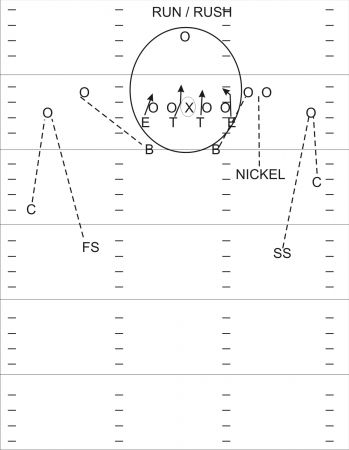
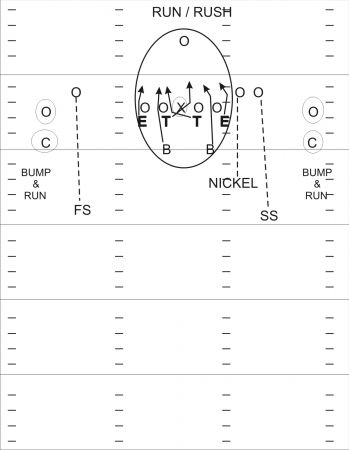
A. Line – 4 defensive linemen vs. 5 offensive linemen. Four defensive linemen is a powerful rush ratio—this is the best match up possible if you have a great defensive line who can get after the QB and limit time for the QB to throw. Most teams in a no-back put the QB in the shotgun to provide even more time for the QB, so getting pressure on the QB becomes more difficult. Possible solutions are twists with LBs or just the line itself or beating the weakest lineman. For this scheme to be successful the front 4 must get pressure. Pressure on the QB may not necessarily result in tackling him; this is one time that getting close to the QB counts. Reducing the QB’s vision or knocking down passes is almost as good as a sack.
B. Linebackers – are the wild card in this defense. This is the disguise factor of the defensive concept. They can blitz, play pass defense or stop the QB running attack.
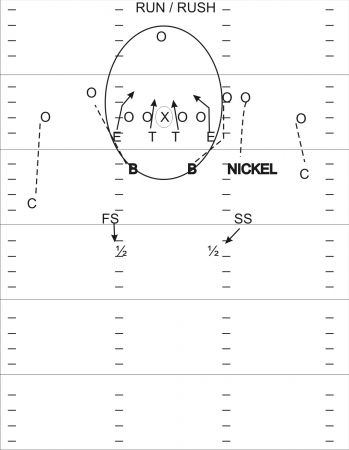
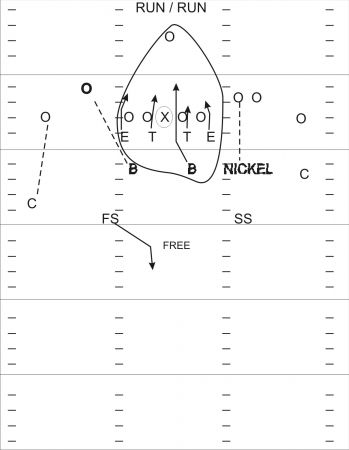
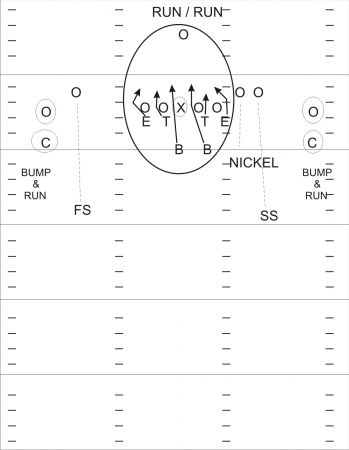
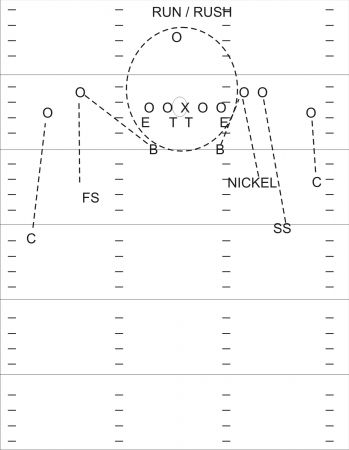
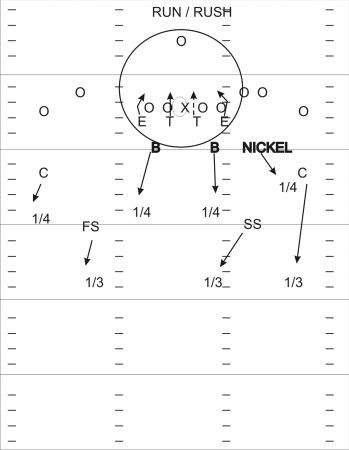
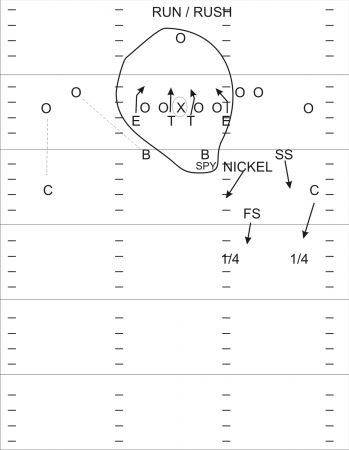
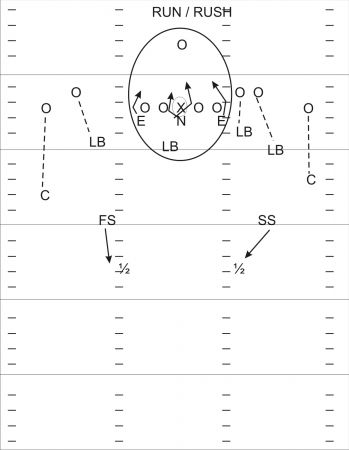
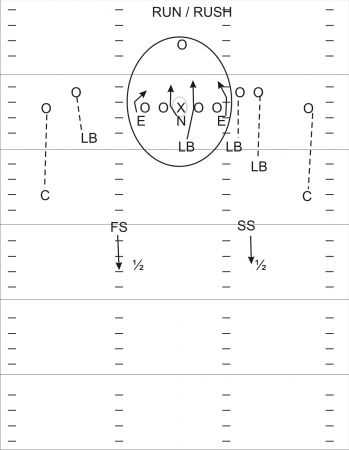
C. Defensive Backs – 5 receivers vs. 5 defenders. This defense is man match up, but you could play a 2 deep, 5 under zone or a 3 deep 4 under zone (using the LBs in coverage). The weakness of this 5 defensive back man alignment is quick passes and crossing routes. I do not favor this concept—an adequate passing team will complete too many passes in my opinion. In the Texas state 5A playoffs, I watched a no-back team march 90 yards against a 4-2-5 man-to-man defense to win the game in the final two minutes. The zone concept seems to be a sounder tactic to me, especially if your players can expand or shrink the zones bases on the routes (no player covering grass). (See Diagrams 1-9 for different combination defenses)
3-5-3
A. D-Line – 3 defensive linemen vs. 5 offensive linemen. This is a very weak rush scheme unless you have very good D-linemen who can defeat double teams. The QB is going to have more time in this scheme, unless you blitz one LB. This scheme makes it very easy to disguise the 4th or 5th rusher, but each rusher weakens the pass defense.
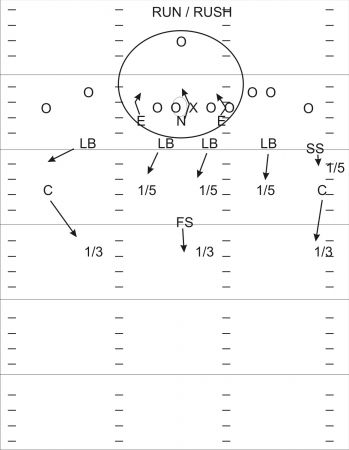
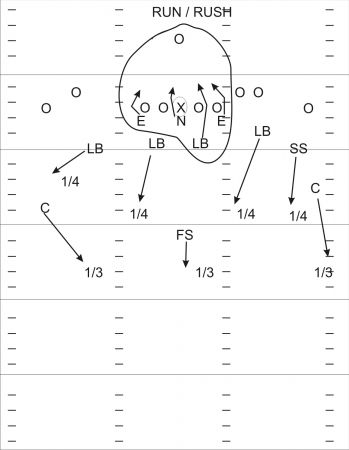
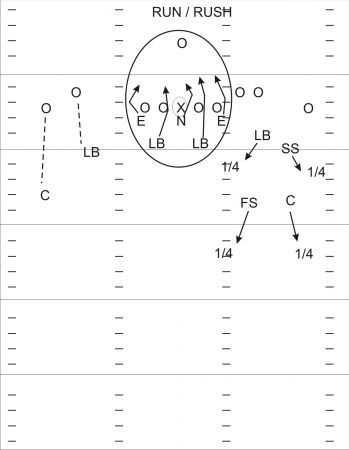
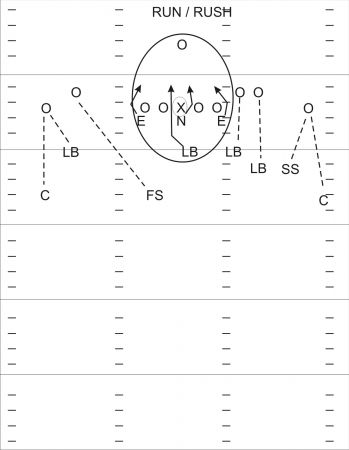
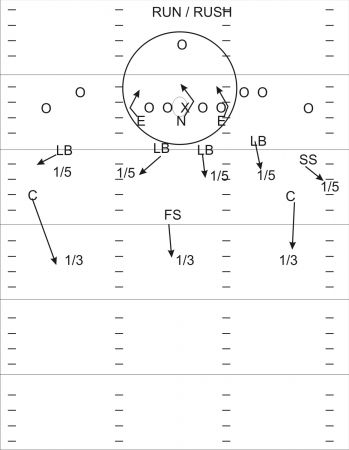
B. Linebacker – this is the strength of this scheme. You can play a variety of pass styles to include 2 deep zone, man under, blitz one, 3 deep zone or combo zone or bracket (double cover) 2 receivers or zone 3 receivers and man 2 receivers. This is a very good defense of disguise—you can force the QB to make a false pre snap read, since he must try and figure out what 5 LBs are doing and you can change their assignments each down. This is my favorite concept if a team uses a no-back alignment as their hurry up offense.
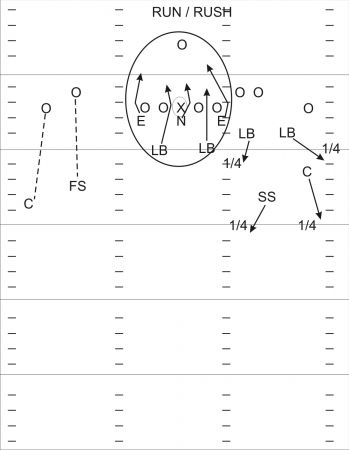
C. Defensive Backs – consist of 3 defenders who give the impression of playing zone coverage but can play almost any type of coverage you can devise with 8 defenders. If no extra rush is planned, this would be 8 pass defenders or 7 pass defenders, 1 blitz rusher and a 3 man line rush. I really like the 7 pass defenders concept since you can play a safety over the top of the twins (1/2 deep coverage) and two safeties over the trips side (1/4 deep coverage) with zone under. You can bracket (double cover) two of the 5 receivers and man up on the other 3. The possibilities for coverage schemes can cause match up problems for a team that adjusts their routes based on defensive reactions and alignments. Another concept is to man up the wide outs and collision them to destroy the timing with the strong safety and an outside linebacker. This technique will help against the vertical stretch. This defense in a zone type alignment works great in the red zone since the compressed area helps the pass defense and negates the poor pass rush, while at the same time allows some run support if the QB runs the ball (See Diagrams 10-15).
3-4-4
A. Lineman – 3 defensive linemen against 5 offensive linemen. All previous comments about the man rush remains the same.
B. Linebacker – the 4 linebacker option is the most flexible and easy to install if you use this defense as an all-purpose defense as several pro teams do. Personnel dictate how successful this defense will be against the no-back. For best results, the linebackers need to be “tweeners”; that is, good enough to play pass coverage yet be able to stop the run in other formations.
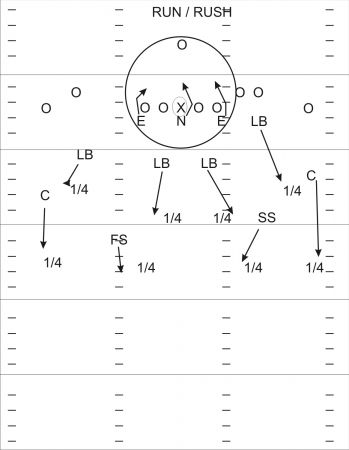
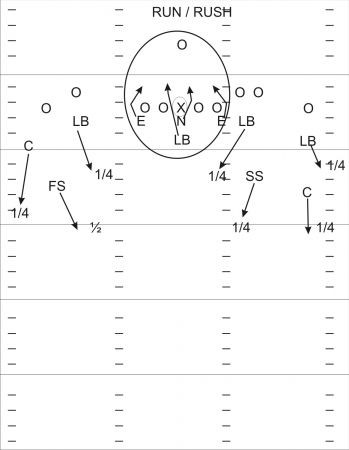
C. Defensive Backs – the modern 4 DBs—2 corners and 2 safeties is base defense for most college and pro teams. By rolling to a 2 safety look on the trips side (1/4 coverage) you can play safeties over the top on both sides. You can also play a cover 3, with 5 under, 3 deep. This defense makes it easy to play 4 deep, 4 under, with a weak 3-man rush. Man defenses include a double bracket, man under, 2 deep. A combo man zone look with a double LB blitz is another option (See Diagrams 16-21).
Coaches Decision Planning Guide to Stopping the
No-Back Attack:
1. Decide on rush/pass defense ratio for 1st, 2nd, 3rd & 4th downs.
2. At what point do you change/adjust your strategy?
3. Which defenses do your players execute best?
4. How do you match up against the opponent?
A) Your pass rush against their O-line.
B) Blitzing their weakest blocker.
C) Can you play man pass coverage
effectively?
D) Who are you matching on their best receivers?
5. What sub package do you need?
6. How much practice time do you need to teach the no-back defense?
7. How will you adjust if you have the wrong defense and personnel on the field?
8. How will you handle the no huddle attack?
After reading this clinic, some coaches may believe there are too many things to prepare for against a no-back attack. I disagree. Your players will be able to handle one or two of the defenses I have explained in this report. Choose the one that you believe will provide your team with the best chance of success. Rehearse your team in small segments each day of practice—10 minutes—so defending the no-back becomes familiar. Players who can recognize formations and possible plays from these formations react quickly to the ball and defend well. Use these thoughts to get your players prepared and success will follow. u
Former Texas high school coach Hank Schrader can be reached at HankSchrader@GridironStrategies.com.