Two-point conversions and their effectiveness are not often talked about. Offensive coaches always have a few plays reserved for the right time when the decision is made to “go for two”. With teams like Oregon going for two much more often than going for one, coach’s have to take this part of the game very seriously.
Gridiron Strategies has brought together two coaches, one offensive and one defensive, to go head-to-head on the philosophy, strategy and psychology of the two-point conversion. They are Christian Ozolins, Assistant Head Coach and Offensive Coordinator at Buffalo State, and Matt Welch, Defensive Coordinator at Friends University.
TALE OF THE TAPE
Christian Ozolins
SUNY Buffalo State
Asst. Head Coach/OC/Quarterbacks Coach
10 years at Buffalo State, Also coached at Maryville, Methodist, Alfred and Hamilton
Matt Welch
Friends University
Defensive Coordinator
12 years at Friends University 28th season coaching in college, part of 10 championships
What is your basic philosophy and strategy for running (or stopping) a two-point conversion?
Ozolins: We go into each game with three two-point plays that we have practiced regularly throughout the week and pre-season camp.
Welch: Our basic philosophy is to align properly to the formation that we may see, read our keys and react to what we see. It is important that we swarm to the ball as quickly as possible.
What is the mental side of the two-point conversion?
Ozolins: We believe, just as we get into the +10, “We Score” is our mindset. That is preached to our offense from day one. That is the same mindset we use for the two-point play as well.
Welch: The mental side is to know we must make a stop. That starts with alignment and going over formations in practice. We will walk through each formation and what plays should be coming at the defense from each formation.
What are your priorities in communicating with your offense/defense? How do you take the surprise element out of it?
Ozolins: We are a no-huddle offense with a few different tempos. That is where our surprise element takes place. Our QB has the ability to check at the line of scrimmage when he feels there is a better option available.
Welch: Communicating with the defense through pre-practice meetings as well as on-field walk-throughs are our priorities. We also use the chalkboard to diagram plays that the offense may run and then we go through each player’s responsibility on each formation. We give them different scenarios that may be run so there are no surprises. If the offense comes out in a formation we have not seen, we tell our players to call a time out to talk about it before the play is run so everyone knows their responsibilities.
Depending on the situation, do you have a set play to run offensively? Do you have a set defense ready if your opponent goes for a two-point conversion?
Ozolins: As I mentioned, we have three plays for each game that we practice during the week. Our athletes know what we are calling and have the confidence to execute the play.
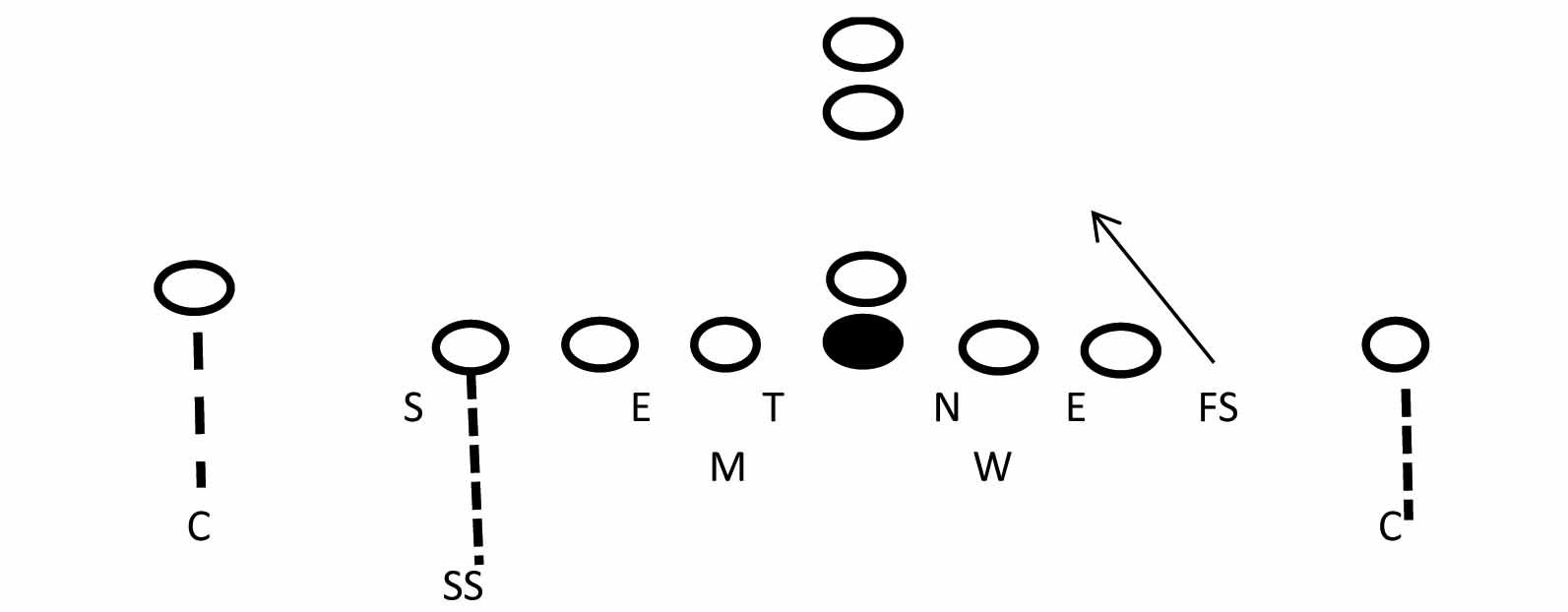
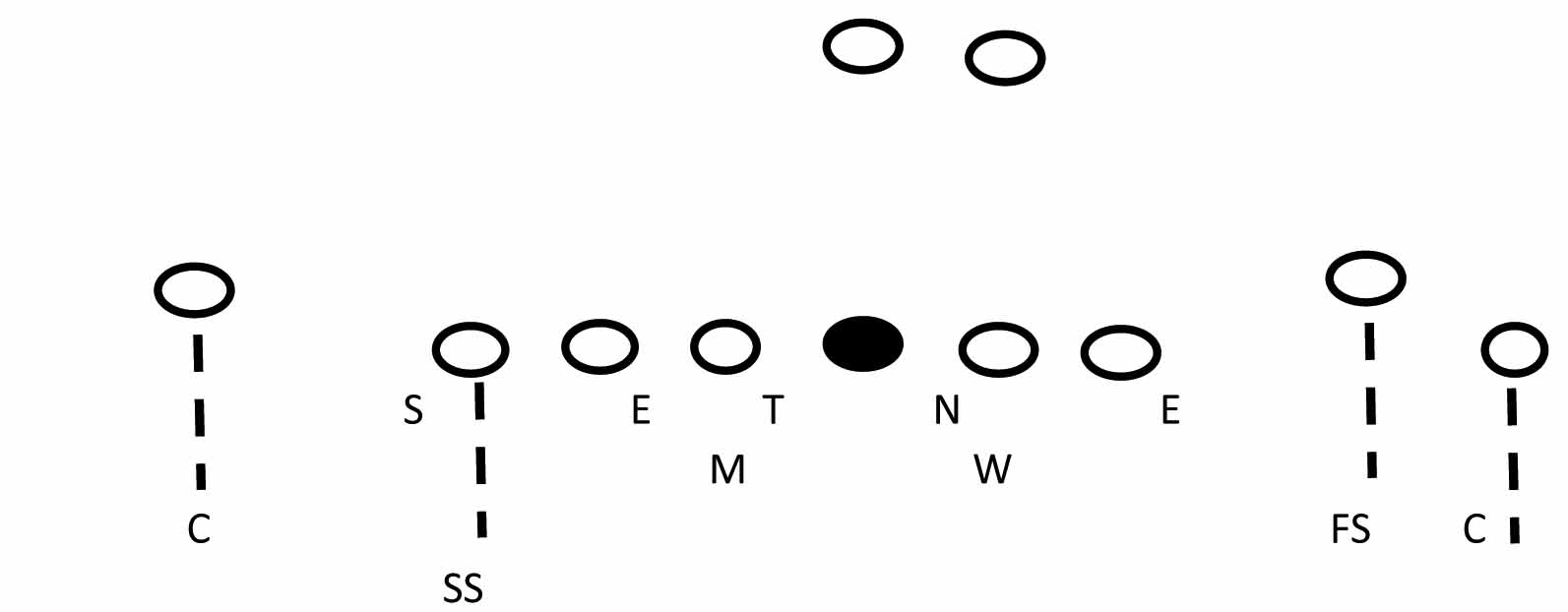
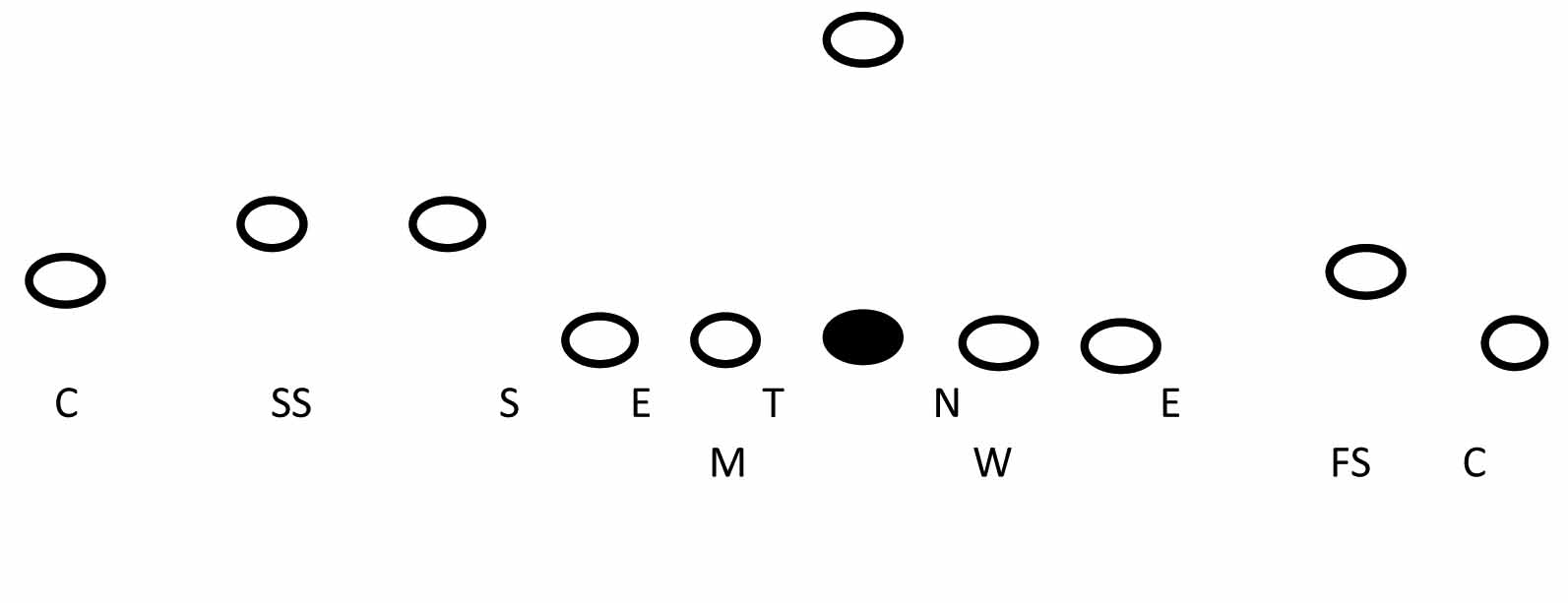
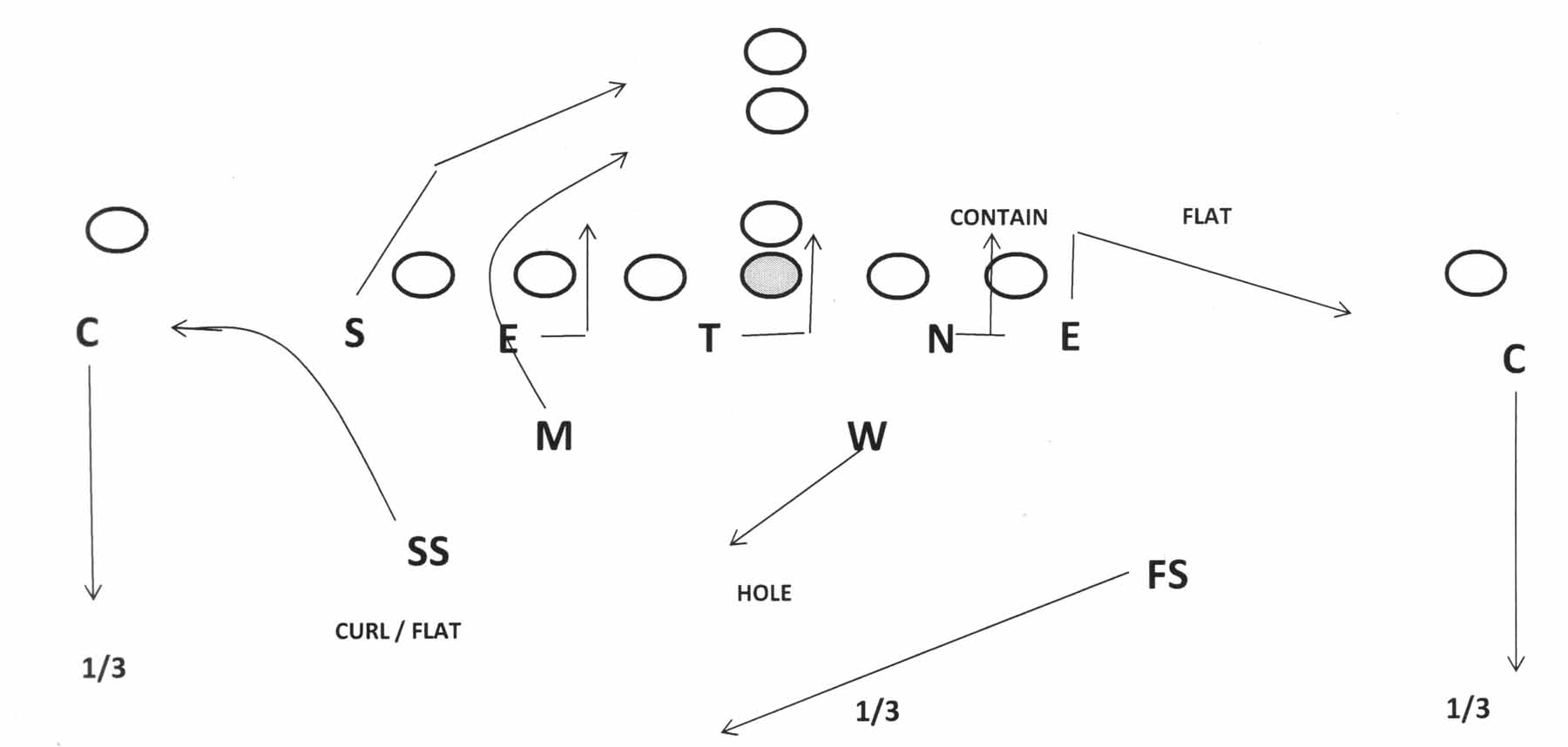
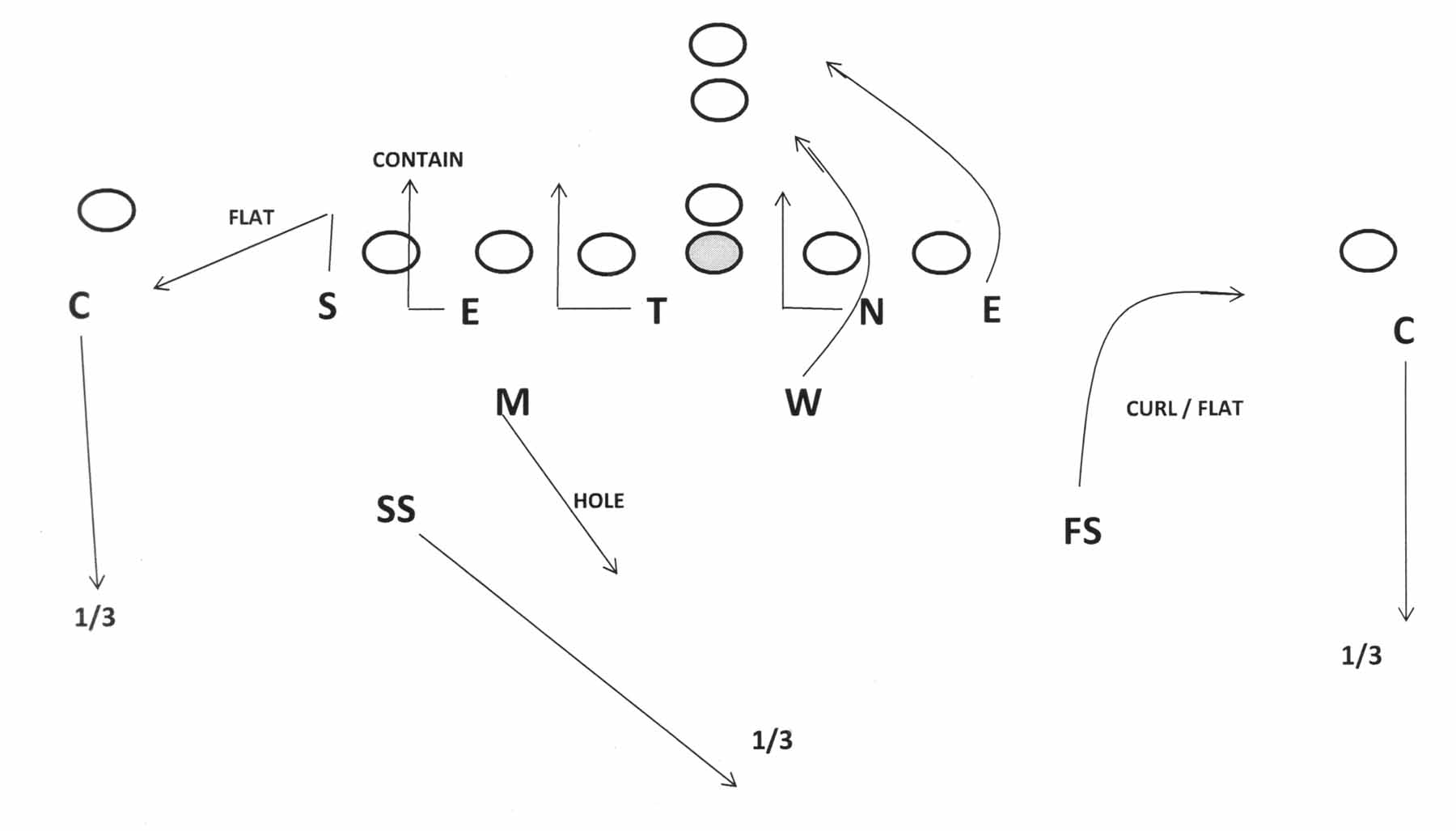
Welch: We have a set defense - we use our goal line defense which can be run at any place on the field (Diagrams 1-4). We use a lot of man coverage in the secondary, or we will run our base defense which is a 4-3 package with both strong side and weak side zone blitzes (Diagrams 5A and 5B). We spend a lot of time just walking through formations and alignments.
What is the psychological advantage if you convert the two-point conversion? Or, if you stop it, what advantage does that give you?
Ozolins: There is an advantage for a short time, but we teach to look to the next series and to expect to score every time we have the ball.
Welch: The advantage of stopping a two-point play is that it gives the team confidence in knowing they can make plays when needed that will carry through the rest of the game.
Our Goal Line Base Rules:
1. Defense does not flip sides based on offensive strength.
2. Tackles align in two eyes.
3. Ends align as four eyes unless linebacker beside them is removed. They then align in a 5 tech.
4. S/FS align as 6 techs and are D gap players.
5. M/W align over the guards (20 tech) and are C gap players and have back if out on a pass.
6. C/SS align inside shade of receivers and have man coverage.
7. FS aligns in a 9 technique. However, with only one back, the FS finds the uncovered receiver and defends him.
8. If FS/S are uncovered when aligned on the line of scrimmage, they may blitz off the edge.
9. Vs. a no-back formation, we will run 27-7 zone coverage.
10. Vs. a three-back formation, FS/SS has TE man coverage, corners have first back out and the Mike has the second back out.