IT SEEMS AS IF offensive packages are changing and becoming more sophisticated every season. Today’s offenses are based on timing and overpursuit of defenses. It’s quickly becoming more like a chess match between offensive coaches and defensive coaches. Field position, timing routes, base running plays and trick plays force defenses to continue to adjust. From week to week, defenses are being forced to reduce their packages to combat these offenses.
Colleges, high schools and even the pro teams are trying to find ways to put pressure on and disrupt offenses. Every defense — at any level — has two basic components: a force unit and a contain unit.
Each unit is important to control the offense they are facing and both play a big part on the role of the defense being played.
Î Force Unit. Must disrupt and aggressively pressure the offense to force a turnover, gain field position or to force a big-play turnover that you can score on.
Î Contain Unit. Must prevent the big play, keep the opposing offense from scoring and dictate to offenses what they will be allowed to do.
Both units need to work together to control momentum, field position and to prevent the offense from scoring.
Designing A Pressure Formula
As a staff, during preseason, we reviewed our schedule and noticed that four out of our first five opponents were primarily passing teams. The other team was more of an option team with a very fast quarterback. The remainder of the teams on our schedule would be primarily running teams. As defensive coordinator, I had to have a way to put pressure on an offense whether run or pass.
After comparing all the different offensive formations and base plays we would face, I developed three combination stunts with adjustments that I could call and use with either our odd or even fronts.
We didn’t have to change up our coverage and the defense could still remain balanced and sound.
These stunts can work if you utilize a gap defense or a man (assignment) defense. The force unit in each of these stunts will be the defensive line and the player doing the stunt. The contain unit is primarily the corners and safeties. These stunts can be used one right after another in various combinations and, in some cases, can be the major design in the game plan verses an aggressive running offense.
The secondary coverages that we use with these stunts is either an “11” (a man to man) or a “33” (3-deep zone).
Using odd or even fronts in itself can cause offenses to change their packages, yet, when you factor in an effective stunt defense (especially if it is sound) an offense can find itself in serious trouble.
DIAGRAM 1: Even Easy 11 Spy. This is a total defensive assignment call. All players will have definite responsibilities and all gaps must be filled.
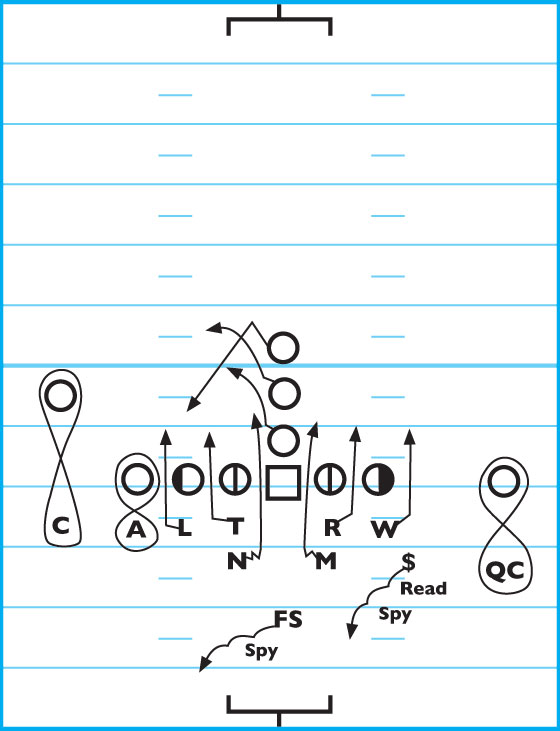
This can be used in either odd or even fronts with a variety of different change ups or adjustments.
The Mac Linebacker and Nose rush the A-gap while the Ram Tackle, Tackle, Will End and Lion End rush the
B- and C-gaps.
The Free Safety plays a technique while the corners if they have a receiver across from them will be in 11 (man-to-man) coverage. The Strong Safety and Anchor Safety will have contain on the outside.
Players can stack or get into gaps right away. It an be used for either run or passing situations.
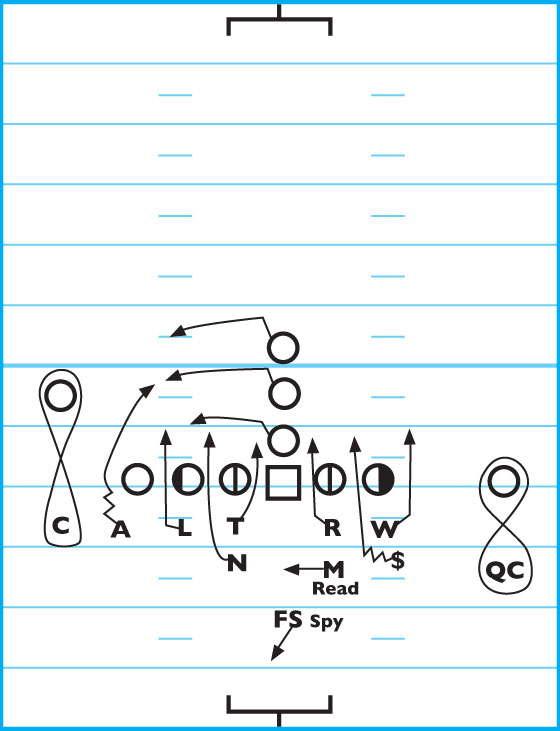
Diagrams 2 and 3 show variations of the Easy stunt.
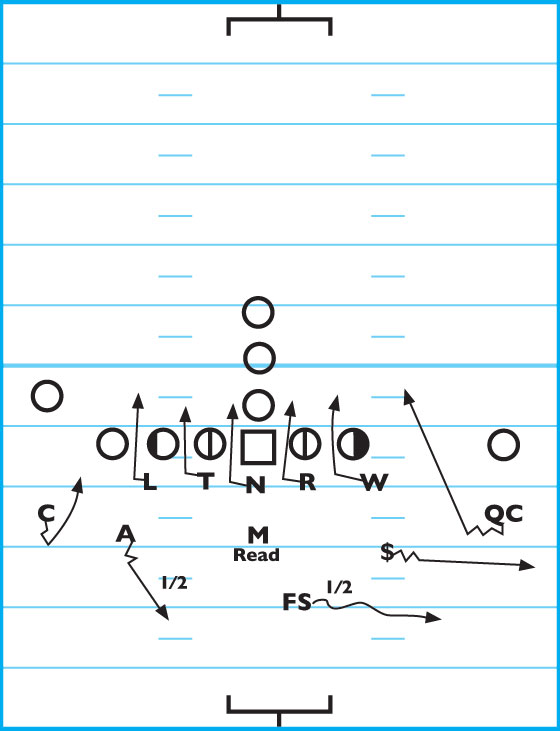
DIAGRAM 2: Odd Easy Smash Read 11.
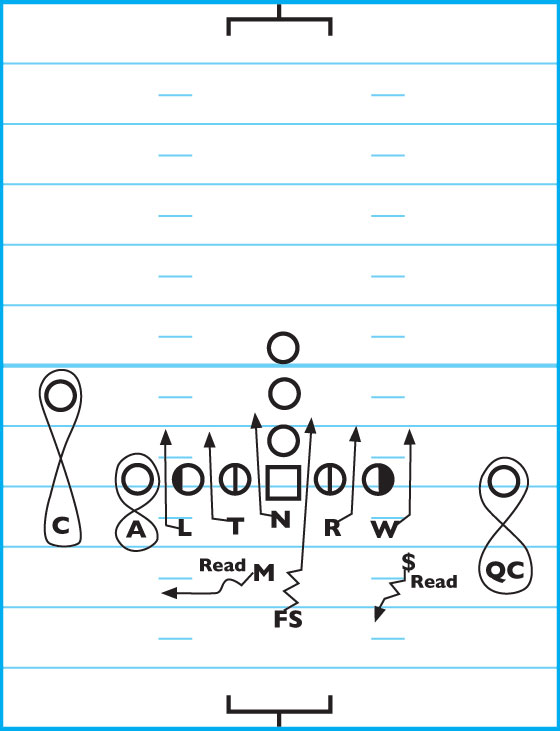
DIAGRAM 3: Even Easy Twist 11.
Ghost
Ghost is a total defensive assignment similar to Easy. All the players will go on this stunt except the corners, who, will play man to man or cover 11 and contain if there is no receiver to their side.
DIAGRAM 4: Even Ghost 11.
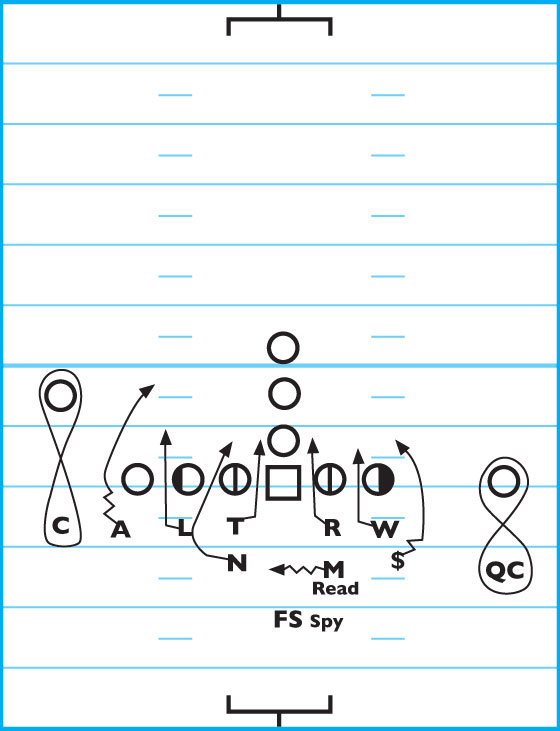
The Mac LB reads on this stunt or can fire the B-gap like the Nose. The Ram DT and DT pinch into the A-gaps while Will DE and Lion DE cover the B- and C-gaps.
The SS and Anchor safety attack from the outside gaps off the edge keep the play inside forcing it toward the A-gaps.
One of the adjustments that can be made is running cover 33 Zone and the FS would have middle. If the Mac LB rushes, the FS must use a spy technique. Change ups are shown in Diagrams 5 and 6.
DIAGRAM 5: Even Ghost 33 Zone.
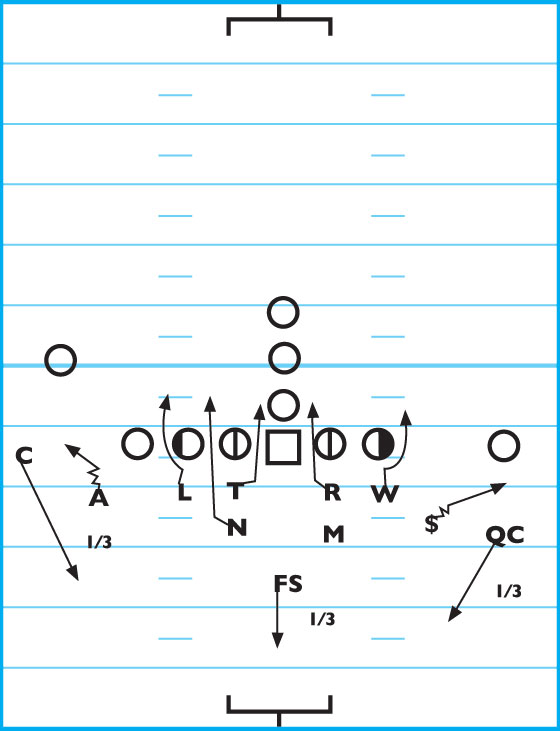
DIAGRAM 6: Even Ghost Twist Left 22.
Crunch
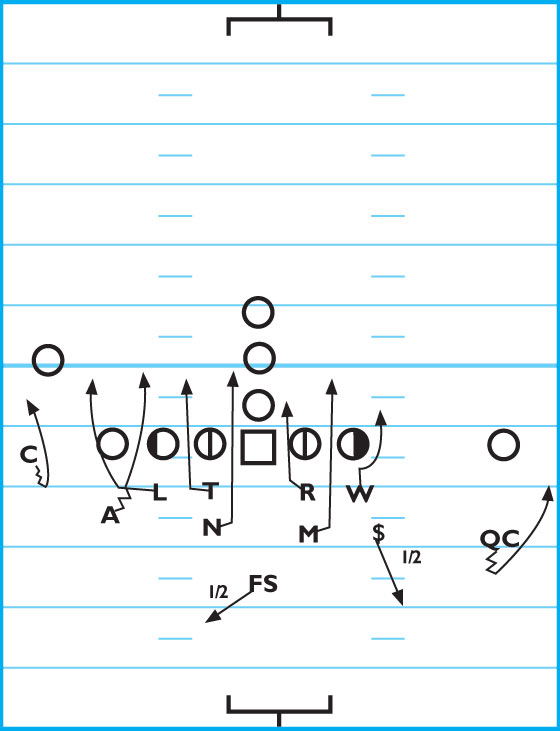
Crunch is a stunt that can cause great problems — but tendencies, down/distance, and field position will determine its use.
DIAGRAM 7: Even Twist Crunch 33.
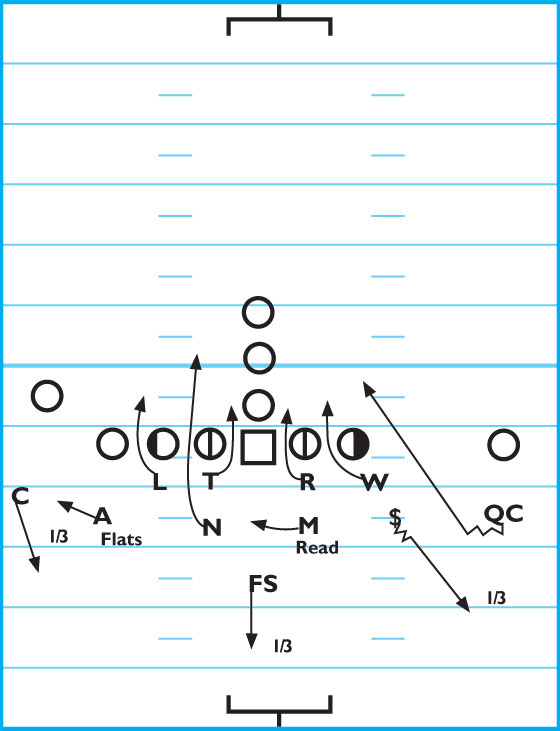
As a defensive coach you may want to bring both or just one on the call. We even ran it with an automatic call when we saw certain offensive formations. We usually used Crunch in combination with a slant or pinch call.
Diagrams 8 and 9 show each of these calls.
DIAGRAM 8: Even Pinch Double Crunch 33.
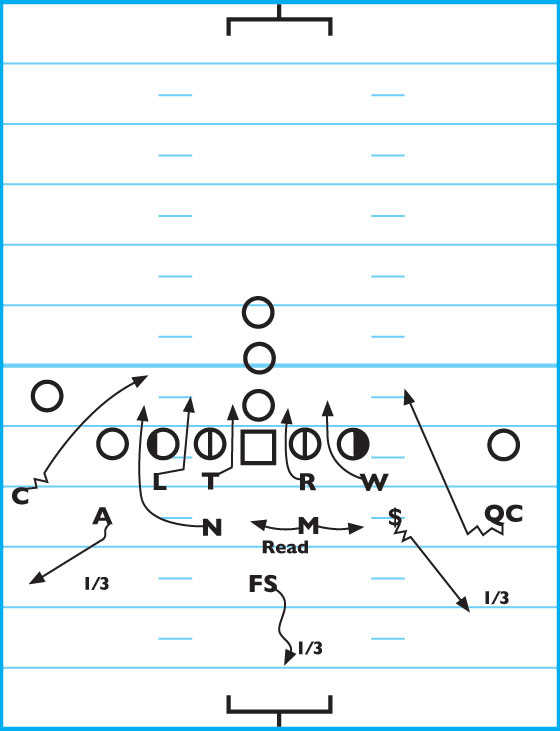
DIAGRAM 9: Odd Slant Left Crunch Right 22.
These combination stunts can cause offenses a great deal of trouble. They demonstrate the force and contain units necessary to be a hard-to-stop defense.
Defenses have to constantly be concerned with field position, down and distance, formations, personnel and even offensive tendencies.
Yet, wouldn’t it be nice as a defensive coach to have something in place that can be used no matter what the formation or play and still be effective?
Though these stunts aren’t perfect, by design they bring the heat and force offenses to change what they’re doing and force offensive coaches to adjust by eliminating plays from their package and remain with their base plays.