In my short time coaching college football, I have found that there is never enough time for individual work. With so much on the agenda for daily practices, individual periods may only be five to fifteen minutes, depending on the program and day in the week. I believe this period is crucial and should be used as a creative and competitive way to get as much done as possible. Although there are times to work on situations a wide out will face through drills, we have other days where we need more time.
A few examples of what wide receivers should work on are fundamentals of the release, successfully handling the defensive tactics of “walling” and “rerouting”, finishing the footwork at the top of the route, adjusting to the football and catching and finishing with contact while getting “YAC”. There are more aspects to coaching and teaching, but my goal is to give an example of what I mean by creating a productive multiple drill.
Before working a multiple drill with players, I make sure the athletes understand what I want and they give a great tactical and physical effort with each part of the drill. In the drill circuit, I use players to hold pads, give contact and real looks players will see in a game situation. Each player understands that the only way their teammates will get better is if they give them a good look within the drill circuit.
The first obstacle of the drill is the release. There are essentially three different releases the wide out can use, and before they start the drill, I will tag which type of release I want them to do. The team will hold the arm pads and give the player a press look and the wide out working through the circuit will then start the release.
1. The Release
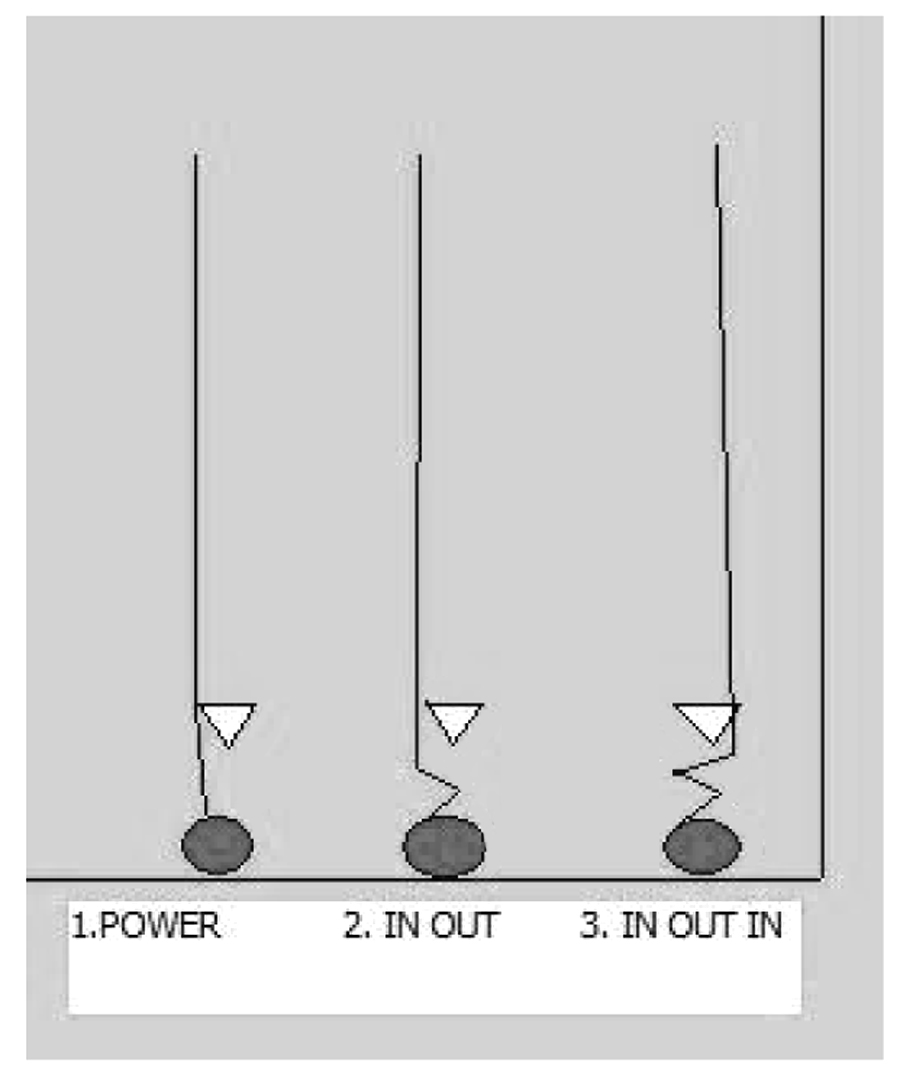
One release used vs. press coverage is the power release. There are different forms of releases which can manipulate the DB and get the wide out on top of the defender. No matter what you teach, each coach has their way of manipulating the defender with the WR’s hands and feet to get outside or inside the defender while honoring the landmarks on the play. When the receiver releases, he must use his hands to chop and get back on top of the defender with quality hand work. In this drill, our wide out will do this and then proceed to get back on top of the pressed defender, which will take him to the next part of the drill. The releases I use in this drill are the power release, in-out, and the in-out-in (See Diagram 1).
2. The Reroute/Open Slip
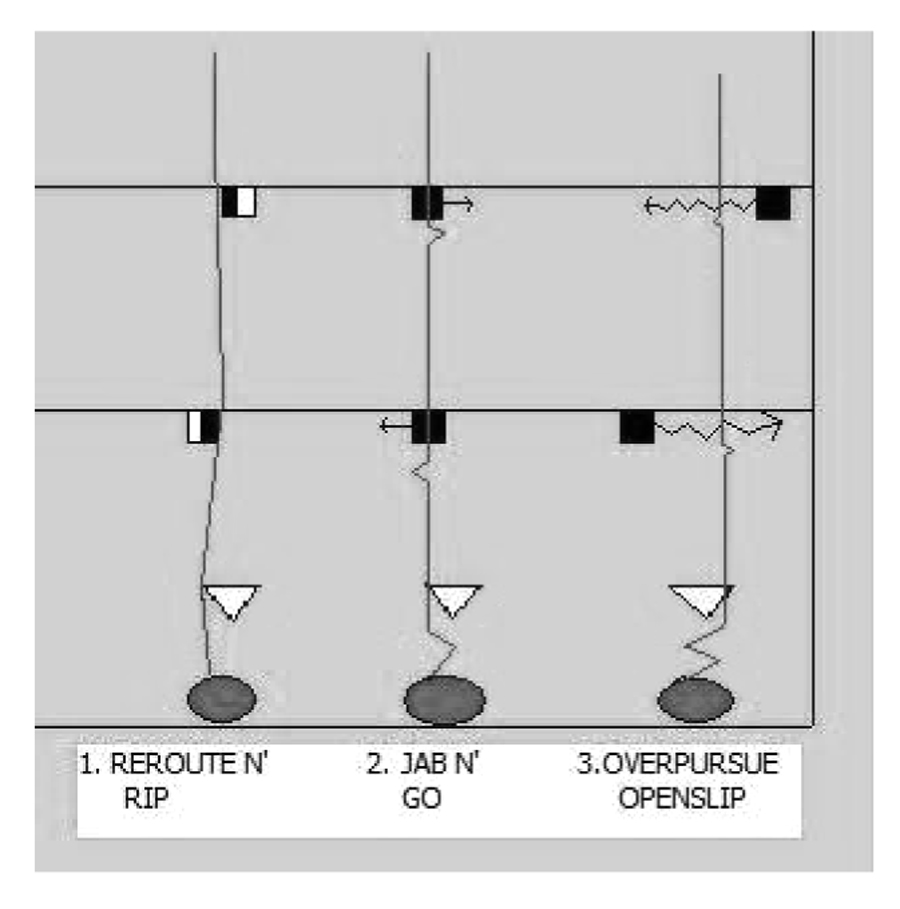
Defenses are constantly trying to “reroute”, “wall”, or play man based on the coverage and schemes being used on the field. Wide receivers must deal with this because defenses are trying to protect areas and disrupt timing in the passing game. At this point in the drill, the defenders become very important in given a realistic, yet controlled look for the wide out. The defender will hold the pad at his chest and proceed to:
1. Funnel the wide out with quality contact.
2. Hold their ground head up with the receiver and honor the jab while still making contact.
3. Over-pursue the wide out.
In the funnel technique, the defender will be shaded to a certain side of the wide receivers body and try to knock him off his track without getting out of control. When the wide out gets to the defender trying to reroute, he will proceed to stay low and rip through the defender with the shoulder closest to the pads while staying on his route. This defensive tactic is one which resembles a strong safety rolling down in a cover 3 look.
The next technique used by the defender is to hold his ground with the wide out while still trying to give contact. In this part of the drill the receiver is taught to manipulate the hip of the defender and rip through it while staying on his route. The defender is told to honor the nod or stick the receiver by stepping with one foot in the direction the wide out gives him the nod. The receiver must understand that he must stay on the line or track in order to continue the drill. This is the man look.
The last tactic I will have the defender do is over-pursue the wide out. In a game, linebackers will try to get contact on slots while being split between either the tight end or tackle in the trenches. In order to get contact, they must run to the path of the receiver and get contact before working their way to their zone. Sometimes the linebacker gets there early and his momentum will carry a little beyond the path of the wide out. Here is the time when the receiver is taught to nod, push the defender through, and continue on his track. In this part of the drill the defender must time out when their teammate is working towards their path and must run laterally past him just enough for the receiver to push his momentum through and continue the drill. This takes practice by the defender but, as stated before, the defensive player is the key to this part of the drill (See Diagram 2).
3. Top of the route/finishing footwork
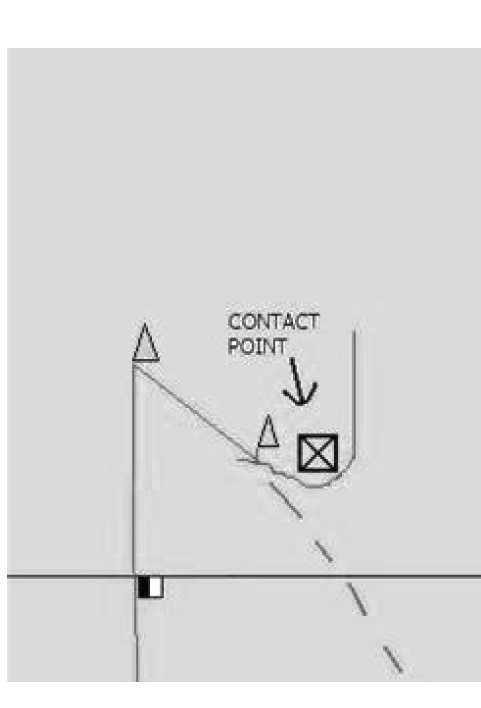
There are many different angles WRs must master in becoming great finishers in route-running. The curl cut and the in-cut are just a few which can be worked on in this drill. In this part of the drill I emphasis dropping the hips, working the hands to help decelerate, and using the inside leg to open up and direct the athlete in the direction these cuts require. Once the player finishes the top of his route, he then must turn his head quickly and look for the football (See Diagram 3).
4. Adjusting, Catching and Finishing with Contact
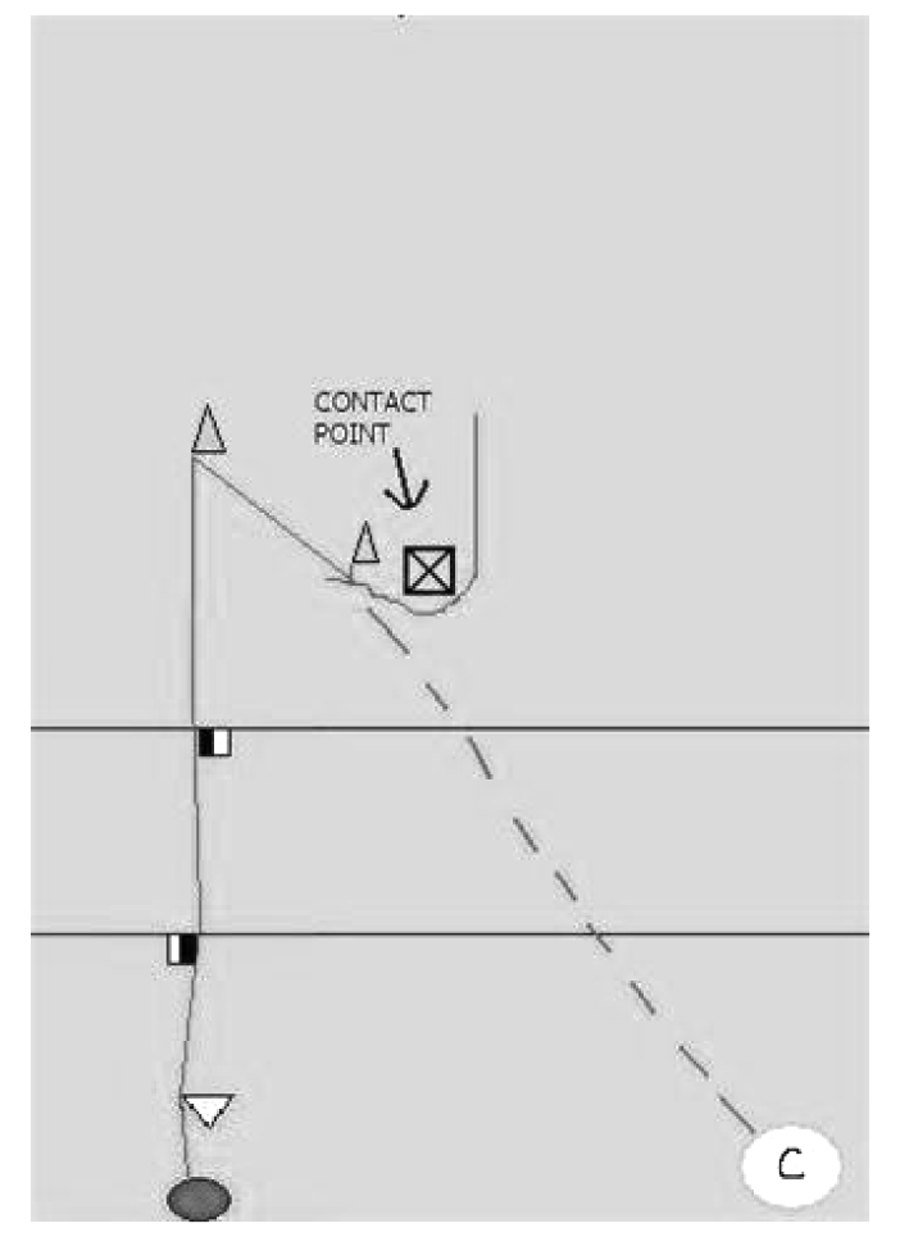
The final part of the drill is adjusting to the throw and catching the ball with contact after the ball is caught. The throw is not always perfect, but where the ball is placed dictates where the hands should be to catch the ball. Once the ball hits the player’s hands, the defender will then be holding a pad near the receiver and will slap him directly in the chest in a controlled manner. The defender must time the contact and hit him just enough to try and distract the receiver or separate him from the ball after catching it. This aspect of the drill makes the receiver focus on the catch. Once the ball is caught and given contact, the wide out will run north and south and finish the course five yards ahead working to get “YAC” (See Diagram 4).
In order for these combinations of drills to mesh, coaches must teach these drills separately in order to get the kids to understand the details. In a ten minute individual period, this drill could be useful to coaches wanting to work different aspects of the game that receivers will face. Start slowly, if needed, because often your athletes will have trouble doing everything correctly. But these scenarios are all a part of the game and putting players through this course not only can save time, but builds them for real life game situations in a short amount of time.
About the Author: Jake Dodderidge has been the wide receivers coach at Palomar College for the last three seasons. He played at College of the Sequoias were he was a team captain. In high school, Dodderidge was an All-State wide receiver while playing at Yosemite High School in Oakhurst, CA.