AS MUCH AS COACHES would like to have a powerful running back who picks up key first downs on third-and-three, the very best coaches adapt their offensive schemes to fit their personnel.
Our team utilizes a multiple-attack offense that emphasizes the passing game. But to make the passing game work to its fullest potential, the running game must be efficient. The biggest part of that efficiency comes from not asking the RB to do something that does not fit his strengths.
In this diverse offensive attack, we like to have a back who can do many things, including the ability to both protect the quarterback and receive passes. Obviously, it’s very important that the RB run the ball effectively. More often than not, the back who can do all of the things we ask of him is not going to be a large, powerful runner. Therefore, we designed a running scheme that is advantageous to his versatility.
Core Running Game
Like our passing game, our running game can accurately be described as wide open. Though we have been known to run various reverses and other gadget plays, that is not the main reason we describe it that way.
The core of our running game consists of four schemes that contribute greatly to the efficiency of the run package. Each of the schemes is set up by the success we have in our passing game and each can be executed from a 1-back, 2-back or shotgun set. The flexibility of the “Jab,” “Iso,” “Sprint” and “Stretch” have enabled several RBs to excel in our multiple-offensive attack.
Jab Play
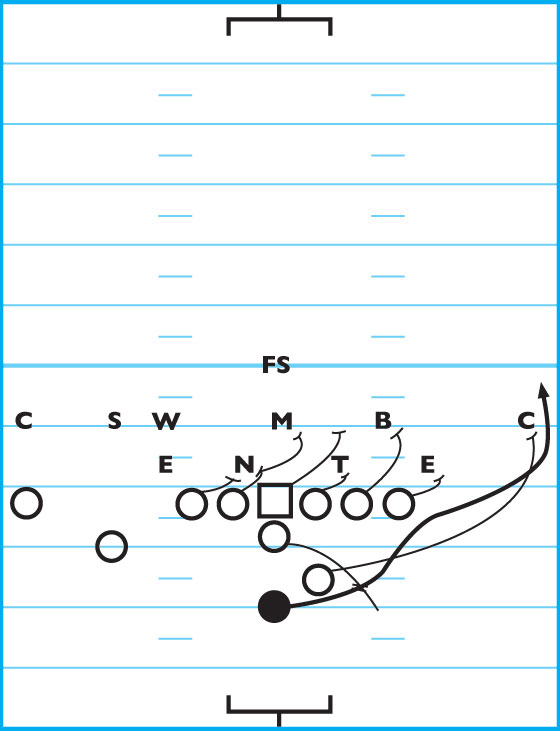
The Jab play has been our most efficient running play and produces more big plays than any other play in our offensive package. It’s essentially a counter that is set up by our 5-step, half-roll passing game.
DIAGRAM 1: Jab Play.
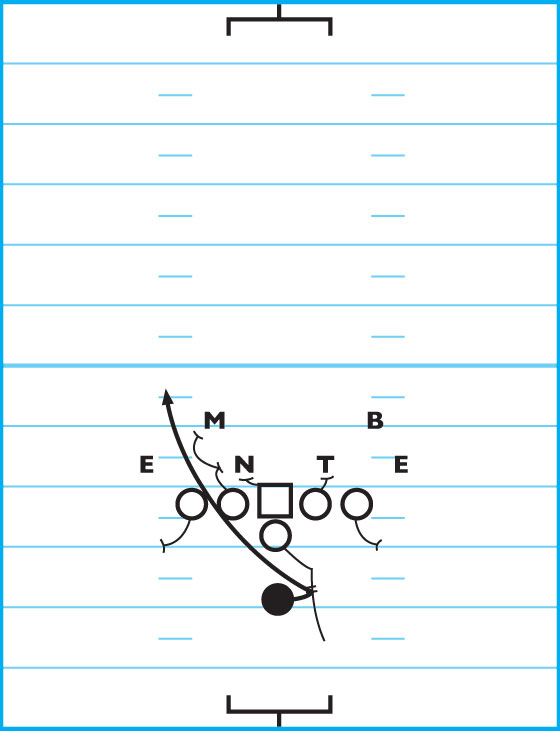
Both offensive tackles pass set just as they would in 5-step pass protection. We want to show pass to invite an upfield rush by the end-techniques. The backside offensive guard is responsible for the first defender head-up to the outside.
The center and play-side OG will combo the No. 1 down-technique and linebacker on the play side. We will utilize an “influence block” on the play-side LB.
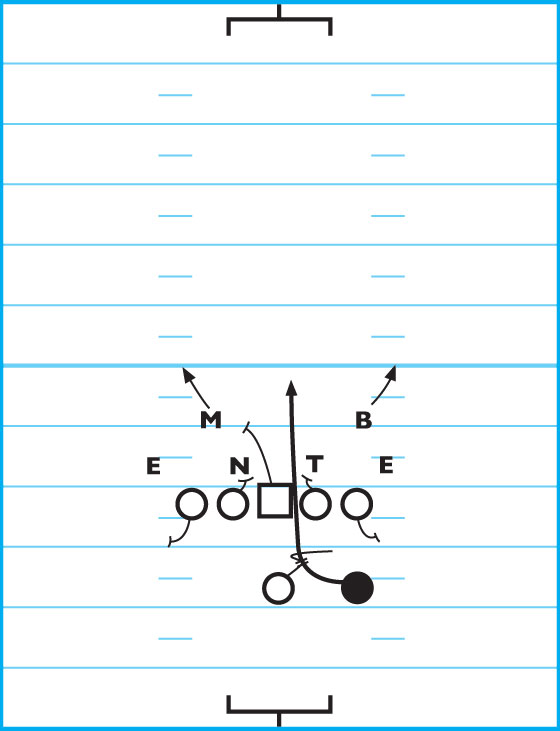
DIAGRAM 2: Jab Play With Influence Block On Backside LB.
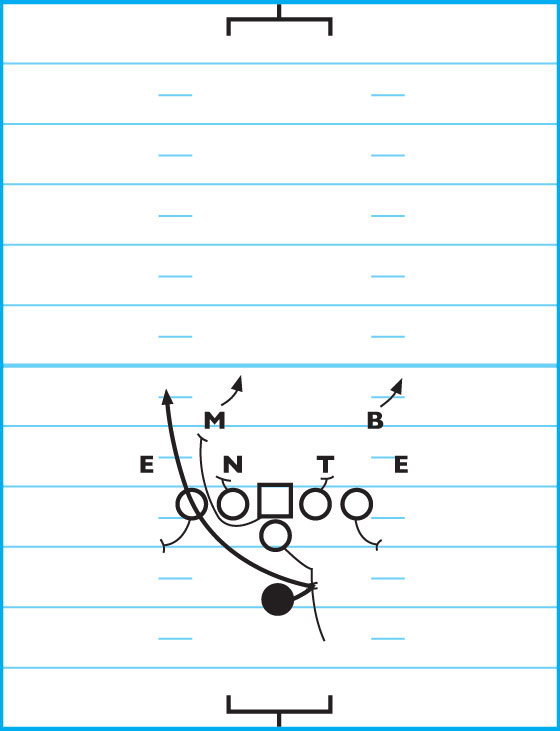
Influencing the LB drop with the half-roll action of the quarterback creates a large crease for the back when he changes direction at the mesh point.
DIAGRAM 3: Jab Vs. 50 From Base I-Formation.
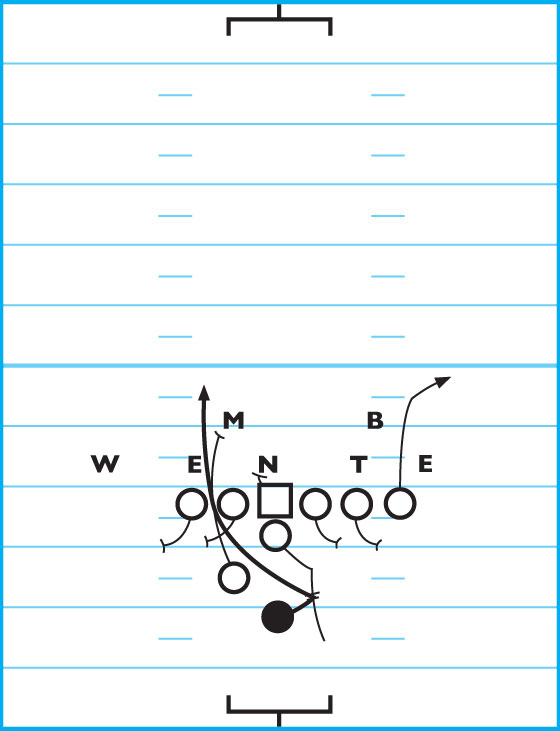
The Jab can be accentuated from 2-back sets by inserting a fullback to gain a lead blocker. By running the Jab from a 2-back set, we can use all five offensive linemen to account for defenders on the LOS. The fullback will be used to secure the second level defender at the point of attack.
The Iso
It shouldn’t be surprising that a pass-happy offensive scheme employs two draw plays among its four base runs. By giving the look of a pass play, the offense influences second-level defenders into pass drops.
DIAGRAM 4: Iso From A 2-Back Set.
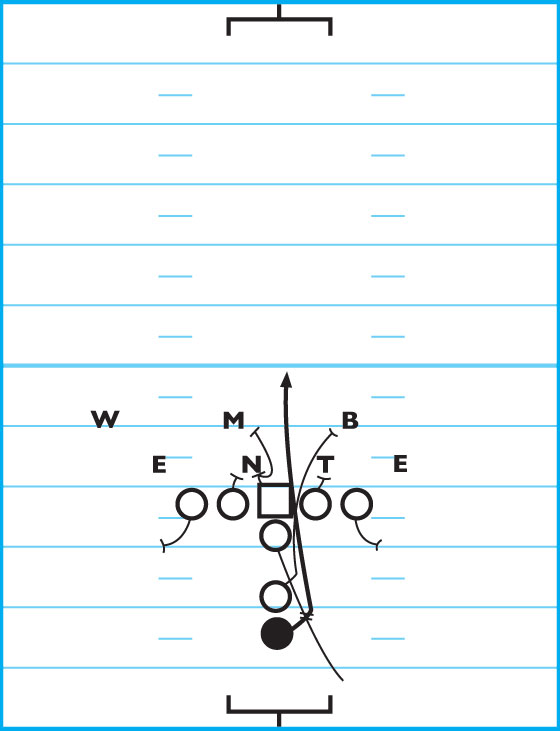
The Iso (or middle draw) is particularly effective from 2-back sets with a FB leading up on the play-side LB.
The Iso is a very good play to complement our passing attack, because we utilize the backfield action of the Iso to gain a “natural” play-action fake in our base pass schemes.
DIAGRAM 5: Iso From 1-Back Set.
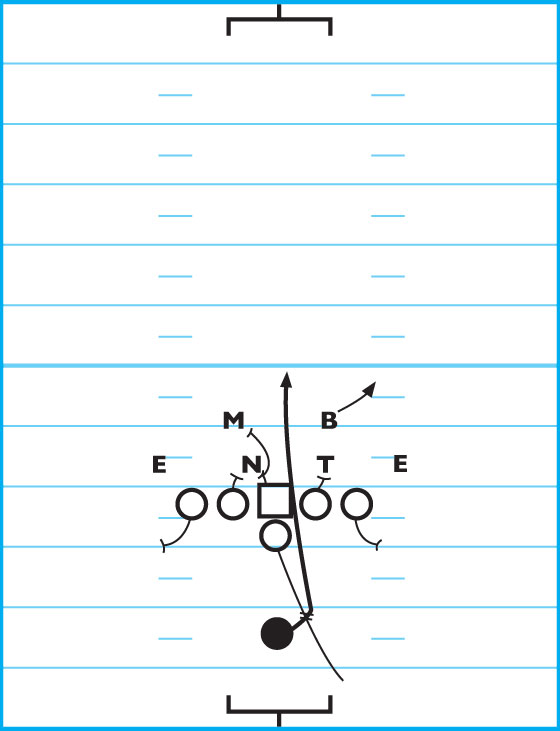
From a 1-back set, influence block the play-side LB with the pass action in the backfield. To take advantage of the LB who reads that the play will be a pass, get the ball to the single back on the running path created by the LB drop.
As inside LBs become conscious of dropping to cover pass zones in the middle of the field, the Iso-draw becomes a very effective run scheme. Like most draw plays, the Iso is an ideal first-down call for coaches who like to throw the ball early in a set of downs.
Zone Play
Our base inside zone run is referred to simply as the “Zone” play and is executed with total zone principles. The backs never know exactly where the hole will be on the Zone, so it takes a back with quick feet, good burst-ability and a little patience to be a good Zone runner.
The inside-zone scheme is most effective when you can capitalize on a numbers advantage in the tackle box.
DIAGRAM 6: Zone Vs. 5-Man Box.
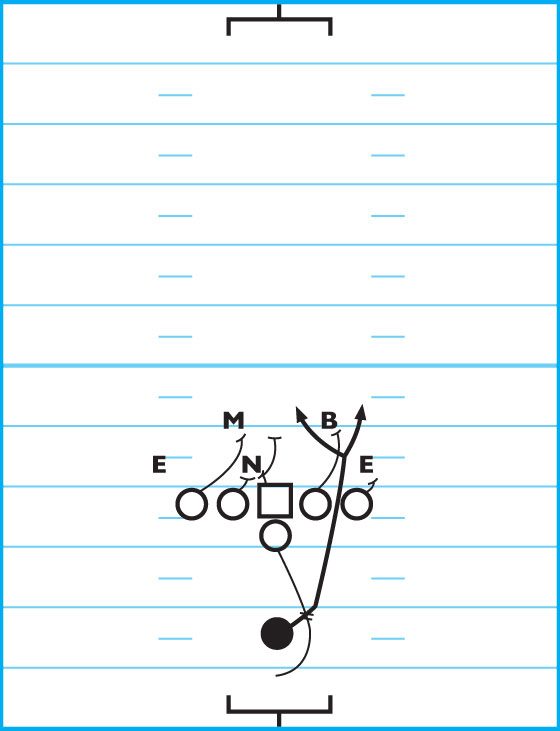
As the defense is forced to commit more players to the pass, the number of defenders in the box is reduced. When the numbers are reduced to 5 men in the box, we run the Zone effectively from our 1-back sets.
By inserting a second back to run the Zone, you can add another dimension to the inside-zone scheme.
DIAGRAM 7: Zone From Base I-Formation.
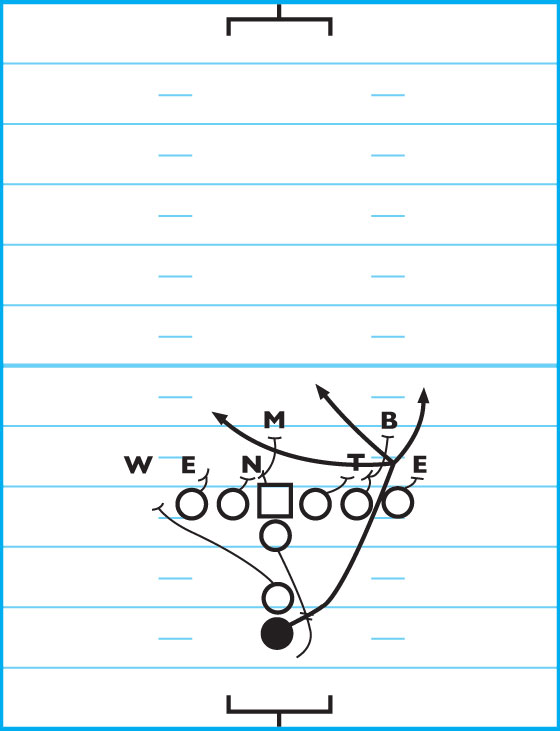
Utilizing the FB to “kick” out the backside end-technique enables the ball carrier to cut back the Zone vs. an over-shifted defensive front.
The key for the RB on a Zone call is to key the alignment of second-level defenders prior to the snap so he can better anticipate where and when the cutback opportunity may present itself. The back must “press the heels” of the offensive linemen before his cut. Cutting back too soon allows defenders to come off the combos and make the play.
Stretch Play
As the offense establishes success with the Zone scheme, the defense will commit numbers to the box to shut down the inside run. The outside zone scheme is a versatile run package that allows you to attack such defensive concentration in a number of ways.
The base outside-zone play is called the “Stretch” and can be executed equally well from 1- or 2-back sets. The key to the Stretch is the hook or reach block made by the end man on the line of scrimmage. Most of the time we’ll run the Stretch to the tight end. However, you can also run it to an open side with the offensive tackle making the hook or reach block. The rest of the offensive line will “rip-and-run” through their play-side gaps.
When the interior linemen can successfully cut off LB pursuit, you’ll have a very good football play.
DIAGRAM 8: Stretch From 1-Back Formation.
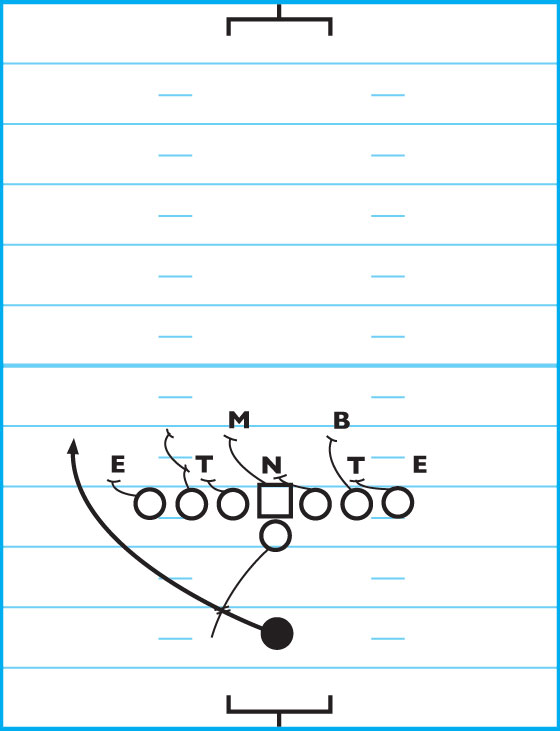
DIAGRAM 9: Stretch From 2-Back Formation.
The versatility of the Stretch scheme is evident when you adapt the blocking scheme with a block-down pull combo with your offensive linemen.
DIAGRAM 10: Outside Zone Executed As A Toss.
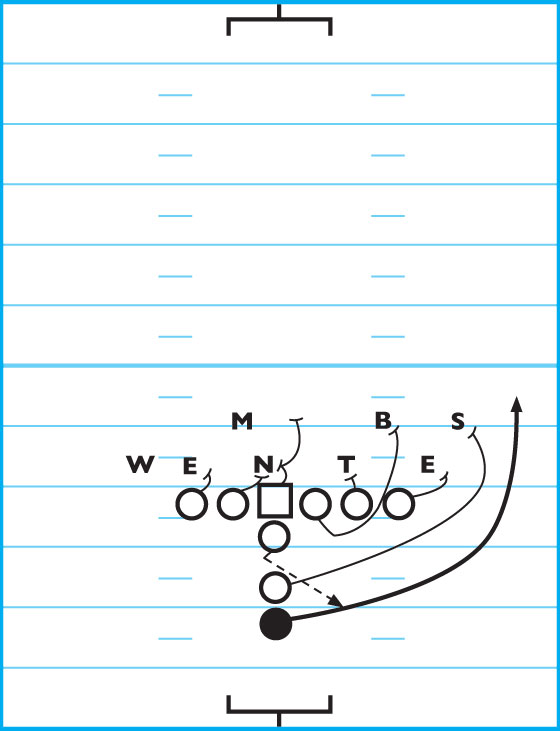
With this adjustment, you can toss the ball to the ball carrier so that he can get the ball in his hands and run downhill quicker.
Shotgun Runs
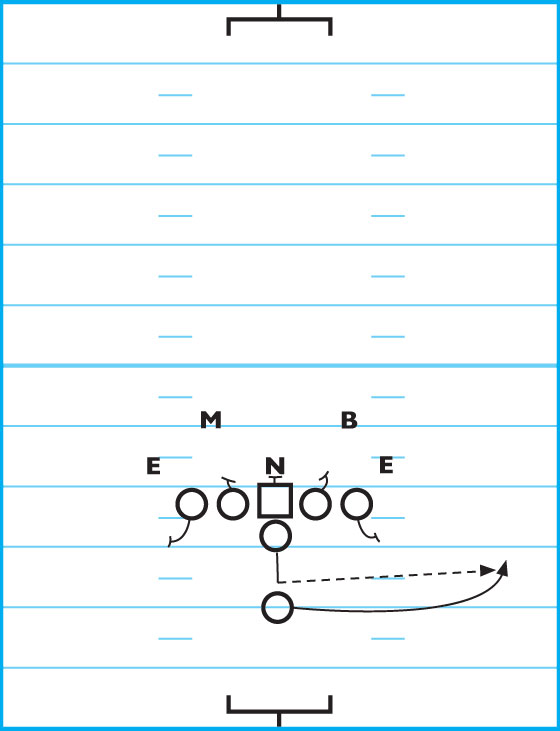
The gun formation typically brings with it the connotation of a pass-dominant approach. But a good coach never limits his team to a one-dimensional approach from any formation. That’s why we have developed the core of our offense around four running schemes that can be executed from the shotgun just as they are when the QB is under center.
For an offense that plans to operate from the gun several times per game, the versatility of the four run schemes allows the offense to make transitions in formation without changing and limiting its approach.
DIAGRAM 11: Zone From Gun Formation.
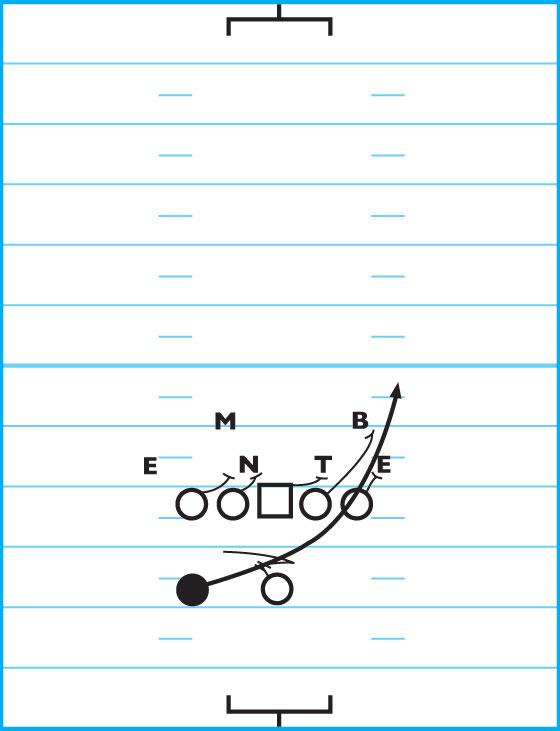
DIAGRAM 12: Jab From Gun Formation.
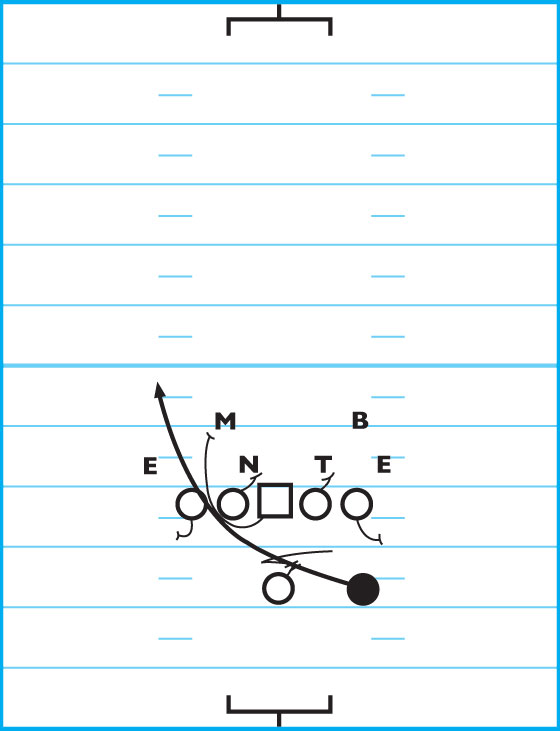
DIAGRAM 13: Stretch From Gun Formation.
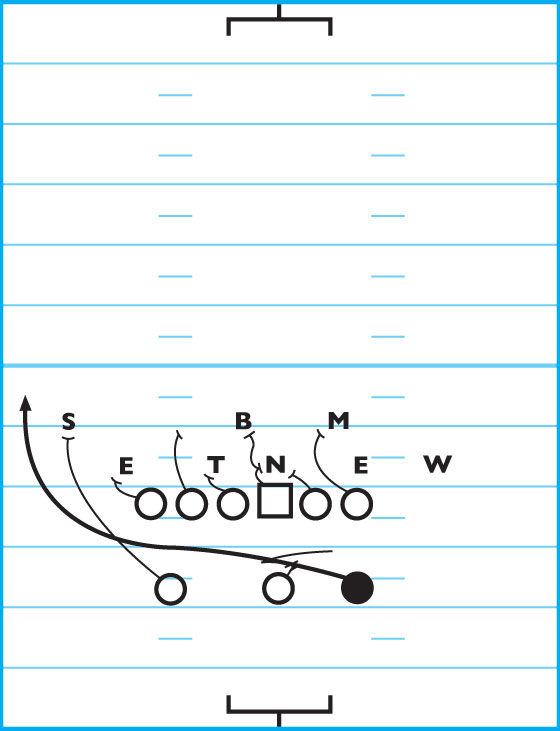
DIAGRAM 14: Iso From Gun.
RBs in the Passing Game
Our offense is predominantly a 1-back attack. Consequently, our RBs must protect the passer, catch the ball as a receiver and pick up yards in the ground game. In most cases, we prefer to make the back accountable for LBs in our pass-protection schemes.
DIAGRAM 15: Check-Flat Route By RB.
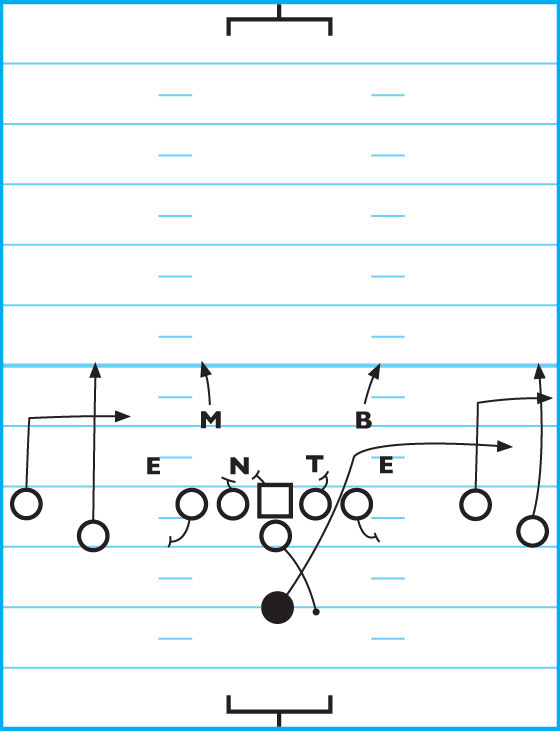
Using backs to key LBs in pass protection allows you to release backs into the pass pattern when designated LBs drop into pass coverage. This is called a check-flat route for the RB.
Throwing to backs out of the backfield can be very effective. Many times these backs will be left unaccounted for by the defensive coverage. Knowing this advantage, we have designed variations in pass-protection schemes to “free release” (no blocking assignment) the back into the designated pattern.
DIAGRAM 16: O-Line Pass Protection, No RB Protection (Free Release).
When you reduce the defense to five defenders in the box, you can automatically check to a 0-protection in which your back has no pass-protection responsibility.
DIAGRAM 17: Free Release RB Vs. 6- Or 7-Man Fronts.
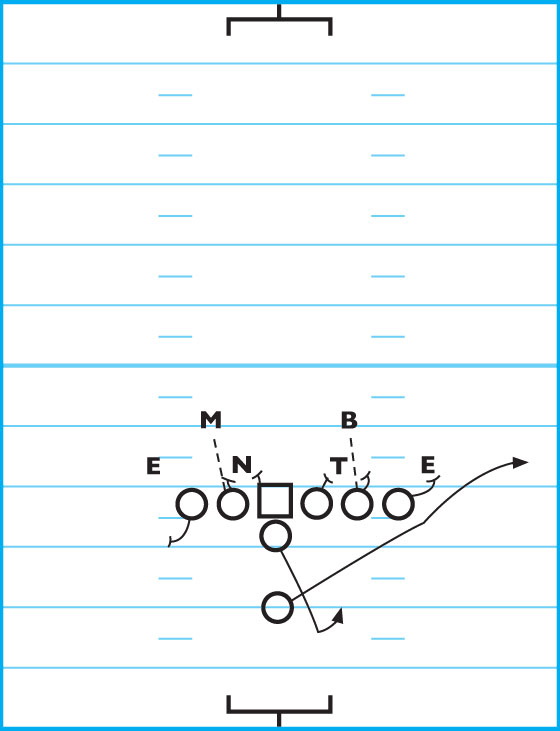
When the defense gives you a 6- or 7-man front to protect, use a second back or tight end to account for the extra defenders. This enables you to free release the back out of the backfield.
RB Size Doesn’t Matter
Though he may not be a powerful workhorse to carry the load in traffic, a smaller RB can easily become the most versatile weapon in your offensive arsenal. Regardless of his physical stature, you must design your offense to take advantage of the back’s strengths. The more diverse his capabilities, the more diverse your offensive package can be.
As much as our team likes to pass, we know that the running game must also be a threat to the defense. Our work in the run game focuses primarily on the Jab, Iso, Zone and Stretch due to the flexibility we have to execute these schemes from a variety of formations.
Proving that you can move the football on the ground forces the defense to commit more effort and resources toward stopping the run. Once your ground game is established, and by utilizing the versatility of your RBs, you can further exploit the defenses by getting him free in the passing game. This leads to your team having a wide-open, unpredictable offensive attack that’s tough to defend.