There is no doubt that conditioning is an important part of a successful program. With this in mind, I would like to present to you some drills and activities that when used at various times during practice, will increase the physical condition and mental toughness, and competitiveness of your team and also improve your program as well. It has been pointed out to me many times over the years that, if you want to see if players are competitive, put them in competitive situations. Some can compete and some can’t! With that in mind, all of the things we did in practice stressed competition, whether it be sprints, drills, scrimmages or any other activity.
Having coached for 42 years, 34 as a head coach, I learned very early on that the more you put players in a competitive situation, both physical and mental, the better players they become. In making sure that we were able to do this, we followed certain principles:
1. Never mismatch players in a drill.
2. Have speed run against speed.
3. Don’t follow the same schedule every day.
4. Have a conditioning drill before important parts of running the offense and defense.
5. Encourage the players to give 100%, 100% of the time and nothing less.
The reasons for these principles are simple. We wanted our players to be able to compete both mentally and physically with confidence, especially in the fourth quarter.
We all know that there is nothing new in football, but we also know that we can vary what we do in more constructive ways to achieve the best results. It is not necessarily important what the drill is, but how you present it that will achieve the best results. With that in mind, let me explain to you our philosophy of practice. We never followed the same order, day by day. Secondly, we would stop practice at various points to have some type of drill or activity that would stress conditioning and, at the same time, be competitive. And last, we always stressed, as a staff, positive results.
The following is a list of drills/activities that we used during the season. This is a combination of skills and conditioning activities that we worked into our practices at anytime that we felt would accomplish one or more of the following:
1. Break the monotony.
2. Create a competitive situation.
3. Help prepare us for the point in games when conditioning could mean the difference between winning and losing.
- 40 yard sprints - 4 Man KO Cover Drill
- 5 – 10 -15 Suicides - Defensive Pursuit Drill
- Bag Drills for Quickness - Run the Lines
- 15 Point Punt Coverage Drill - Power Training
- 3 on 3 Wave Drill - End of Practice FGs
These drills would be done with the team being divided into groups that remain the same all year. Usually there would be four or five groups. As soon as one group started, the second group would get to the starting line. As soon as the last group reached the finish line, the first group would line up and go on command. We would run 10 sprints. We would then go into an activity such as goal line “O” or “D”. By doing this, we always felt that the activity was more game-oriented in that our players were more physically challenged.
Suicides
Suicides would be run much like 40-yard sprints, except the groups would be placed in various places on the field. Everyone in the group would run at the same time and all groups would run using the entire field to separate the groups. We would run two or three suicides with 15 seconds rest between each sprint. One suicide would be five yards and back, then 10 and back, and 15 and back. Again this would be followed by a practice activity.
Bags For Quickness
Bag drills were usually done following stretching at the beginning of practice, but can be done at anytime during or at the end of practice. Keep in mind that the coaches must stress quickness. It is an excellent drill to get the body ready for whatever follows. We used bags three feet wide and 6 in a row for the following drills:
– Hi-step – Hop with 2 lines:
– Shuffle – Hi Hop – Hop – Hi Hop – Shuffle – Hit – Shuffle
– Carioca – Long Stride – Shuffle – Spin – Shuffle
15-Point Coverage Drill
This drill served a dual purpose. One, it enhanced our punt coverage and two, it is an excellent drill for conditioning. All players take part in this drill in groups of 10-11. Use two punt returners lined up on the hash marks as the center snaps the ball to the punter. When the ball is punted, all the players rush downfield. Their rule is to keep the ball in front of them and inside of them. They must down the ball and all players then run in place until the last man gets to the ball. Then they must jog back to the punter, staying off the field. Scoring is as follows. Downing the ball inside the 5 is three points, downing the ball inside the 10 is two points and downing the ball inside the 15 is one point. Out of bounds, into the end zone or outside of the 15 are all zero points. Each group must get 15 points (See Diagram 1).
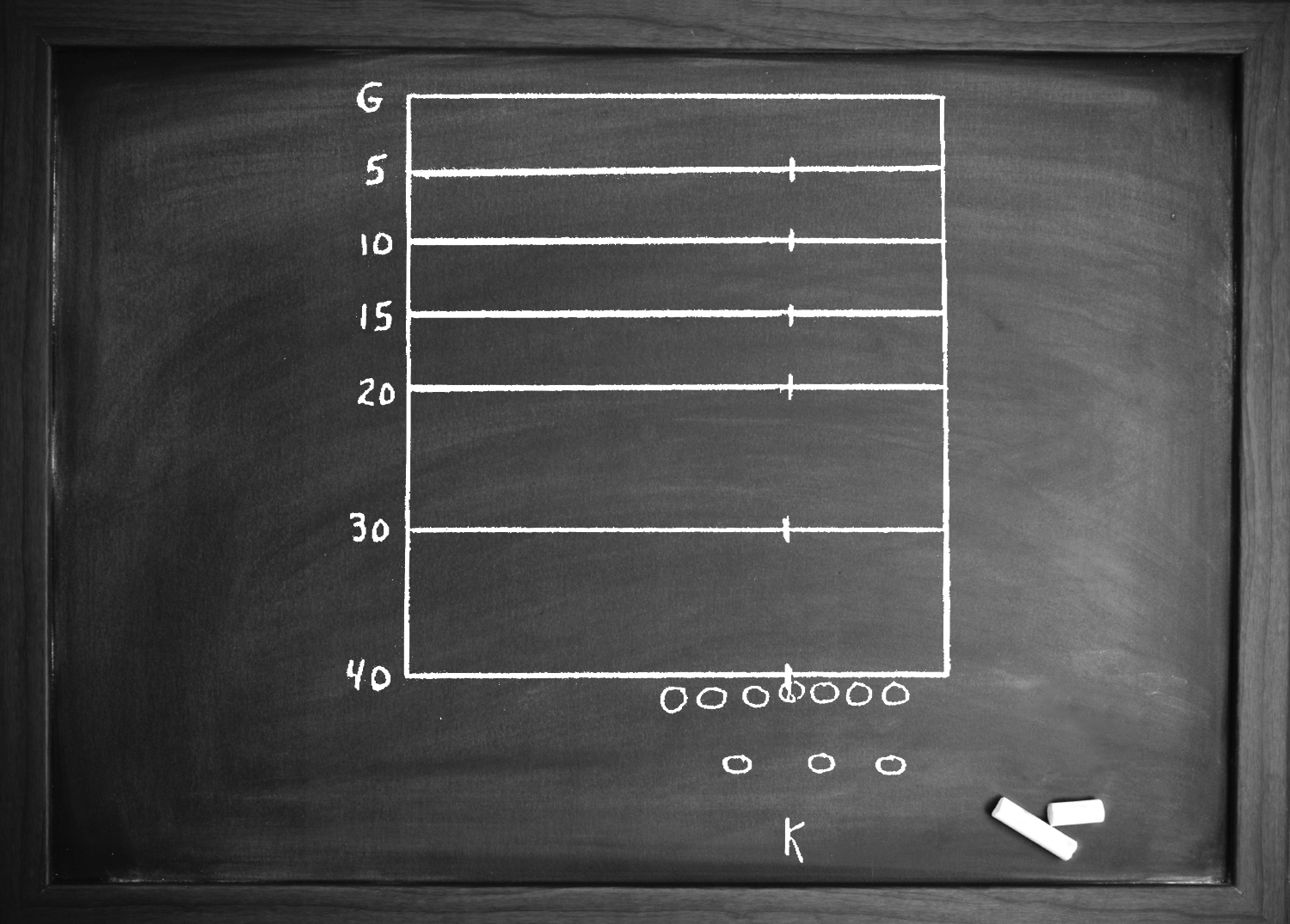
Punter Kicks - Team Covers
1. Must down the ball:
G-5 yard line = 3 points
5-10 yard line = 2 points
10-15 yard line = 1 point
Outside of 15 yard line = 0 point
Into the end zone or out of bounds = 0 points
2. Practice kicking from the left, middle, and the right
3-on-3 Wave Drill
This drill is an excellent drill to find players who can and will do the following:
1. Be physical. 2. Block on the move.
3. Run hard with the ball. 4. Fight off blockers on the run.
5. Tackle on the move.
To make this drill competitive, scores are kept and both groups have turns on both offense and defense. It is important to have the groups aligned to be competitive and not over-matched. Players will rotate from one line to the next until they have been in each position. After every player has been in all three lines on offense, then their group becomes the defense (See Diagram 2).
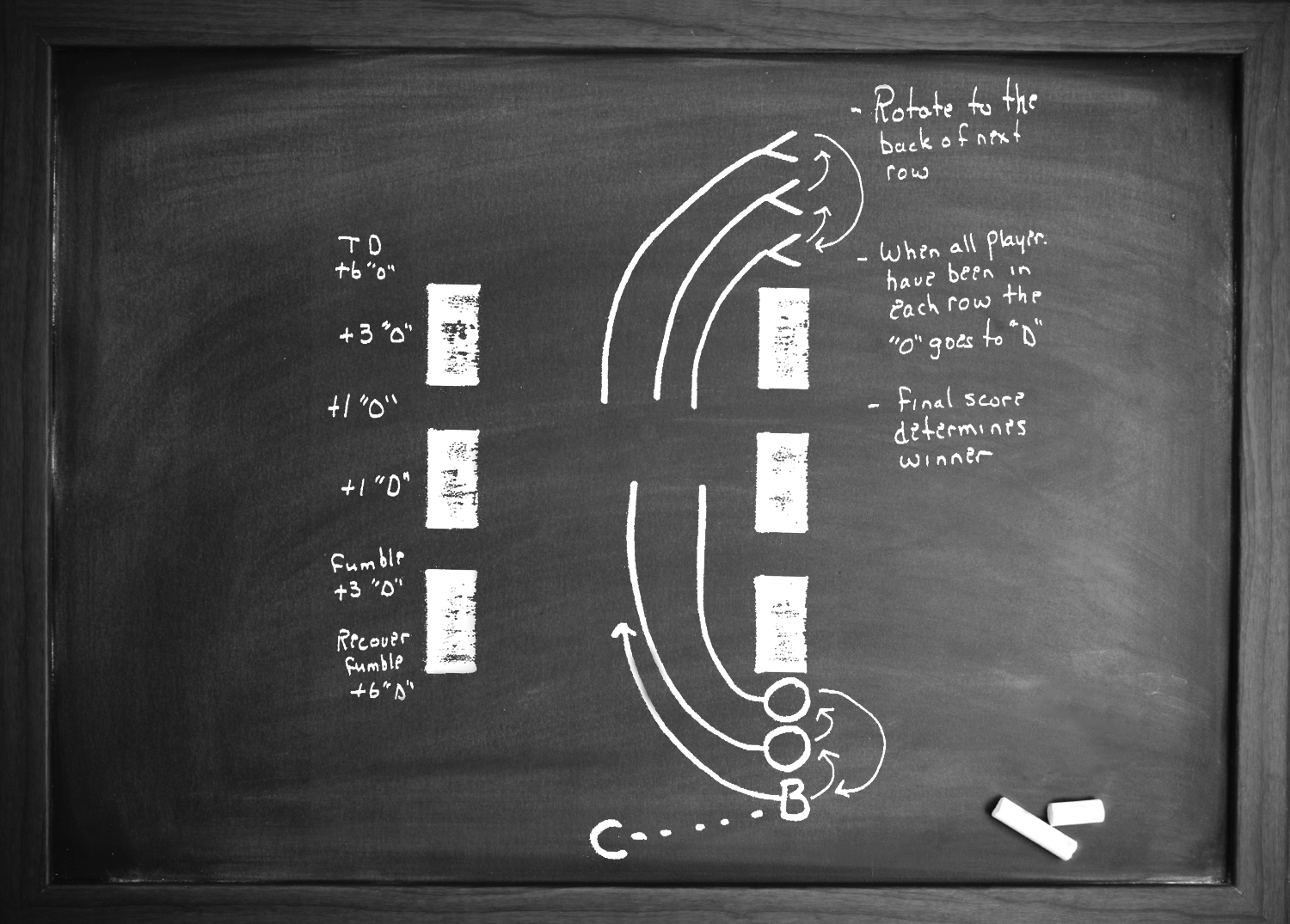
4-Man Cover Drill
This drill is used to enable the coaches to find those players who would perform best on kickoff and punt coverage teams. The principle of this drill is simple: keep the ball in front and inside of you. Knowing that we were looking for players with speed, we would have the slower players involved in another activity during this time. Speed in coverage is important. However, the simple rule of keeping the ball in front of you and inside of you is the most important teaching point. We would use one or two returners and they were free to run, making it challenging for the defenders (See Diagram 3).
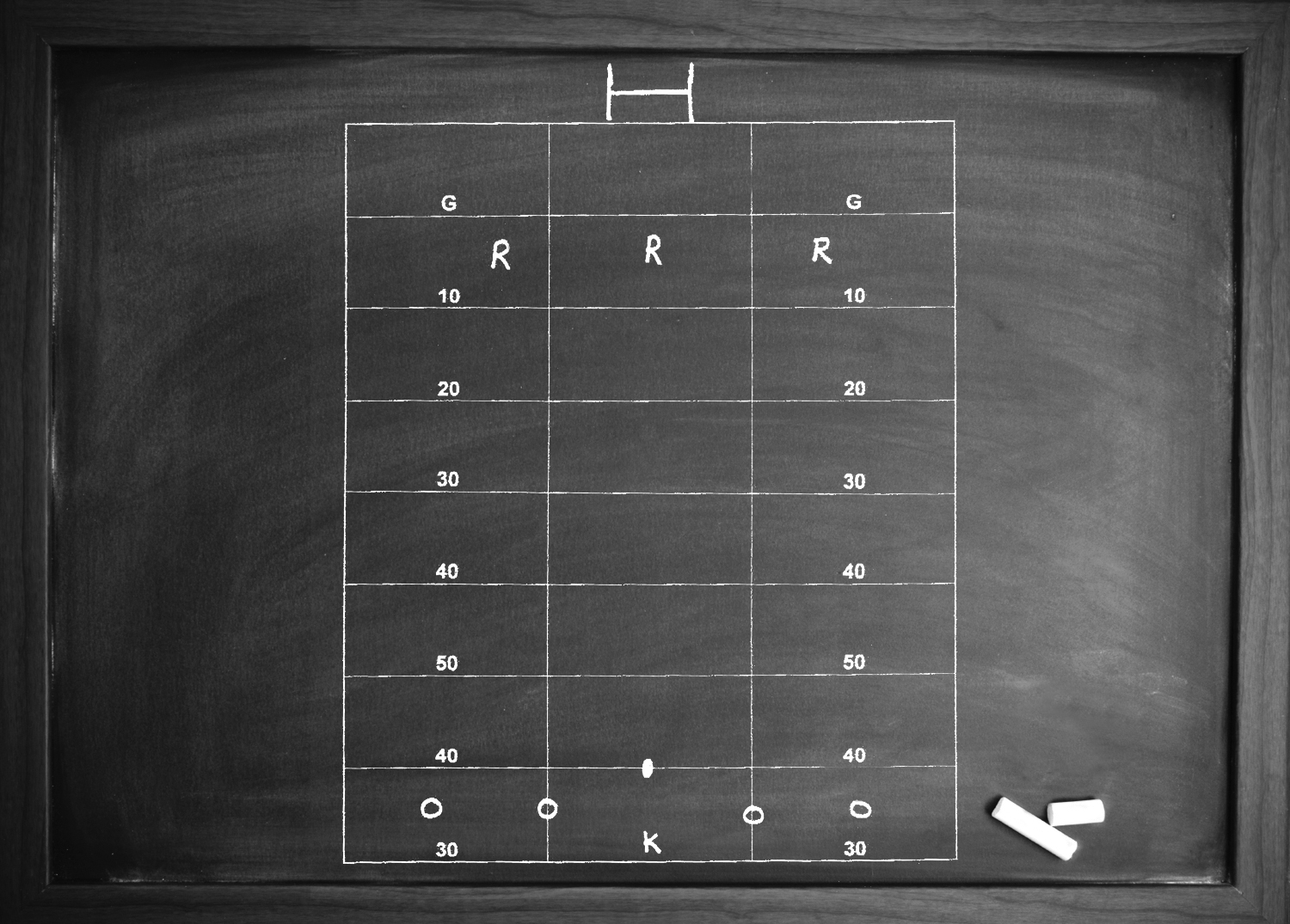
Defensive Pursuit Drill
This is an excellent drill to stress the importance of proper angles for pursuit. It takes very little time and is great for both conditioning and pursuit angles. We would use this for all players regardless of their position. Coaches would be stationed at various points to make sure that players were pursuing at proper angles and were moving at full speed. The play would start from the middle of the field to insure that all players would be pursuing the same distance when going to opposite sides of the field.
Positions are marked with the cone/angle that they will run to. The drill starts with movement of the ball. All players would drop to the ground from their stance, pop up and pursue in the direction of the signal by the coach (See Diagram 4).
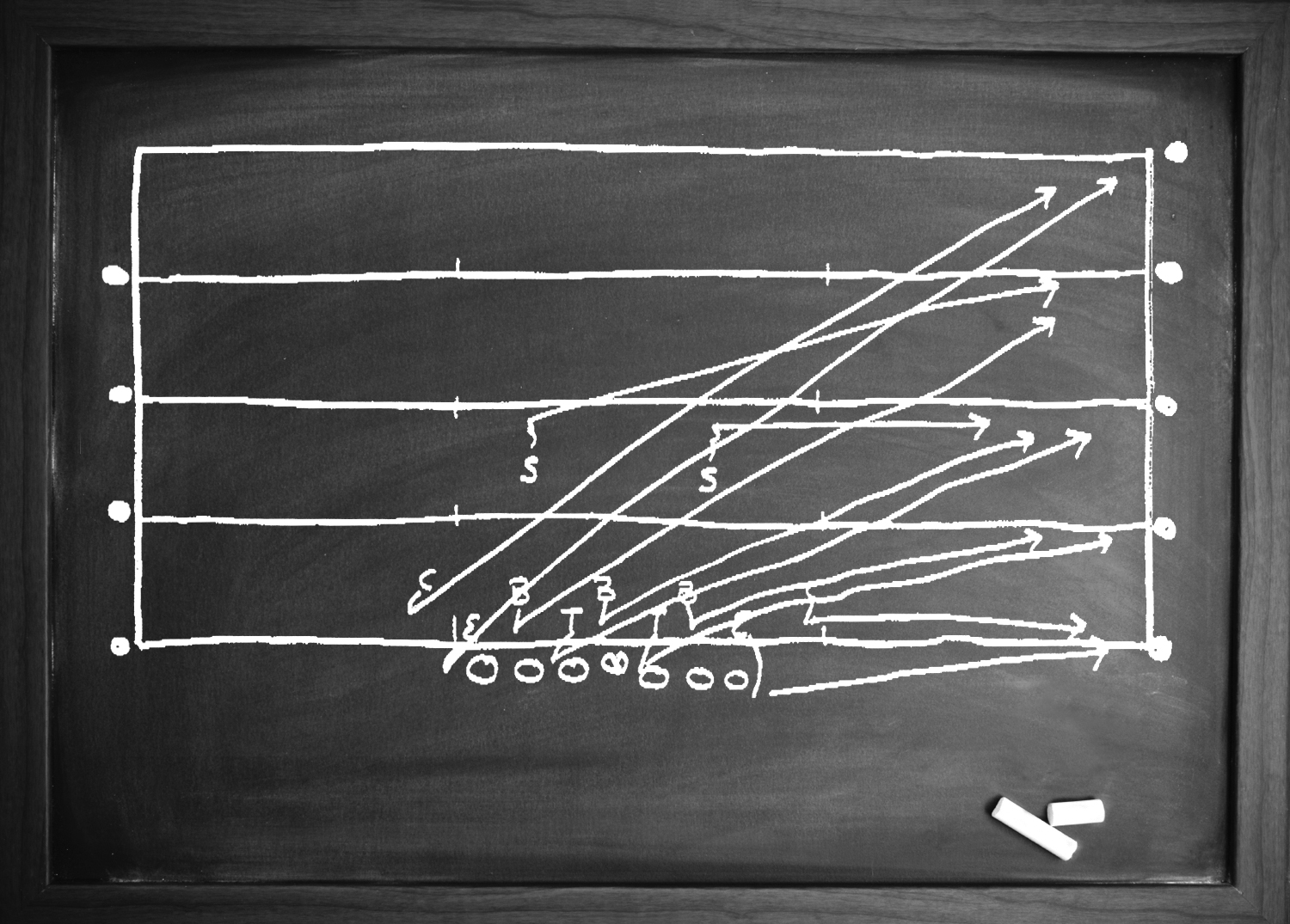
Run the Lines
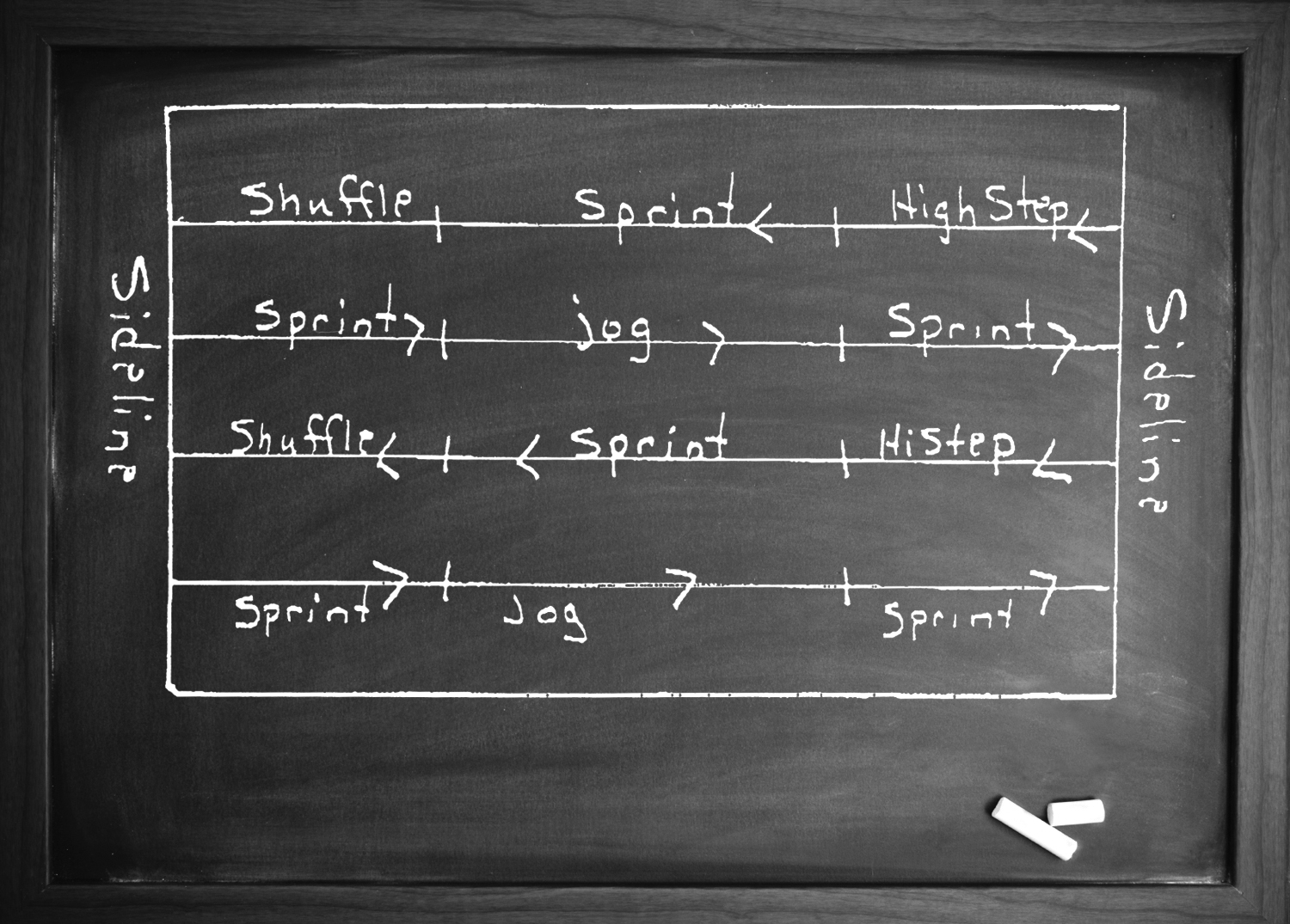
As in other drills, we run speed vs. speed. Players run across the field in the following way - sprint to the hash mark, shuffle to the next hash mark and sprint to the side of the field. Then do the same thing going back across the field at the next 5- yard line. Good form and technique would be stressed on each phase of the activity. The entire activity takes less than five minutes and is then followed up with another part of practice, thus stressing conditioning (See Diagram 5).
Power Training
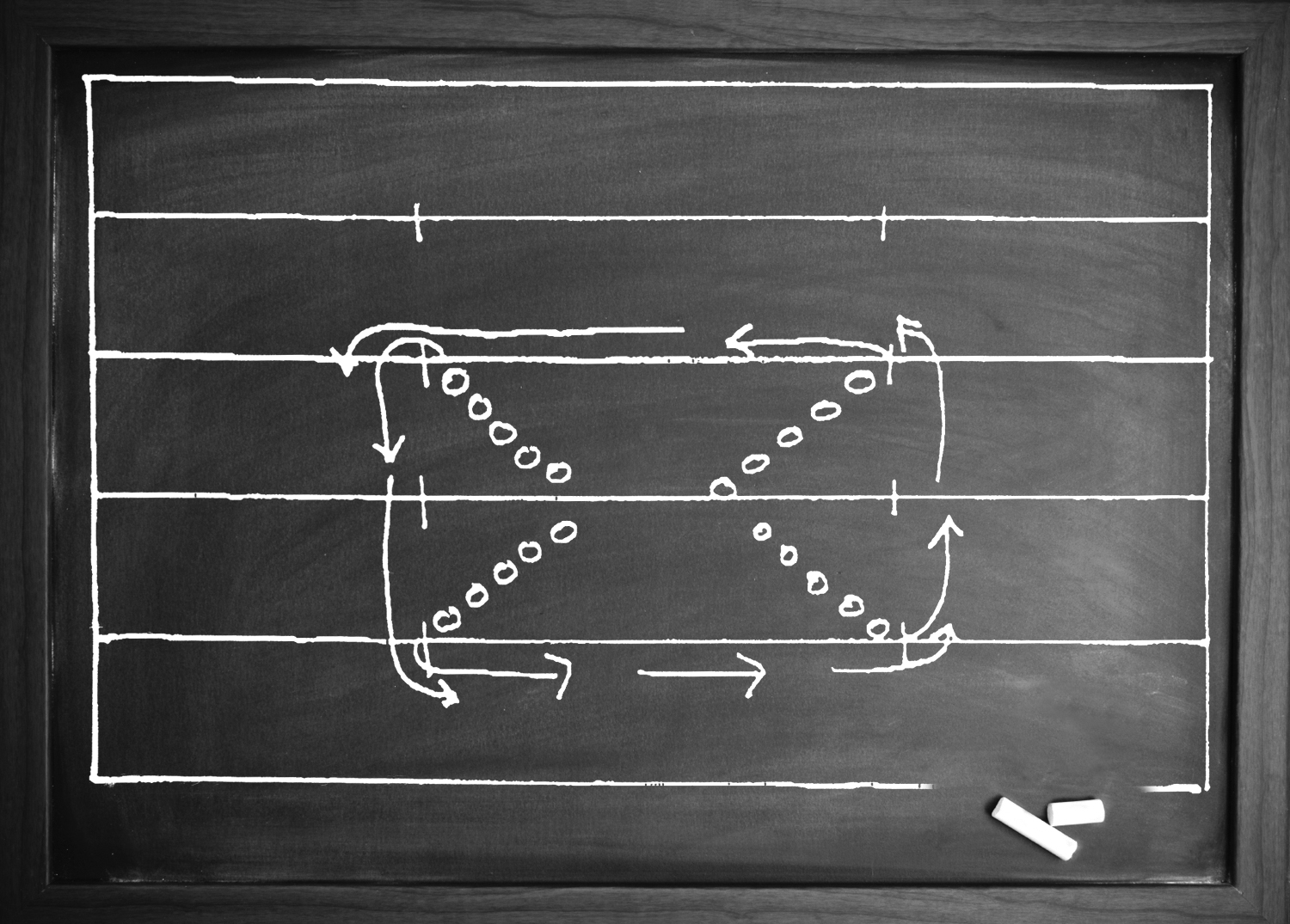
This is a fun activity that is competitive and aids in conditioning. We usually did this near the end of practice to end up with a positive activity. Divide the teams in groups of no more than six while trying to even up the groups in speed. Set the teams in a square 15 yards apart using cones to mark the square. Have one player from each group stand outside the square and, on command, sprint around the square. While he is sprinting, all others in the groups are doing sit ups, push-ups, jumping jacks, up downs, etc. To make it competitive, the winners count out as the other groups do push-ups, etc. (See Diagram 6).
End of Practice Field Goals
This activity is one that we found to be of great value to the entire team. There will be 10 kicks and, for each miss, the entire team will do 10 push ups, 10 sprints, etc. By doing this, the entire team stays involved and will cheer the field goal team to succeed. The FG team has 25 seconds to set up and make the kick. As soon as the kick is made, a coach will toss a ball to another location and again the team must move, set up and get the kick off in 25 seconds. It is important to have each kick from various locations from hash mark to hash mark and all within the range of the kicker. We found that it was a great way to end practice and to have a very competitive situation. We stressed that each and every kick could be a game winner.
The use of these drills and activities over the years proved to be a valuable way for us to condition our team without the feeling of punishment at the end of practice. And when we did have some form of conditioning at the end of practice, we stressed competition, with speed vs. speed.
Practice is two-fold – both game preparation and conditioning for success. It has been our belief that making sure that practice is competitive makes every player better and more competitive and, therefore, the team better as well.
About the Author: Phil Acton was a head coach for 34 years of the 42 years he coached. His overall career record was 237-115. Acton is the recording secretary of the Illinois State Football Coaches Association and supervises both a 7-on-7 program and linemen competition. He can be reached at raiderfox@yahoo.com.