What we want to accomplish is physical and dominating defensive play while maintaining integrity and head safety. We believe by following specific techniques, we can replicate this physical style of play over and over without sustaining injuries. Being head safe does not have to mean giving up a physical mentality. Our inspiration for this style of tackling comes from the sport of rugby where athletes make multiple tackles while playing in multiple games over the course of a weekend. This is made possible by the affects that this style of tackling works while keeping the head out of it. Remember, rugby players do not wear helmets. This means that you can practice specific techniques on tackling without pads.
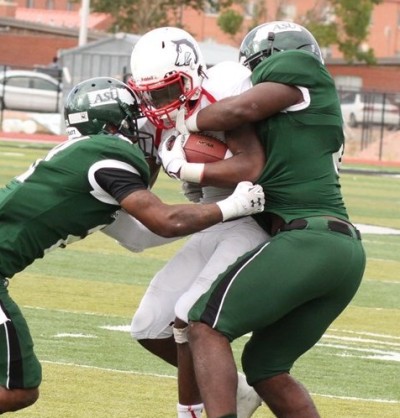
This is an introduction to ‘Grizz Tackling’ which is keeping the head out of hitting and staying aggressive by using shoulder leverage and rugby style tackling techniques. Although different defenses use different force and leverage assignments in pursuit of ball carriers, we use a form of box leverage and forced cutback techniques when attacking running backs when they transition to the open field.
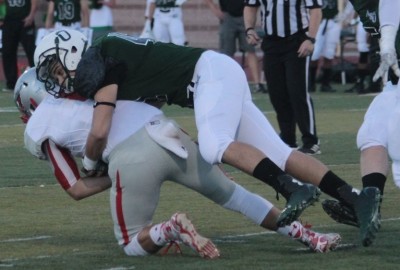
Our ‘sleuth tackle’ technique gives our players confidence that help is on the way and by forcing the leverage of a ball carrier, help will arrive from the inside pursuit. If players worry too much about missing tackles, chances are they are lacking the nerve to make the play anyway. We want a sleuth of 11 Grizzlies on the ball carrier. Missed tackles on the proper leverage side are not a concern when you have 10 more players flying around.
· The approach – We call this ‘seek and destroy.’ Starting from the time the running back has the ball, our players locate the near hip to the inside lower portion of the number. The point of emphasis is eyes through the thighs. This location is our target and we train to run to that target.
* Drill – Run and Gather Drill which includes an alley chase with a cutback. The
technique includes ‘Eyes Through the Thighs.’
· Strike – We call this a ‘Bear Hug.’ Our players utilize a shoulder leverage style
of tackle with the head behind the runner. We strike the thigh with the shoulder and wrap to the back knee where they hug-up and collapse the runner by squeezing their hands to their shoulder through the legs.
· Drill – A Knee, Head Up Drill in which the tackler is on his knees, face up to the
ball carrier. Movement is triggered and then the player does a hug-up. This technique we title, ‘Wrap and Squeeze.’
· Finish – We call a ‘Bear Fight.’ I want our players to be enforcers and pick fights
With the ball carriers – it’s a specific mentality. We have three finishing techniques: Strike, Roll, and Sleuth (Which is a group of bears). Strike is dropping the ball carrier on contact. Roll is when our players lose leverage or can’t initially bring down the ball carrier. The players then wrap and squeeze and roll the ball carrier over their body. Sleuth is when initial contact is made but our players feel the ball carrier slipping away. They will then drive their feet for five yards and stand the runner up while wrapping and squeezing him. They try to dump the runner while the 10 other Grizzlies are running to the ball to complete the tackle.
· Drill – Shoulder Leverage and Run Drill: the shoulder engages with the head
behind the runner. On the whistle both feet are run. The technique is titled, ‘Drive for 5.’
Remember, the idea behind GRIZZ-tackling is to keep the head out of it but still remain as physical and dominating while making tackles. Safety is always a concern when playing a collision sport such as football and this makes practicing it a limited event. Our theory allows us to coach tackling properly without limiting the number of repetitions or days of practicing tackling because we are staying head smart and head safe.
About the Author:
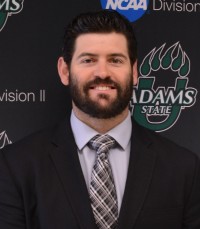
Jay Staggs is now in his second season as defensive coordinator for Adams State University. Previously, he served as a Graduate Assistant for three seasons at his alma mater, UNLV. Staggs played defensive back for the Rebels from 2003-2006. He became a free agent with the Chicago Bears and played three seasons with the Montreal Alouettes before beginning his coaching career.