THE UGLY PUNT was borne from necessity for our team. In one of my first seasons as a head coach, we had no one on the team who could punt the ball more than 25 yards. We searched long and hard for an answer and came up with the “Ugly Punt.”
Gregg Williams, coach at Thomas Edison High School in San Antonio, is the coach who passed the Ugly Punt on to me. Since we made the switch, our net average has been the best in the district (almost 35 yards net average) and only one punt in two years was returned for a TD (a high, spiraling punt to the returner in the city). The only blocked punt came when one of our reserve linemen was shoved backward into the punter’s foot.
The Ugly Punt is simple to practice and doesn’t take up too much teaching time. Meanwhile, a defense is forced to spend precious amounts of practice time preparing for it.
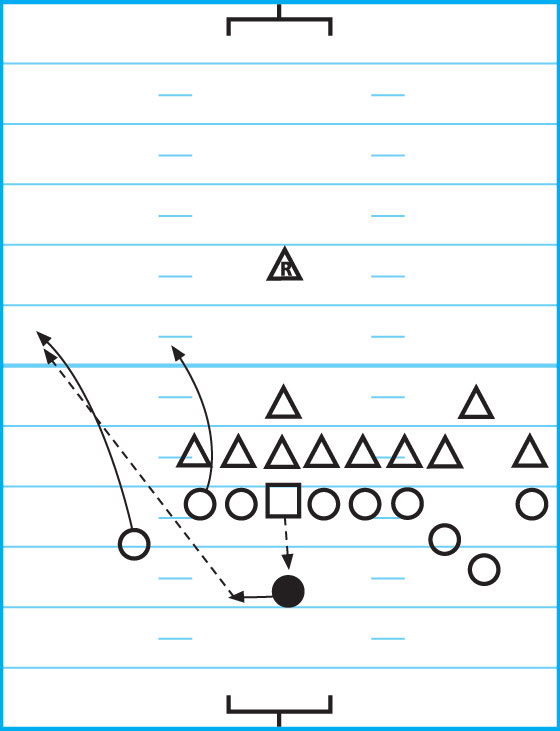
Executing The Ugly Punt
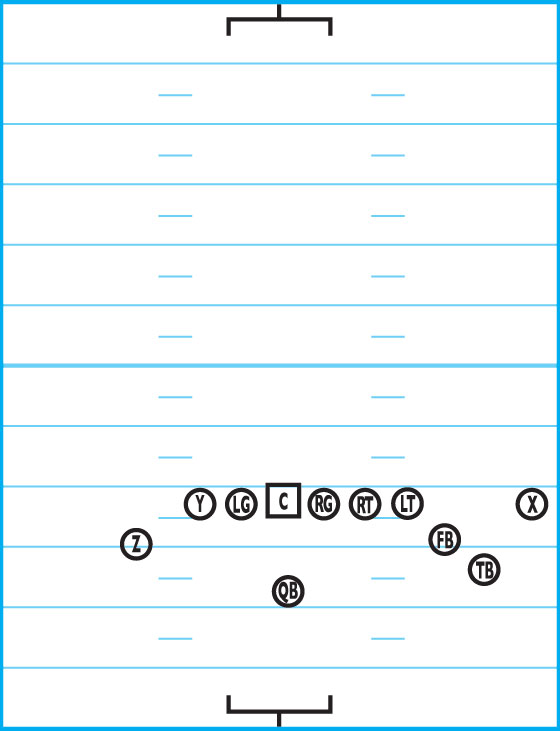
The first key to the Ugly Punt is the formation itself. It includes an unbalanced line with one split end close to the sideline and three wing backs.
DIAGRAM 1: Ugly Punt (Initial Alignment). This formation is so unusual that, opposing teams usually have difficulty just lining up against it. It gives us exactly what we want — an easy alignment to block with little chance of a return and a significant net yardage on the punt.
A key for success is the punt itself and the protection for the punter. For this punt scheme to work, the punter should be able to run, pass and make decisions, as well as execute the kick.
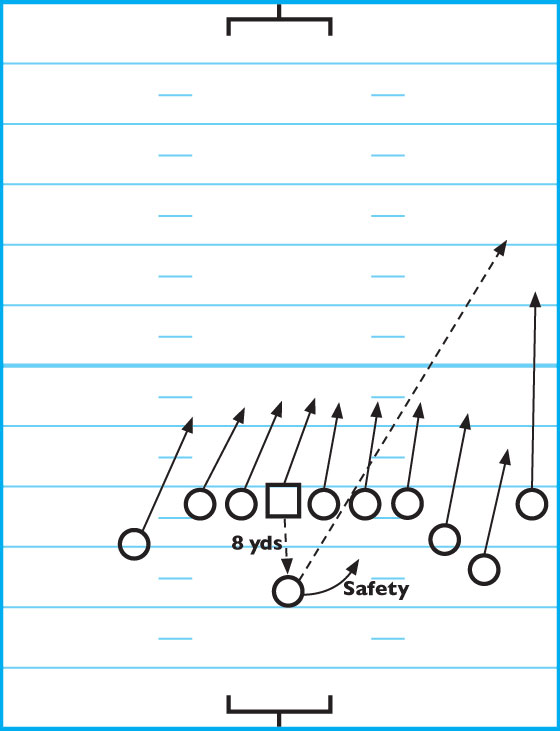
DIAGRAM 2: Punting The Ball. The punter must be set 8 yards deep and must get the ball off quickly. The punt should be a low, end-over-end, rolling ball. The ball should leave the kicker’s foot at a 45-degree angle over the strong-side tackle’s head, hit the ground at 20 to 25 yards from the line of scrimmage and roll another 15 to 20 yards. On turf, these distances are often greater. Our longest punt was 72 yards! You’ll find that almost all good athletes can execute this type of punt. Since the ball hits the ground, there’s no need to allow the receiver to have an opportunity to field it. The split end has the responsibility to see that the returner doesn’t get that chance.
Normally, the returner tries to field the bouncing ball near the sideline and is quickly tackled.
The protection scheme is simple. Our players are instructed to block to their inside gap. We’ve seen other coaches “borrow” the Ugly-Punt idea and use zone-blocking rules. Since the punter aims over the strong-side OT with on the directional punt, zone blocking seems logical.
Alignments, Options
The primary goal of the Ugly Punt is always to punt the ball effectively. But you must be willing to take the things that a defense gives you and force them to play honestly. The punter must read the defensive alignment. Once he reads the defense, the punter may signal one of the options we’re always prepared to run.
DIAGRAM 3: Ugly-Punt Vs. Man-To-Man Alignment. Most teams line up man-to-man, but occasionally some strange schemes pop up. When this occurs, your punter must “read” the adjustment and call for an options.
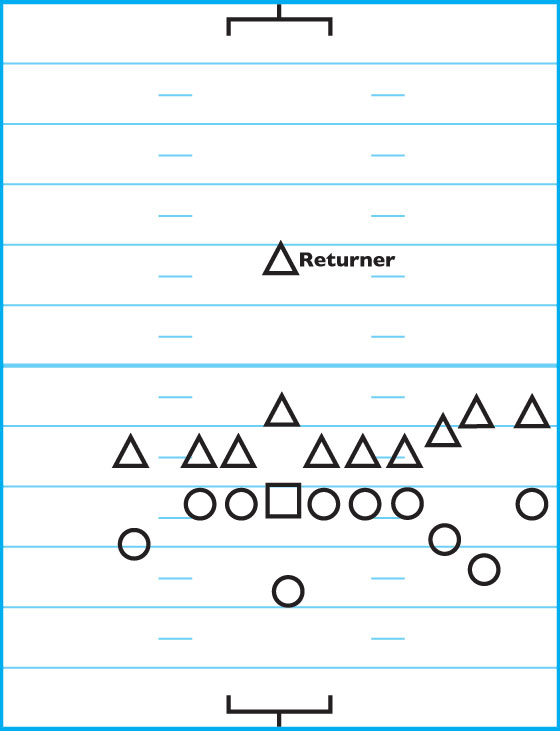
DIAGRAM 4: Ugly-Punt, Option 1: Split End Uncovered. The first mistake most teams make is forgetting to cover the split end (mostly due to the Ugly Punt’s unbalanced set). When this happens, the punter simply throws to the split end and he runs upfield toward the first-down marker.
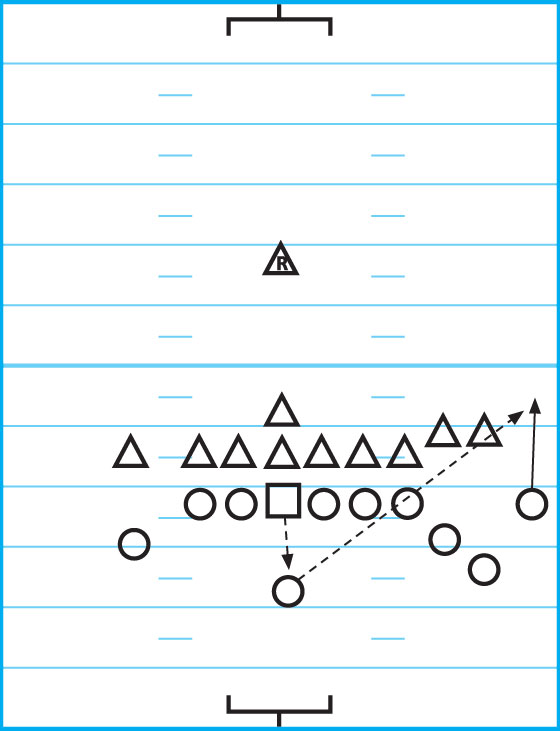
DIAGRAM 5: Ugly-Punt, Option 2: Two Returners Back (A). Another mistake a return team makes against the Ugly Punt is to have two players back to receive the punt. This creates an overload on one side and a shortage of manpower on the other. In this scenario, a punter sweep is extremely effective.
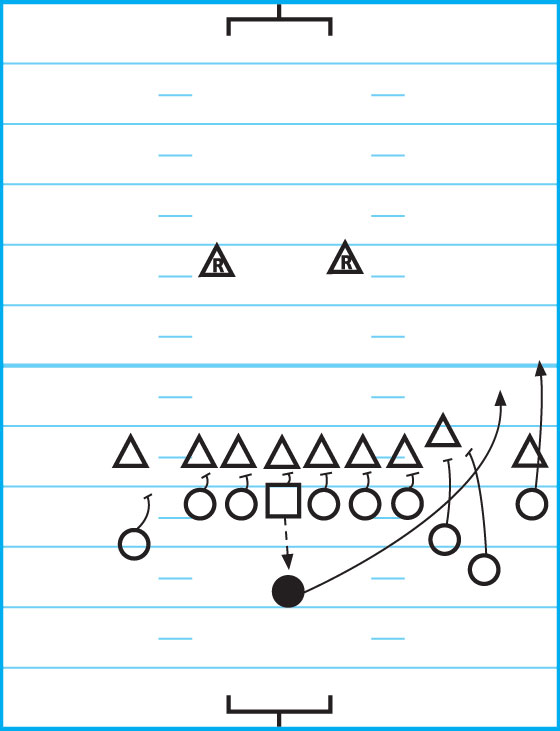
DIAGRAM 6: Ugly-Punt, Option 2: Two Returners Back (B).
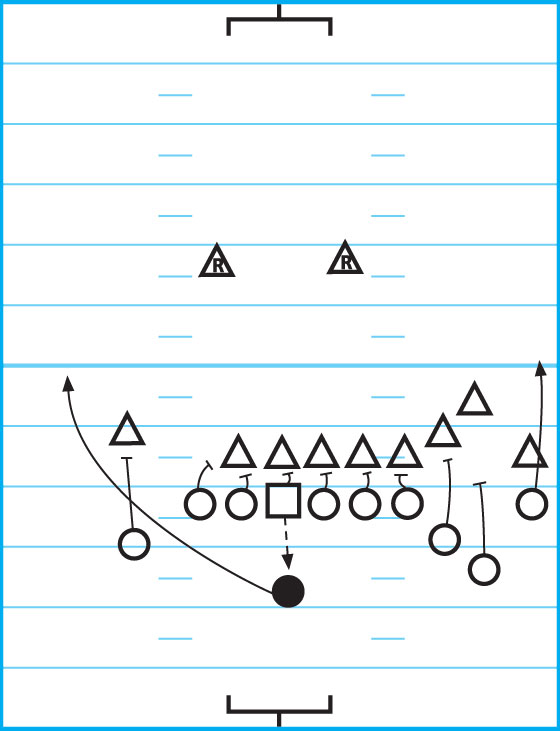
DIAGRAM 7: Ugly-Punt, Option 3: Uncovered Wing Back (A). You’ll often see a punt-return team use an alignment that leaves one of the three wing backs uncovered. When this happens, the uncovered WB becomes a “hot” read for the punter as a receiver.
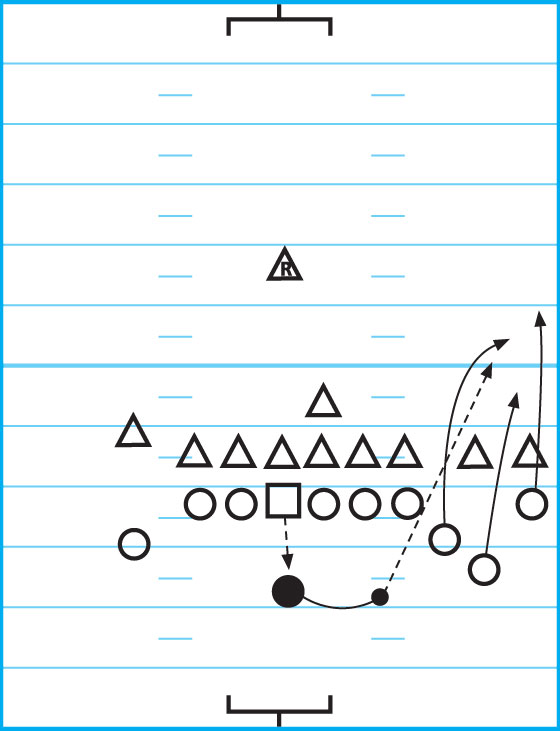
DIAGRAM 8: Ugly-Punt, Option 3: Uncovered Wing Back (B).