MANY COACHES AGREE that the punt is the most important and most dangerous play in football. A long punt return or a blocked punt can completely change a game’s tempo and momentum.
A blocked punt often results in a score, but the impact can be more far-reaching than the points. Statistics show the disastrous effects on a team that has a punt blocked. Dan Read, head coach at the University of Montana, studied games over a 25-year-period and discovered that 90 percent of teams that had a punt blocked lost the game. On the same note, former NFL coach Marv Levy has stated that 80 percent of teams that score on a blocked punt go on to win the game.
There are many benefits to be gained with an aggressive punt rush, and a block isn’t necessary to be successful.
An aggressive mindset by the defense can result in various miscues by the kicking team, including a poor snap (particularly if the center is a primary blocker), the punter altering his mechanics, and holding or illegal procedure penalties. Your return team also benefits if the punt team has to hold its blocks for a longer period of time.
Some teams institute formational changes prior to playing aggressive opponents to protect their punter. When a team opts for compact punt formations instead of spread-type formations, it sacrifices coverage for protection.
Punt-Block Fundamentals
A correct stance is paramount to any called punt block. The rusher should place his hand just the slightest distance in front of the ball and then get into his stance, which is a sprinter’s stance (feet staggered) and the weight on the down hand.
The blocker needs to see the ball to facilitate a great takeoff, which is a key ingredient in every successful blocked punt. The rusher should be ready as soon as the center touches the ball. The center’s pre-snap keys should be studied on film, with attention to his tendencies and mannerisms. For example, if the center rocks or dips just prior to the snap, your defender can time his takeoff. On takeoff, rushers should stay low and make themselves “small” by keeping their shoulders perpendicular to the line of scrimmage.
Lane-rush integrity is also crucial to a successful block. If a rusher deviates from his assigned lane, he might clog up a teammate’s lane (allowing a blocker to handle multiple rushers) or force other rushers out of their lanes.
If an offensive lineman takes on a rusher head-up, the rusher should work to his assigned gap. If a rusher is blocked from the side, he should work away from the technique, dip his nearest shoulder, and rip through and redirect toward his assignment. At the launch point, the rusher should extend his arms and surge ahead, not jump or leave his feet. If a rusher must leave his feet, it should be a “lay out” (flat and parallel to the ground). In anticipation of the contact point, the rusher should bring his hands together in a “V” with his thumbs touching. The rusher should look through the “V” with his eyes on the ball. A middle rusher should work to the side of the punter and work his hands to the ball.
These fundamentals are applicable to any punt block scheme. This article examines two punt blocks, both diagrammed against the common spread punt formation.
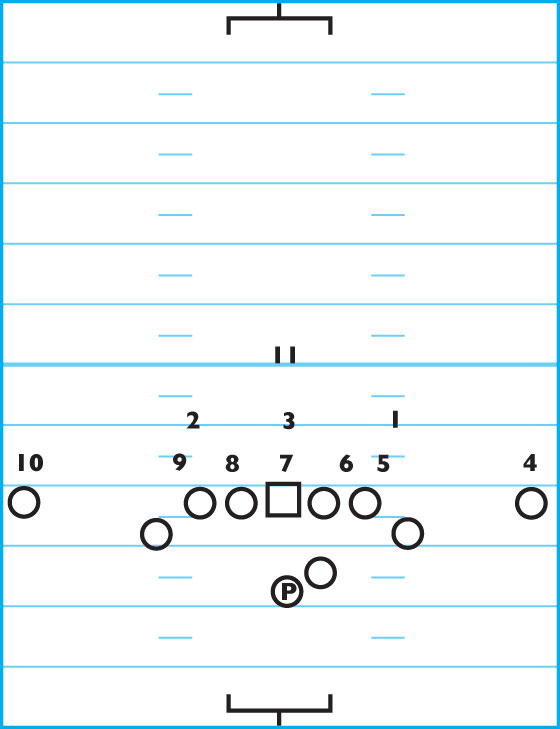
DIAGRAM 1. Punt Return Formation Vs. Spread Offense.
Twist (Lane-Exchange) Block
The following diagram illustrates the player movements and responsibilities on the “Twist Block” punt block call.
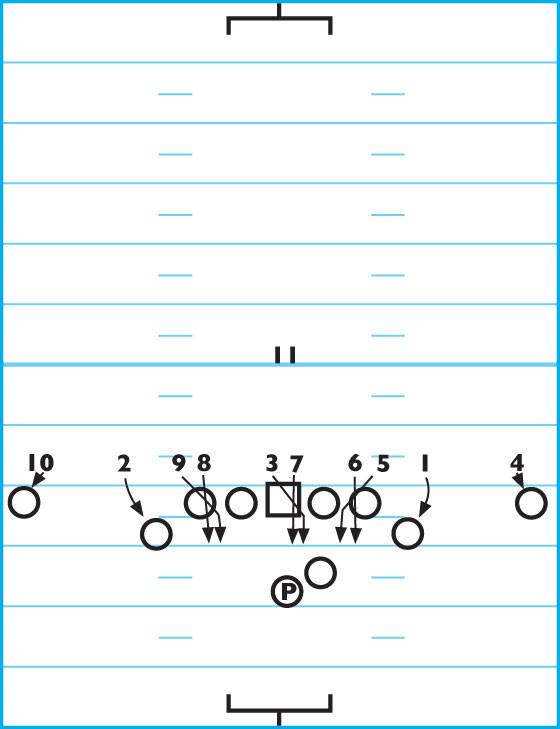
DIAGRAM 2. Twist (Lane-Exchange) Block Movements.
This block employs a 6-man rush. As shown in Diagram 1, rushers are numbered 3, 5, 6, 7, 8 and 9. Numbers 1, 2, 4 and 10 cover eligible receivers, and 11 is the punt returner.
PLAYER 4: Takes the gunner man-to-man. He uses a bump-and-run
technique.
PLAYER 1: Blitz-engages the slot. He draws the slot back and takes him man-to-man.
PLAYER 5: Aligns in C-gap and looks to go under the offensive guard or tackle’s block on the snap. Twists with
Player 6.
PLAYER 6: Aligns on the inside shoulder of the OT and rushes the
B-gap.
PLAYER 7: Aligns on the right shoulder of the center. If blocked by the center, he rips and runs to the launch point. If the center blocks away from him, he attacks the inside shoulder of the personal protector.
PLAYER 3: Aligns on the left shoulder of the center in a linebacker position. If the center blocks away from him, Player 3 tightens his angle and comes off the center’s hip. He then goes under the personal protector’s block. If the center blocks toward him, he comes around and reads the personal protector’s block on Player 7.
PLAYER 8: Aligns on the inside shoulder of the OT and rushes the
B-gap.
PLAYER 9: Aligns in the C-gap and on the snap, looks to go under the OG’s or OT’s block. Twists with
Player 8.
PLAYER 2: Blitz-engages the slot. He draws the slot back and takes him man-to-man.
PLAYER 10: Takes the gunner man-to-man. He uses a bump-and-run
technique.
PLAYER 11: On a short kick, he is instructed to signal for a fair catch.
Sell-The-Farm
The “Sell-The-Farm” block is a do-or-die attempt to block a punt. It features a 10-man rush, and some teams have been known to blitz all 11 players. It’s most often called near the end of a game when time is almost out and the defense knows that a successful punt essentially ends the game. The chance of a fake being used is virtually nonexistent when this punt defense is called. A coach calls for it when the ball must be blocked for the defensive team to have a chance to win.
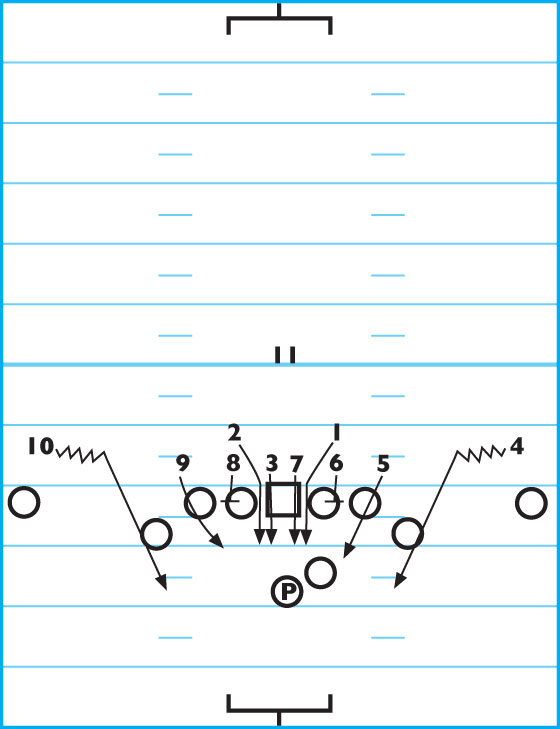
DIAGRAM 3. Sell-The-Farm Block Movements.
PLAYER 4: Rushes through the D-gap. He must pre-align on the gunner and slowly creep to his final jump-off point prior to the snap.
PLAYER 5: Rushes through the C-gap.
PLAYER 6: Aligns on the outside shoulder of the OG. On the snap, he clamps the OG and turn’s his shoulders toward the sidelines, opening up a lane for Player 1.
PLAYER 7: Receives a right or left call from Player 3, and then rushes through the called alignment. He must rush tight to avoid running into Player 1.
PLAYER 3: Calls Player 7’s assignment (right or left) and rushes the opposite gap. He must rush tight to avoid running into Player 2.
PLAYER 8: Aligns on the outside shoulder of the guard. On the snap, he will clamp the guard and turn the guard’s shoulders toward the sidelines, opening up a lane for Player 2.
PLAYER 9: Rushes through the C gap.
PLAYER 10: Rushes through the
D gap.
PLAYER 1: Stacks behind Player 6 and, on the snap, rushes through the gap opened by him. Player 1 must run tight off the guard or he’ll become entangled with Player 7. He should read the personal protector’s block. If the protector tries to block him, he stays outside. If the protector blocks Player 7 or steps away from Player 1, he should fit tight on his outside hip.
PLAYER 2: Stacks behind Player 8 and, on the snap, rushes through the gap opened by Player 8’s burst. Runs tight off the OG to avoid becoming entangled with Player 3.
15 Maxims For Punt Blocking
Regardless of any formation, special teams coaches should teach the following maxims to their punt blockers.
1. Align as close to the ball as possible.
2. Keep your hands out in front of your head.
3. Key the ball and get a great jump on the snap.
4. Stay low on the charge and make yourself small by turning your shoulders toward the ball.
5. Understand that the block point will be out in front of the punter’s original spot. The block point will be 1 yard in front of the punter’s foot.
6. Take the ball off the punter’s foot.
7. Run through the block point. Don’t leave your feet if possible. Avoid running into, or roughing, the punter.
8. Keep your eyes open. Do not turn your head at the point of contact.
9. Yell “Bingo!” if the ball is blocked to alert teammates.
10. Yell “Peter!” if the ball is blocked and crosses the LOS.
11. Scoop and score if the blocked punt doesn’t cross the LOS on fourth down.
12. Fall on a blocked punt that doesn’t cross the line on a quick kick or a third-down punt.
13. Block the punter on a blocked kick to take him out of the return play.
14. If blocked solidly on the rush, stay square and slide outside to check for a fake.
15. If the ball isn’t blocked, execute the fall-back return, usually a middle return, on the kick.