IMPLEMENTING an effective passing game can be problematic as the ability of your quarterback changes from year to year.
A complex passing system can make an opposing defense spend a great deal of practice time trying to stop it. This can be advantageous to both your passing and running games, but it is often difficult to master with a less than spectacular QB.
Diagram 1: The trips-open (4-wide) set can be utilized to give the QB simple reads, allow for a running game and give the defense something else to prepare for during the week. A couple of basic routes with four receivers can be used to make things difficult for defenders and will make them think about adjusting coverages from what they normally practice.
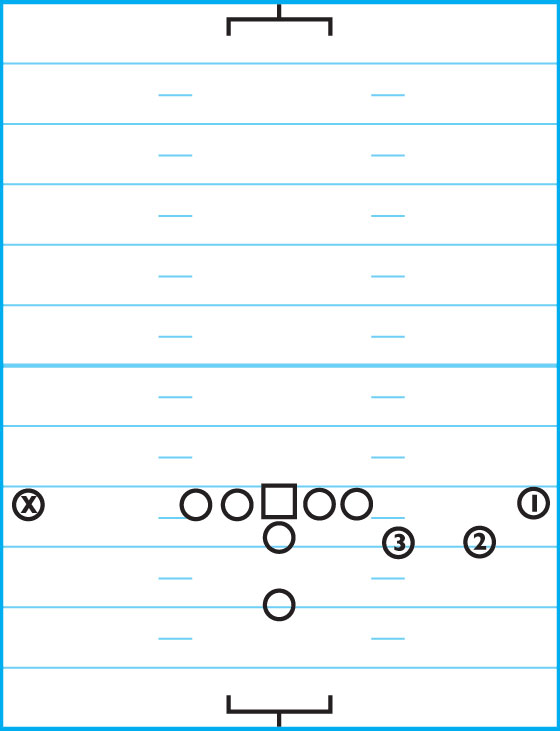
3rd Receiver Is Key
The advantage the trips-open set gives is the alignment of three WRs on one side. The third WR requires the defense to make an alignment adjustment to have all receivers covered. If the defense does not adjust, a throw must be made to the uncovered (usually third) WR on either a swing route or hitch.
Diagram 2: Uncovered Third Receiver.
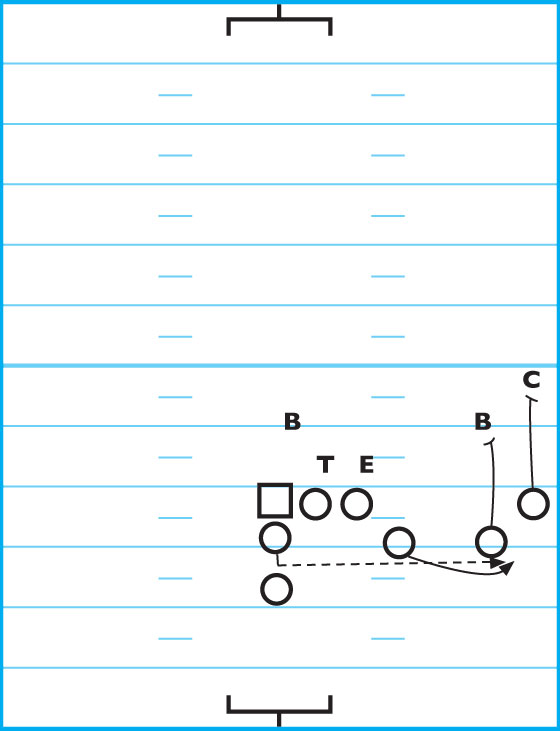
Diagram 3: Uncovered Second Receiver.
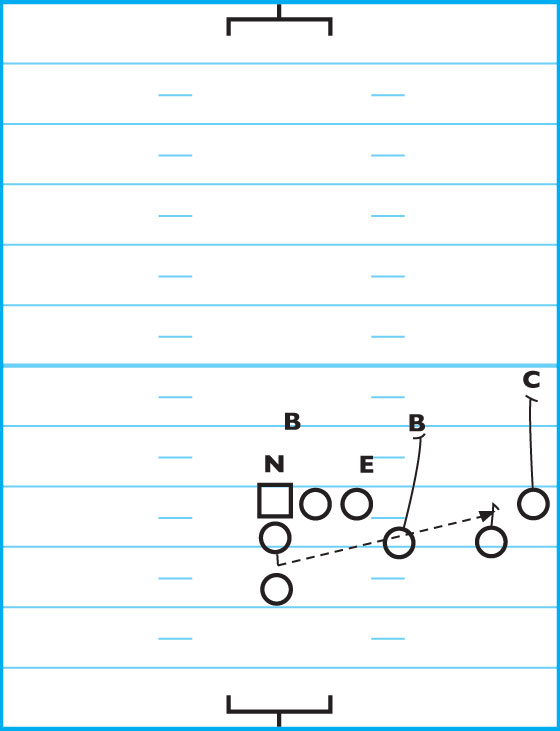
Diagram 4: Third Receiver Seam Route. Once they have adjusted, the third WR runs an inside seam route toward the middle immediately looking at the QB.
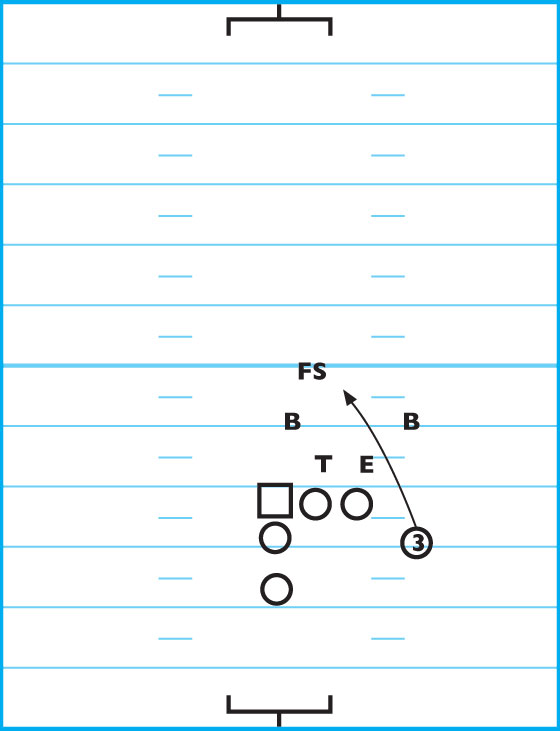
This route serves three purposes:
1. Keeps the safety from flying over the top and helping on your other routes.
2. Holds the inside linebacker from getting to the deep curl on the outside.
3. Can be a hot throw (depending upon your protection choice) against blitzes.
Read The Defense
Now that your inside and deep middle must be honored, the QB can focus his attention to the outside. His decision should be based on the movement of the outside linebacker or the movement of the cornerback, depending upon the routes selected.
Diagram 5: Slant To The Flat. If the OLB steps to cover the flat, throw to the inside route.
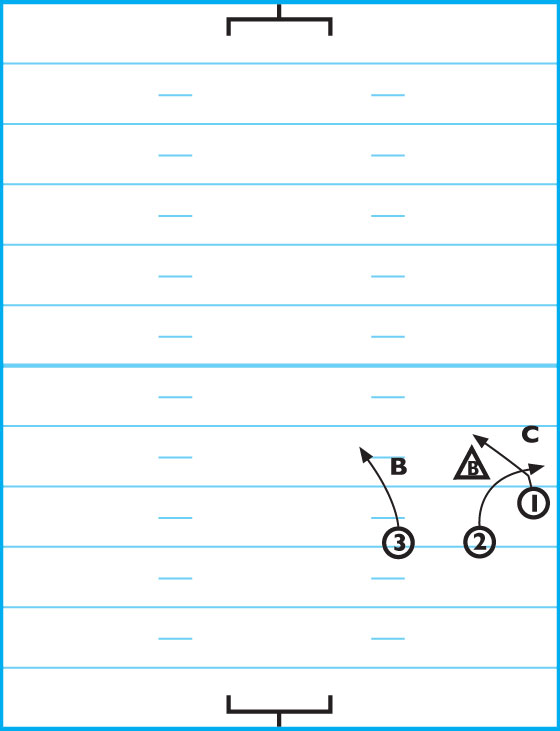
Diagram 6: Stop, Idle.
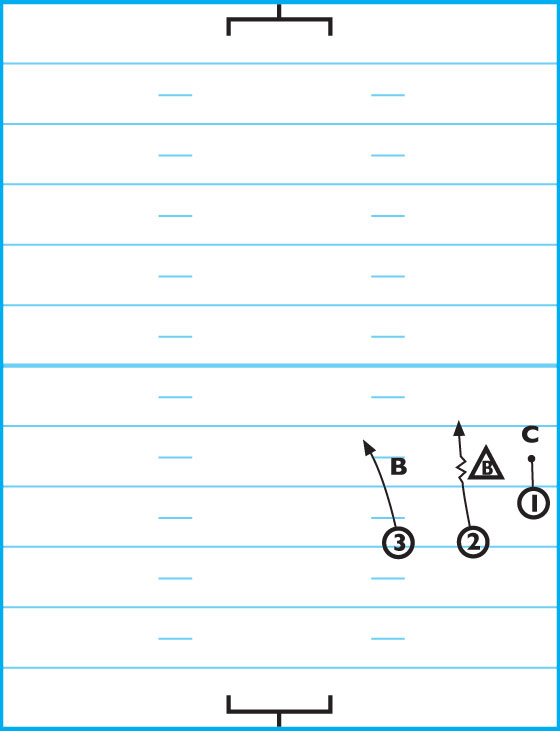
Adjusting For The CB
The following routes are CB reads. If the CB sits, throw over the top.
Diagram 7: Slant Stop, Wheel.
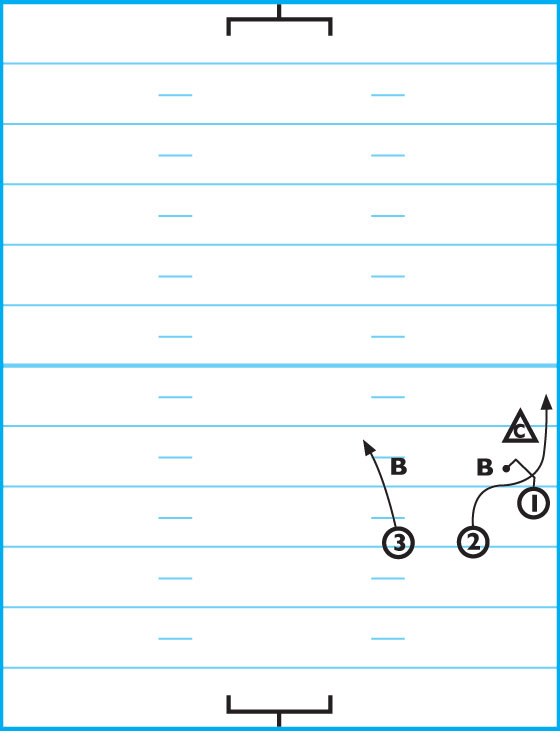
Diagram 8: Hide, Corner.
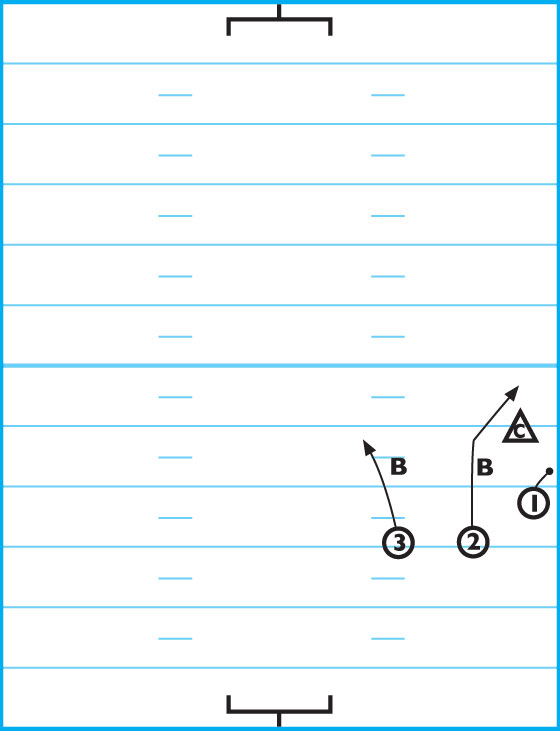
Diagram 9: 3 Vertical. One way to throw deep is to send all three WRs vertical (remember the safety is shielded by the route of the third WR). Does the corner slide toward the second WR or does he stay wide on the first WR?
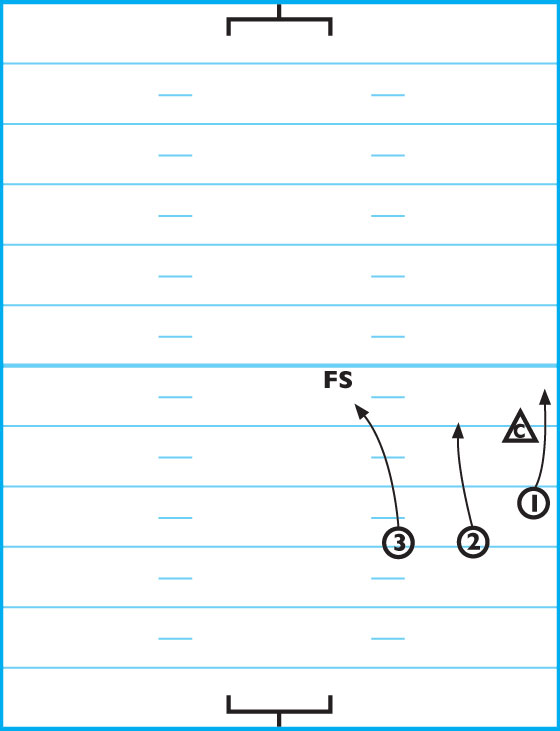
Diagram 10: 3rd WR Goes Flat. The third WR goes to the flat while the first and second go vertical.
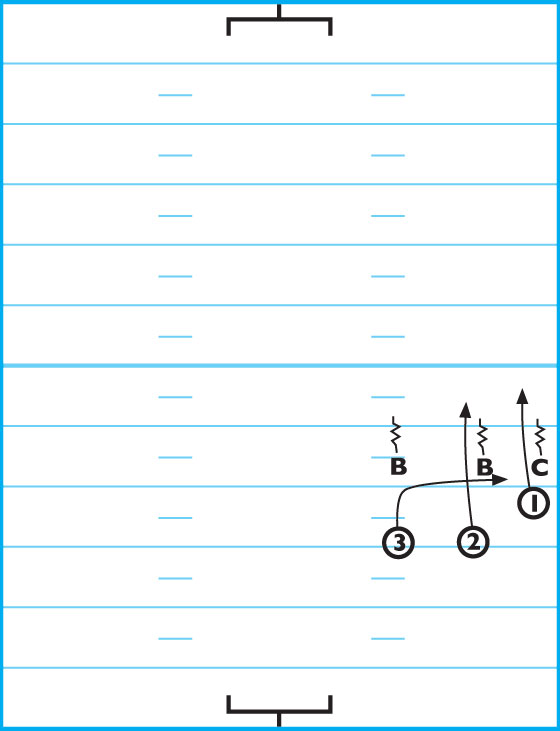
Diagram 11: 1st WR “Walk Off.” The second and third WRs go vertical while the first WR “walks off.”
Backside Is Often Best
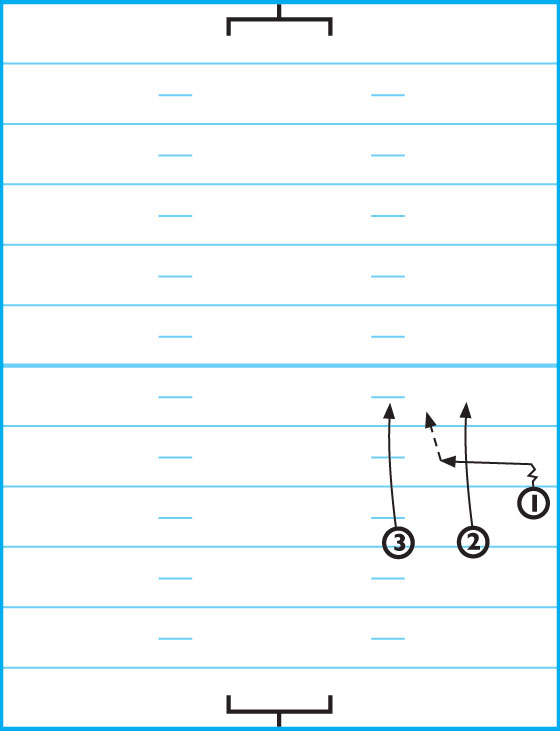
Many times, the best WR will line up on the backside. Call plays that specifically tell the QB to look to the backside. Never ask him to look to both sides (the decision to throw to a side can be made by the QB or the coach after the defense has aligned). The backside WR will run the same route as the first WR to the trips side. Isolated on his one route, the WR can now be the focal point for the QB.
If the defense chooses to leave one coverage person outside to give them another run defender or pass rusher, you now have your best WR matched up one-on-one.
Swinging your tailback to that side can give you another option when the defense plays with two defenders. Many times the defense falls asleep on the weak side with all of their attention drawn to the trips.
Run is Fun
With a little success in the passing game defending both the weak and trip sides, you may have only five defenders in the box (sometimes only four). This will open up all zone/trap plays for a one-back set. A running QB can make the QB draw or the speed option work as well.
That’s one of the advantages of having an athletic QB who can run. It gives your team on more option to keep the defensive off balance.
Diagram 12: QB Draw Vs. 3-Man Front.
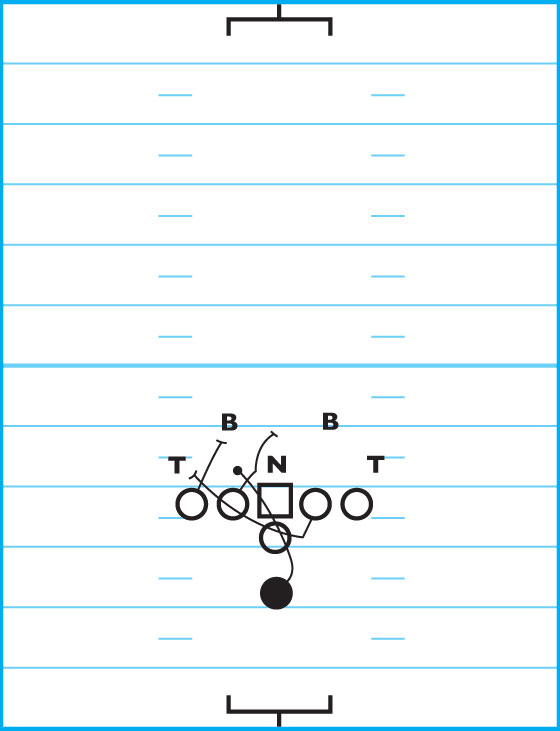
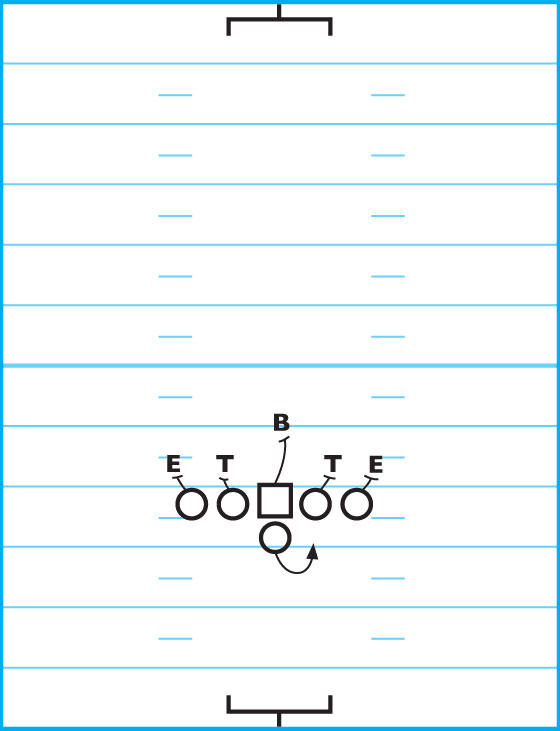
Diagram 13: QB Draw Vs. 4-Man Front.
This simple read system for the average QB can make him look like the leader of a dangerous passing attack. Using this scheme as a part of your offense can open up your running game. Keep the reads simple and let the other team’s defense have all the worries throughout the week about how to prepare.