The use of Olympic lifts in the training of football players is quite common. According to many coaches, these lifts are used mainly to develop explosive power. Once the athlete has attained more explosive power, many believe this power will be transferred to the field.
Can this, however, be substantiated in theory or in practice? Or, is it a myth that has been perpetuated since it was discovered that the Olympic lifts are explosive in nature? To my knowledge, there has never been a study proving that performing Olympic lifts will make the athlete more explosive or improve his performance on the field.
There is no questioning of the fact that performing Olympic lifts can make the athlete more explosive. But there is no proof – in theory or in practice – that this explosive power will transfer to the execution of other skills. In fact, science tells us that it may be just the opposite. The reason for this is that transfer is very specific when it comes to execution of skills. Transfer, as a general factor, is not specific to execution of most sports skills. This has been proven by Russian sports scientists and coaches.
Because transfer of explosive power occurs as a general factor does not mean that it applies to specific execution of a skill. It is quite often the opposite. Only when execution of the skill duplicates what occurs in the execution of a particular Olympic lift – in regard to a neuromuscular pathway, a type of muscular contraction, range of motion in which strength is developed, will there be a positive transfer.
With this definition and explanation in mind, we can say that positive transfer can occur in a jumping action since the forces, direction, etc. generated in most Olympic lifts, especially in the clean portion, are very similar to what occurs in jumping. As a result, basketball and volleyball players may benefit the most by performing Olympic lifts.
However, football players, except for receivers and defensive backs, may find little benefit from practicing the Olympic lifts. They will get more benefit from doing specialized explosive leg exercises and plyometrics that employ the shock method. These exercises can be created in a manner that they duplicate what the athlete does in executing skills on the field. These exercises will have a positive transfer and result in tremendous improvement in performance.
It should also be noted that coaches who use the Olympic lifts in the training of their athletes have not looked closely at the total training of world-class weightlifters - including Russian weightlifters - from whom this practice originated. If they did, they would find that the Russian weightlifters did extensive work on supplementary exercises and plyometrics in addition to doing the lifts.
The three most common Olympic lifts include the snatch, the power clean and the clean and jerk (see photos ).
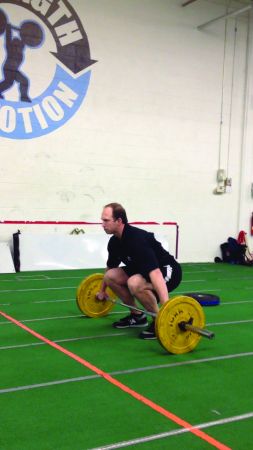
Olympic Snatch 1.
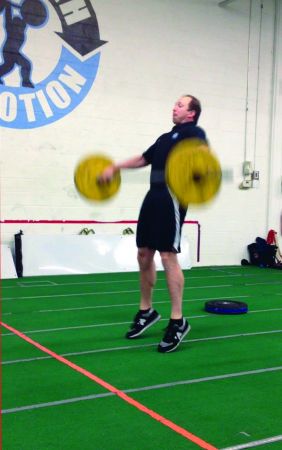
Olympic Snatch 2.
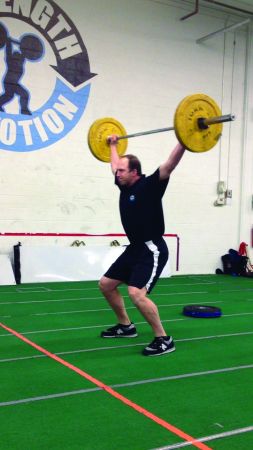
Olympic Snatch 3.
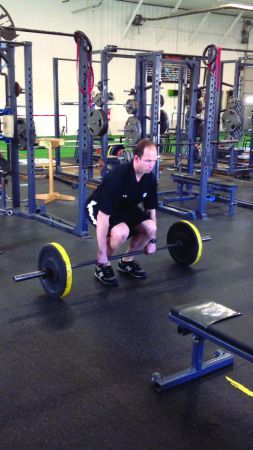
Olympic Jerk 1.
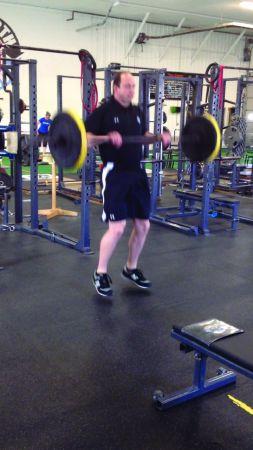
Olympic Jerk 2.
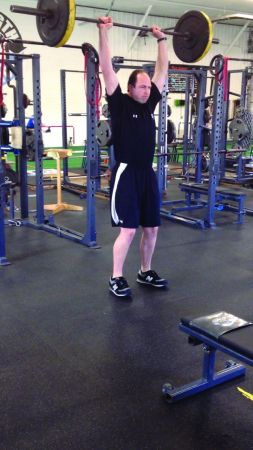
Olympic Jerk 3.
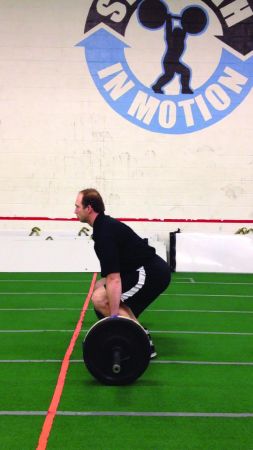
Olympic Power Clean 1.
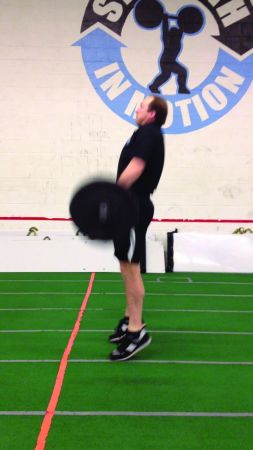
Olympic Power Clean 2.
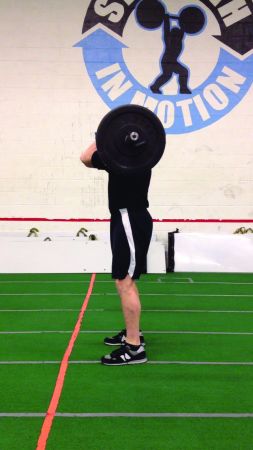
Olympic Power Clean 3.
To get maximum benefit from training, it may be more advantageous to look at supplementary exercises that duplicate specific aspects of skill execution. This will produce greater improvement than only relying on the development of explosive power.
About the author: Dr. Michael Yessis is the president of Sports Training, Inc., a diverse sports and fitness company. The author of 16 books, Dr. Yessis has been a training and technique consultant to several Olympic and professional sports teams. He can be reached at his web site – www.doctoryessis.com or his email address – dryessis@doctoryessis.com.