THE FIRST INSTALLMENT in this series (see June/July 2004 issue) covered the 20 Series, the most productive series from a “big-play perspective” in our program.
When formulating our offensive game plan each week, our staff always looks at how the tailback series (the “40”) can be established and used against anticipated defensive fronts. We consider this series to be the “bread and butter” of our offensive attacks.
When it comes to the single-wing, our philosophy is to put certain defensive personnel in a conflict mode. How these defensive players react determines our areas of attack. The 40 Series creates this type of conflict among opponents’ defenses that we can exploit on the field.
40 Series basics
Ten plays make up the 40 TB Series. From the left to right, these include 421, 423, 423 Wham, 45 Decoy, 47 Power, 48, 48 Power, 49 and 49 Option.
In our play-calling sequence, the first number designates the series and the player that receives the snap. The second number is the area of attack. When a call has three digits, the second number refers to the ball carrier and the third number is the attack area.
DIAGRAM 1: Numbering System (Unbalanced Single Wing).
When running the 40 series, the TB aligns at 4-1/2 yards from the front tip of the football, with his left foot aligned over the football. The fullback is also 4.5 yards deep and aligned over the outside leg of the inside tackle. 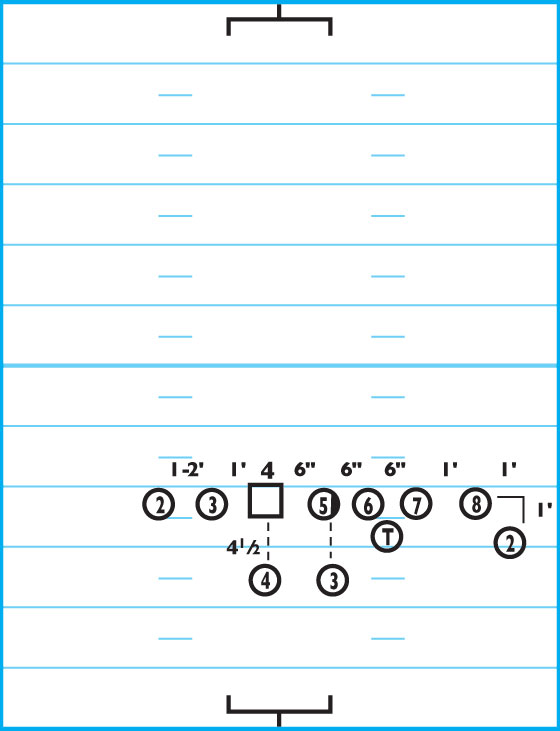
Putting Defenses In Conflict
DIAGRAM 2: 49 Vs. 50 Defense.
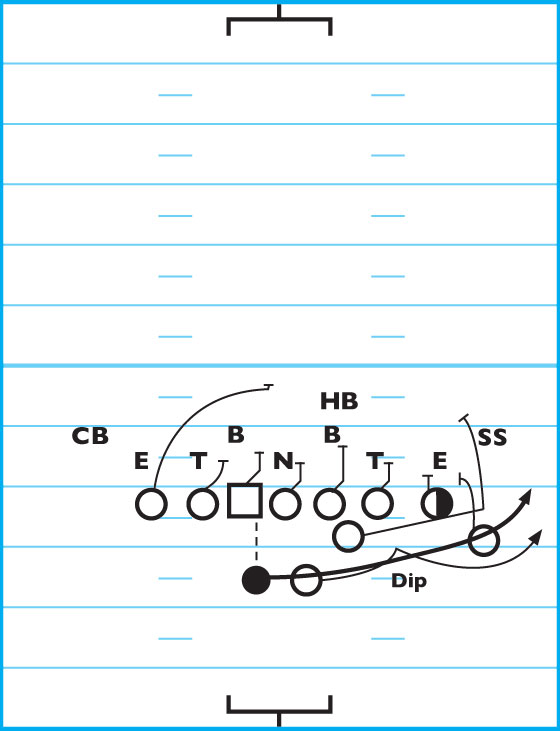
DIAGRAM 3: 48 Vs. 50 Defense.
The key when running both the 49 and 48 is for the blocking back and FB to approach the strong safety shoulder-to-shoulder. The SS should not be able to determine whether the FB is going to seal him inside or if the blocking back will kick him to the outside.
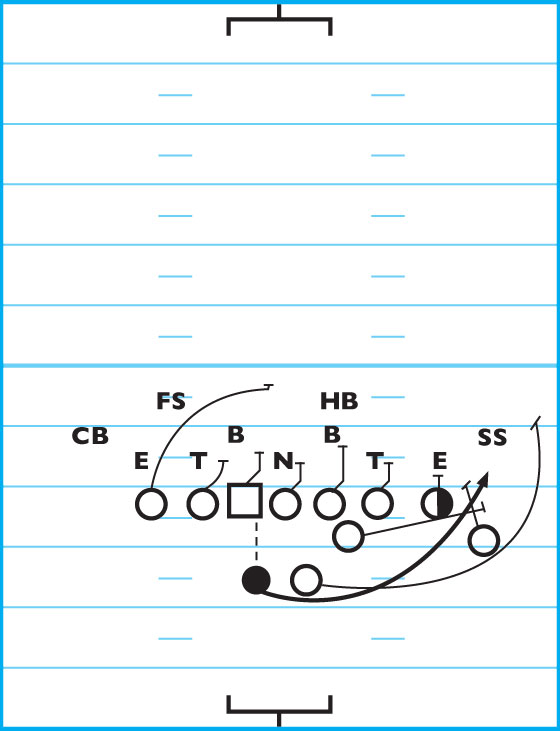
If the SS has been taught to never allow a ball carrier to get outside, he will give up the 8-hole. If he squeezes down on the 8-hole, the FB is in an easy position to seal him inside.
DIAGRAM 4: 47 Power Vs. 50 Defense. The defensive end can be placed in the same alignment predicament as the SS. Whenever the point of attack has been the 9- or 8-area, the DE will have seen a strong dose of double-teaming from the 8-end and wingback. After this has occurred, we move our attack point inside the DE with the 47
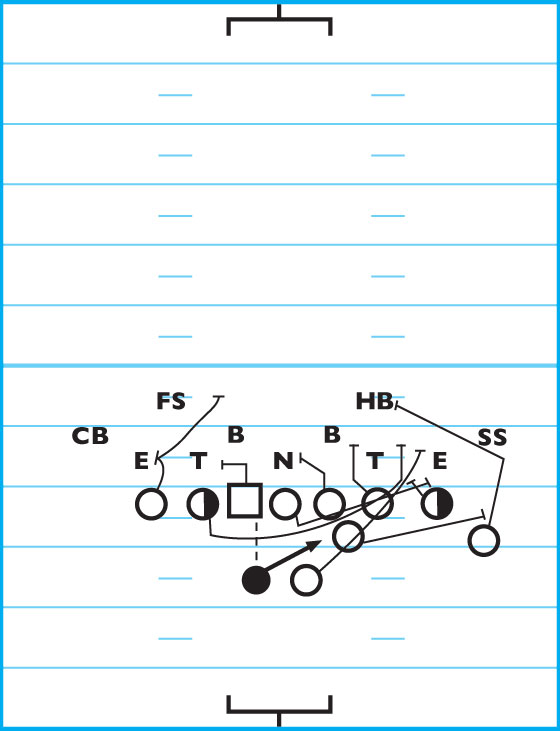
Power Play.
In this blocking scheme, the DE sees the blocking back crossing to his outside just as he did on 49 and 48, thus influencing the DE’s reaction to the outside.
This 47 play can be run with numerous variation and line calls for the 7-hole to counter the defense.
DIAGRAM 5: 47 Vs. 50 Defense. In this case, the DE sees the blocking back and the FB both running across him to the outside, often giving up the 7-hole.
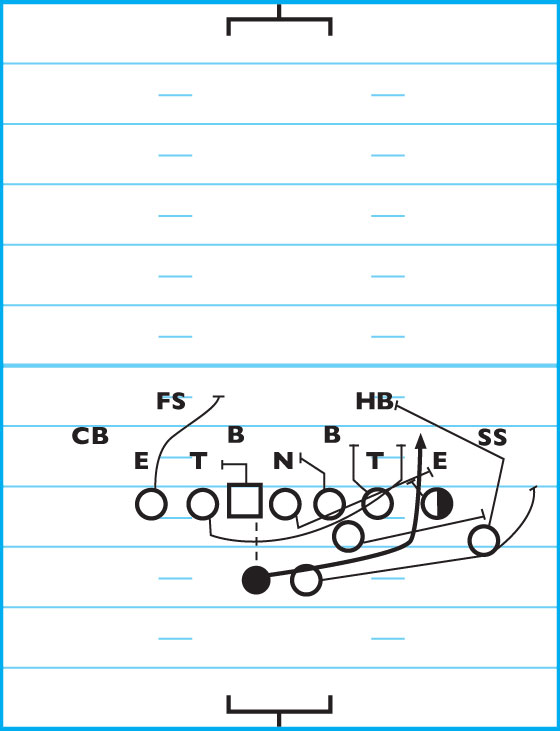
DIAGRAM 6: 47 Power Solid Vs. 50 Defense. The “Solid” call tells the weak-side guard to stay at home and not lead up through the hole. This call is made when a defender is on this guard and the center cannot handle picking up the guard’s defender.
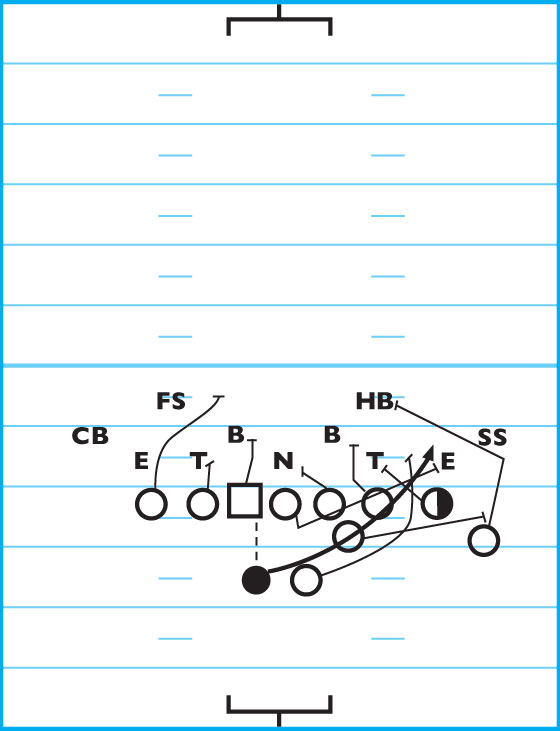
DIAGRAM 7: 45 Decoy Vs. 50 Front. Once the linebackers begin to read the full flow, it is time to attack them with the 45 Decoy. This puts the LBs in a conflict situation, as they see:
- a TB going hard to the strong side.
- a WB coming back toward the weak side.
- the blocking back going either to the strong or weak side.
The WB crosses in front of the TB, ideally just behind the inside tackle. The WB handles the fake — the TB never gets the ball near the WB.
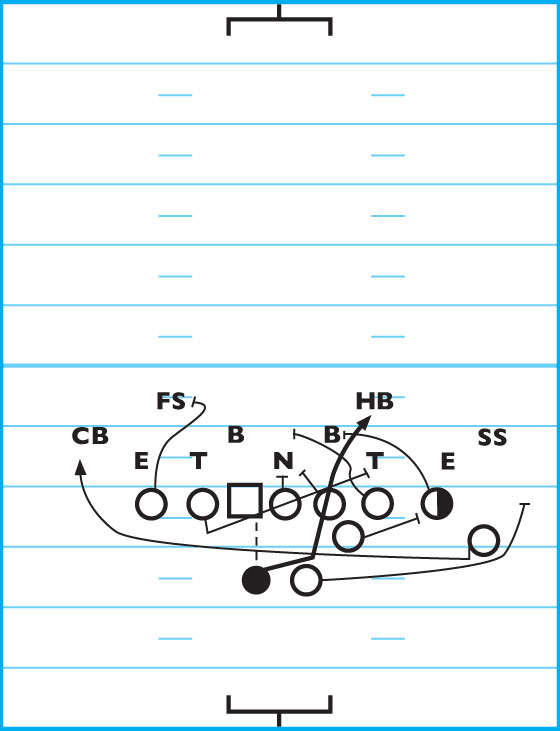
DIAGRAM 8: 45 Decoy Opposite Vs. 50 Defense. At times, we bring the blocking back to the weak side to block the first defender past the center and allow the 8-end to block solid.
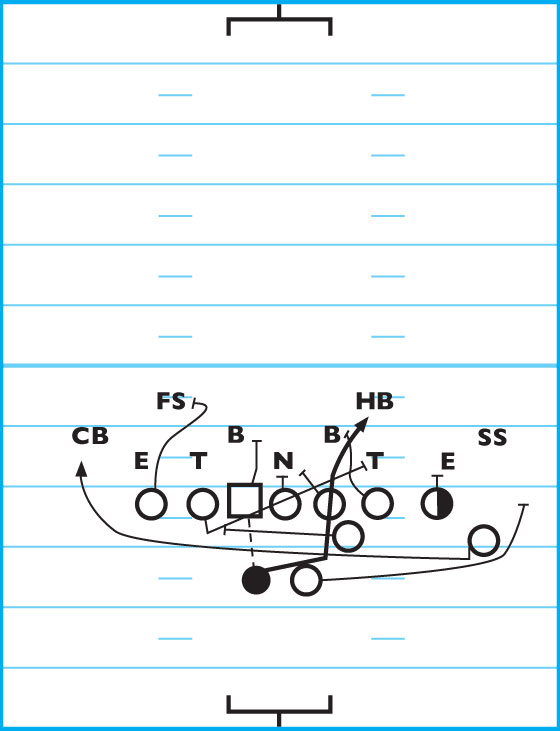
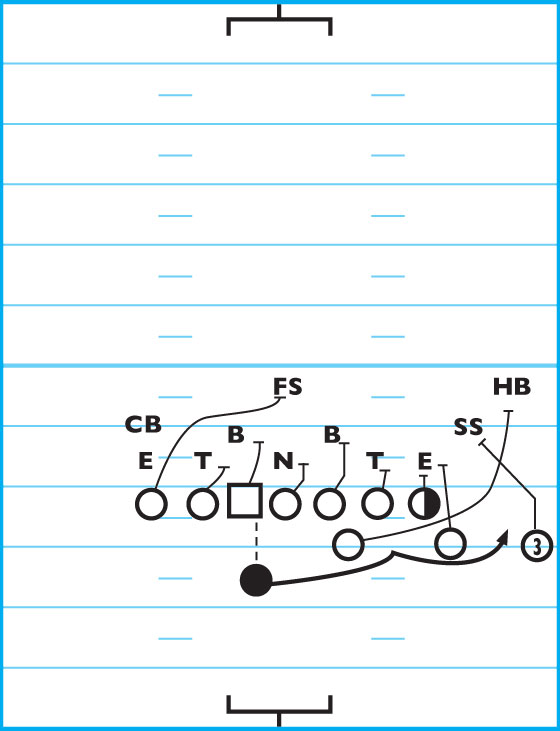
DIAGRAM 9: 423 Vs. 50 Front. After the LBs are confused and no longer trust their keys, it is time to slip the ball to the WB who is attacking the weak side. The first weak-side aiming point is off-tackle.
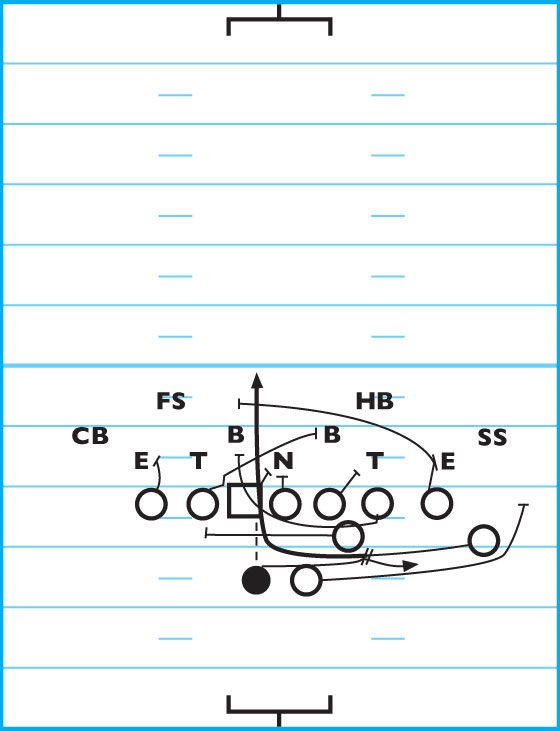
DIAGRAM 10: 423 Wham Vs. 50 Front. A variation of the 423 play is the 423 Wham. Adding the term “Wham” to the play call tells the FB to step backward and then go through the hole as an additional lead blocker.
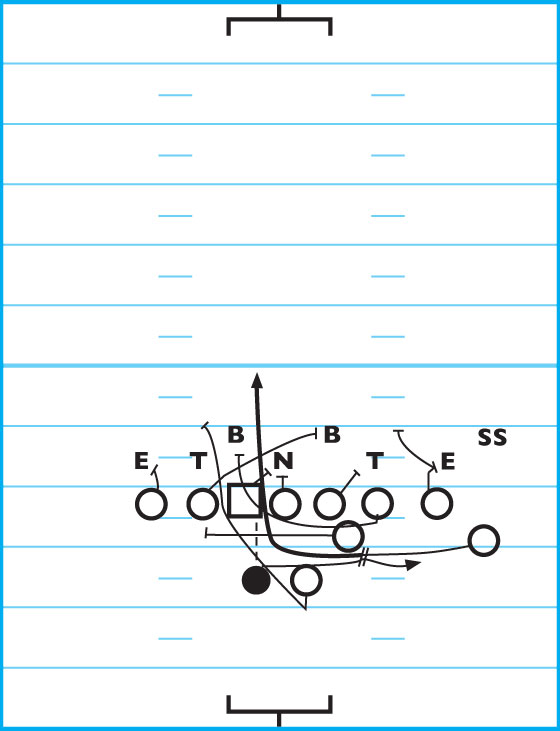
DIAGRAM 11: 421 (Weak Side Reverse) Vs. 50 Defense. A final area of concentration is the 1-hole area — where many big plays can be produced due to the short corner created by the unbalanced offensive line.
In this play, the weak-side OG shouts a “you” or “me” call, directing the actions of strong-side OG. For instance, a “me” call indicates that the weak-side OG must pull-hook the first man past the weak-side OT and the strong-side OG leads up through the 3-4 seam. Meanwhile, a “you” call indicates that weak-side OG blocks any man from head up to the inside shoulder of the center, and the strong-side OG log-blocks the first defender past the weak-side OT.
Variations
Following are two examples of variations that can be called to give the defense problems.
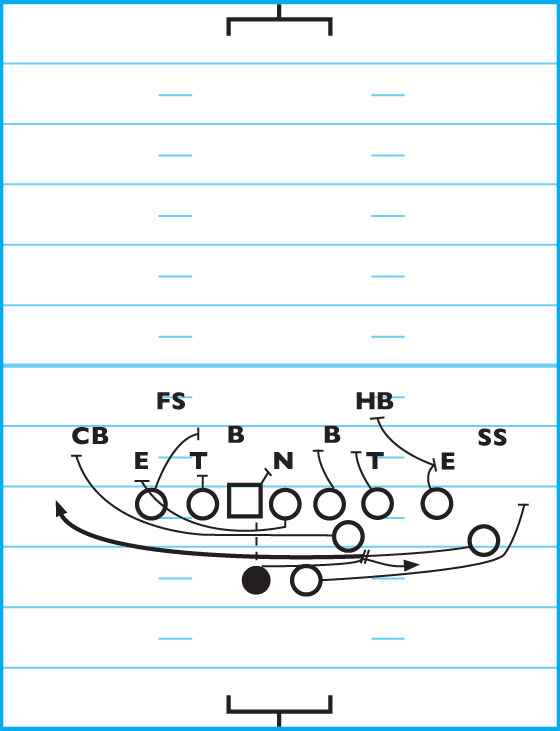
DIAGRAM 12: 423 Vs. 50 Defense. The 423-FB motion weak play forces corner adjustments by the defense, which opens up the off-tackle area.
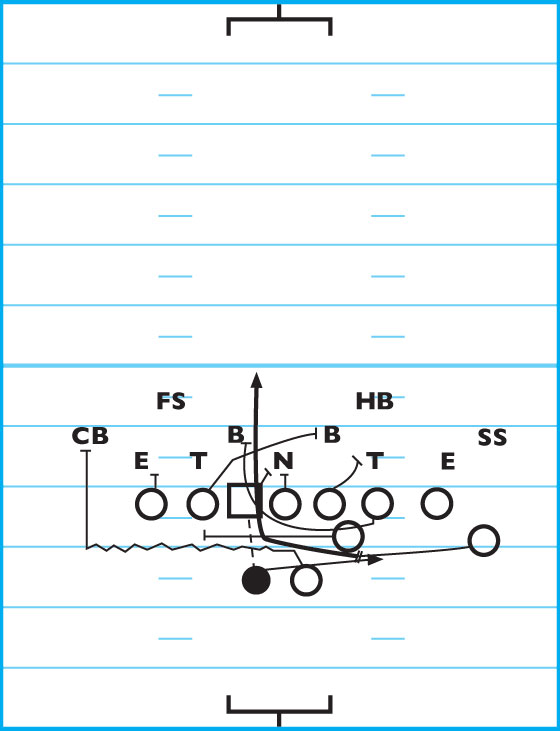
DIAGRAM 13: 49 FB Wide Vs. 50 Defense. Another variation is the right formation FB wide, which creates great strength for a strong-side flank attack. This causes the defense significant adjustment problems, as it must weaken itself for the 47 Power or 45 Decoy in order to defend the strong-side flank.
opens up others
Every successful offense has a “bread and butter” series for attacking defenses. The 40 TB series fits the bill in our single-wing. It may not produce the most yardage or touchdowns, but the defensive alignments and adjustments it forces opens up the 20, 30, 50 and 70 offensive series plays.
A 34-year head coach, Rude was inducted into the Illinois high School Football Coaches hall of Fame in 1995. A five-time “Coach of the year” at three different high schools, his 2001 squad was undefeated and, while running the single-wing offense, led Illinois class 3A in scoring at 39.7 points per game.