ONE OF THE very best formations to use — especially in high school football — is the two tight-end set.
This set gives you the ability to balance the defense and keeps it from sliding away from the split end and loading up on the TE side. It also allows you to run a mirrored attack to either side of the formation and the TE splits keep the series nearly blitz-proof. It also allows your offense to target and attack the weakest personnel in the defense.
Our main attack from this formation is called “Power” and we use it as our “bread-and-butter” series. The Power Series gives our team the ability to run 4 specific plays in every game.
Easy To Teach
The Power Series is conducive to teaching your base offense at the lower grades in your program. By the time players reach the varsity level, they’ll have a complete understanding of the series and how to attack the variety of defenses that you’ll be facing. For this article, we’ll focus on how the Power Series attacks a 5-2 defensive front.
We begin our teaching of the Power Series by installing our “Smash” off-tackle play, which forces adjustments by the defense. From this play comes the rest of the series — based solely on how the defense reacts toward stopping the Smash play.
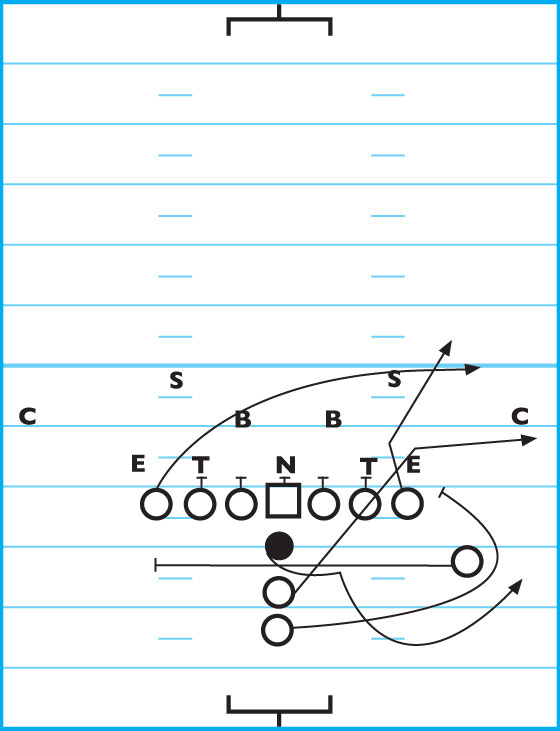
DIAGRAM 1: Power Series “Smash.
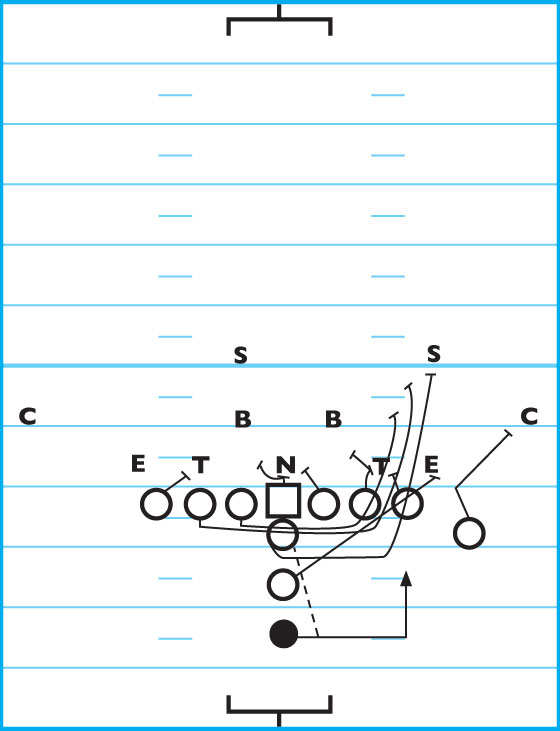
We use 12-inch splits in our offensive line to minimize penetration and “run-throughs” by the linebackers, who would disrupt the flow of the Smash.
The backside TE fills for the pulling OT and must drive his shoulder through the far knee of any player on the LOS in the tackle’s zone. The backside OT pulls and leads through the off-tackle hole and looks inside. If the defense places the DT in the gap and the TE can’t reach him, then the backside OT blocks the play-side gap. The backside OG eyes up the play-side LB and blocks him with a shoulder block.
The WB fakes a block on the end and turns outside on the corner. The FB takes a good inside-out course on the end and kicks him out. The QB makes a reverse pivot, tosses the ball to the TB and leads through the hole, looking for the first DB to block.
The TB takes a 6-inch step with his right foot (slowly, to allow the FB to clear), then takes a crossover step with his left foot, plants with the right foot and runs to daylight.
DIAGRAM 1a: Power “Smash” Using Motion. The WB can line up on the play side or you can have him go into motion across the formation on this play. To counter defenses who are angling toward the WB, the QB must go through the hole and block out on the corner.
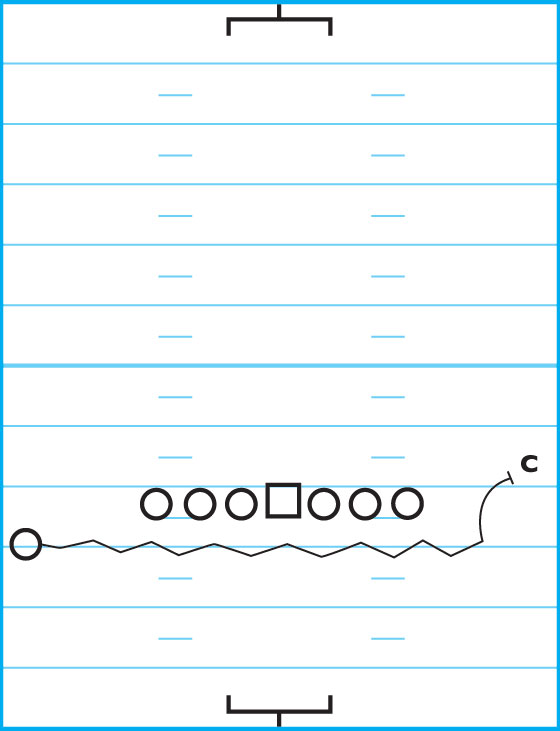
DIAGRAM 2: Power “Sweep Right.” Once the DE begins to close hard to stop the Smash, it makes for an easy block from the WB to run the Sweep.
The FB kicks out the first defender to show outside the WB’s block.The QB reverse pivots, tosses to the TB, leads through the alley and blocks the first DB. The TB secures the pitch and runs up the alley.
DIAGRAM 3: Power “Counter Left.” After establishing the Smash and the Sweep, the defense will be pursuing hard to contain both plays. This opens up a perfect opportunity to call the “Counter Left” play.
The WB takes a drop step and runs the Counter, while taking the inside handoff from the QB. The TB fakes as if the play were a Power Sweep.
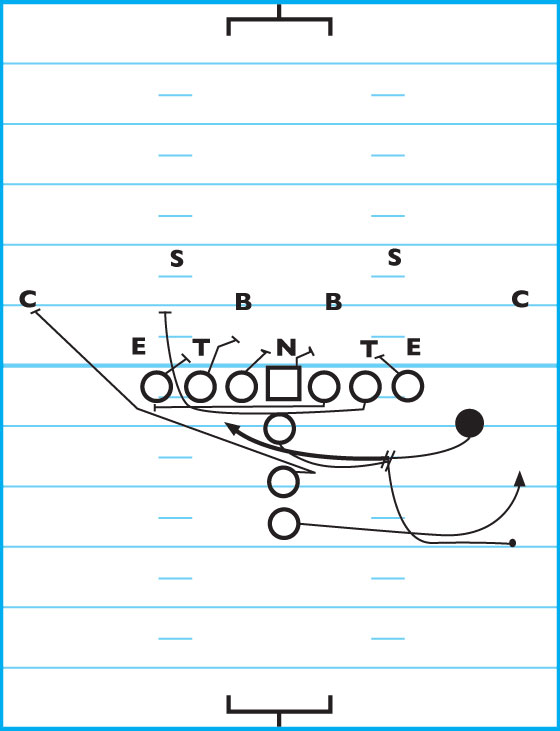
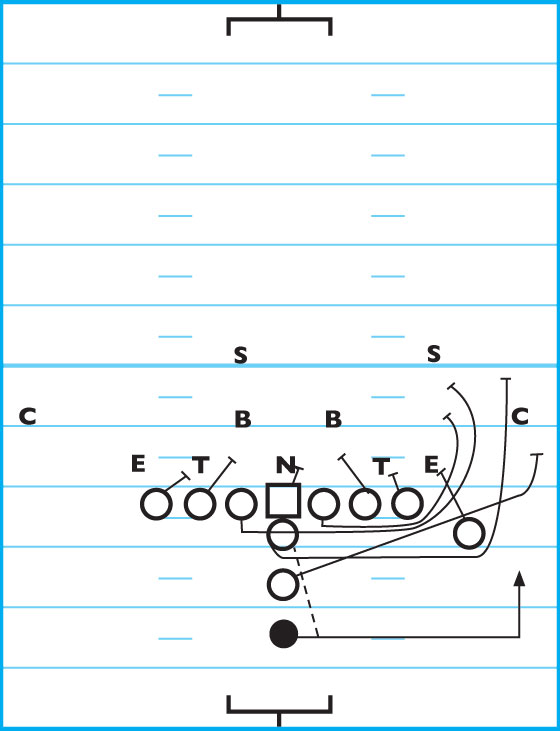
DIAGRAM 4: Power “Counter Pass.” The backside TE runs a 15-yard drag route, the play-side TE runs a deep corner route, while the WB fakes the Counter play and blocks the backside DE. The FB fakes a block on the DE and runs to the flat. The TB runs a fake Sweep and gets outside on the DE and hooks him. The QB fakes the Counter and can either runs or pass once he reaches the corner.