By Jason Semore
Special Teams Coach • Adams State College
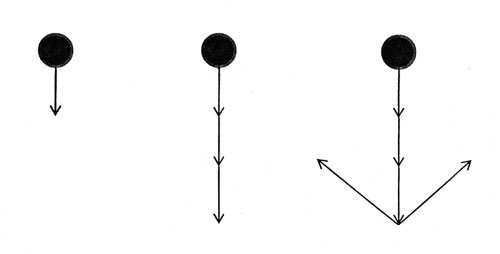
When putting together drill work for punting, a coach should always remember to protect first and cover second. For this reason, we begin our drill work with blocking fundamentals. Most protections are a zone blocking concept. For that reason, your first teaching priority should be footwork, more specifically footwork that has depth and body position that results in balance and power. At Adams State, we use the kick-step, inside leg forward and the outside leg back driving off the inside leg to achieve depth and balance. This being the first teaching progression, your coaching points should first be technique, depth, and finally a release (See Diagram 1).
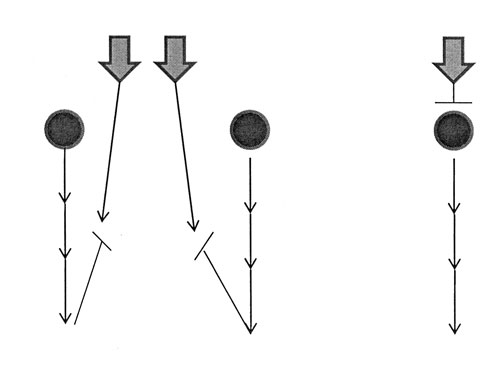
The second progression is what we call complete or defeat. Now that we have drilled proper depth and balance, we will focus on teaching the completion of a block as well as a defeat of a block. During punt protection, you will see two schemes that you must be ready to combat - 1) a rush or attempt to block the punt and 2) a block or an attempt to set up a return. To combat these two schemes, we will drill first a rush (because protection is our priority) than a block. Start by going through the kick step progression and having a man attack his outside shoulder to simulate a rush. After achieving depth, engage the rusher with an emphasis on three things – power position and staying low and balanced, hand placement in the middle of chest plate, and complete block with the hips as vertical as possible stopping the rushers momentum. Do not allow him to compress toward the ball and detach by pushing through the rusher with a outside release. Be sure to work both sides in your drill work (See Diagram 2).
The next step in our progression is defeat a block (commonly referred to as a hold up). This drill work is similar to working a rush except now the rusher is going to work from an outside angle and instead of attacking the shoulder, he will now work head-up and engage a block. We still want to achieve depth with our footwork as well. We will do this by stopping their momentum (hit and detach) and then clear hands with an outside release.
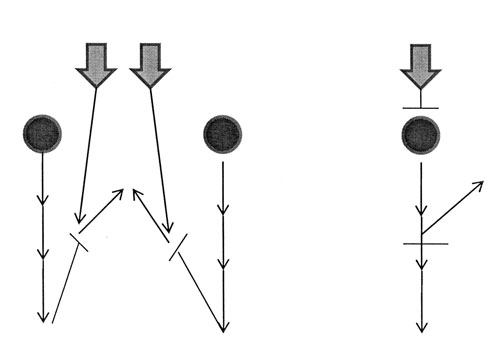
Once we have established the difference between a rush and block and established the priority of protection in our drill work, we will now move on to our third progression, which is our escape into coverage. It is important to carry over all coaching points from our previous drill work into this drill. We first work on completing a block and escaping into coverage and move onto defeating a block and escaping into coverage. Your coaching points should include stopping downfield momentum, creating separation by pushing through the rush or block and finally clearing hands, using various techniques (See Diagram 3).
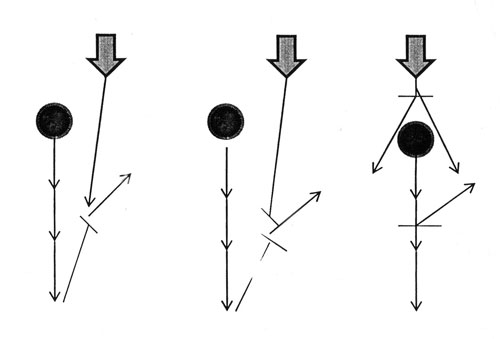
Finally, we want to identify what we need to combat during our kick-step which brings us to our fourth and final progression – diagnosing the intentions of our opponent. We will maintain all the coaching points of our previous drill work. Kick-step for depth and send either a rusher or a blocker at an angle forcing the protection to identify if his opponent is attacking a shoulder (rushing) or working head-up (blocking). Use all the proper techniques we drilled earlier and get into coverage. We now have drilled the fundamentals required to install whatever blocking scheme you feel will be most successful (See Diagram 4).
About the Author: Jason Semore has been on the staff at Adams State College since December, 2007. A former three-time all RMAC selection at linebacker, Semore graduated from Adams State in 2005. He coached also at the Colorado School of Mines and now coaches both the secondary and special teams at ASC.