THE KICK RETURNS we use in our program are designed for ease of teaching and learning. We believe that if we can keep it simple, the players will have an easier time learning and mastering what they are supposed to do.
The progression we use helps to facilitate that belief. With the different returns, we’re able to isolate any possible weaknesses in an opponent’s coverage.
Non-Traditional Front Blocking
There are only four men in our kick return front line, rather than the traditional five. This is done so that we can get back to our blocks quicker.
As with any aspect of the plays you run, personnel will play a big part in the success of your returns. We’ve decided not to use the traditional “big guys” up front, but rather more athletic players with good quickness.
Since we rarely ask our players to take a man head-on, we’ll put them in a position where they can use angles and the element of surprise, not letting the cover team know where they are going to get blocked from.
Return Schemes
The following diagrams shows the progression from rather basic returns to more sophisticated blocking schemes.
DIAGRAM 1: Kick-Return Middle — Double Wedge. The double-wedge middle return is a great starting point for teaching returns to your players. This blocking scheme is easy for inexperienced players to learn and execute.
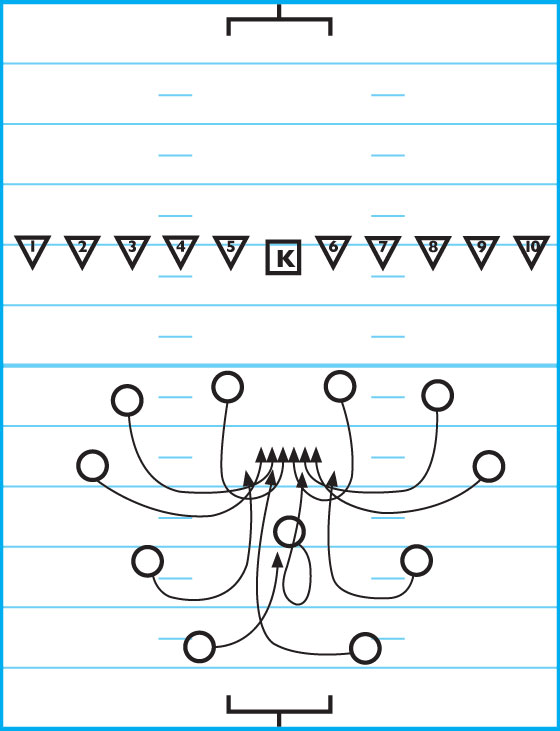
However, the guys in the wedge must be courageous. After all, you’re asking them to get in front of sprinting opponents who are coming straight at them.
DIAGRAM 2: Kick-Return Middle — Cross. The middle return with the cross-blocking scheme works well because you are able to give your players the angles to make their blocks. You also have the element of surprise. The cover teams aren’t exactly sure where the blocks are coming from.
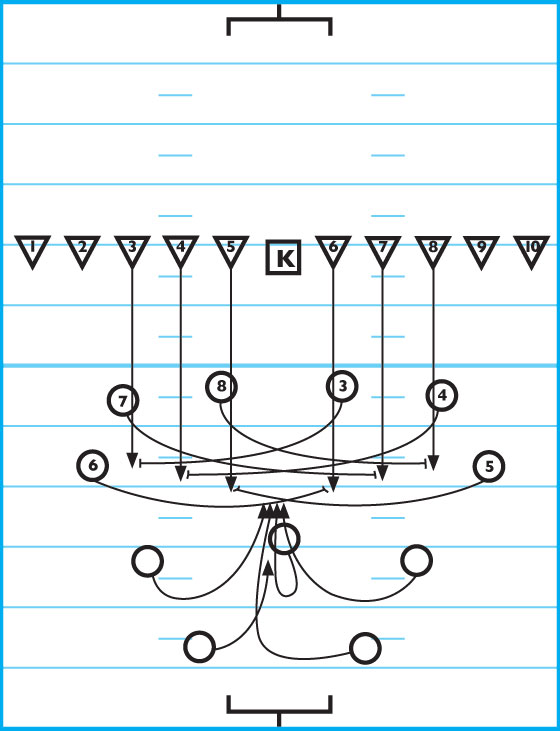
DIAGRAM 3: Kick-Return Right.
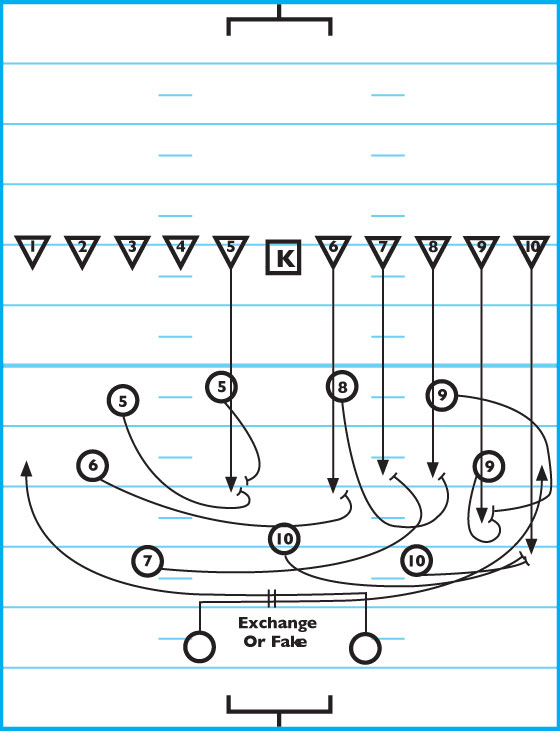
DIAGRAM 4: Kick-Return Left.
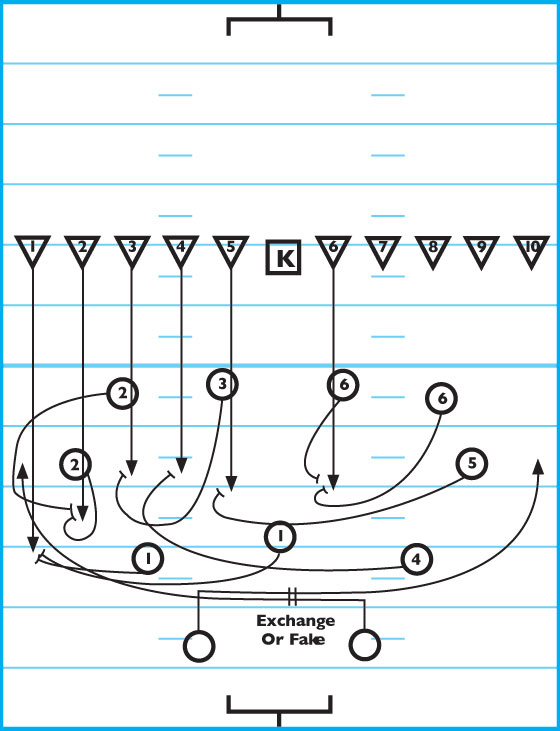
The right and left returns are my favorites. Though they take more time to develop and teach, we’ve had our best returns with these schemes. Either return can be run with a fake or crossing exchange.
There are advantages to not crossing your return men such as no fumbled exchanges and having an extra downfield blocker.
The disadvantage is that you may not be able to hold cover team players in their lanes very long. By crossing, you make the cover team honor its coverage lanes, which gives your blockers better angles at their blocks.