THE VEER ANGLE offense is a 3-pronged attack based upon a combination of options. Its purpose is to combine option and power football and add in a quick sprint passing game. It’s an offense that’s simple to teach and consistently effective.
This offense attacks from the inside to the perimeter with the C-gap as the focal point. The initial concentration is on the defensive end position and placing that defender into a “reading quandary” during the play.
Using the Veer-Angle Offense, we once averaged 56 points per game over a 4-game playoff stretch, eventually winning the state championship.
DIAGRAM 1: Veer-Angle Offense. The offense is first a triangular combo of succeeding schools of thought, utilizing an option package that consists of the mid-line, G-option, outside veer and speed or double options.
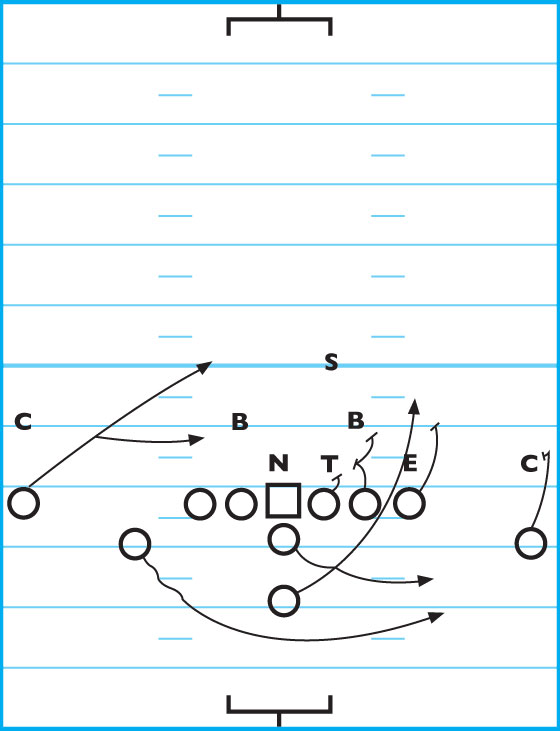
The goal is to have the DE react to a physical blocking attack, which comes from three directions — forcing him to make a read in each direction. We utilize the “I,” Slot, Wing, and Trips looks, using the same play series for each. These are complemented by wing or slot on the play side and return motions, so as not to give away any true keys and to develop better blocking angles and pass routes.
On each play, the opposing DE must either tackle a physical running back on a backside angle, read the quarterback on the midline or speed option, or take on a tight end or TE/wing combo. Once the Veer Offense has established an inside-outside option triangle, the defense invariably begins to overplay, allowing you to move to the second attack phase of the offense.
DIAGRAM 2: Power Series. Teams will tend to overplay you in the C-gap and on the perimeter, allowing you to move to the “power series.” You can run a basic power play with the RB kicking out the DE, giving him yet another read to worry about. The power series includes an Iso, G-Blast, Fullback Trap, Quick-Pitch, Scissors and Inside Reverse. These plays really hurt fast-flow linebackers and overpursuing stunts who begin to key on your options.
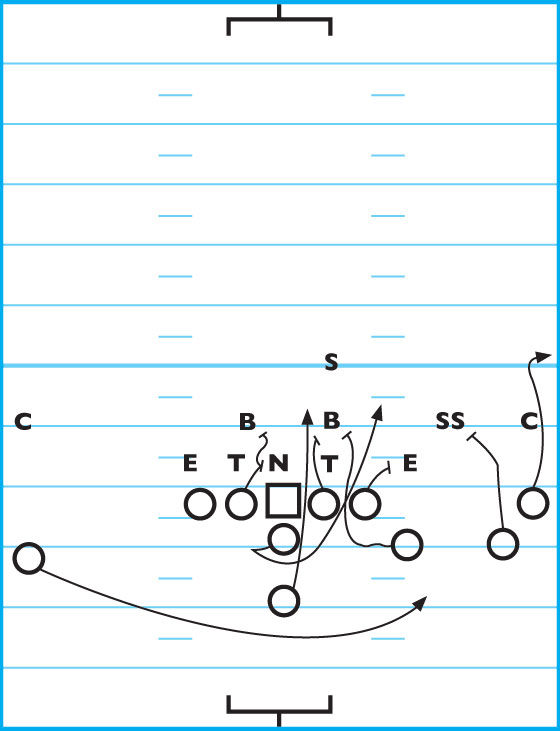
You must carefully track the play of the DE early in the game. If you offer a blend of smash-mouth blocking, keeping him on his heels and reading from three angles, your offense will really go into high gear. Having to make multiple reads on the options while being attacked by a pulling guard, slot, TE, RB, wing or combo can really wear a player down and make him tentative. Once the corners and safeties join in run support or begins to plug the run alleys, the Veer Offense is ready to blend in the third phase.
DIAGRAM 3: Quick Sprint Passing Game. The quick-sprint passing game gives the look of an option and puts extreme pressure on the DE and other perimeter players. The “Veer Angle” run offense can quickly translate into a slant, fade, speed bubble or up-and-out passing attack. You can sprint to the perimeter or use short drop-offs or play-action to circumvent blitzes and mixed coverages. The running sets rapidly become 4-receiver clusters when the defense presents the opportunity. The backside receivers run post or drag routes to take advantage of overloads or secondaries that begin to overplay the run.
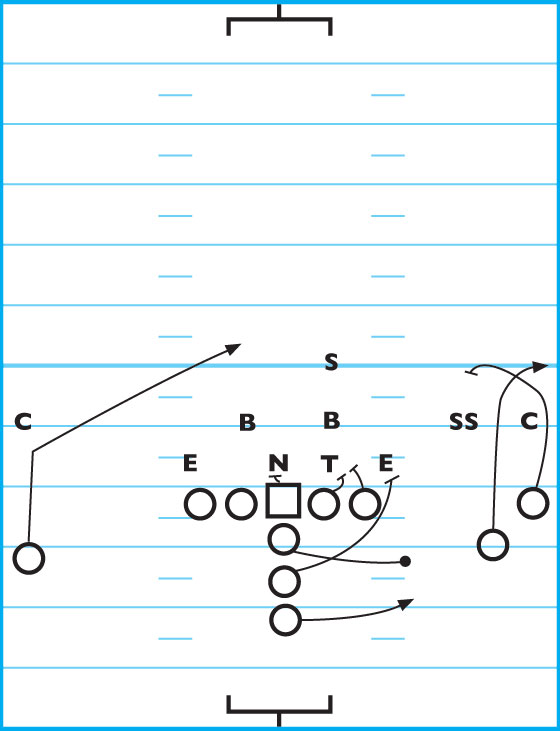
In all, this offense is a triangle read of options with a power or reverse phase and short passing game — all from the same looks and initial action. Key the ends and corners and attack the C-gap until you get adjustments from the defense. In other words, attack what the defense is giving up and then play “chess” with the stunts and coverages.
Often, the most difficult task on offense is to successfully block an outstanding “3-tech.” Consequently, we would rather have him read midline and inside reverses, when he isn’t seeing a combo block coming. On defense, the most difficult position to play is on the end of the line opposing a Veer-Angle attack. These defenders must simultaneously deal with multiple reads, exact assignments and great blocking angles.
The best aspect of using a Veer Angle attack is that you do not have to design a complicated game plan each and every week. The defense lets you know early on in the game, what you need to do and what type of adjustments you need to make. Be sure to run a lot of Veer Offense repetitions in practice, working on execution. This reduces your preparation time and you can focus during the week more on slight adjustments and reducing slippage.