A SUCCESSFUL PASSING game can be the great equalizer for less-talented and undersized teams.
Our program is a small-enrollment school that participates in 8-man football and we must have at least 26 players in order to keep our second assistant coach on a yearly basis. By utilizing the passing game in 8-man football, it allows us to play two wideouts on particular formations. We can rotate the less physical players into the game and keep many players involved.
There are several other reasons why a passing game can be an important part of a football program.
If physical match-ups at the line of scrimmage do not favor your team, a quick passing game allows you to pass block aggressively for an adequate amount of time.
By having your opponent know that you may throw the ball at any time, you may reduce the number of defensive players in the box that you must account for in the running game.
Having more play-calling options that may fit your players’ strengths and possibly play upon your opponent’s weaknesses.
Multiple formations cause the opposing defenses to spend more time preparing for all you do offensively — run and pass — in each formation.
Different formations utilized in your passing game may also increase your blocking angles in places for your running game.
Passing-Game Structure
In the design of our passing game, we always try to have our QB only read part of the field when selecting a receiver to throw to. We will have a short and deep combination, or two of the same such as short-short or deep-deep, where the receivers are in the same half or third of the field.
In developing our passing game prior to each season, we try to adhere to the following principles:
1. Since our league is 8-man football, we rarely send three receivers out when we’re in 2-back formations (for protection reasons).
2. We utilize several play-action passes out of our base formation. All play-action passes are set up off our basic running-game plays.
3. By using a combination of personnel at TE, we throw deep and short combinations. We do this in drop-back and sprint-out protections, as well as for play-action passes.
4. From year to year, our utilization of the passing game has always mirrored our personnel. We do what we’re best at — with the players we have that particular season.
8-Man, 2-back Formations
DIAGRAM 1: Base.
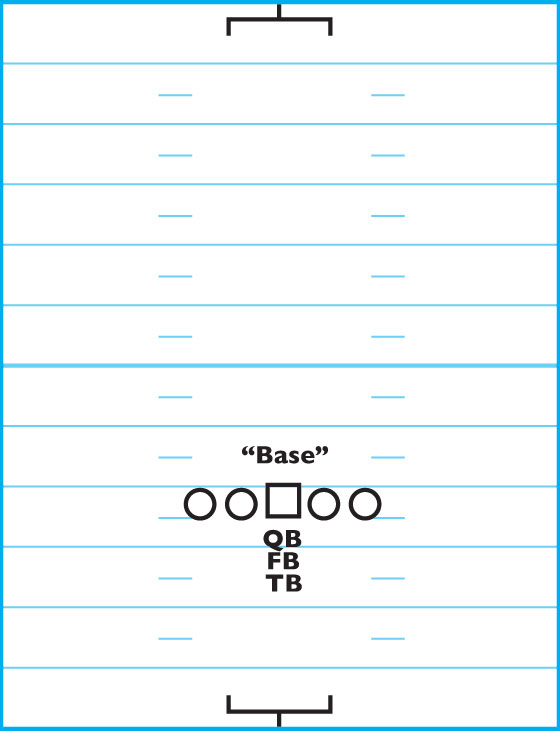
DIAGRAM 2: “Lions.”
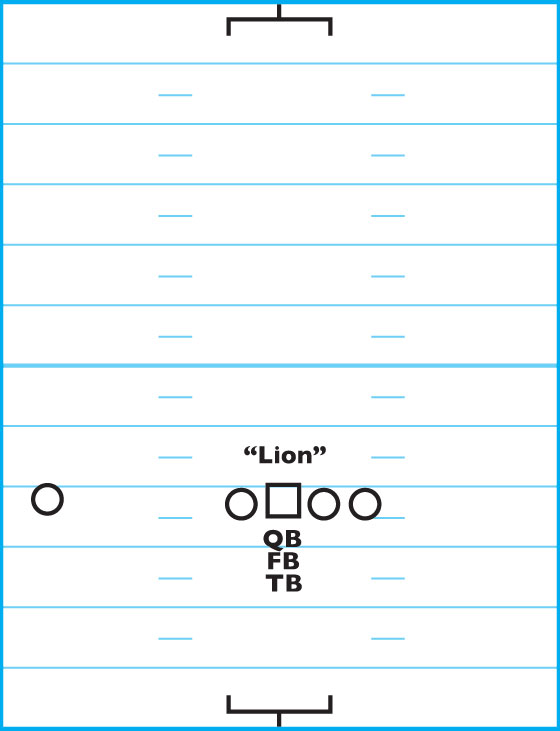
DIAGRAM 3: “Ram.”
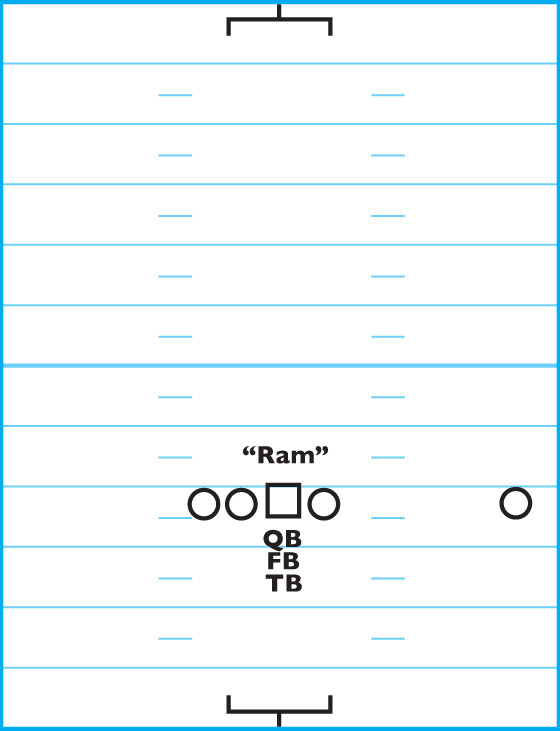
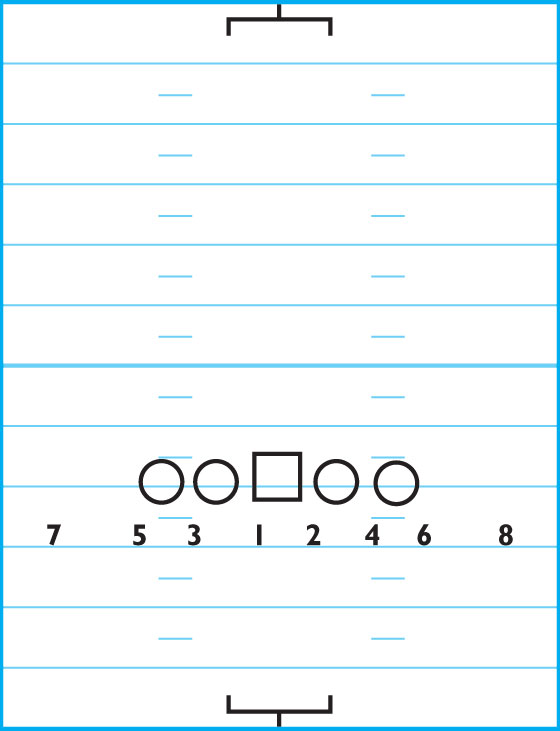
DIAGRAM 4: Hole-Numbering System. Our hole-numbering system for our offensive assignments are even numbers to the right and odd numbers to the left. Besides our running game, that is also how our pass protections are assigned.
8-Man To 11-Man Translations
Integrating the passing game information that’s detailed in this article from 8-man to 11-man football should be quite simple. By adding another number to the pass pattern combinations called, or two numbers if you do not teach complimentary patterns for backside or weak-side, receivers would account for the additional receivers that would be in pass-pattern combinations for 11-man football.
When using strong-side formations, patterns are called for receivers outside to inside, strong side to weak side. For example: Pro Rt. 1 protection 272. The FL and backside SE run the “slant” with the TE running the “go” to clear out the underneath for the flanker.
If using balanced formations such as “Ace” or “Double Twins,” patterns are called right to left, with the outside receiver running the first pattern and the TE or SB running the second pattern. The backside or left side of a balanced formation could run “mirrored” patterns, same as right side, or complimentary patterns could be utilized. For example: “Ace 1 protection 21” with each side running the crossing combination.
All of the pass protections can be utilized by the backs being aggressive in “one step” and “one protection” while blocking the first person to the outside of the OT or TE on their side of protection. The same rules apply in the other protections listed. Pre-snap reads taught in practice and from opponents film should assist all in their pass protection responsibilities.
Specialty Patterns
Specialty patterns are patterns that are used in our passing game that aren’t on our passing tree. The patterns must be called in the huddle and in the sequence they are to be run.
Hitch Route. The receiver takes one hard step and turns back into the QB for the pass.
-Stop Route. A 5-yard stop pattern where the receiver turns in to catch the ball.
-Stop-And-Go Route. The receiver runs a 7-stop, shows his hands to the QB, turns out and runs a “go” route up the sideline. This is set up off a -stop that you’ll use earlier in the game.
-Comeback. The receiver runs the 7 hard up the sideline and then turns out 1 yard past the first down mark or the desired distance. This is a very effective 3rd-and-long pass play.
Post/Flag. The receiver runs the post, cutting at 5 to 6 yards, instead of the usual 7 to 8. After 3 hard strides to the post, the receiver plants on the outside leg and cuts hard toward the pylon. This is a great long-yardage pattern if you can get your best receiver isolated in 1-on-1 coverage or basically no help over the top.
Nike. The receiver takes off like they’re running a drag pattern, stops and accelerates to the sideline. It takes good speed and quickness for this pattern.
2-Back Pass Plays
The following are pass plays out of our 2-back formations.
DIAGRAM 6: Base 1, Prot. 14.
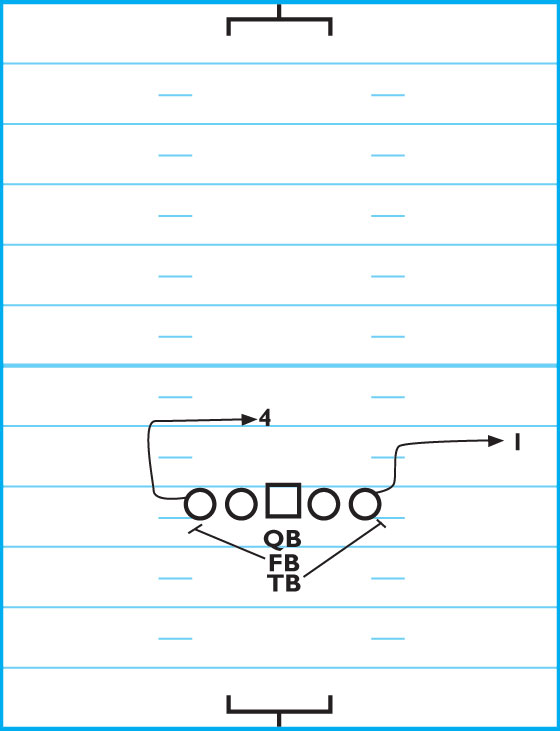
DIAGRAM 7: Ram 8, Prot. 68.
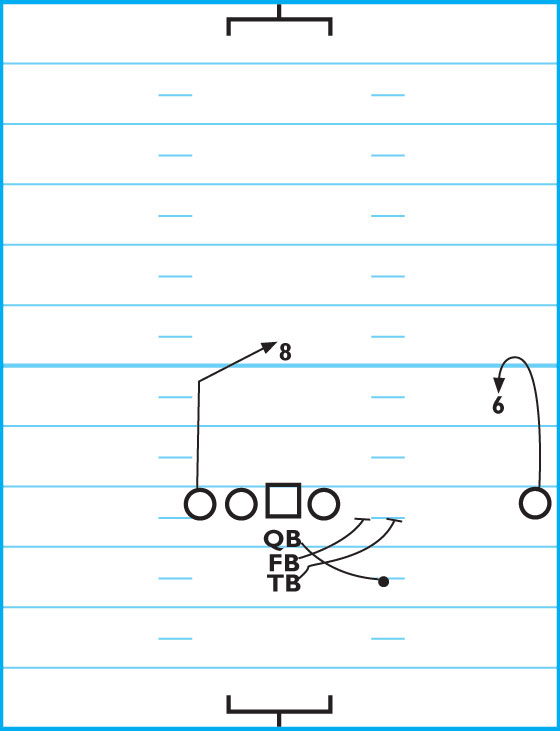
DIAGRAM 8: Lion 2, Prot. 47.
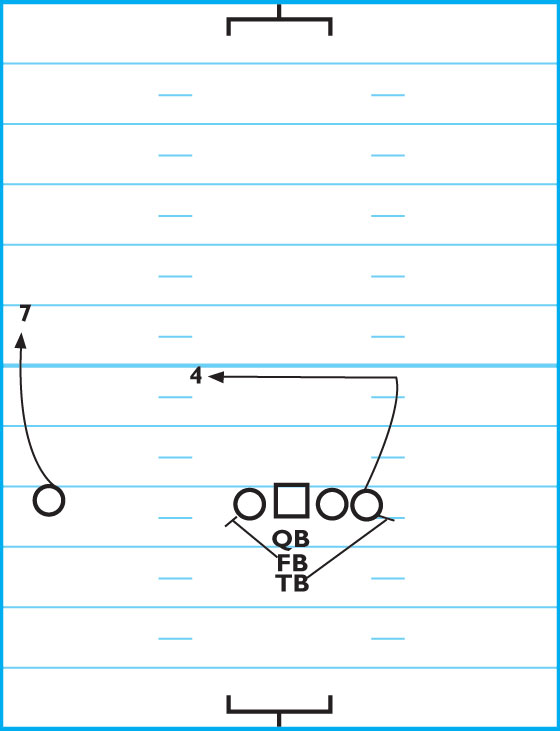
DIAGRAM 9: Base 8, Prot. 94.
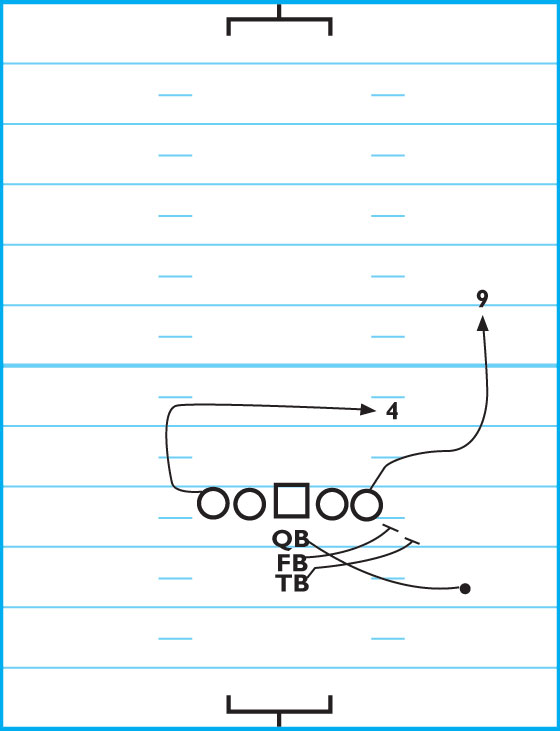
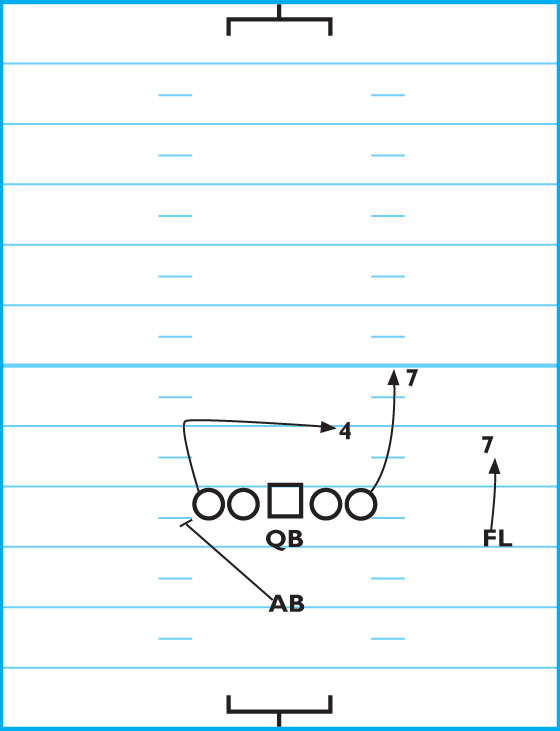
DIAGRAM 10: Lion 7, Prot. 4, 7-Stop-And-Go.
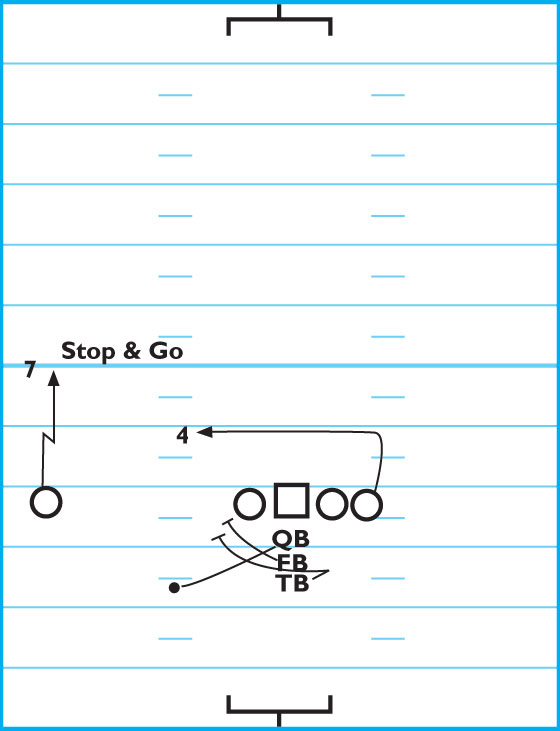
DIAGRAM 11: Base Power, Rt 5X.
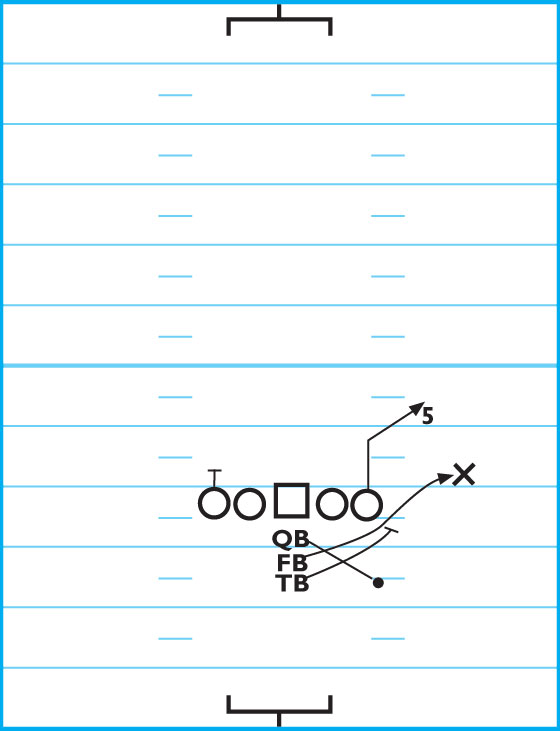
DIAGRAM 12: Base Puma Left.
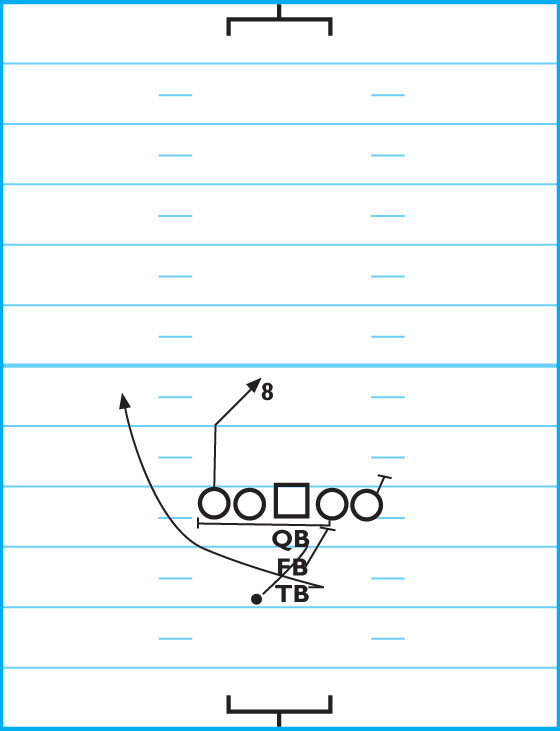
1-back Formations
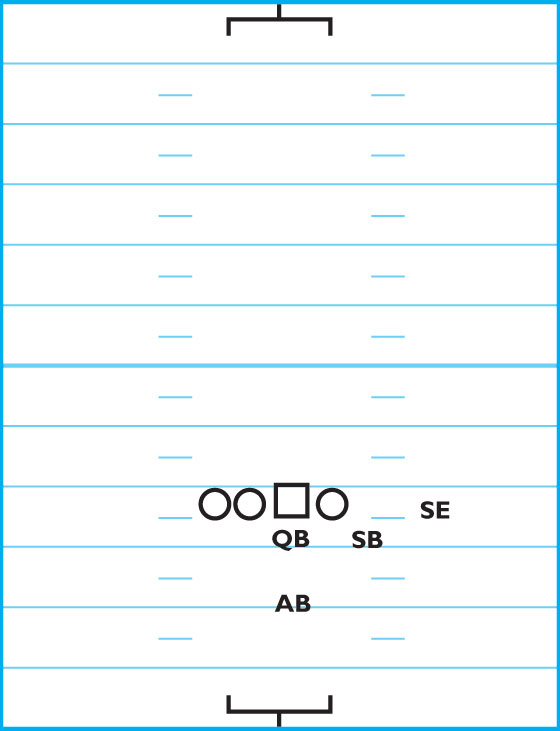
All 5 of our 1-back formations (right or left versions), allow us to pass protect with 5 players and send two receivers out in patterns. We’ll rarely send only 1 receiver out in a pattern. We do, on occasion (when the opposing defense isn’t attacking too much), send three receivers out in patterns. We always place great emphasis on being sound in our pass protection.
DIAGRAM 13: “Lag.”
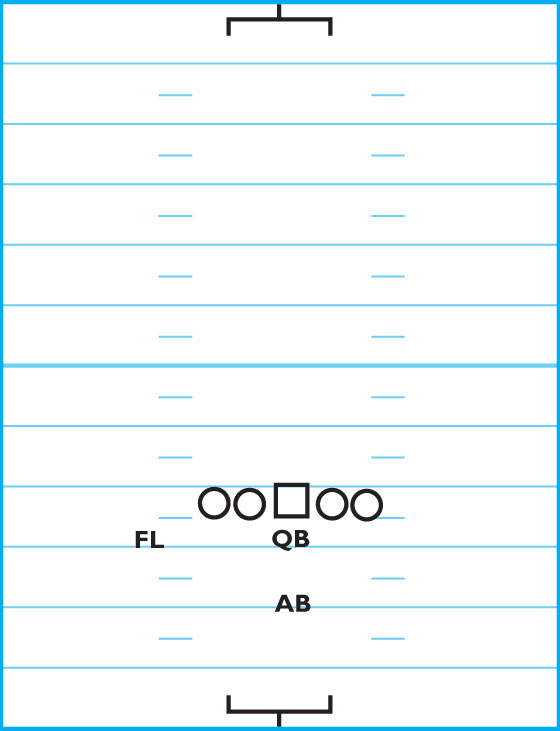
DIAGRAM 14: “Rag.”
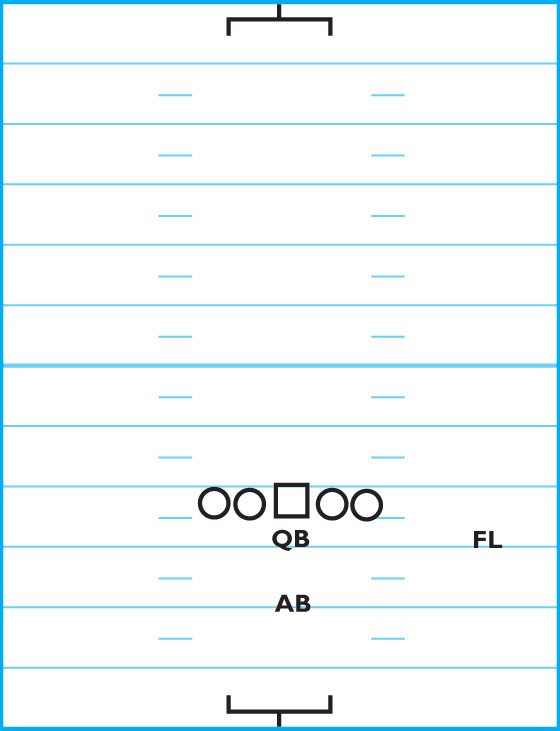
DIAGRAM 15: “Wall.”
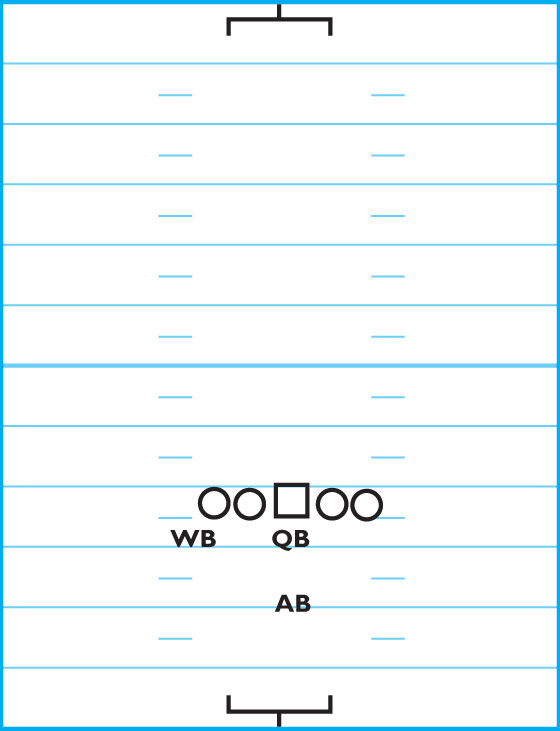
DIAGRAM 16: “War.”
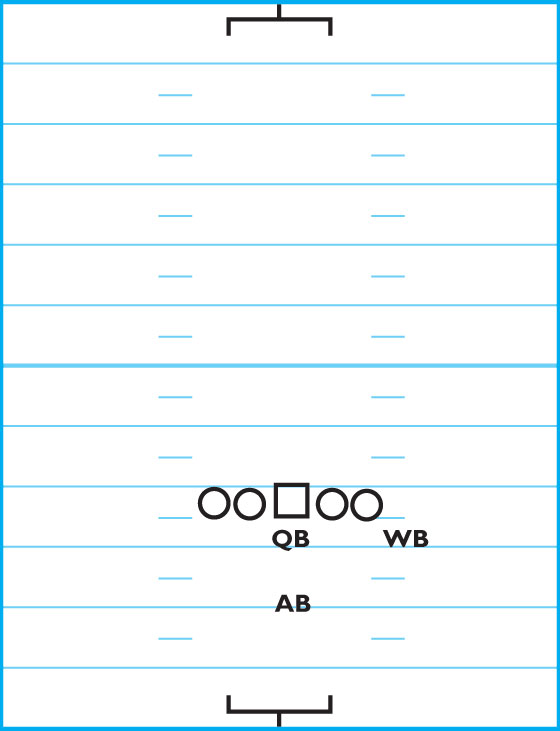
DIAGRAM 17: “Twins Left.”
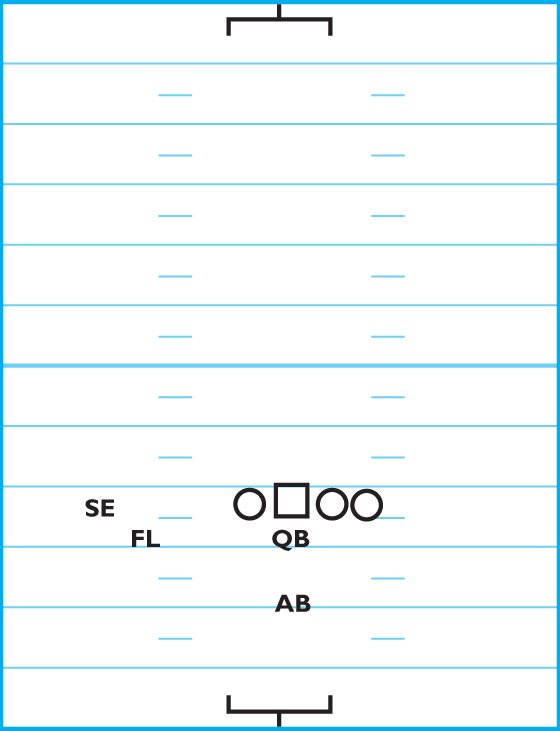
DIAGRAM 18: “Twins Right.”
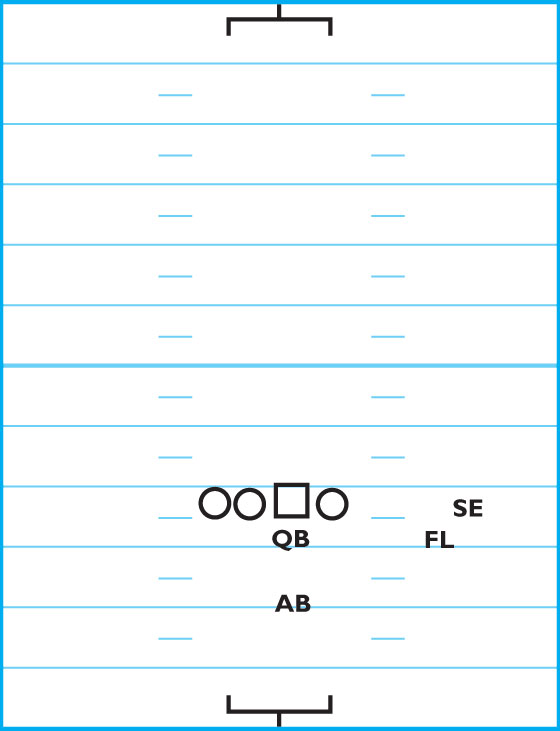
DIAGRAM 19: “Pro Left.”
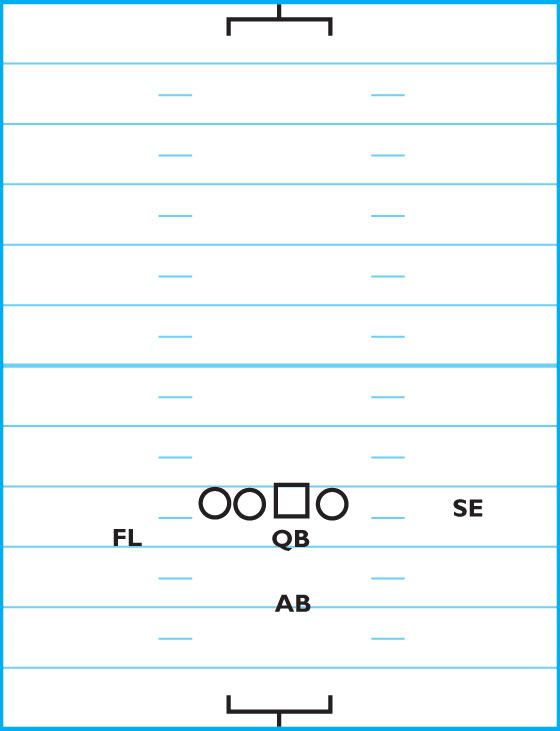
DIAGRAM 20: “Pro Right.”
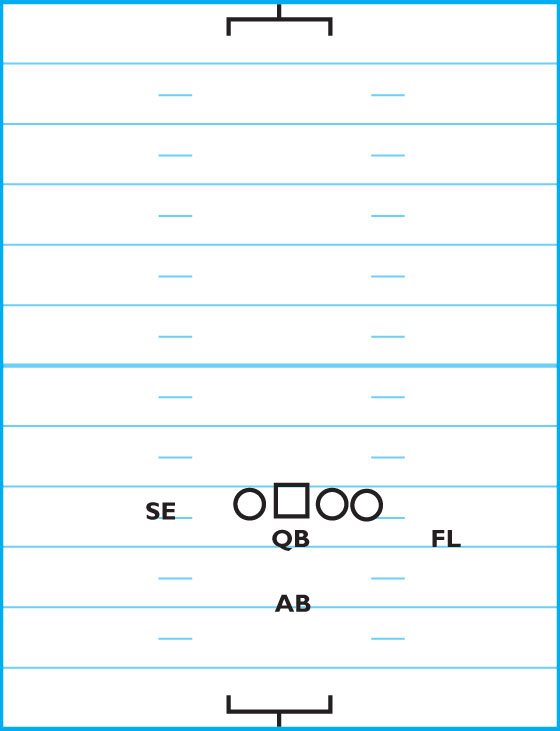
DIAGRAM 21: “Slot Left.”
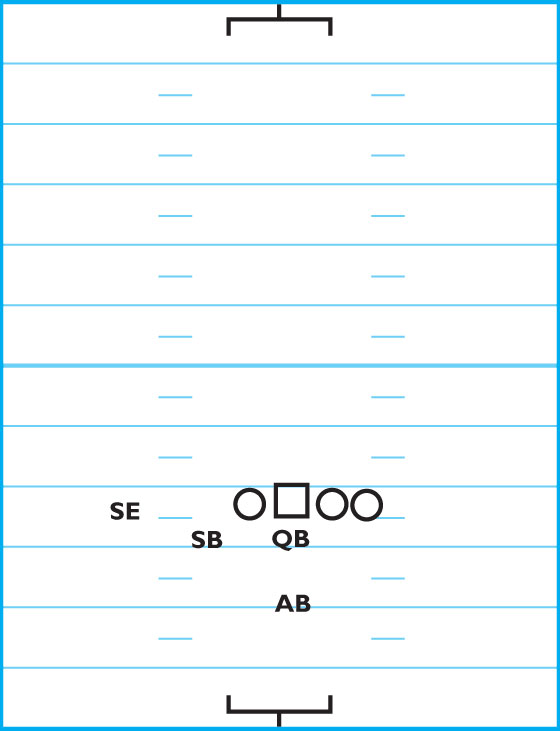
DIAGRAM 22: “Slot Right.”
1-Back Pass Plays
In 1-back pass plays, pattern assignments are outside-in to the 2-receiver side. The following offer examples of 1-back passing combinations.
DIAGRAM 23: “Rag 1, Prot. 71.”
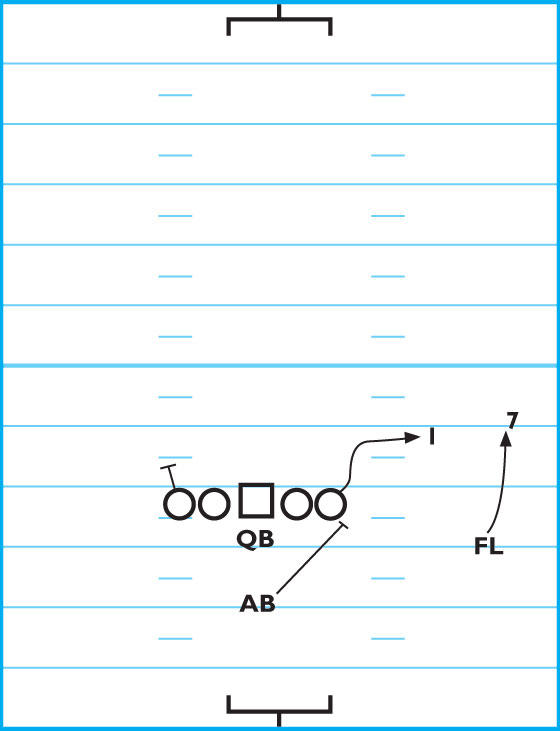
DIAGRAM 24: “Wall 1, Prot. 15.”
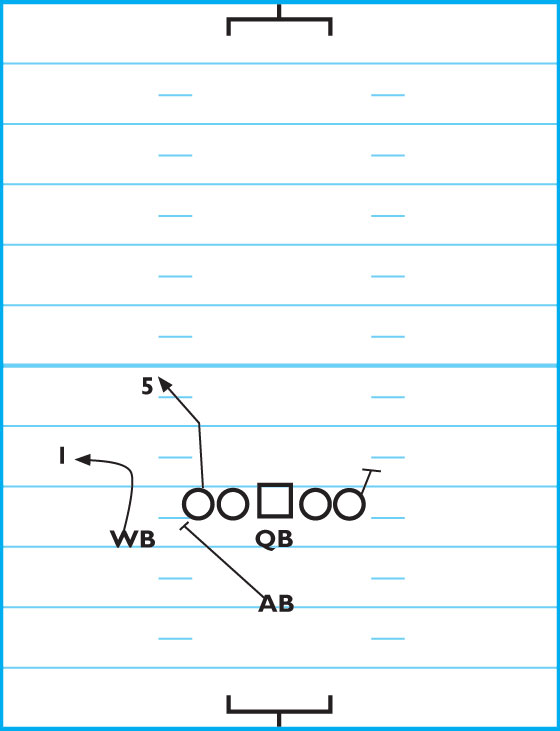
DIAGRAM 25: “Twins Rt. 8, Prot. 36.”
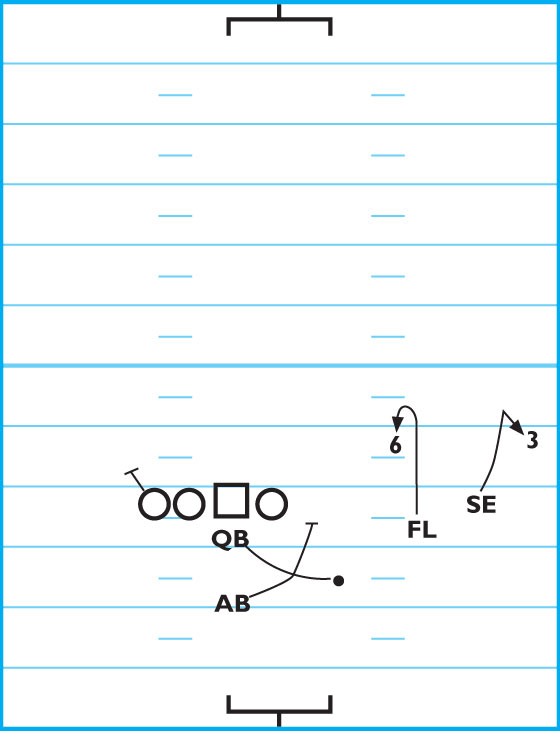
DIAGRAM 26: “Pro Left 1, Prot. 27 (Patterns Are Right To Left).”
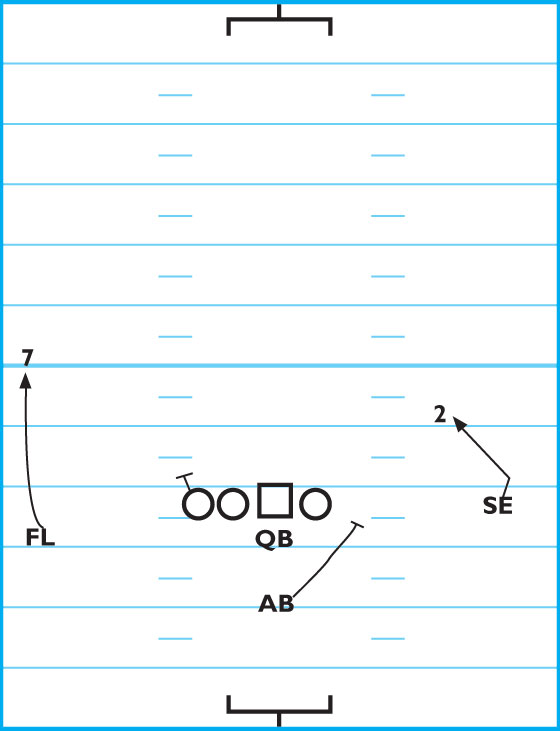
3-Receiver Plays
When sending three receivers out in patterns, the QB’s pre-snap read is critical. Seldom does the QB have enough time to check more than two receivers because we are only pass protecting with four players. The QB’s reads are based on:
• Defensive alignment and coverage.
• Personnel match-ups.
• Particular yardage possibly needed on this play.
For pass protection, when sending three receivers out, our 1-back blocks to the left and three offensive linemen step to their right, always protecting their inside gap.
By throwing 3-receiver out-patterns from the Rag or Lag formation, — which is usually a great 1-back running-game formation — you will probably know what defensive front and coverage you’ll be facing.
DIAGRAM 27: “Rag 1, Prot. 714.”
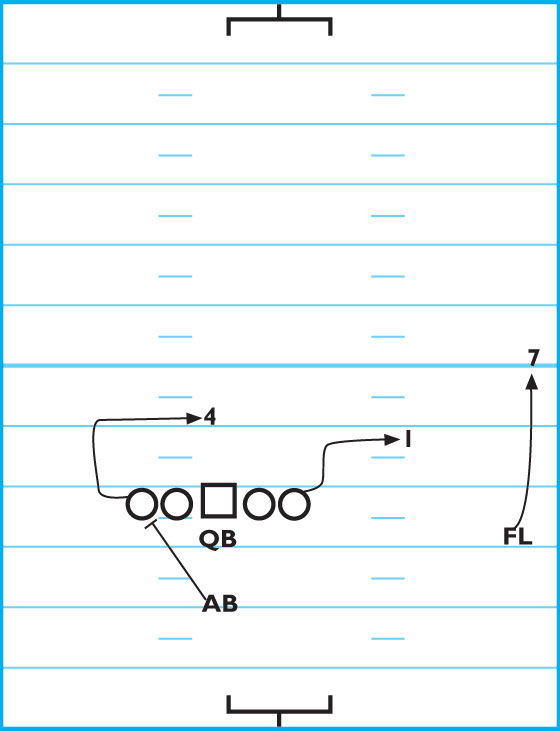
DIAGRAM 28: “Lag 1, Prot. 785.”
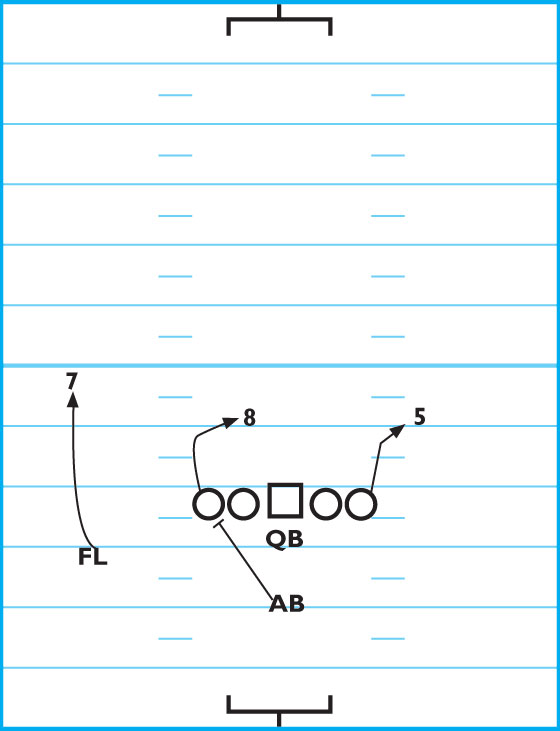
DIAGRAM 29: “Rag 1, Prot. 7-Stop 74.”