OUR OFFENSE HAS thrown for more than 16,000 yards and 157 TDs during a recent 5-year period. Without a doubt, our best “go-to pass” has been the “dig” package. This explosive offensive package gives your team an opportunity to get the ball to your best receiver on the backside.
We use the base principals that most teams use and “tag” the pass with different variations. But you can run this package from a 2-by-2 formation, trips package or no-back sets, as well as using motion and play-action combinations.
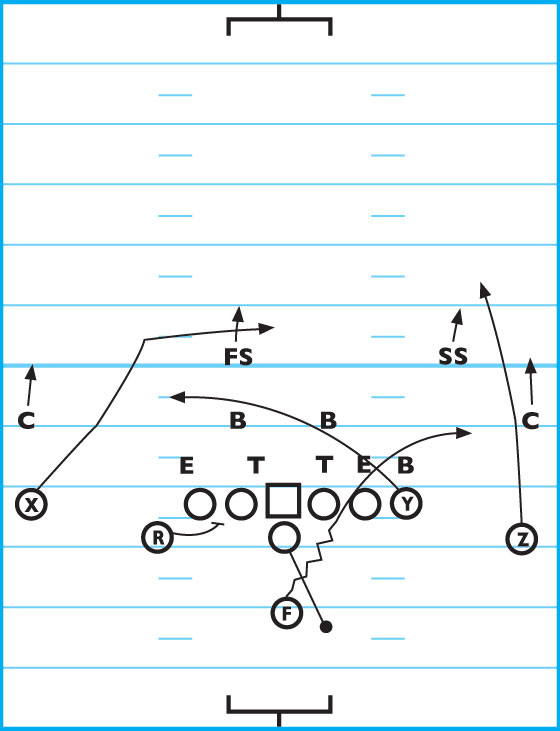
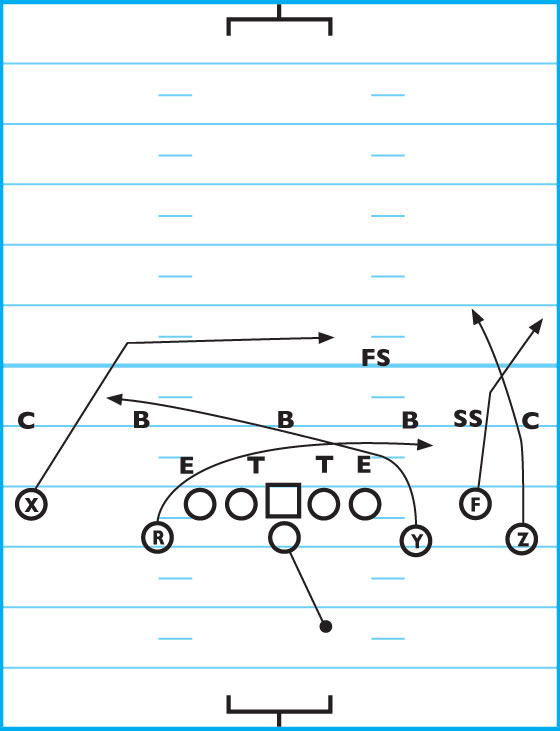
The following diagrams demonstrate throwing the dig to both the weak side and strong side of the field.
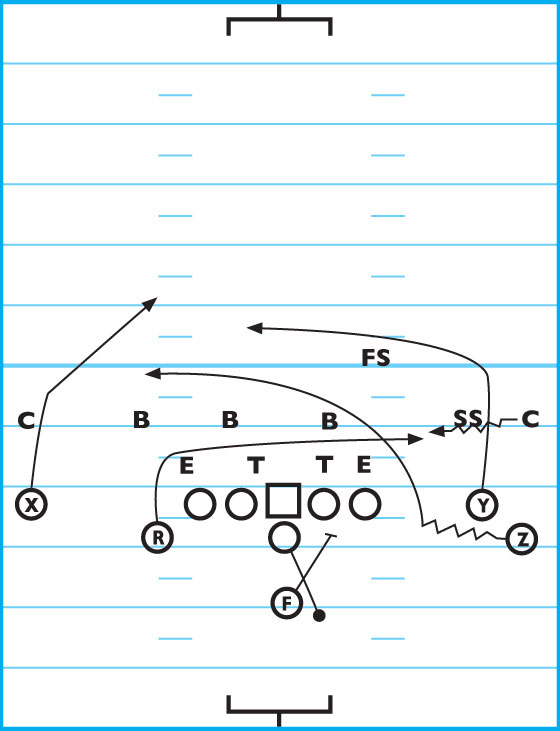
DIAGRAM 1: Dig Routes (A).
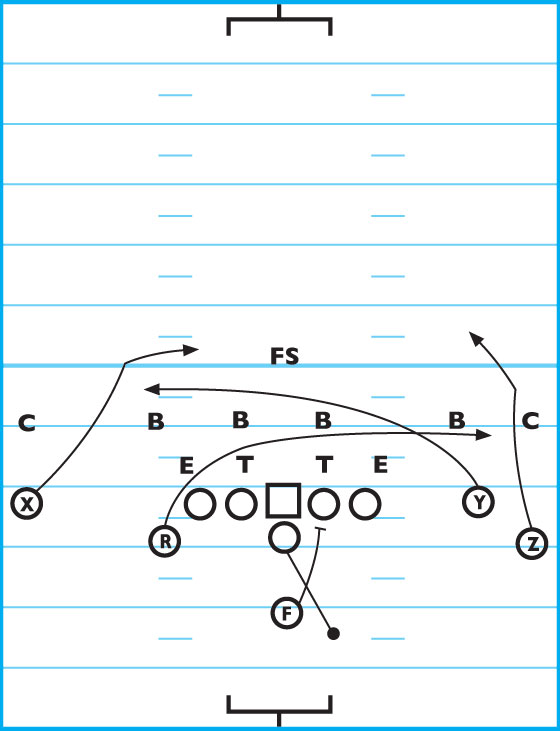
DIAGRAM 2: Dig Routes (B).
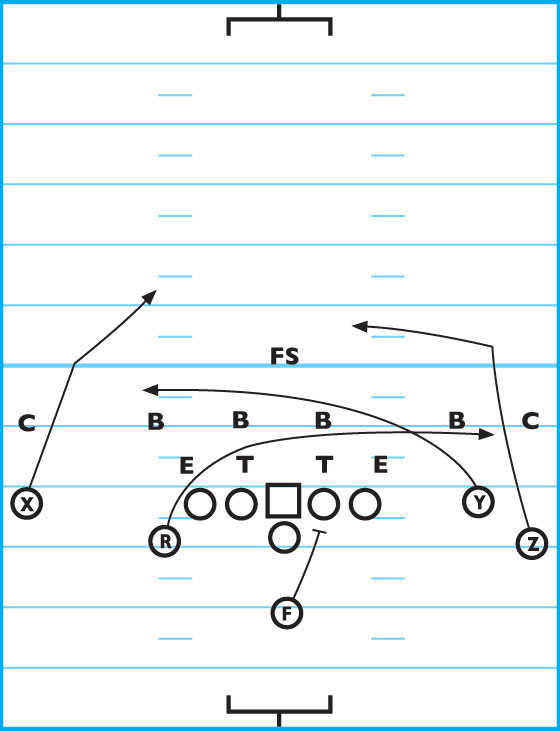
RECEIVER ROUTES:
Receiver X: Runs a 12 to 15 yard dig route across the field.
Receiver Z: Runs a post route without crossing the hash mark.
Receiver R: Runs a 3 to 5 yard shallow-crossing route.
Receiver Y: Runs a 6 to 8 yard crossing route.
The routes for receivers R and Y never change, no matter what formation they align in. They always need to end up on opposite ends of the ball. If R and Y start on the same side of the ball, then Y will be the one to cross the field and R will run a smash route.
Dig Routes In Other Packages
The following diagrams show you how to incorporate the dig patterns into your other packages.
DIAGRAM 3: Dig From Play-Action Package.
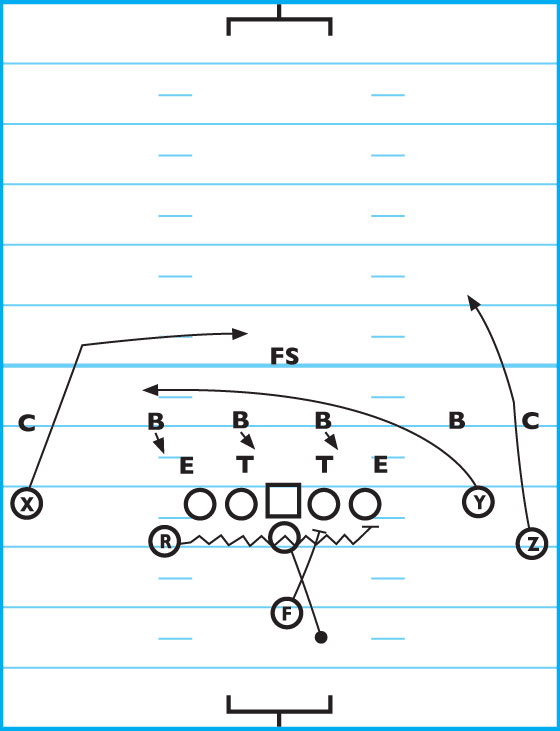
DIAGRAM 4: Dig From Trips (A).
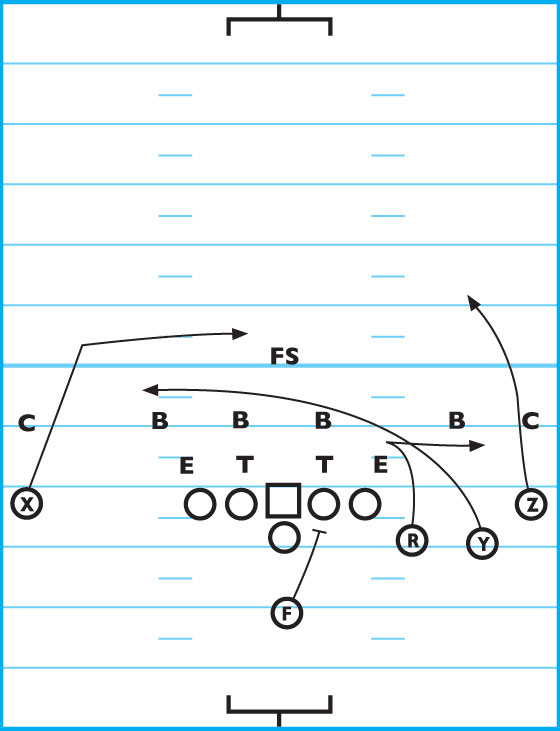
DIAGRAM 5: Dig From Trips (B).
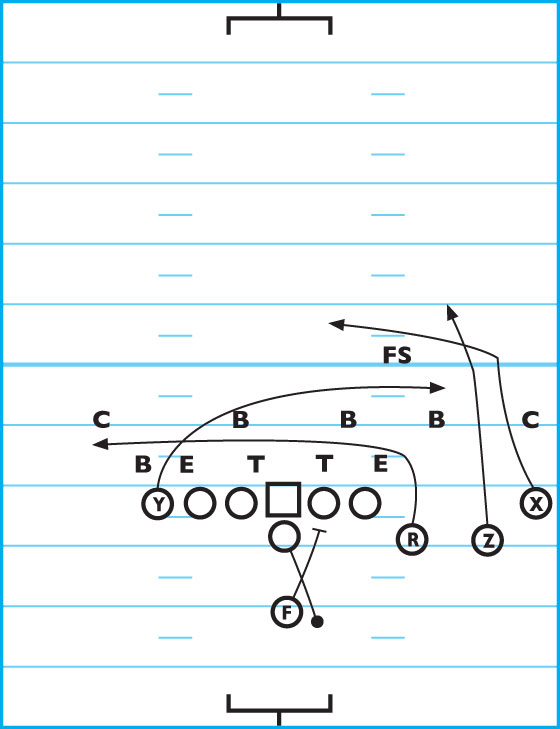
Countering Defensive Adjustments
As the season progresses, teams will try to take away the dig route in the middle of the field. To help counter this and to keep the defense honest, we’ll occasionally throw what we call the X Bend or X corner.
DIAGRAM 6: X-Bend.
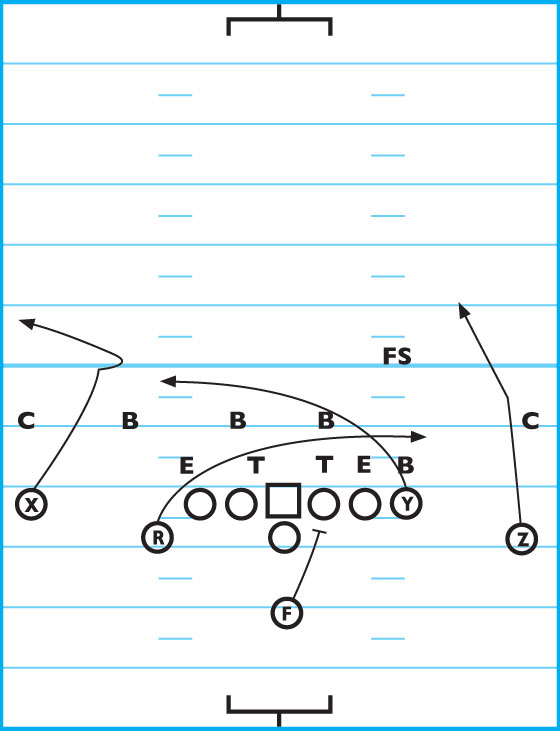
DIAGRAM 7: X-Corner.
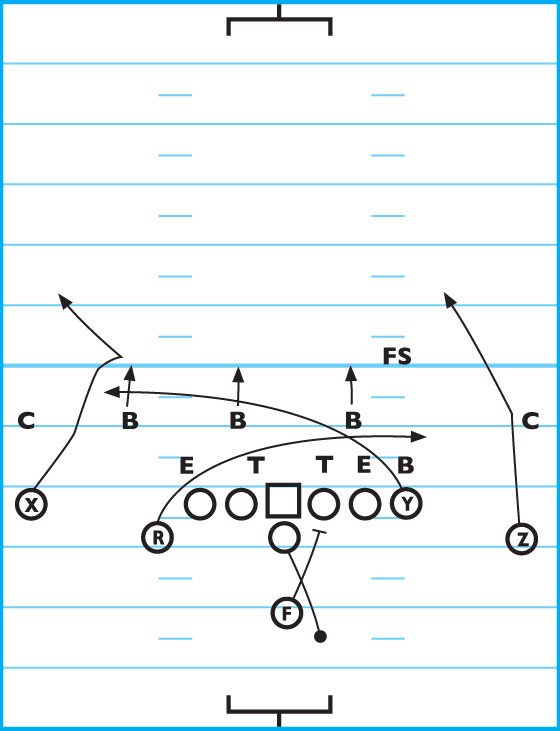
Against a predominately Cover 2 or Cover 4 team that wants to take away both the dig and post routes, we’ll throw in a tag called the “F-Delay.”
DIAGRAM 8: F-Delay.
Dig With No-Back Sets
You can also run the dig package out of no-back sets. The only change is that you need to have the No. 2 receiver on the 3-man side run a corner route to keep the strong-side cornerback honest.
DIAGRAM 9: Dig Routes From No-Back Set.
Inside Receiver Running The Dig
The only time an inside receiver will run the dig route in our offense is when we use motion vs. man-to-man defenses. This affects only the two receivers switching with motion and allows you to get a bigger, more athletic receiver against a linebacker or strong safety over the middle of the field.
DIAGRAM 10: Inside Receiver Running Dig Route.