This is an offense that was used by a majority of teams in the 80’s and early 90’s. Today some teams still run the Veer, but our team has started to use this offense out of the shotgun. This helped us improve to an 8 and 3 record in 2008, scored 23 rushing touch downs, averaged 27 points, and 161 yards rushing per game in 2008. This total was up from a 5 and 6 record in 2007, our team scored 14 rushing touch downs, averaged 16 points, and 95 yards rushing per game in 2007. Our offense involves 4 wide receivers, no tight ends, and fits us well because we are an undersized team.
Out of the shotgun this veer uses split back veer principals, kind of like the old Houston veer offense, just out of the shotgun. There are two ways that this can be run through a two back split set (See Diagram 1)
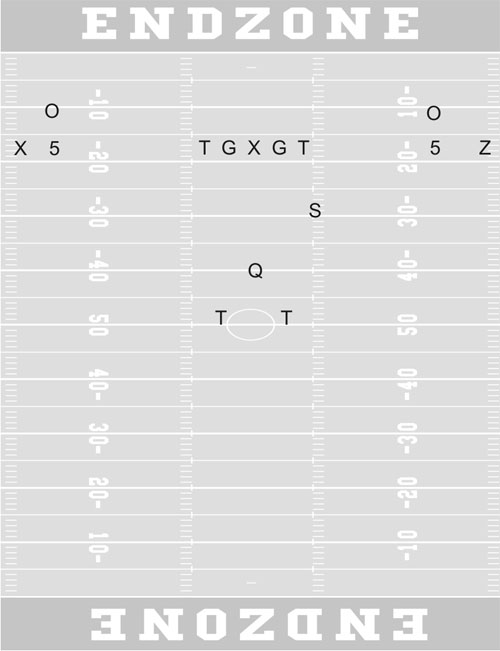
and a 2-by-2 double slot set motioning over the pitch back (See Diagram 2).
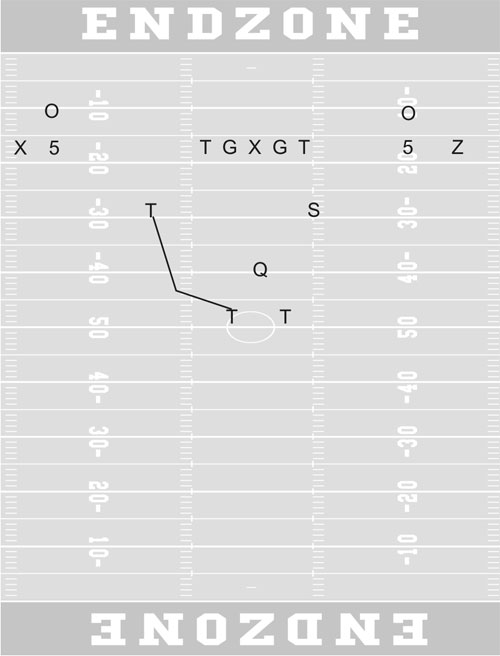
Running the veer out of the shotgun gives a huge advantage to the quarterback because he has more time to make the read out of the shotgun.
Lining up
The quarterback is lined up at 4 1/2 yards behind the center, this allows the QB to get closer to the LOS faster. His first step is at 3 o’clock if you were going right with his left foot following. He then ends up about 3 yards from the line of scrimmage reading the end. The QB first has his hands up after he receives the ball, then seats the ball in his stomach, gets his eyes on the end, then extends the ball by his right knee inside the full backs belly. Then as the QB is reading the end he makes a decision, by the time the full back gets to his left knee. If the end pinches or the QB sees his numbers he will disconnect
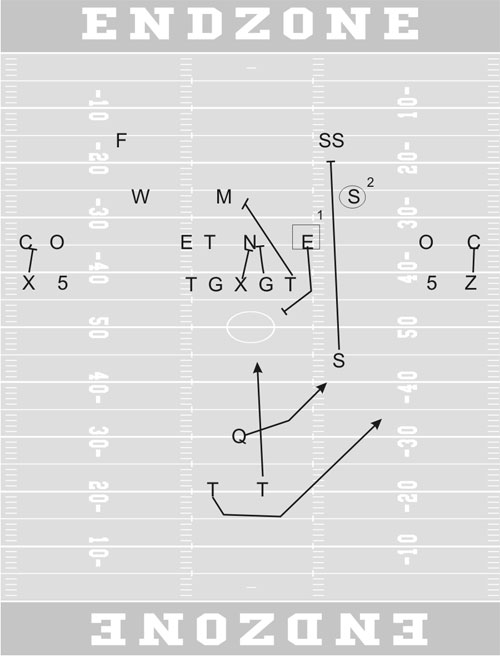
(See Diagram 3, the box is the disconnect read, the circle is the pitch read). Then the QB will read the outside line backer or the strong safety. If he comes at the QB he will pitch the ball to the tail back who will be 4 yards away from the QB. If the defender goes at the pitch back then the QB will keep the ball and turn up field. I tell the pitch back to follow the QB incase a defender brakes free there will be a pitch man down field. If the end comes up field (or the QB sees his numbers) then the QB will give the ball (See Diagram 4).
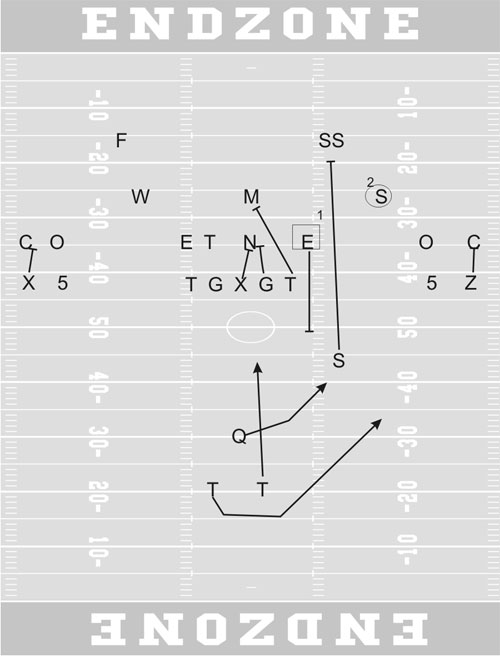
Full back is lined up at 5 or 5 1/2 yards from the LOS. If you run split backs with no motion then the backs would line up behind the Guards evenly. Slot or tailback will line up on the hash and then the QB sends him in motion (See diagram 2) and he keeps his path with a 5 by 1 yard relationship from the QB (5 yards away and 1 yard behind). We have a no tight end set all the time, so we tell our out side WRs to get to the numbers and our inside or outside WRs to get on the hashes.
Trap option
When the defense starts to adjust to the motion of the tailback over the formation, a good answer is the trap option. The tailback still comes over in motion and makes it look like they are going to run veer right, but they work back the other way and it is their responsibility to keep the 5 by 1 relationship with the quarterback. The quarterback will still fake veer right but then turn towards the left and attack the defensive end as the read man. The right guard will pull and pick up the first linebacker inside of the end. The full back will pick up the tackle over the right guard (See Diagram 5).
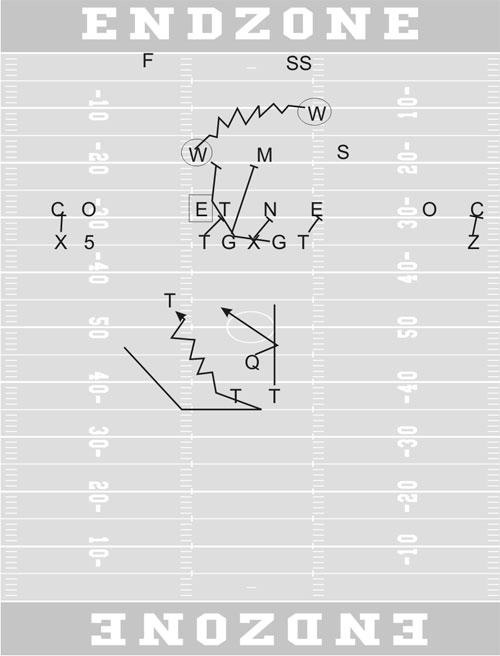
Reverse
The reverse is a play that we run when our coaching staff notices that the defense is flowing to the side that we are running the veer to. This has been a big play for us. We scored 3 times off this play and averaged about 11 yards a carry when we ran it (See Diagram 6).
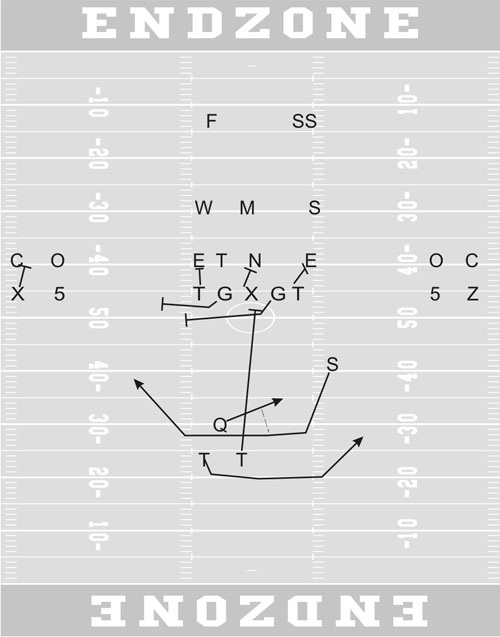
This is a good answer to defense who think that they can bring extra defenders up to stop the veer. Both guards will pull unless the linebacker in front of them blitz.
Play action pass
Another way to attack defenses off of the shotgun veer is play action pass. Through film study, our staff has noticed that there were some teams who would roll coverage from cover 2 to cover 3 when the tailback would go in motion
The slot will go inside the strong safety and then he will head outside the hash. The outside receiver will go vertical outside the numbers. The tailback will come in motion and keep the same path like he is going to get the pitch on the veer and he will be the outlet receiver. The back-side receiver will run a post and if the safety comes up then he should get the ball.