THE QUARTERBACK in our offense has the freedom to change the play at any time. We teach our QBs to take what the defense is giving. Every good offense “steals” yards from the defense whenever possible.
This is especially true on first and second down. We send suggested plays into the game for the QB. If the play will work, we want him to run it. However, if he sees a problem with the play, we expect him to change it and go to a good one.
We like to say “the QB has the chalk last.” That means that he can always take what the defense is giving and call his own play at the line of scrimmage.
Using Coverages
The defense cannot stop everything. We use numerous single and no-back formations to spread out the defense. This also reduces the number of defensive calls that can be used and the defense will have to tip their coverage based on our formation. This simplifies the QB’s decision on what play to check to.
When facing different man schemes, use motion to help the QB recognize the coverage. A six-step pre-snap progression shows our QBs how to steal yards. This pre-snap read will tell the QB where and what play he may want to check off to.
Learn Defense
Teach your QBs from day one how to read defenses and explain to them how defenses are developed. The QB needs to be able to go to the LOS and understand what the defense is trying to do. He must understand this to successfully steal yards.
Every down is an opportunity to run a good play. It’s time well spent to let your QB change the play if the defense mixes things up. An understanding of defenses will also help him decide which side of the field a particular play has the greatest chance for success. For us, success means a pass completion or a run of more than 3 yards.
Read The Defense
The following is an explanation of our QB’s pre-snap progression.
1. Read the box. First, we want the QB to read the box. The box is located 10 yards down field from the LOS, and extends from tackle-to-tackle. This is going to tell him immediately how many defenders are in the middle of the field.
Teach him there can be 0, 1 or 2 in the box. This will give him an idea of the number of defenders in the under zones.
2. Depth of the secondary. Your QB should check the depth of the corners. Are they playing back 7 to 8 yards? Are they up 3 to 5 yards? This is one of the first areas where you can steal yards.
3. Check the eyes. Have him look at the eyes of the defensive backs, especially the corners. If they’re looking at the QB, it could tip him that it’s zone coverage. If their eyes are focused on the receiver, it could mean they’re likely in man coverage. This may help your QB anticipate a blitz.
4. Leverage. Have your QB check the leverage of the corners. Are they inside? Are they outside? Their leverage will suggest man or zone coverage and, more importantly, it can tip the QB to where the DB will be getting help.
5. Is the blitz coming? The QB must be able to identify potential blitzers. Are they leaning or are they more balanced? This will help with the hot throw.
6. How many up front? Lastly, the QB should count how many defenders are up front. The front is the number of defenders lined up from tackle-to-tackle within 3 to 5 yards off the ball. If there are seven or more, he should check to a pass. The previous pre-snap reads have given him enough information to check to a good pass play.
If there are six or fewer opponents in the front, the QB can check to a run or pass, because there will be enough players to block for either choice.
It Worked!
In a recent season our QB threw for 2,747 yards and set the all-time record for the state of Iowa. He had 27 touchdowns and only 5 interceptions. He was 210 for 348, a 60 percent completion rate. Our QB spread the ball around. We had four receivers with more than 25 receptions.
This pre-snap progression has allowed us to all but eliminate bad plays. Our QB has an idea of what to expect from the defense before the snap of the ball. We want him to confirm his pre-snap read with his post snap read. After confirming his pre-snap read he plays QB. We want him to play catch with the receivers.
Learn The Coverages
These diagrams include
coverages that can be used to teach your QBs the basics of
pre-snap progression.
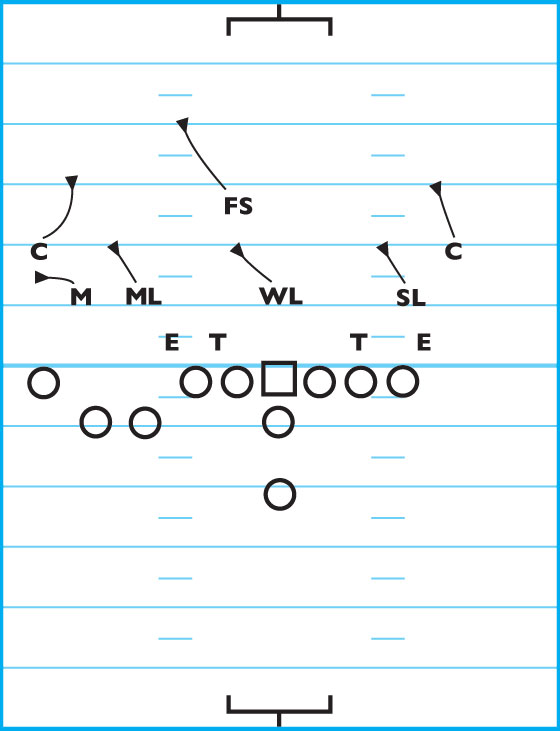
Cover 0, 0 Deep, 2 Under, Man.
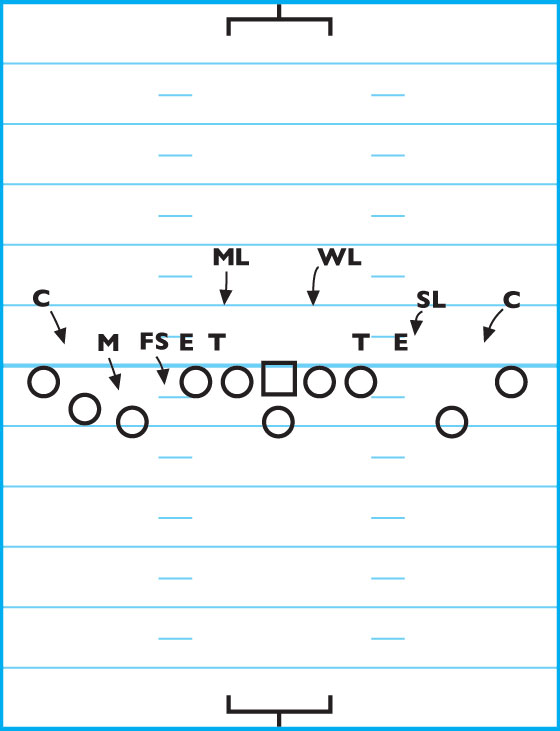
Cover 1 Deep, Man Under.
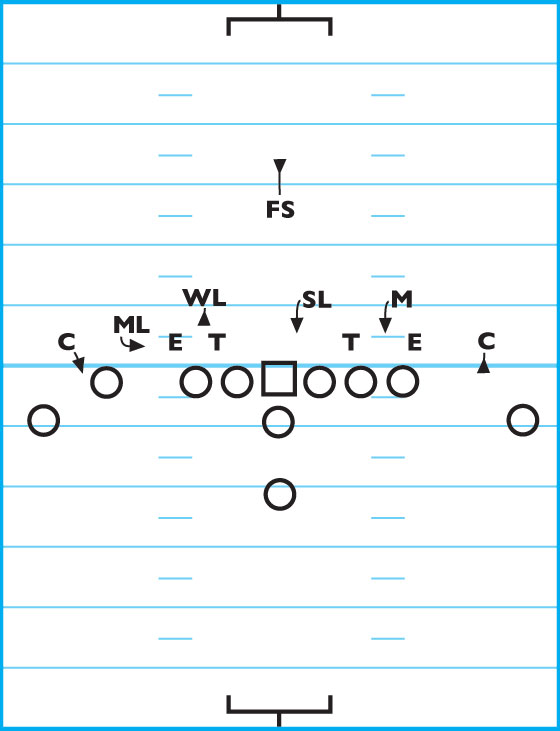
Cover 2 Deep, Man Under
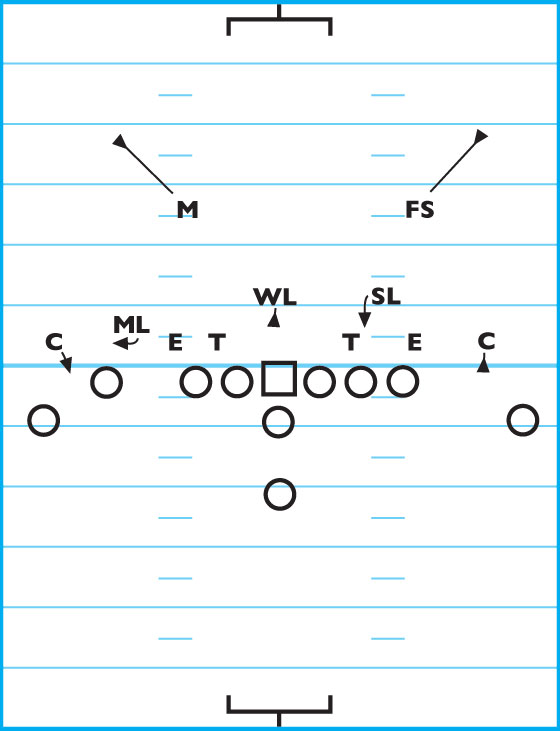
Cover 2 Deep, 5 Under.
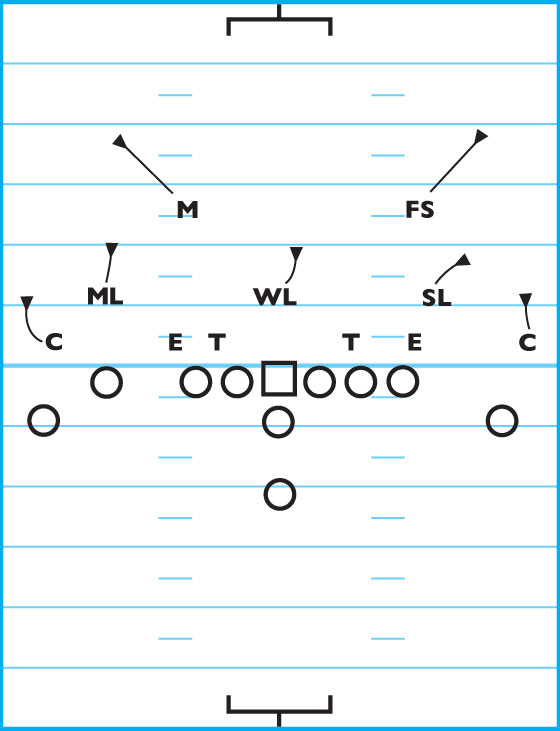
Cover 3 Deep, 4 Under
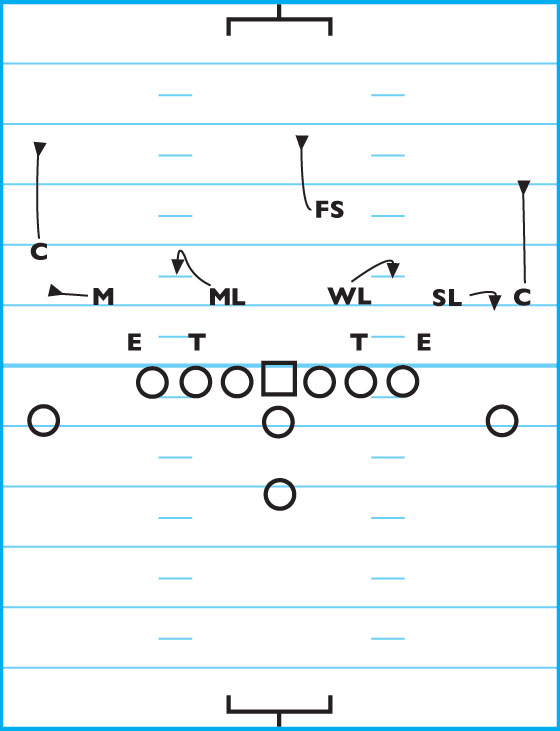
Cover 4 Deep, 3 Under
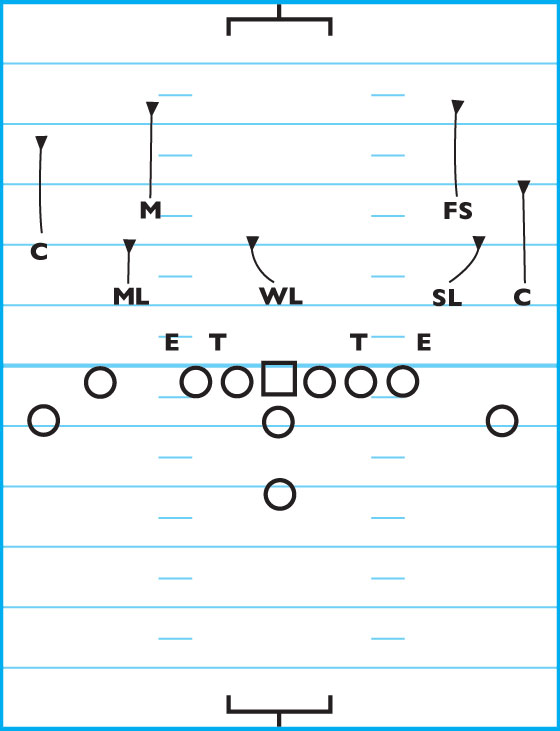
Cover 5, 3 Deep, 4 Under