EVERY FOOTBALL team has one or two base plays upon which the offense is built. Typically, the team then builds a counter run and a play-action pass that simulate the original play but attack other areas of the defense.
Our offense is centered around the counter trey and the speed option — both of which are run from the shotgun, one-back set. See how we diversify our offense with simple adjustments.
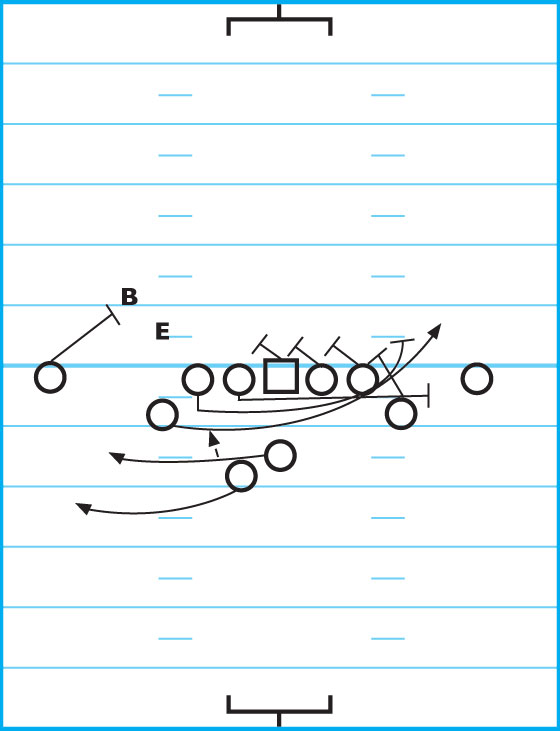
DIAGRAM 1: Counter Trey. The counter trey features play-side blocking down to seal the inside and backside linemen pulling to the play side. The fullback fakes away, then turns, takes the ball, follows the pulling linemen and cuts behind their blocks. The quarterback reverse-pivots (this hides the ball better), hands to the FB and boots away.
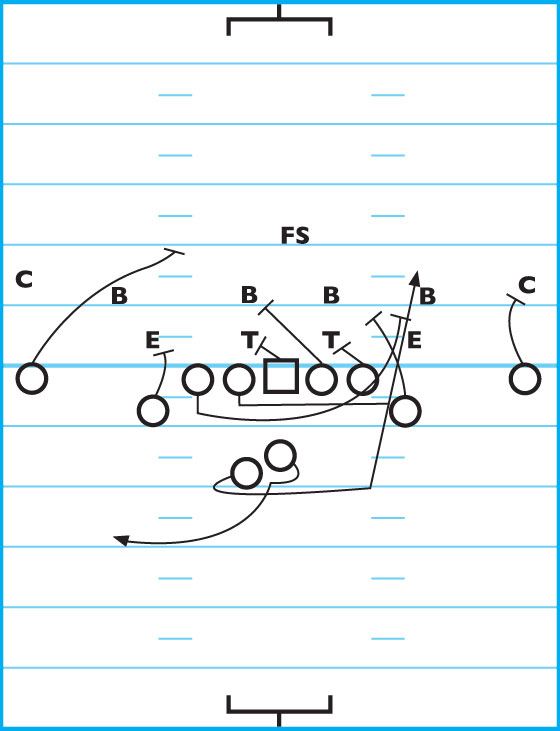
DIAGRAM 2: Bootleg Pass. The bootleg pass corresponds to the counter trey. The linemen block as if it is a counter trey but they do not go down the field. The QB fakes the handoff to the FB for a count of two, the boots away from the fake at a depth of 8 yards and 8 yards outside the tackle. The fake sells the play. Tell the QB to think run first, then pass. If the QB sees green grass with no one in front of him, he has to run the ball. The front-side slot hooks the end man on the line for a count of two, then pivots into the flat at a depth of 3 yards. The backside slot runs a drag at a depth of 8 yards — he is the hot receiver. The wide receiver runs a three-step slant for 10 yards, then cuts back to the sideline at 18 yards. The backside WR runs a deep post.
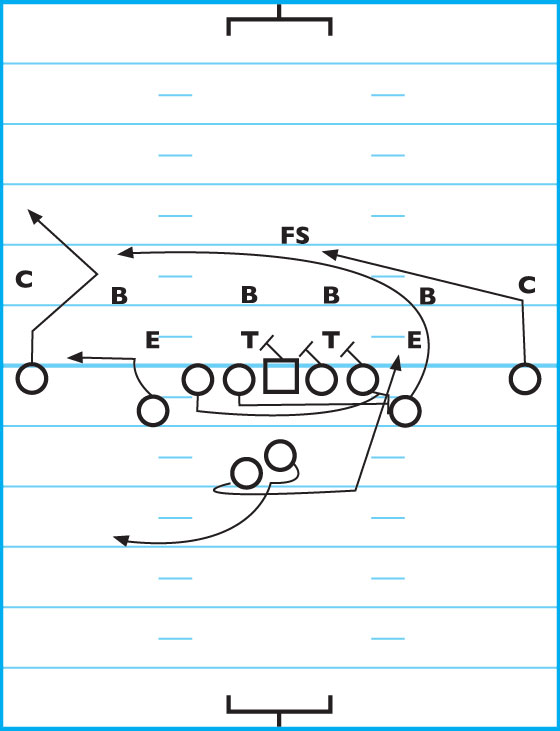
DIAGRAM 3: Speed Option. This play has the line slip-blocking to the play side. Do not block the play-side defense end. The play-side slot “arcs to the force” (the defender who has the pitch responsibility). The FB arcs to a pitch relationship of 5 yards out and 2 yards back from the QB. The QB takes the snap, and attacks and reads the DE. Instruct the QB to pitch the ball to the FB unless the DE runs up the field. If the QB turns up the field, instruct the FB to follow the QB and neither player should give up on the possibility of the pitch.
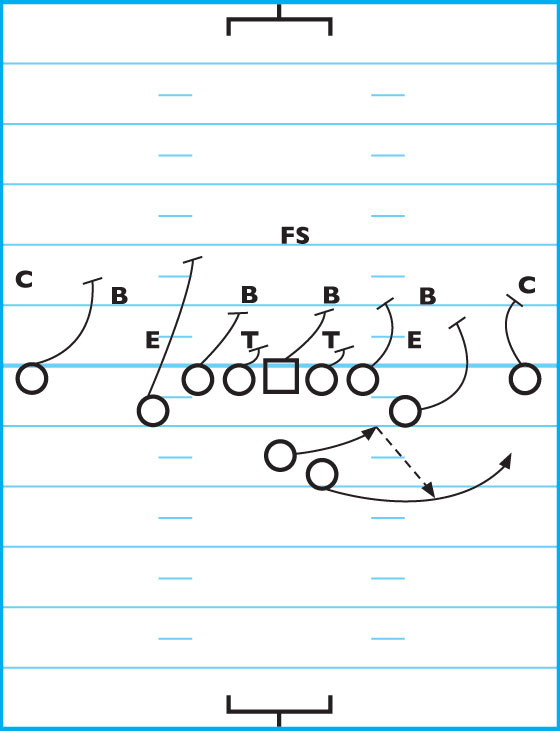
DIAGRAM 4: Shovel Pass. Combine the counter trey with the speed option (which makes the play a shovel pass) to diversify the offense. The shovel pass starts with the QB and FB in a speed-option look. The line blocks like it’s a counter trey. The backside slot sprints with the pulling tackle and looks for a shovel pass from the QB, then cuts up the field behind the pulling tackle. The QB slowly opens three steps while looking at the FB, then shovel-pitches to the slot.
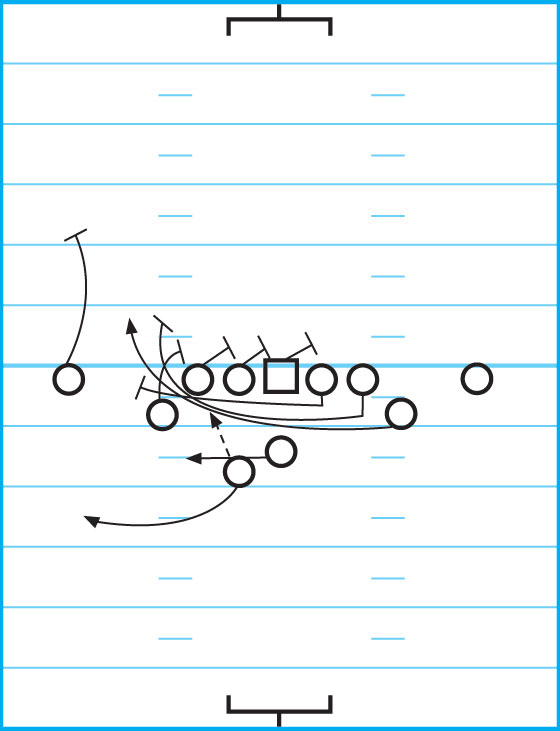
DIAGRAM 5: Reverse Shovel Pass. The reverse shovel pass easily follows the speed option or the shovel pass. The QB and FB run a speed-option look and the line runs a counter trey in the opposite direction. The QB pitches to the slot who is following the pulling linemen. The QB soon learns to read the DE. If the DE sits, the QB pitches to the slot. If the DE follows the slot and pulling tackle, the QB keeps the ball and runs the speed option. In this case, the WR cracks on the defender responsible for the pitch.
Always tell the officials prior to the game that you plan on running shovel passes. This way, the referees are expecting them and won’t accidentally rule the plays a fumble when they actually are incomplete passes. Also, shovel passes are particularly effective inside the red zone, which is another way to keep the defense guessing while adding simple adjustments to your offense.