SCREENS CAN BE an effective method for countering an aggressive, blitzing defense. The following screen package has proven to be extremely successful in neutralizing blitzes and the pass rush. This package has also made our overall passing game more explosive.
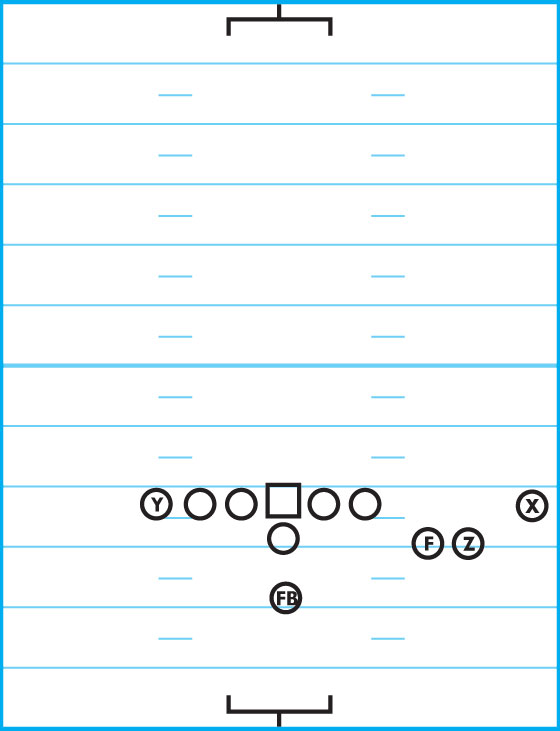
We can run any of the screens in this package to any of the five possible receivers, out of any formation. Our most effective passing formation is out of trips (left or right).
DIAGRAM 1: Missile Screen. This play is a middle screen to the fullback. The quarterback starts under center and uses his drop to pull the defensive linemen, blitzing linebackers and defensive backs upfield.
The offensive linemen sell the drop back for a two-count, release downfield and seek out threats to the middle screen, keying on any LBs who are spying the FB. The FB tries to get lost in the shuffle and quickly turns to catch the screen pass. The QB’s pass must be float over the charging defense.
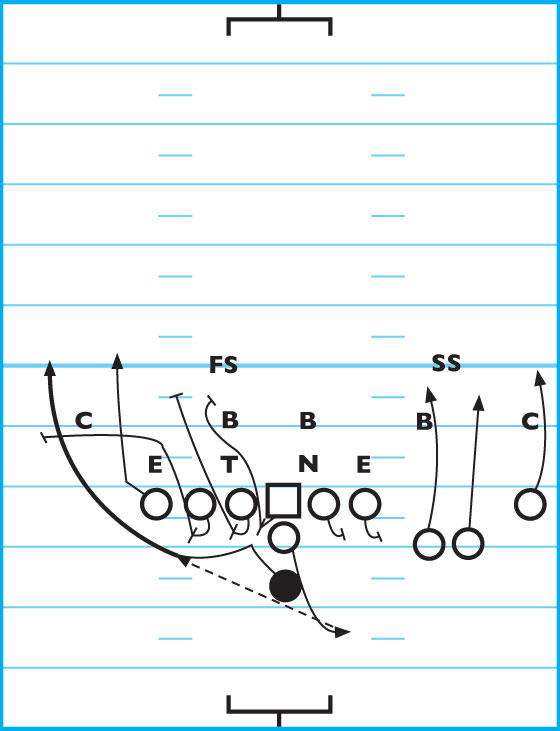
DIAGRAM 2: Trips Right, Apache Left. This screen can be run to either side and is similar to the missile screen, except the FB is outside the OTs. The FB must get “lost” in the middle of the line and then pop out to the call side. The call-side OG and OT block for a two-count, release to the flat and kick out the first off-colored jersey.
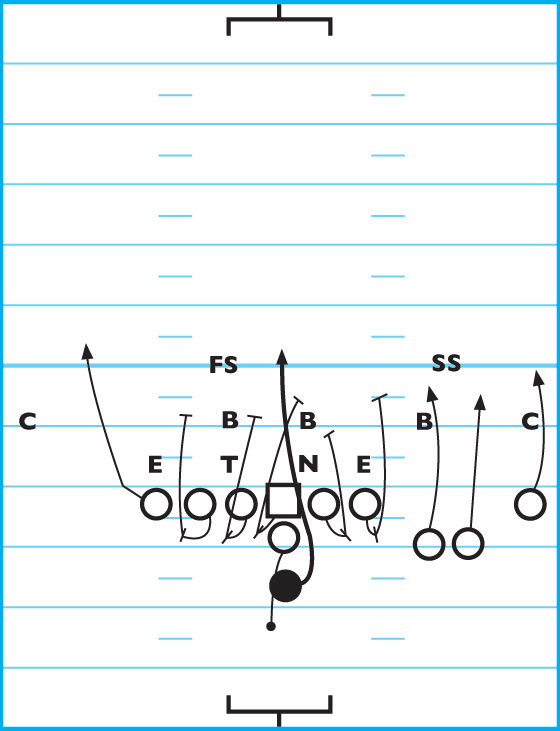
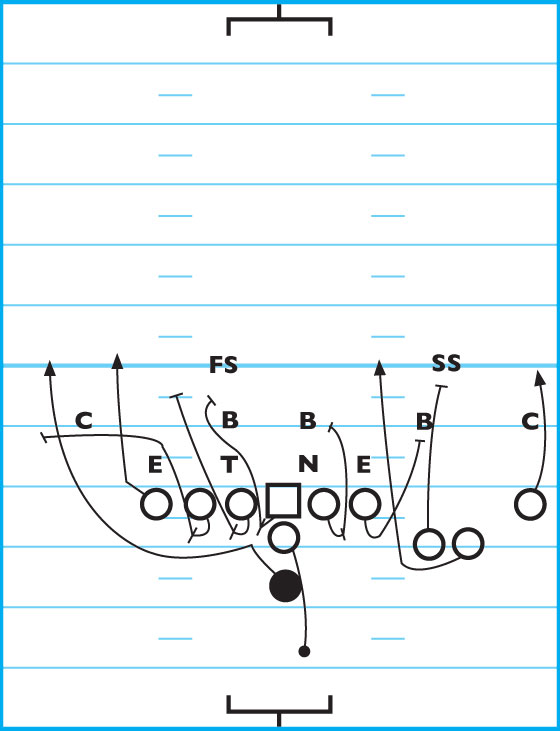
DIAGRAM 3: “Comanche” Screen. This is a double-screen that can be run to either side. The QB must be quick and smart with his reads for this play to be successful. It’s a great play to use against defenses that like to disguise blitzes before the snap. An Apache screen is run to the TE side, while a slip screen to the second receiver is executed on the trips side.
The linemen to the TE side use Apache blocking assignments. On the trips side, the inside receiver blocks the defender over the second receiver.
DIAGRAM 4: Bubble Screen (Right or Left). This is a bubble screen to the inside receiver. It’s been effective against zone coverages or deep alignments in outside secondary players. Unlike our other screens, which take time to develop, this screen develops quickly and allows us to get to an edge without running the ball or putting a receiver in motion for the toss.
The QB takes a 1-step drop and quickly fires the ball out to the inside receiver, who takes a curved path and attacks the first opening.
DIAGRAM 5: “Rocket” (Right Or Left). This is a jailbreak screen to the outside receiver. The second receiver blocks the man over the outside receiver, while the inside receiver attacks the man over the second receiver. The FB exits to the play side and blocks the man over the inside receiver. The TE runs off the corner and then picks up the safety.
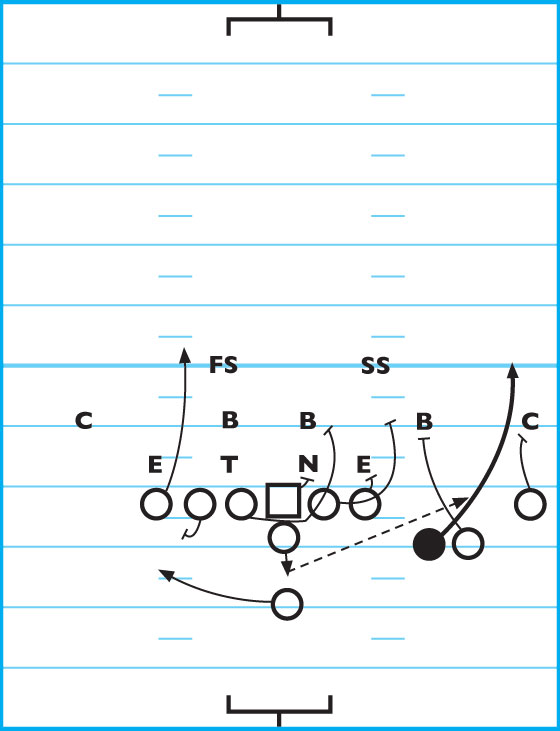
The QB takes a deep drop and looks for the “rocket” receiver who takes three steps back on the snap and crosses behind the LOS.
DIAGRAM 6: “Yankee” (Right Or Left). This is a screen to the TE using sprint-out protection. At times, we’ll “swing the gate” with our offensive line and TE to protect against the backside blitz and have the QB roll to the trips side, giving him a different launch point on the pass.
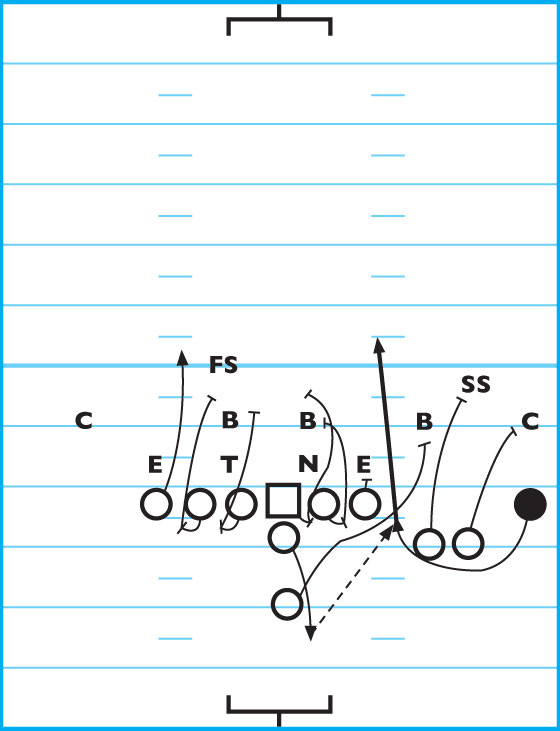
The trips receivers run off their defenders. The TE stays with the swinging gate until the offensive linemen release. Once this happens, the TE pivots away from the LOS and separates himself from the defenders. The QB rolls out to the trips side, keeping his eyes on the trips receivers until the last possible second, and floats the ball to the TE.