Some coaches like to use the run to set up their passing game while others use the pass to set up their run game. In my opinion, you can use screens to set up both the pass and the run at the same time. If you have a good screen threat, you will slow down an opposing defense’s pass rush. This obviously will help your offensive line and allow your quarterback more time to throw the football downfield. On the flip side, if you incorporate wide receivers into your screen package, you are going to see the defense stretch itself thin, thus having a favorable numbers match up in the box by creating huge running lanes. This, to me, is what the spread offense is all about; creating favorable match-ups for your best athletes out in space. There is no better way to do this than via a screen.
The most important piece of advice that I can give someone who is developing a screen package for their offense is to make sure that you have the ability to screen to every position on the field. We go a step further and run the same screen to multiple positions on the field. This allows us to throw more screens in a game because the defense has absolutely no idea where the football is going.
We run a no-huddle spread offense and consider our screen package as part of our run game due to the fact that screen plays are such high percentage throws. Even for the most pass-happy teams, you can control the clock because of all of the completions. In my experience, screens are a great way to slowly build the confidence of a young quarterback. Diagrammed below, I have the basics to our screen package (See Diagram 1).
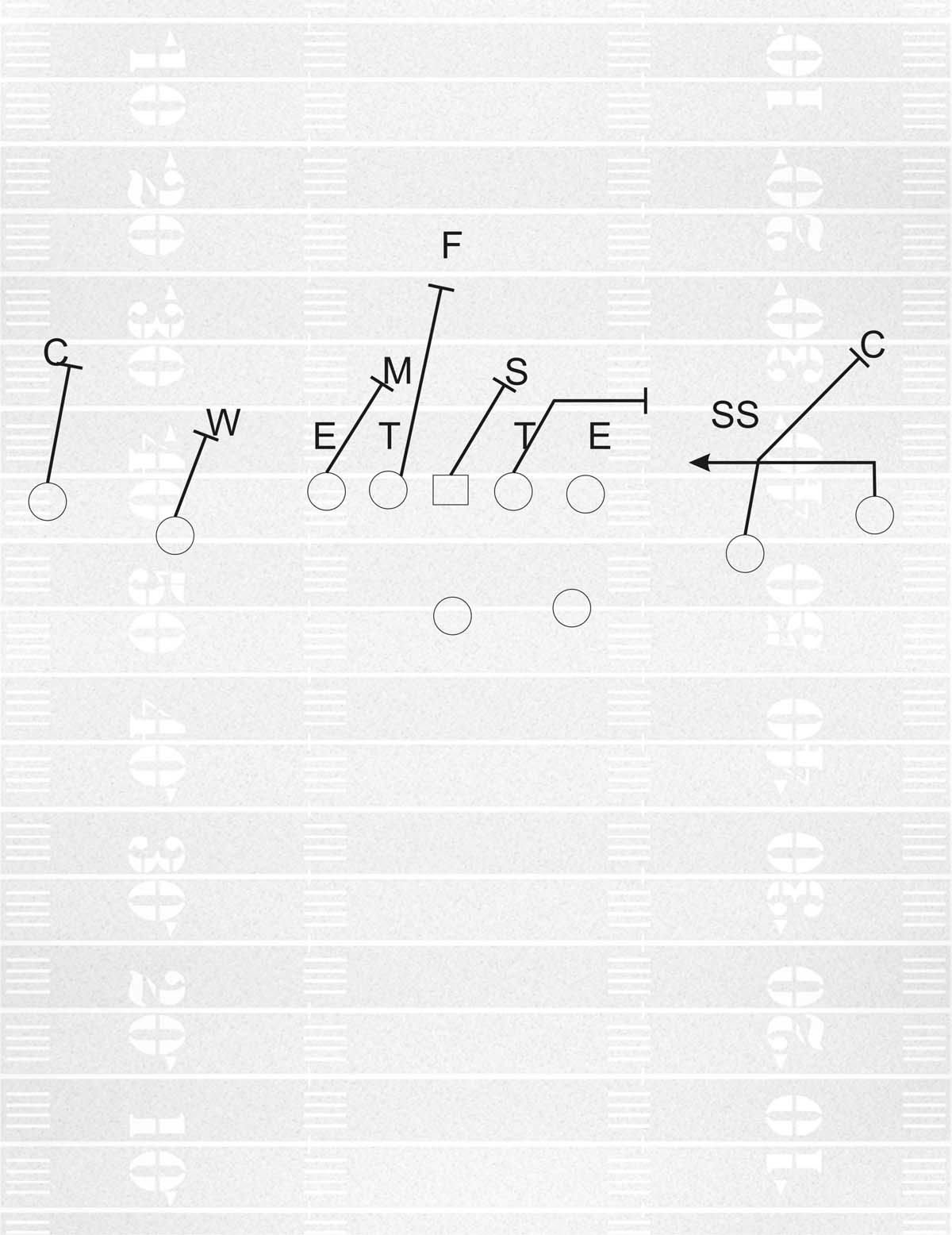
I wanted to stay very general so I have everything diagrammed in either a 2 x 2 or 3 x 1 set, which are base formations for us, and against a 4-4 Cover 3 defense.
My favorite screen to throw is the Jailbreak Screen (See Diagram 2).
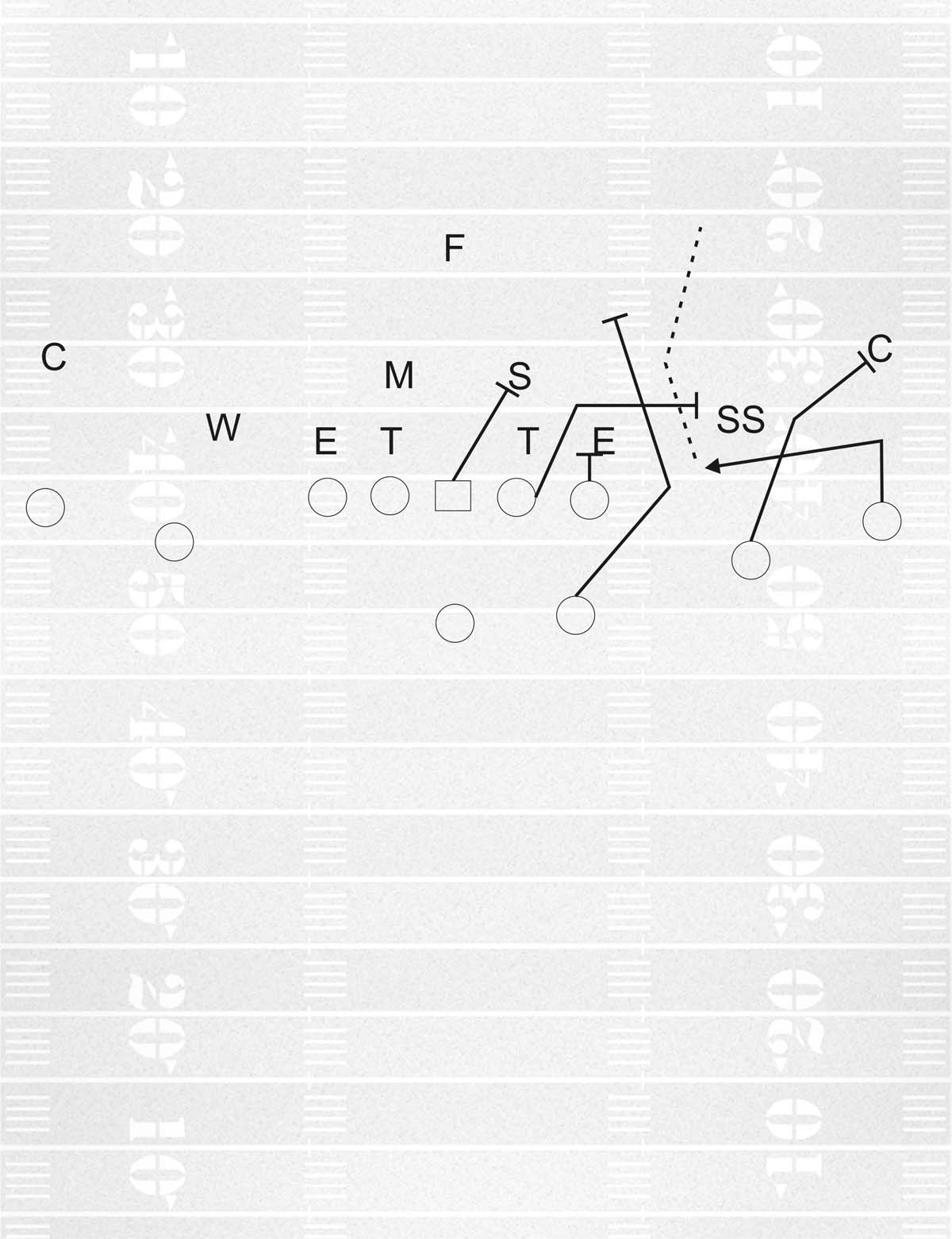
We have had great success with this concept. This play is great against an aggressive blitzing defense. It’s a very easy throw and you can get your best skill kids on the outside with the football with a wall of blockers in front of them.
This is a screen that we throw to all of our wide receivers. It is imperative that the defender over the receiver catching the football is blocked. We usually like to do this with the player inside of the intended receiver. This doesn’t need to be a devastating block, but it should disrupt the defender’s path to the football and create some open space for the receiver to catch the football. We like to pass set the play- side end. This creates a nice throwing lane for the quarterback. The play-side guard is responsible for the first player outside of the box. All releasing offensive linemen should pass set for a count to invite the pass rush upfield before releasing. This play usually ends up hitting toward the middle of the field or down the opposite sideline.
The next screen is very similar to the Jailbreak Screen but instead of trying to work toward the middle of the field, this play is designed to stay toward the sideline. We call this our Tunnel Screen (See Diagram 3).
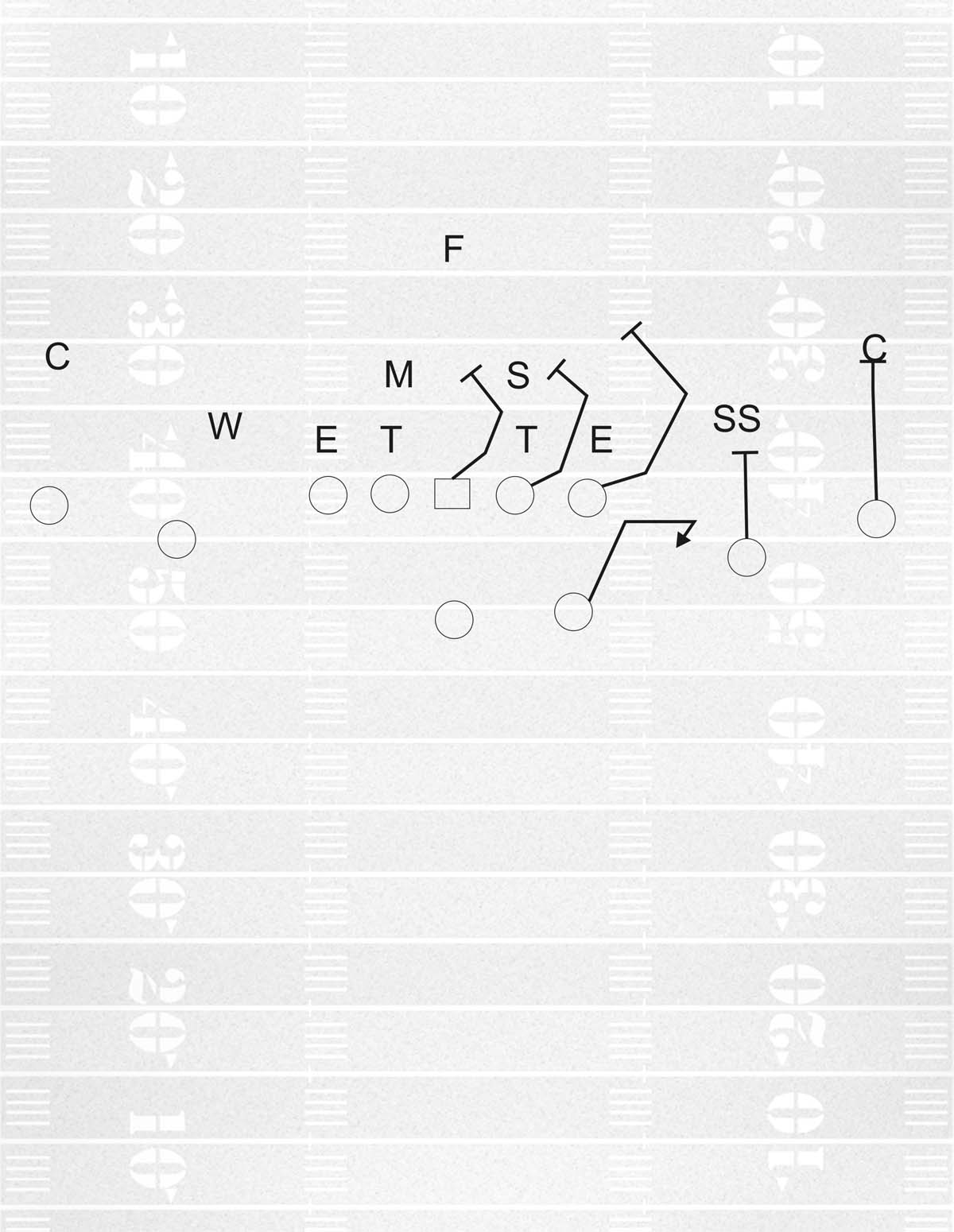
Just like the Jailbreak Screen, we want to block the defender over the receiver catching the football. The play side tackle again pass sets the end and the guard is responsible for the first defender outside of the box. If the center is uncovered, he should try and work up and get a hat on the middle linebacker. We also like to release the back to try and pick up any defenders that may be out there. The receiver catching the football needs to take three solid vertical steps before working back down the line of scrimmage. After the catch is made, the receiver needs to get vertical immediately and try and work back out toward the sideline. The quarterback should look off the defense and maybe even pump fake before delivering the football.
I am a big proponent of utilizing backs in the passing game. One of the ways that we do this is by running more of a traditional slow screen to the back. We release the tackle, guard and center. They should try and hold up for a two count before releasing downfield. The center and guard should be looking inside first for someone to block. We want our tackle to look outside to the inside. The back needs to step up like he is in pass protection before slipping behind the pass rush. The back needs to get width as he sets up for the screen.
We have been very successful with our sprint-out package and our Rocket Screen is a great complement to that package (See Diagram 4).
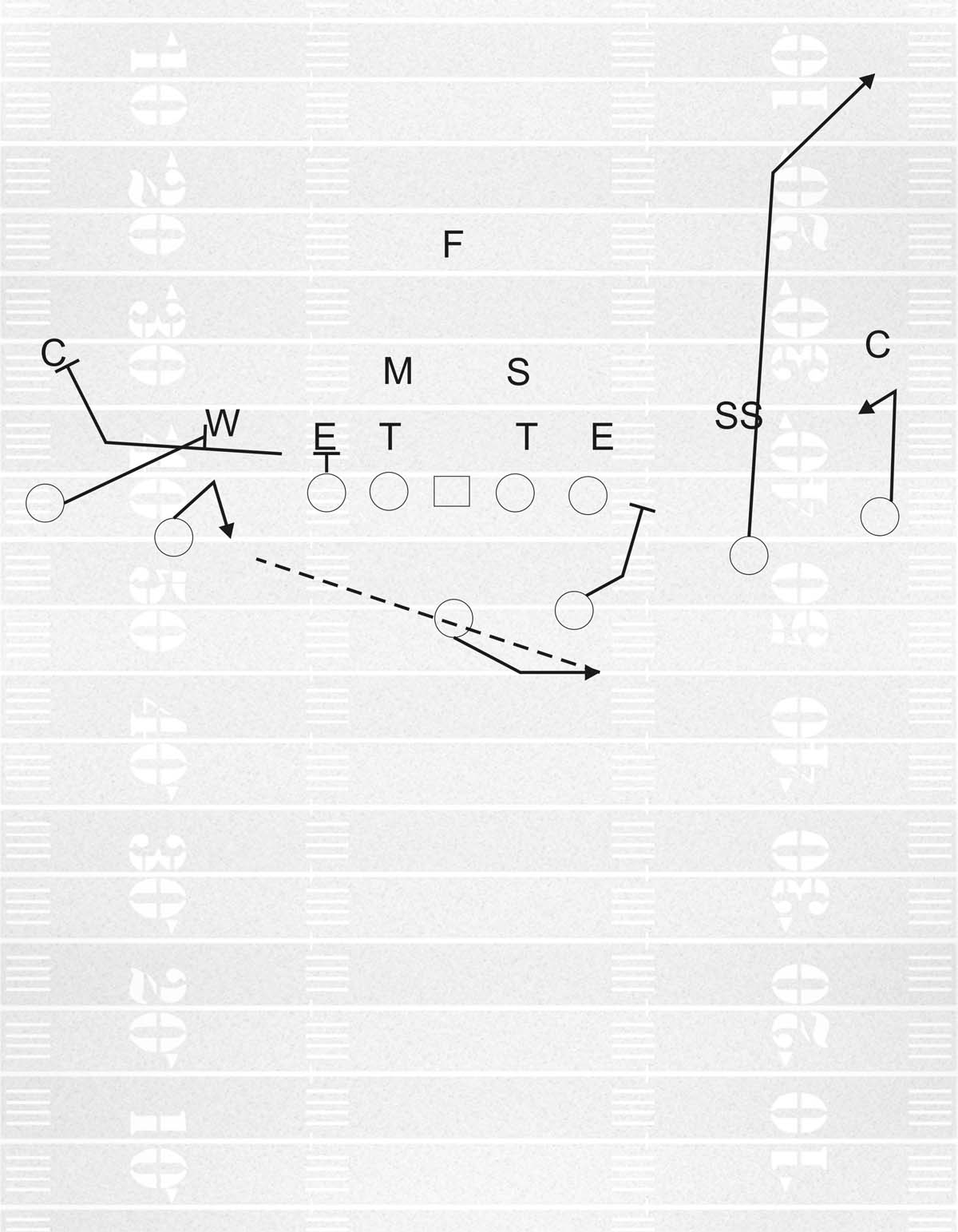
The Rocket Screen works very well against a defense that likes to roll its coverage toward the sprint out. This is a great play against a team with lazy backside coverage.
The quarterback should take approximately three sprint-out steps away from the side that we are screening to. The back side slot receiver comes off the ball at half speed as if it’s a sprint out away. He slowly needs to work back behind the line of scrimmage. The quarterback should then turn and deliver the football back to the slot receiver. The play side offensive tackle should pass set for a count and then release flat down the line of scrimmage for the cornerback. The outside receiver should crack the outside linebacker. Again, this is a great play against a defense that is lazy with its back side coverage on against any type of sprint action.
Finally, we have our Crack Screen (See Diagram 5).
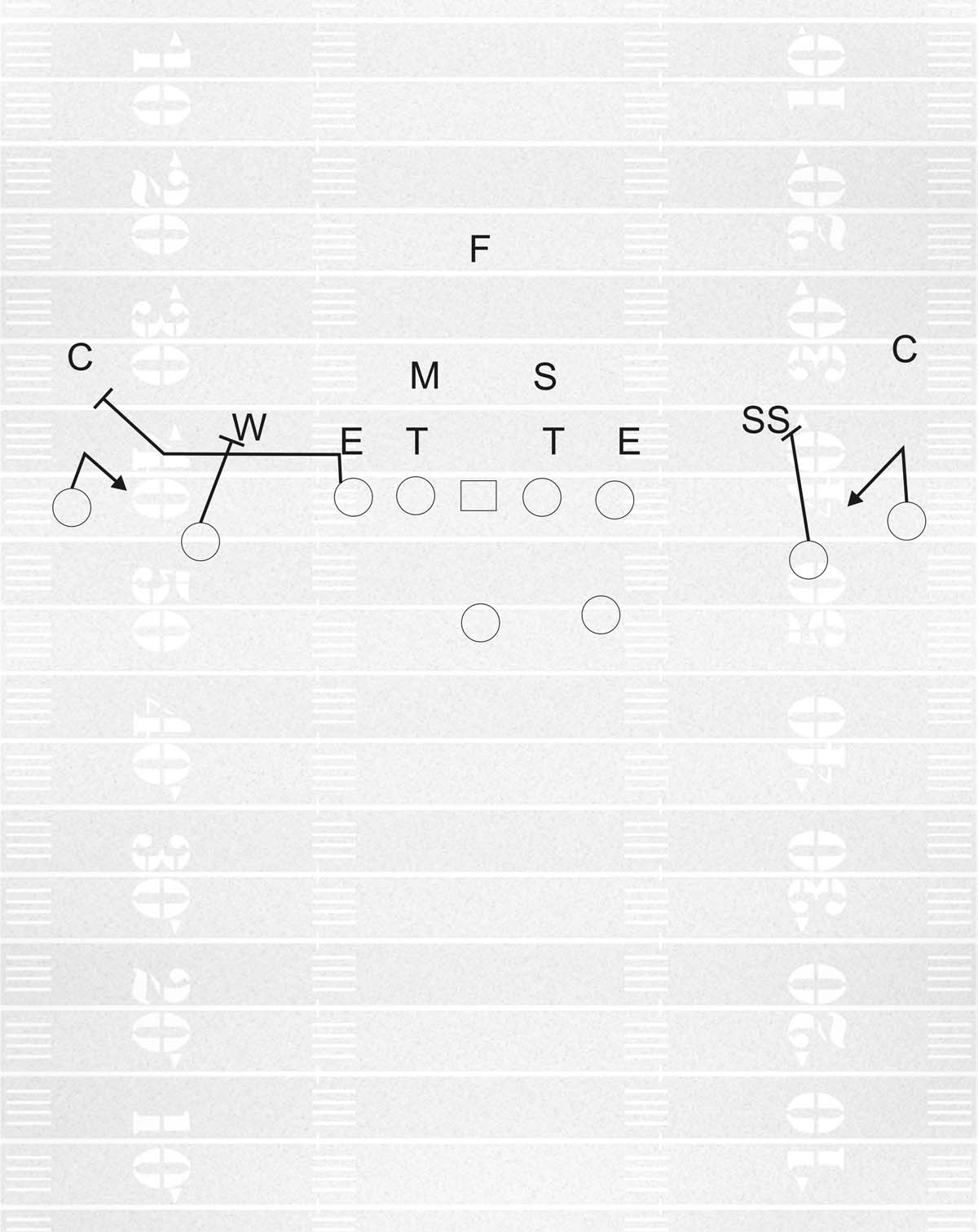
This is very similar to the Rocket Screen except for the fact that now we want to get the football to our outside receiver and we aren’t faking any sprint action. This is a screen that works well into the short side of the field. I generally like to have athletic tackles who can get out on the edge to do these types of things. When it works well the cornerback has no clue what we’re doing until it’s too late. If nothing else, the tackle provides some interference for your receiver to use out on the edge. The offensive tackle releases down the line of scrimmage on the snap of the football. Ideally, he will get a piece of the defensive end as he is releasing to at least slow him down. The quarterback obviously needs to get rid of the football as quickly as he can. It can help if your back slides over to block the defensive end as well.
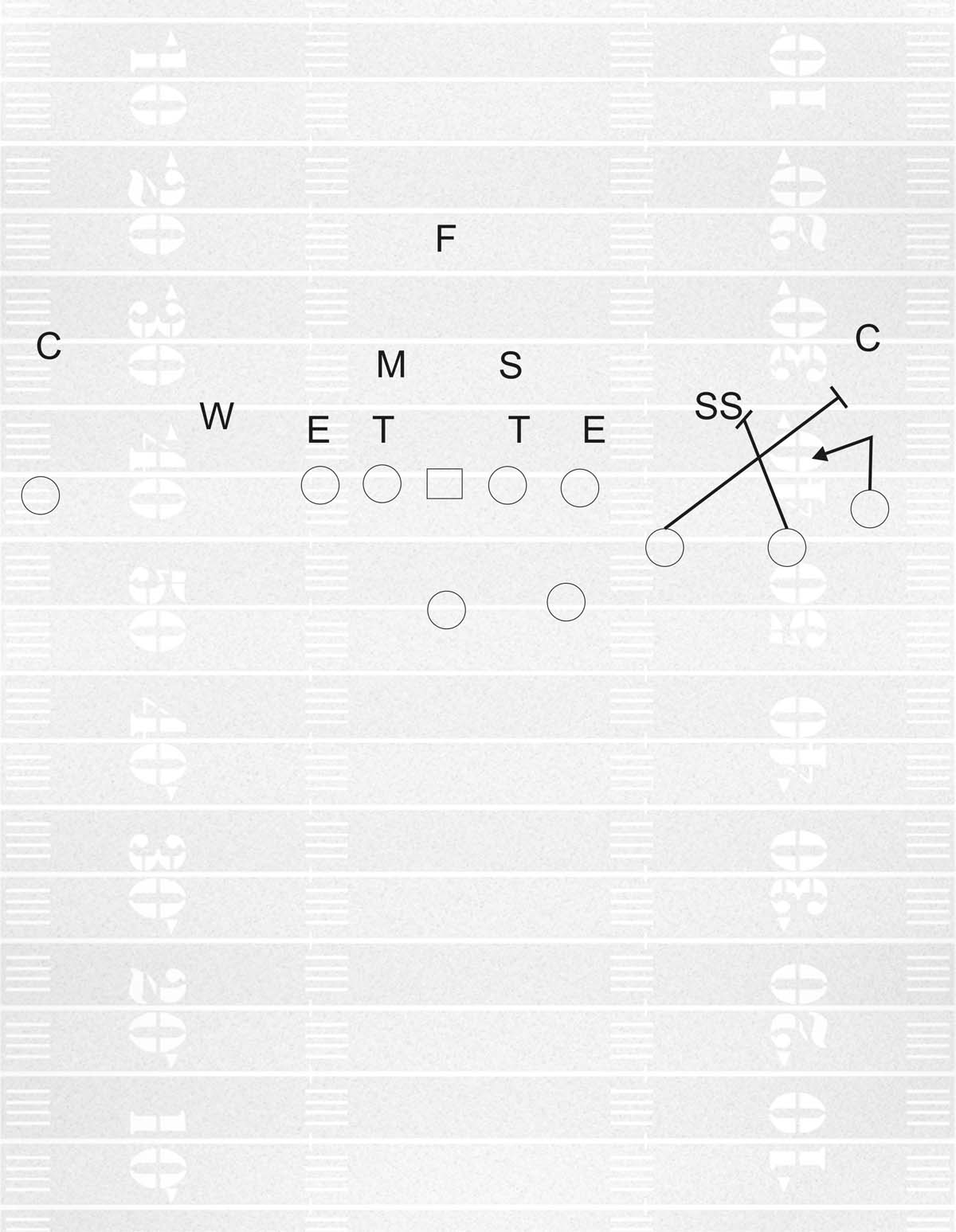
The last things that I would like to touch on are our Bubble Screen (See Diagram 6)
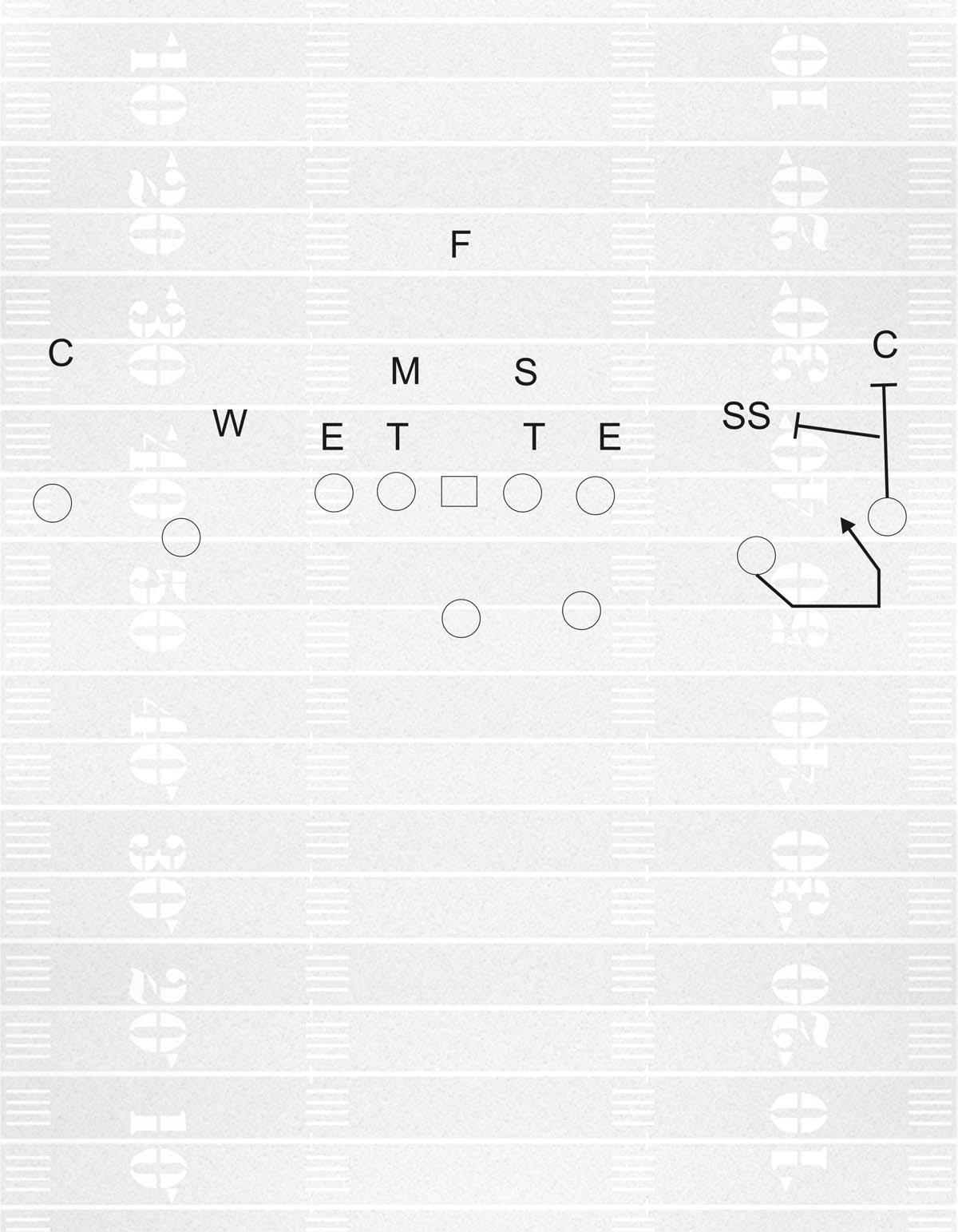
and what we call our Key Screen (See Diagram 7).
They are classified as screens, but to me they are automatics. By automatic, I’m talking about concepts where we don’t necessarily release any offensive lineman, but they are simple throws that take advantage of a certain defensive look.
Whenever we are in a trips set, and the defense attempts to cover our three guys with two, this is an automatic check for us. If the defense has a linebacker apex, this is an easy throw and catch for our number two and three receivers that usually produces solid yards.
The middle receiver blocks the linebacker. This should be a relatively easy thing to do because of the leverage that he already has on this guy. The number three receiver will aim three steps in front of the intended receiver to crack the corner. This can often be a big hit that the cornerback has no idea is coming. The receiver catching the football should use three vertical steps and then come right back to the line. If you see the corner really starting to bite up on this play, you can have the number three receiver act like he is going to crack the corner and then have him turn upfield. If you throw this once, it should keep the defense from flying to the football too quickly.
We have had very good success with the Bubble Screen. By using this concept alone, you have helped out your running game tremendously. This screen forces the defense to extend and now you only are responsible for blocking the defenders in the box if you choose to run the football. We have our outside receiver push three steps vertical and read the corner. If the corner is still bailing after three steps, he should turn and crack the outside linebacker. If the corner comes up to get involved with the play, he should obviously block him and we will take our chances with our slot receiver in a one-on-one situation with a linebacker. I call this an automatic because anytime a defender doesn’t extend far enough, this becomes a pitch and catch for our kids.
A sound screen package is a benefit to any offense. I personally like the advantage of being in a spread offense with the ability to get the football to our best players in a variety of ways. I have had good success with these concepts and, hopefully, they will give you some good ideas about how you can become more efficient in the screen game. By incorporating some of these screens into your offense, you are going to be more successful with everything else that you do.
Q&A
with Chris Meyers
How much time do you spend on your screen game each week?
Ideally, I like to run 40 to 50 screens during the week. I coach at a small school so we have several players going both ways and we have to split our practice time. We don’t have the luxury of having both the offense and defense practicing at the same time. The offense gets half of the practice on Monday, the full practice on Wednesday and we get some work in on Thursday. Then, after warm-ups, the first period we always go to is a team screen period. We like to work about 15 plays in this period.
We have two coaches spotting the football which speeds up the pace of practice. We are a no-huddle team so after the offense gets to the football we quickly get the signal in and go. This allows us to get through this period relatively quickly. This is also a great conditioning tool. I have found that it is easier to practice your screens in more of a team environment. We will also work a few more screens into our full team period as well. We do not work any screens not involving the offensive line in this period (Bubble and Key Screens). We will work on these concepts in more of a 7-on-7 environment.
Which screen works the best vs. the blitz?
My favorite blitz call is the Jailbreak Screen. This is my favorite play in football. We have had tremendous success with this play. I love the versatility of being able to throw this one screen to every receiver on the field. If executed properly, this play can hit for big yardage every time. This is a perfect call against an aggressive blitzing defense.
The football is out of the quarterback’s hands quickly. Your offensive line has no blitz pick-up responsibilities. The WR catching the football is in the open field with a wall of blockers in front of him and not many defenders. If the defense is bringing heat and playing man coverage (Cover 0), this makes blocking even easier for your other receivers. If you are playing a young quarterback and the defense is bringing heat to see how he handles it, it’s a relatively easy throw for the quarterback. This is the perfect call against a blitz- oriented defense.
In which situations do you like to call a screen?
To me, there is never a bad time to call a screen pass. Everyone knows that third and long is a big screen down. Like I stated in the article, I utilize screens to open up the rest of what we do offensively. I like calling screens early in the game on first down. It’s an easy completion and usually for positive yardage. It can build the confidence of the quarterback. It slows down the pass rush and takes away some of the defense’s aggressiveness. Our offensive line has been conditioned throughout the week to run all over the field in our screen period. Usually, the defensive line hasn’t.
You can wear down the defensive front because they have to pursue up and down the line. This obviously allows your offense to run the football. It also forces the defense to rotate some guys through their front. Often in high school football there is a bit of a drop off between a defense’s first and second defensive lineman. This is what I mean by using the screen game to open your running attack.
About the Author: Chris Meyers has been the Offensive Coordinator for the last four seasons at Pequea Valley HS in Kinzers, PA. Meyers also coached at Thaddeus Stevens College, a Junior College, in Lancaster, PA. Meyers played quarterback at Millersville University before transferring and completing his college career at Thaddeus Stevens.