ANY COACHING STAFF implementing the single-wing offense must decide what the role the fullback will play in the overall offensive scheme.
In the Single-Wing “30 Series” — which features the FB — the question of what type of athlete you’re going to use at FB is critical.
The type of athlete the coach looks for in his FB has a significant bearing on which offensive series will be run by the team. Does the coach select a bigger, more physical bruiser-type FB whose main task is to block for the tailback? Does the coach want more of a “runner” who may not be quite as physical, but is more of a threat to break off a quick long-distance run and increases the speed of the entire backfield?
After watching game film from some of the most successful high school single-wing teams in the country, we decided that our FB would need excellent feet and good ball-handling skills. Our offensive coaches were willing to sacrifice brute size and strength for more of a tailback-type to play the FB position. We decided that it was also going to be a plus if the player at the FB position had just a little touch of passing skills.
This critical coaching decision paid major dividends over the past two seasons due to the fact our FBs — over a 2-year period — rushed for over 2,280 yards and scored 26 touchdowns. Of those 26 touchdowns by the FB, 14 came from more than 40 yards out! These TDs would never have gone the distance had we been using a bigger, slower player at the FB position.
Effective, Versatile Offense
For the single-wing offense to be successful, it’s imperative that the FB be a threat throughout the offensive formation. For optimum efficiency, the FB must be involved as a potential ball carrier at any moment. The FB becomes even more effective in a series where the ball can be carried by more than one player and attacked by using a delayed-counter action.
The 30 series was the beginning point for our use of the FB. Fortunately, due to the athletic ability and football intelligence of the players we put at the FB position, we were later able to slowly add the FB full-spin series and buck-lateral series into our offensive weaponry.
Do we use every series in every game? No, but we have it in our arsenal and we can pull out any FB series on any night when our other series are being stonewalled by the defense.
Play-Calling Sequence
The first of the three major FB series our staff put in was our 30 series or FB quarter spin. The quarter spin series was selected due to the fact our staff didn’t feel totally comfortable with teaching the full spin or the added blocking assignments for the buck-lateral series, which was too much for our offensive linemen to handle in the first year.
For coaches who did not read the first two articles in this series, summarized below is our back- and hole-numbering system, as well as outline how we call our plays in the huddle.
In our play-calling sequence, the first number designates the series and to whom the ball will be snapped. If it is a two-number play, the first number also designates the ball carrier. On even numbers, the ball is snapped to the TB and when an odd number is called, the FB receives the snap.
The second number on a three-numbered play designates the ball carrier and on a two number play it signals the area of attack. Therefore, on all three numbered plays, the last digit is the area of attack.
Example: During a “321” call, the ball is snapped to the FB (3) with the ball then being handed to the wingback (2), who attacks the 1 area (weak-side flank).
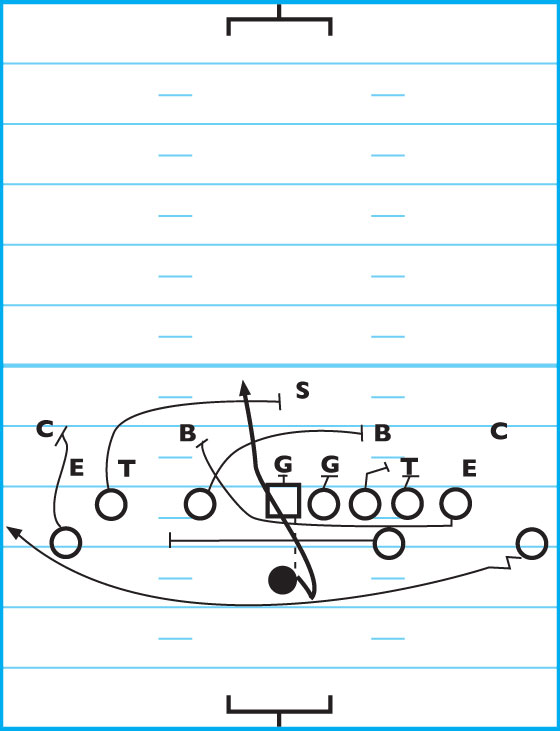
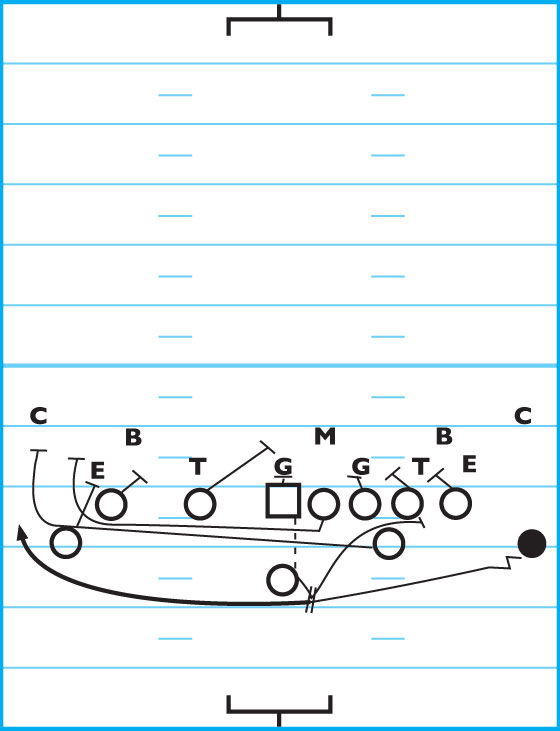
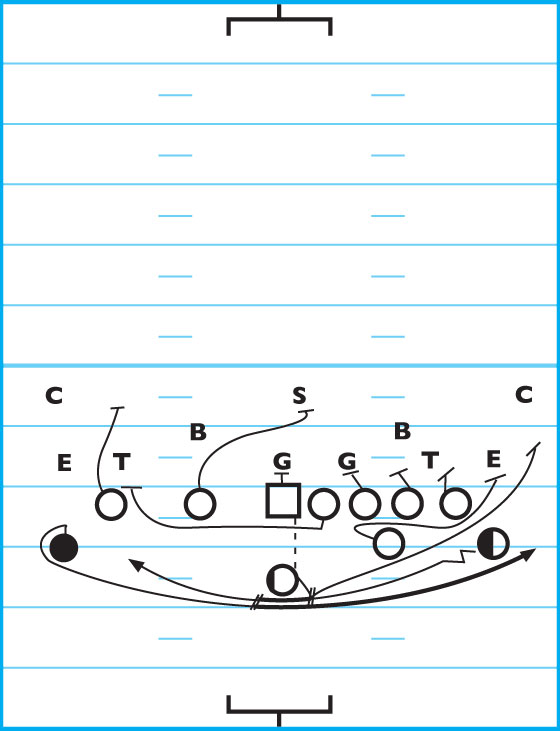
DIAGRAM 1: Single Wing (Right Formation). This is an example of the basic formation and numbering system. This formation is versatile and we’ll often flip-flop all our offensive linemen except our center.
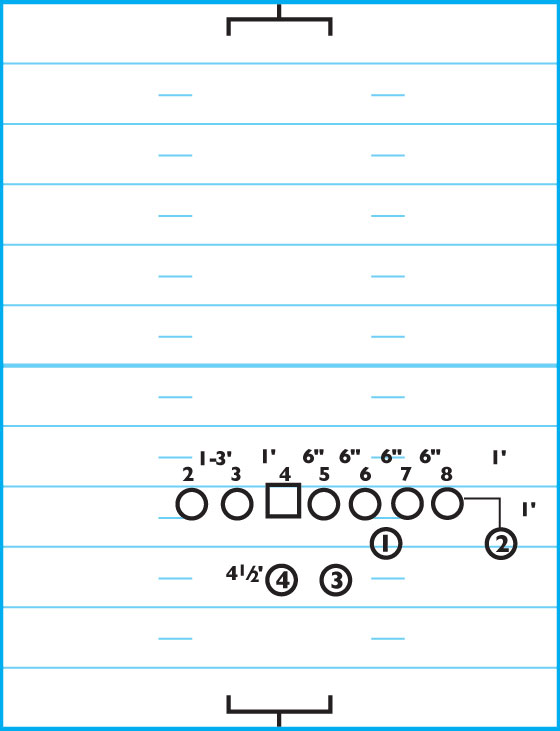
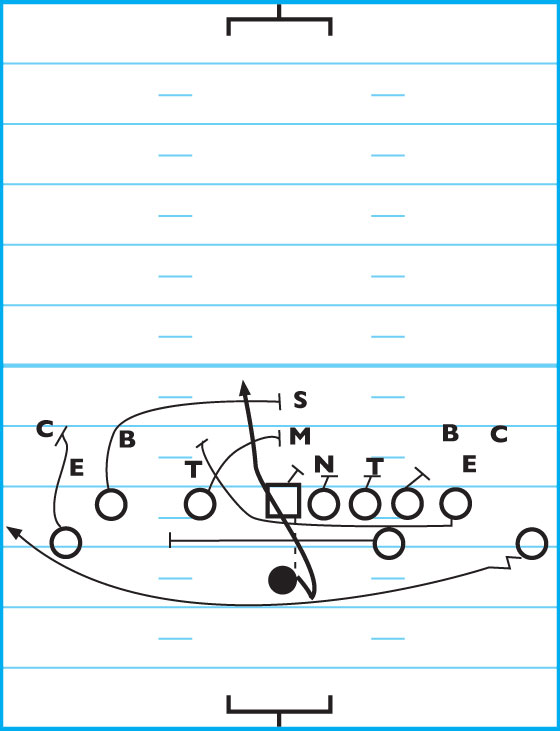
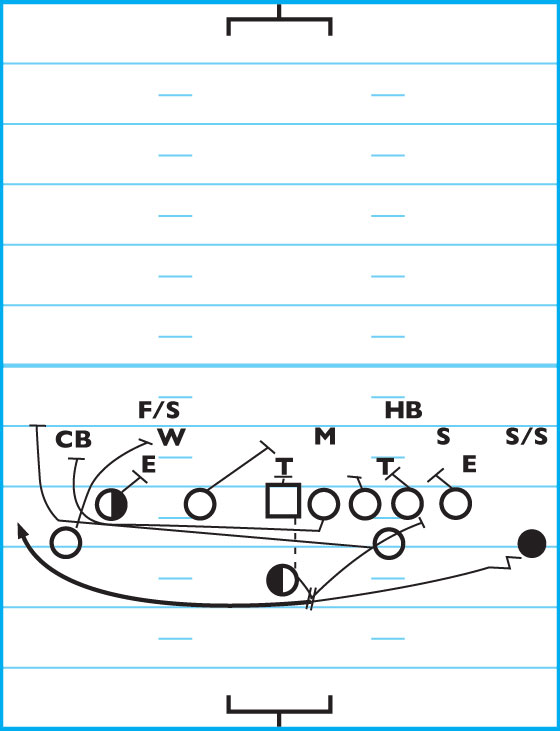
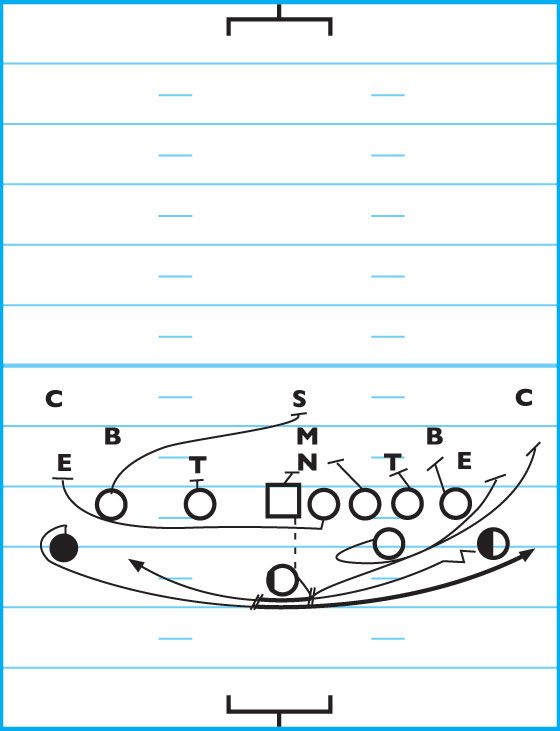
DIAGRAM 2: Double-Wing Formation. When running the 30 series, we prefer to use the double-wing formation. We’ll either shift to it prior to the snap or enter it from the huddle.
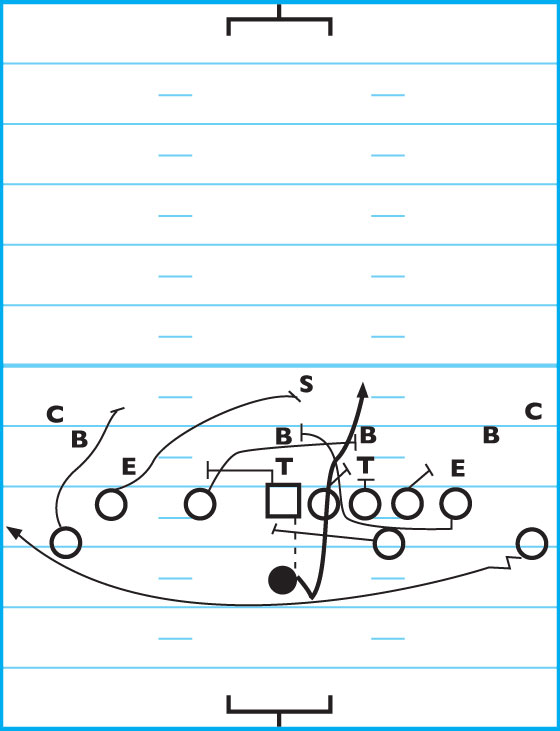
Another way to get into the double-wing set is to use TB motion to the weak side, which for us is the simple call of T1 — this tells the TB to motion and where to be when the ball is snapped.
On all 30 series plays, the ball is snapped to the right knee of the FB (assuming you’re set up in a right formation) who is aligned 4-yards deep, with the weak-side foot straddling the strong-side foot of the center. The FB pivots by moving his weak side foot up and making a quarter turn whereby he ends up facing the strong side with both feet parallel and the toes pointed toward the sideline.
It’s important that the FB not raise up, but instead stay in a comfortable, crouched position with the ball held tight to his body. The WB will use 2-step motion to be in the desired position to mesh with the FB.
Instruct your FB to never get the ball near the WB unless he’s handing it off. Tell your WB that you expect him to do all the faking and sell the play. The same holds true when the FB hands the ball off to the WB. In this case, the FB must sell the play with a great fake to the 5 or 7 hole.
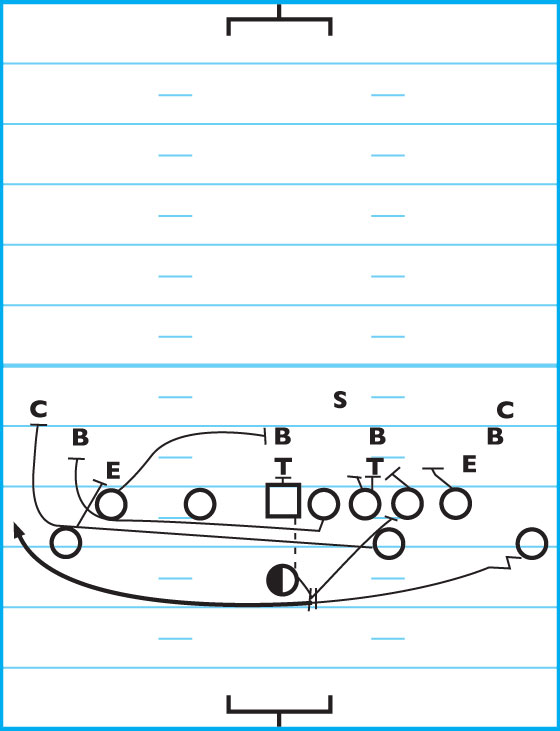
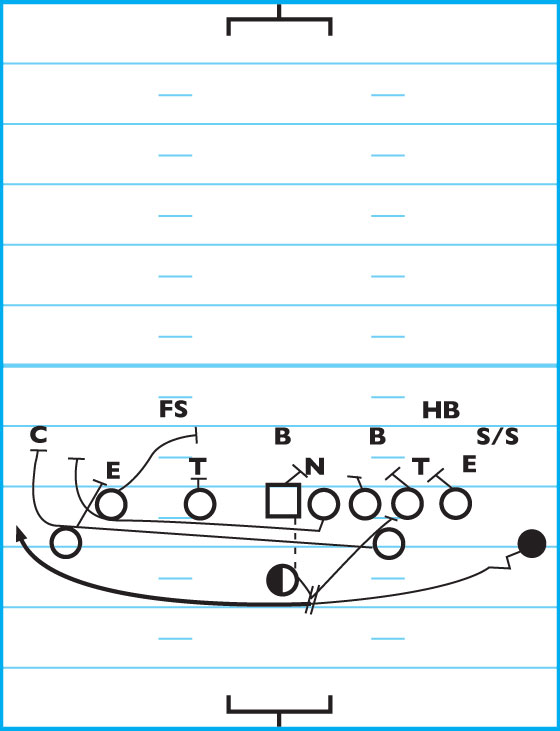
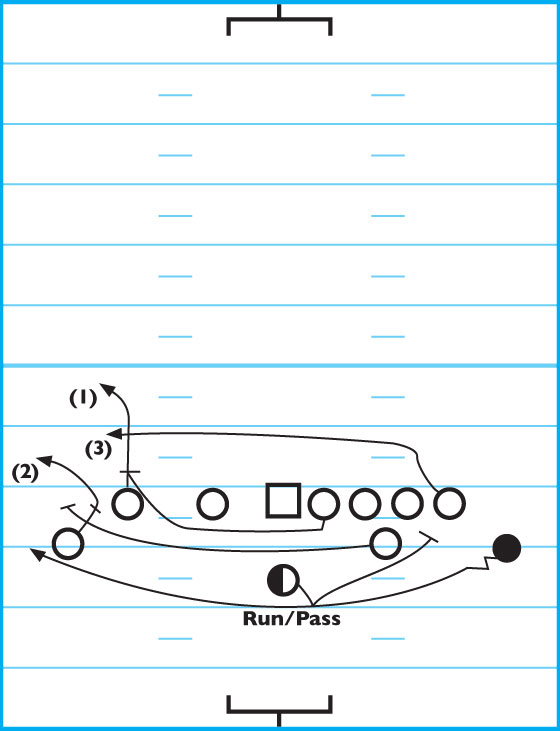
DIAGRAM 3: Single-Wing 30 Series (Points Of Attack). The aiming point for the WB is to come in motion at full speed and aim for the outside hip of the FB. The WB must not “bow back” into the backfield.
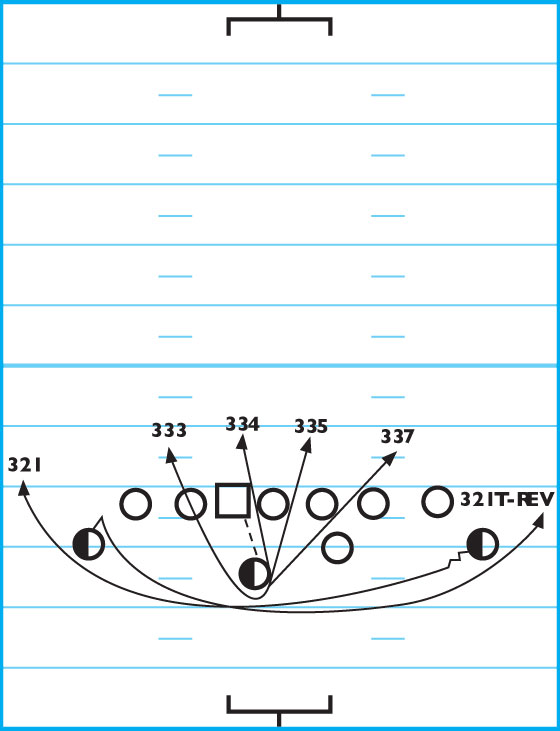
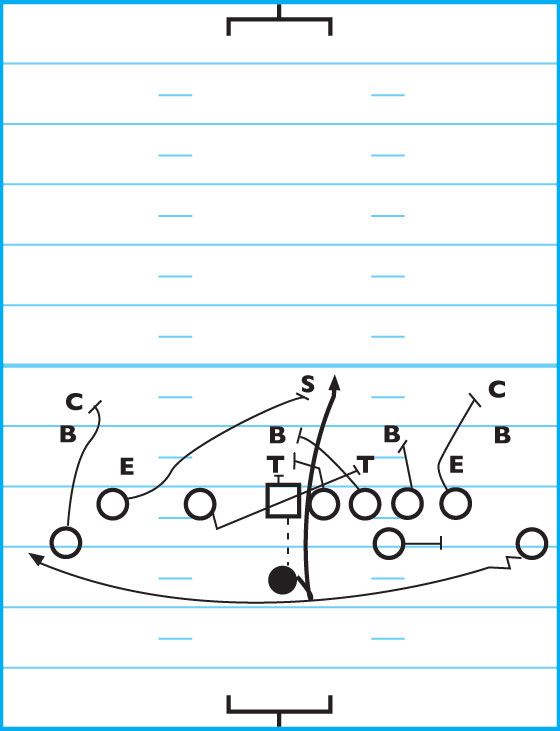
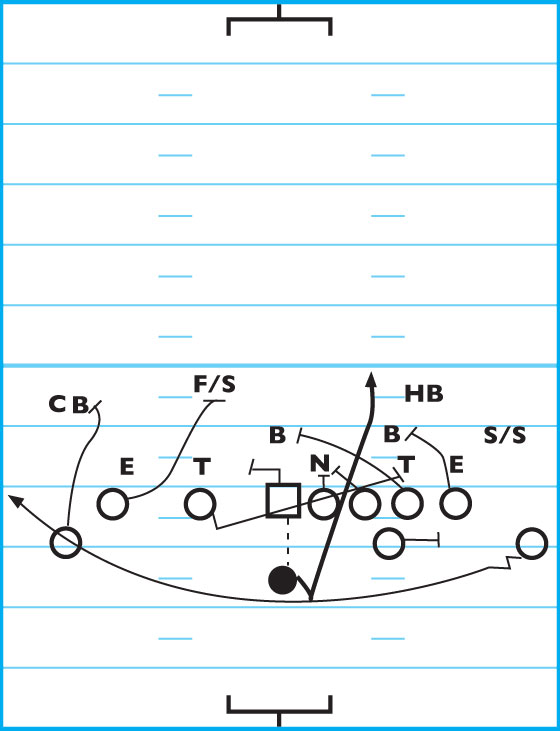
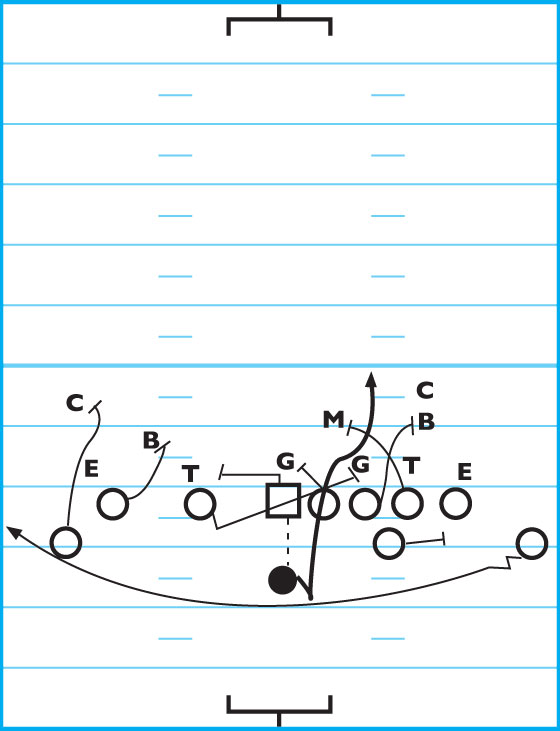
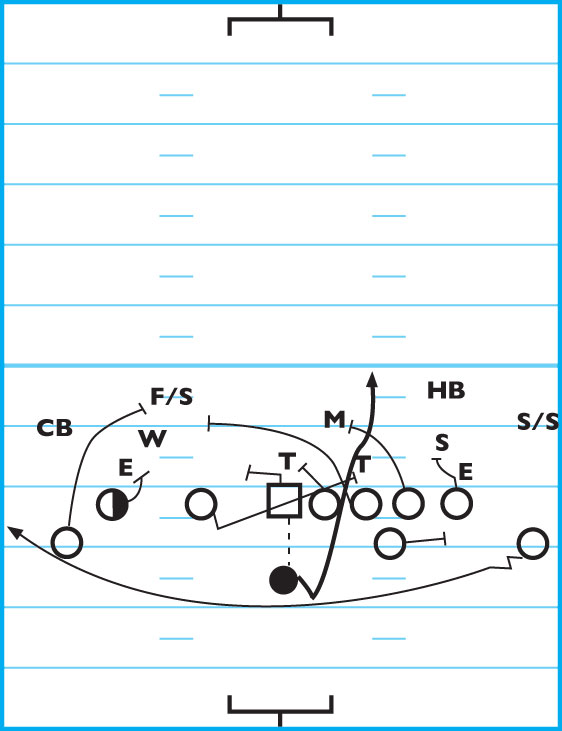
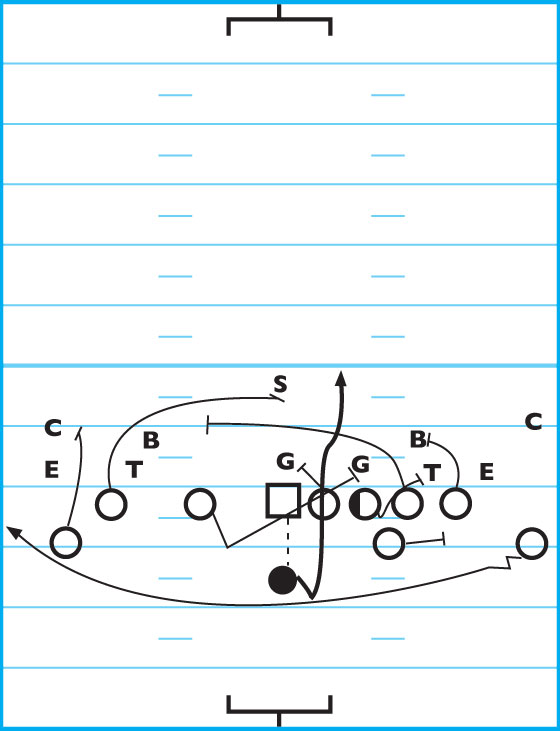
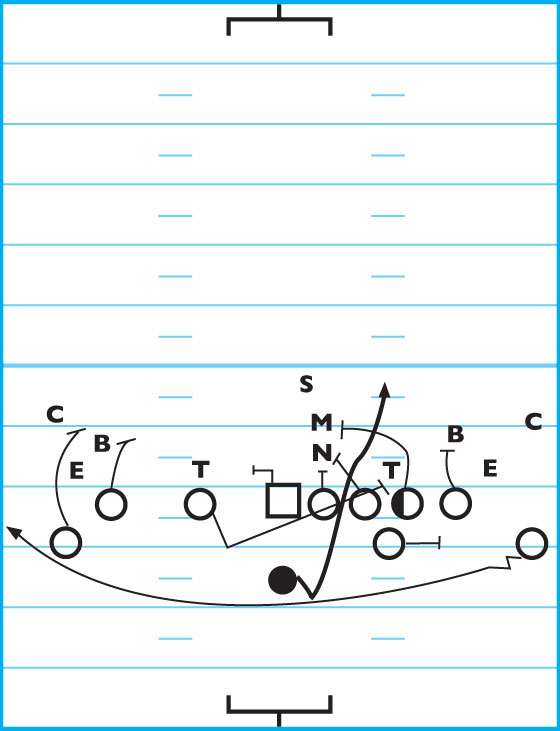
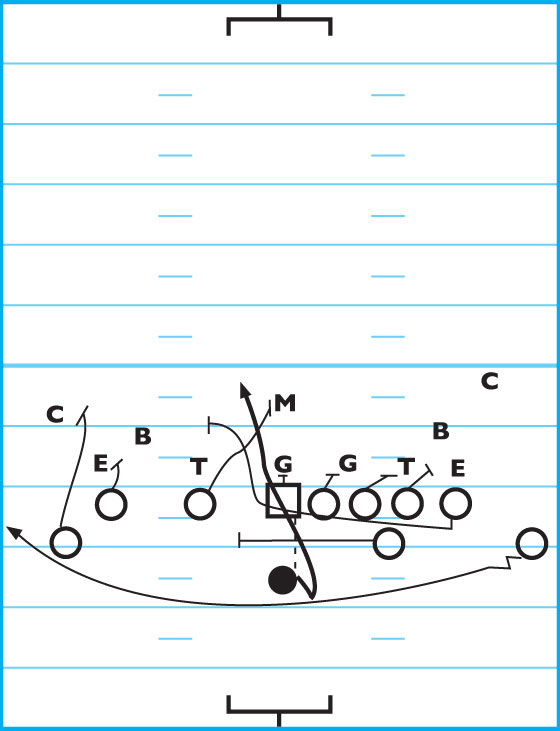
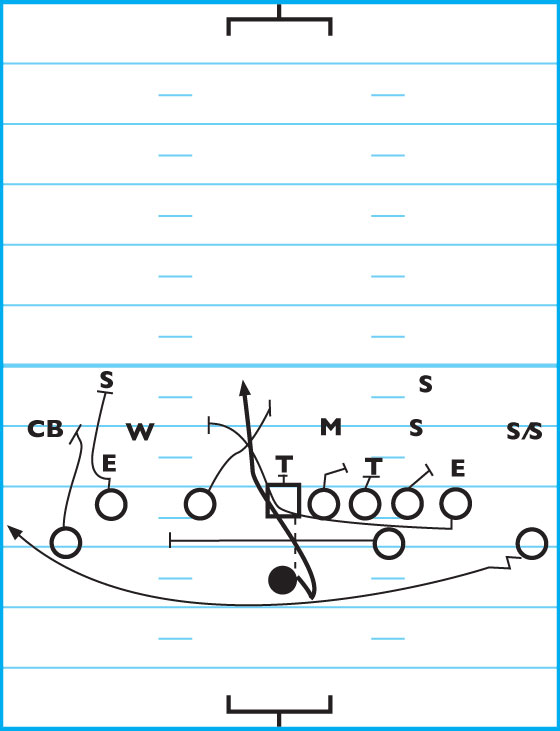
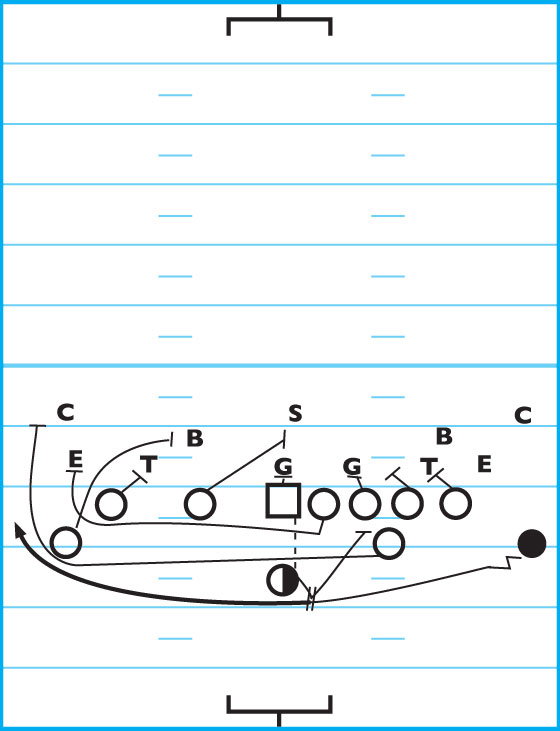
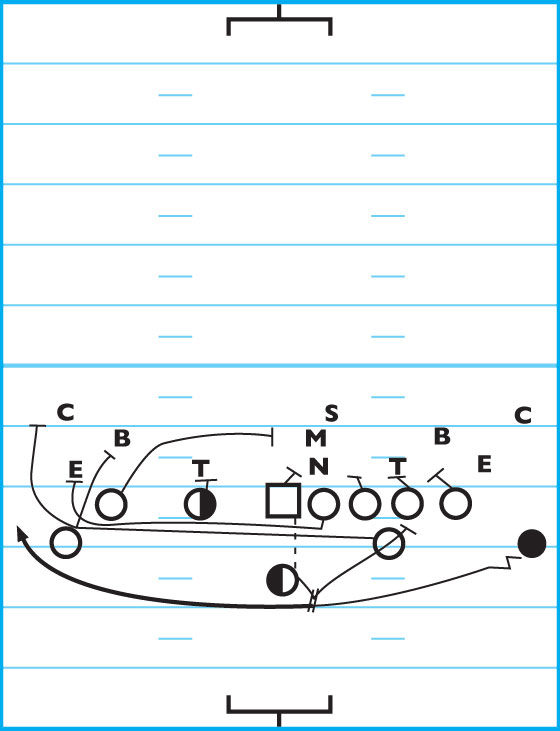
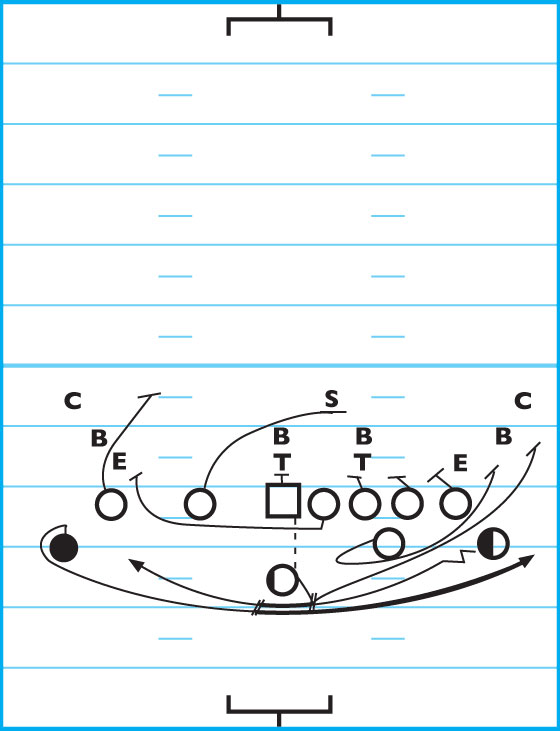
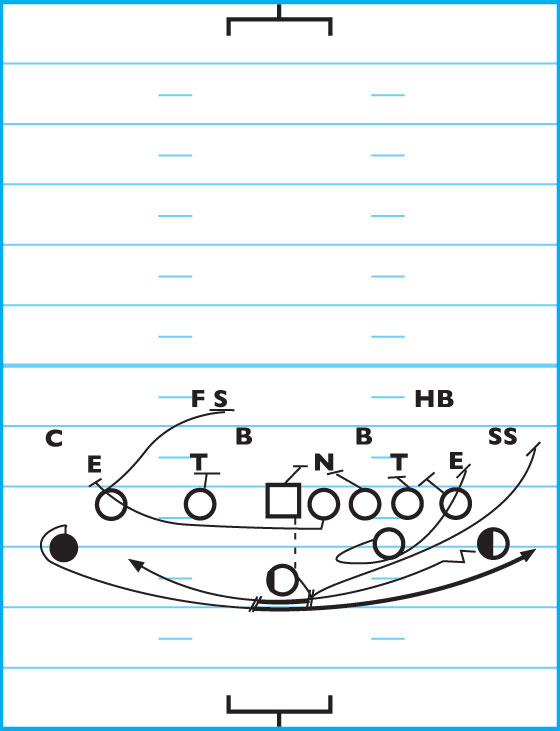
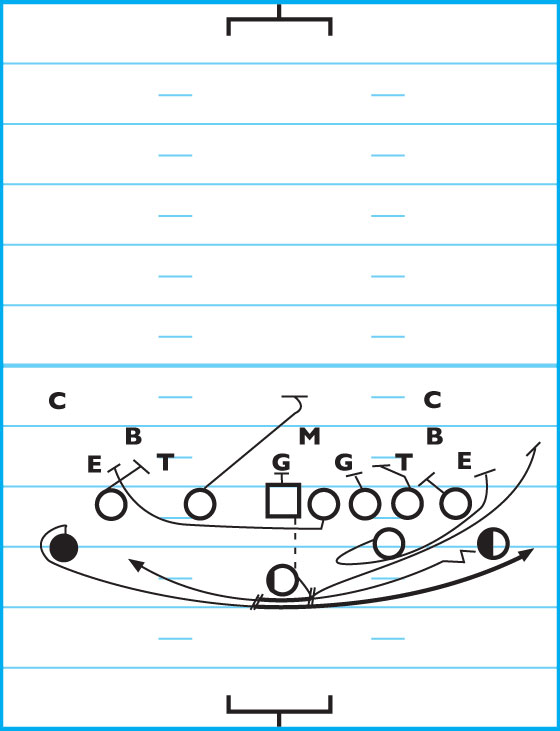
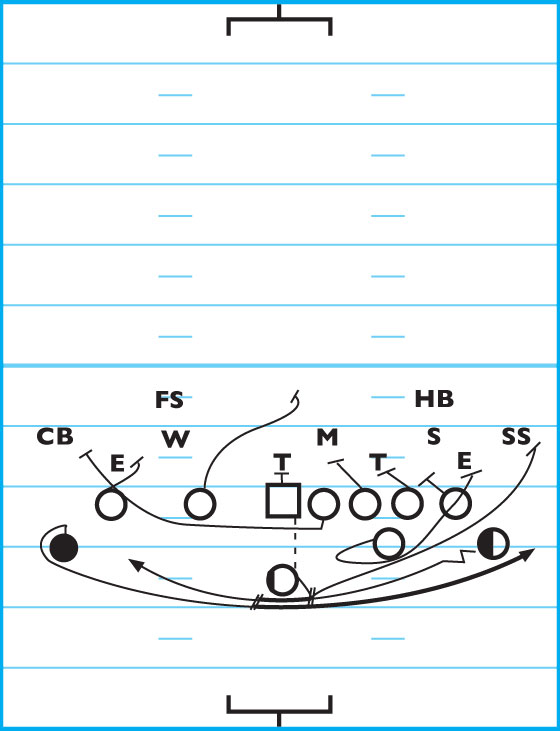
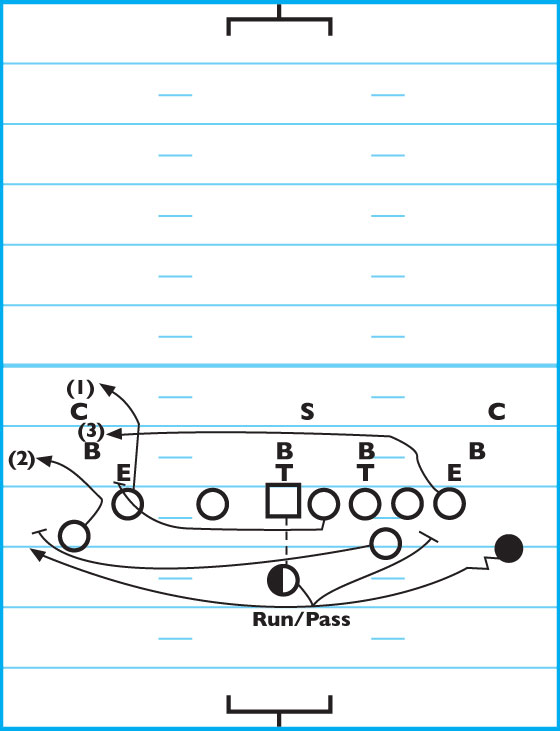
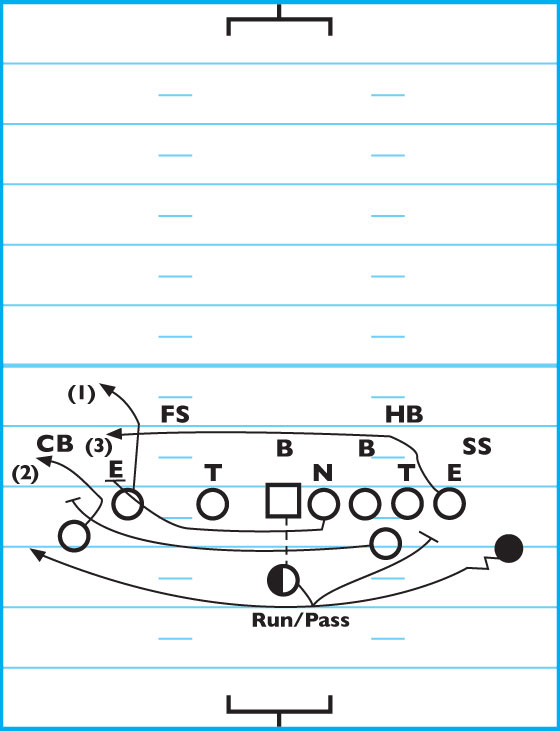
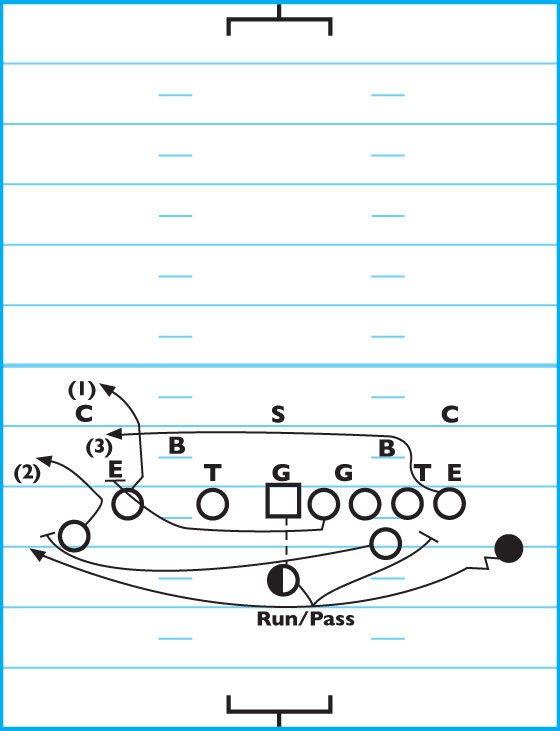
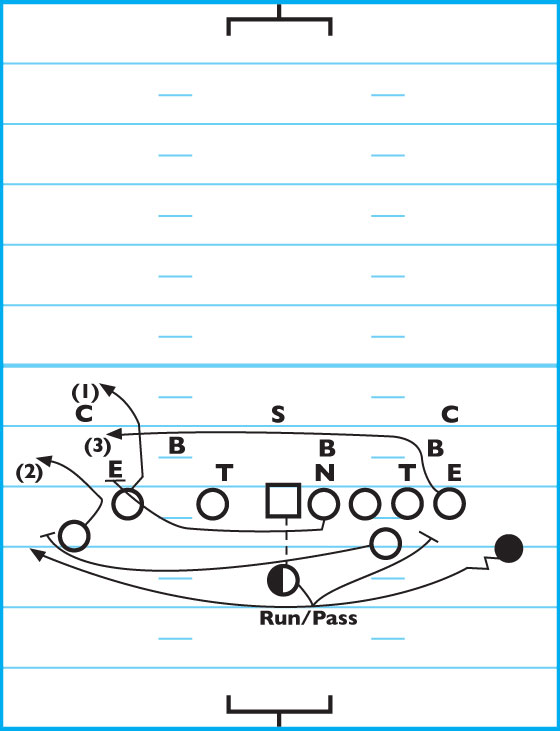
The following diagrams illustrate the four basic runs used in the single-wing 30 series, as well as most productive passes vs. the five most common defensive fronts our players have seen the past two years.