AS A 22-YEAR-OLD head coach fresh out of college in 1970, I attempted to use the single wing as my primary offensive system. I’d always been intrigued with the spinner and buck lateral series of the offense. The problem was that I didn’t understand the intricacies of the offense, such as the proper footwork for the spinner series. More importantly, I didn’t have a clue about the blocking schemes and how to attack various defensive fronts.
After a disastrous 0-8 first season, our staff switched to the wishbone offense and stayed with it for the next 31 years with a great amount of success. But back in 1970, I had vowed to one day use the single-wing offense in my program again.
That time came in the winter of 2001. A close coaching associate who had the dubious task of trying to defend the single-wing attack at the college level reintroduced me to his old single-wing tapes, a playbook and several other valuable single-wing materials.
The single wing helped us win numerous games in which our team was physically and athletically overmatched. After struggling with the intricacies of the single-wing offense in our first season, it all came together in the second season. Our tailback became the first player in school history to gain over 2,000 yards, and he also led our region with 29 touchdowns. At the same time, our fullback rushed for over 1,000 yards and our two wing backs combined for over 800 yards, allowing us to average over 400 yards rushing per game for the season.
Single-Wing “20 Series”
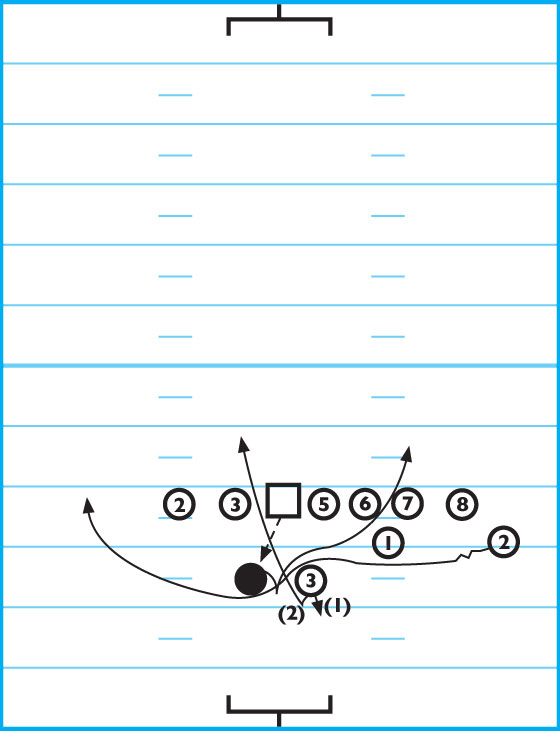
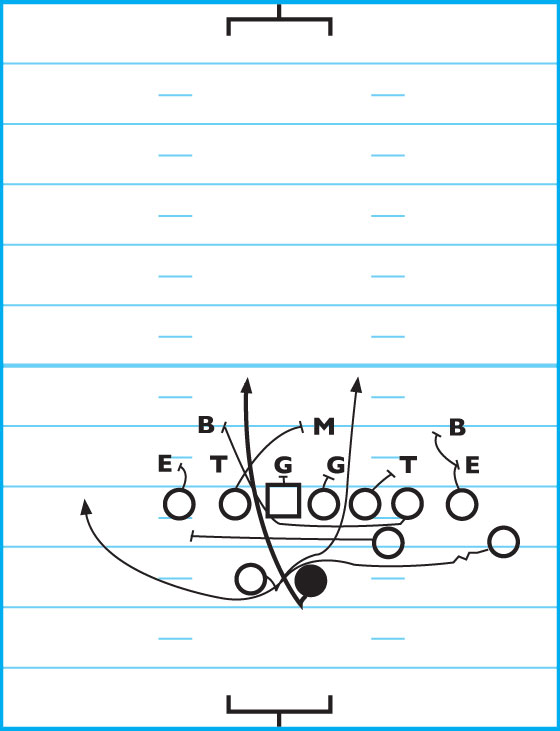
The single-wing “20” series has provided the bulk of our rushing output over the past two seasons. This series features an unbalanced line and a numbering system as shown in the following diagram.
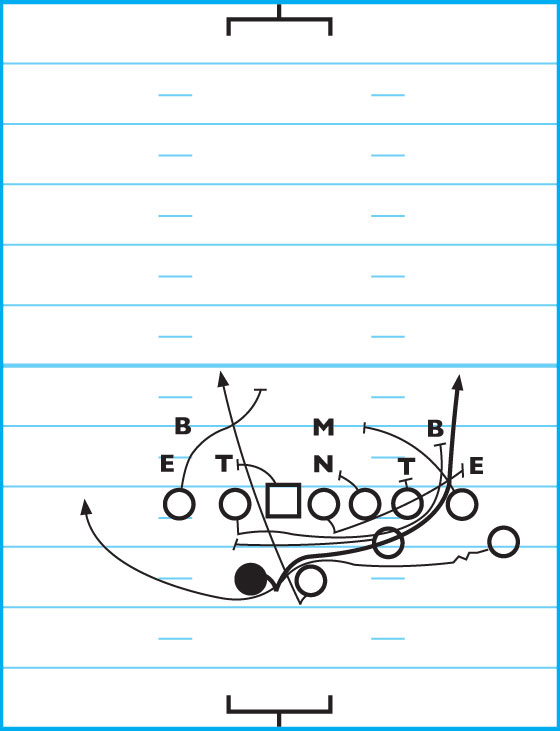
DIAGRAM 1: Single-Wing Formation (Unbalanced Line, Numbering System). In our play-calling system, the first number is the series, the second number is the ball carrier and third number is the area being attacked. For example, in the call “247,” it would be the 20 series with the TB carrying over the 7 area. All told, in the 20 series, we have the following plays that all come off the same action: 247, 233, 221, 232, 244, 245, 20-8 end across, 2-end across, the BB screen and the FB screen.
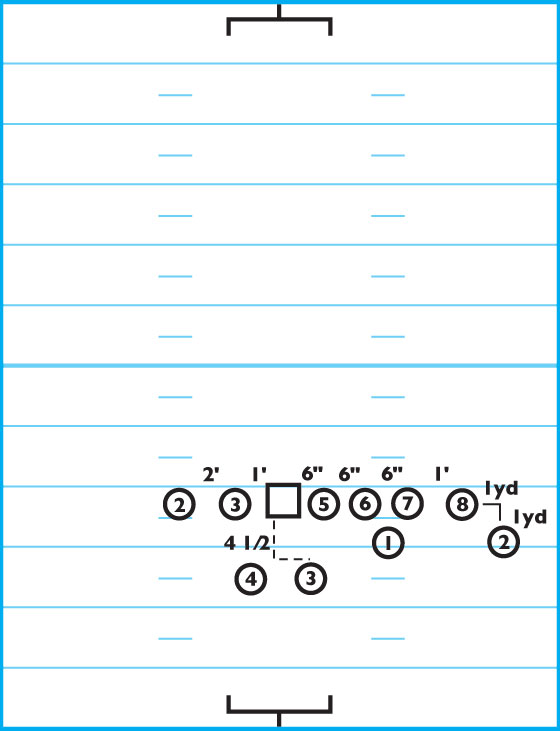
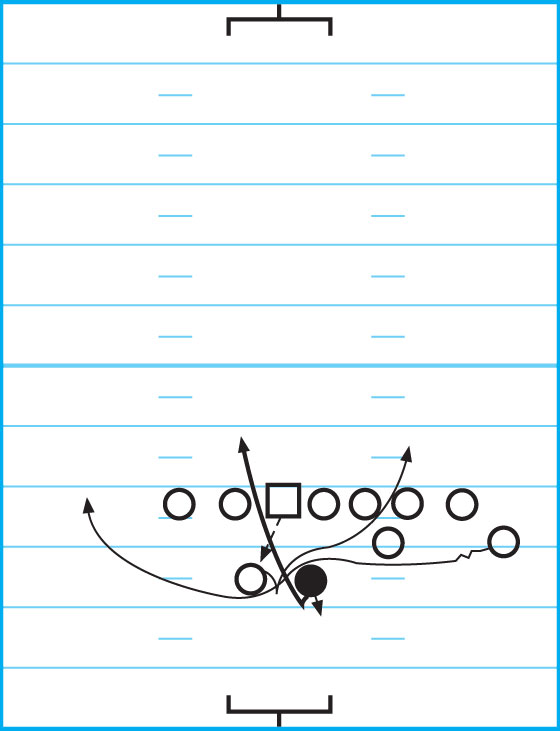
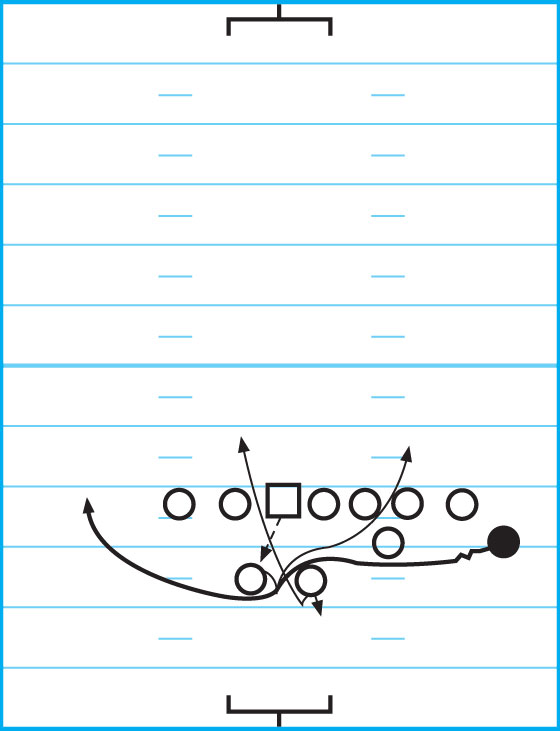
On all 20 series plays, the ball is snapped toward the right knee of the TB. The TB takes a one-quarter turn (pivot), which leaves him facing the sideline to the strong side. His feet must be parallel to the line of scrimmage. He’ll give the ball to the WB as a first option, the FB as a second option or keep the ball and run as a third option.
The FB takes a short 6-inch step back with his strong-side foot, followed by a balanced up-step with the weak-side foot. This is done to allow a small running lane between the TB and FB for the WB to run trough.
The WB takes a step, goes into motion and must be running full speed on the snap. His path is parallel to the LOS — he should not bow back. The TB is instructed to never allow the ball near any back that’s coming through on a fake. Backs must follow through on their fakes.
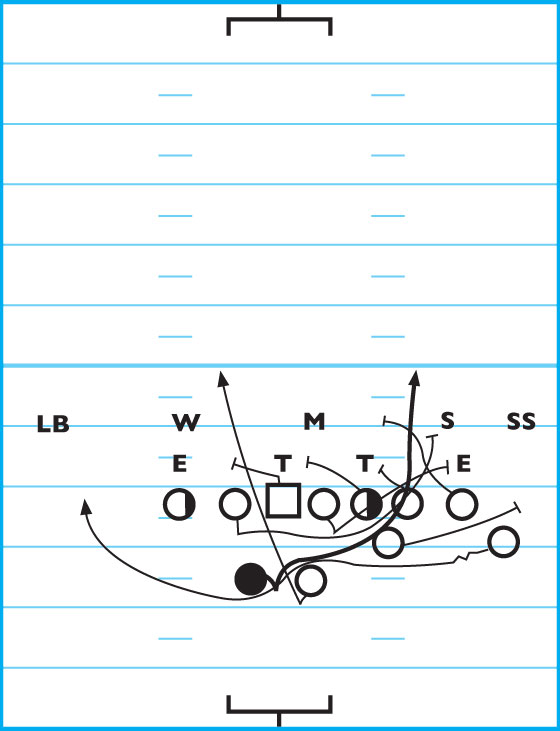
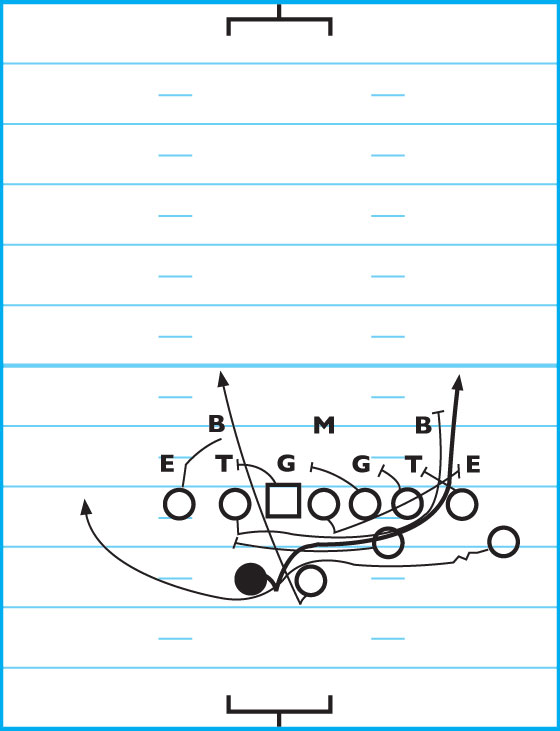
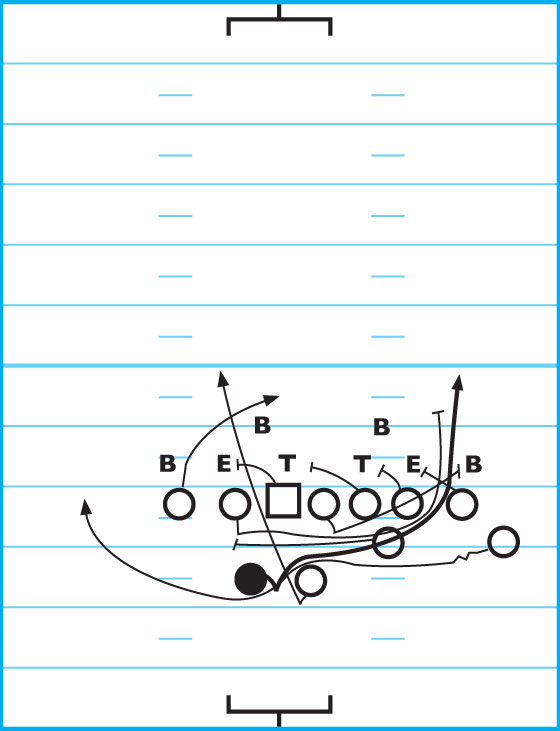
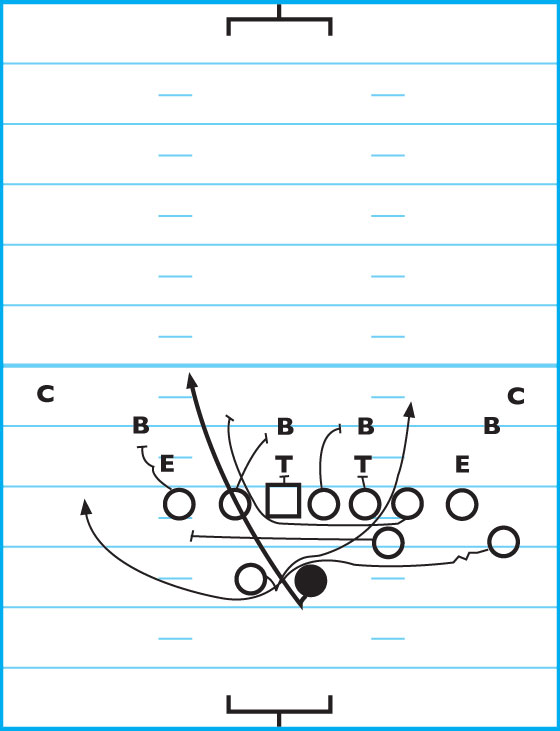
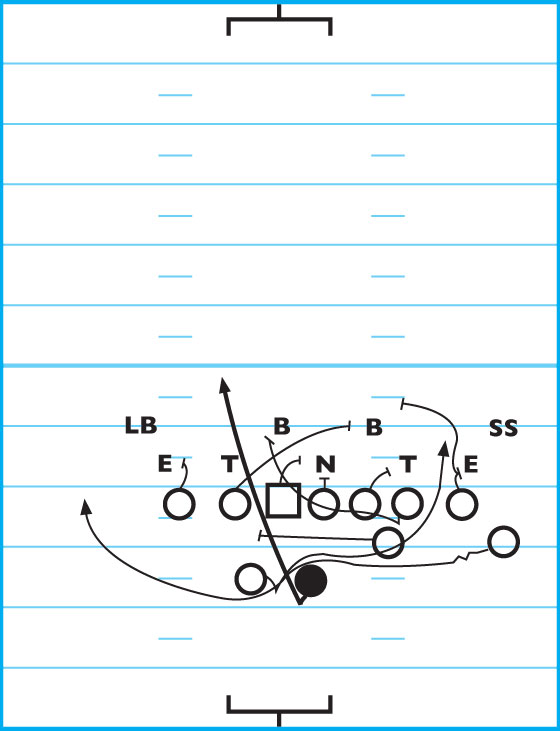
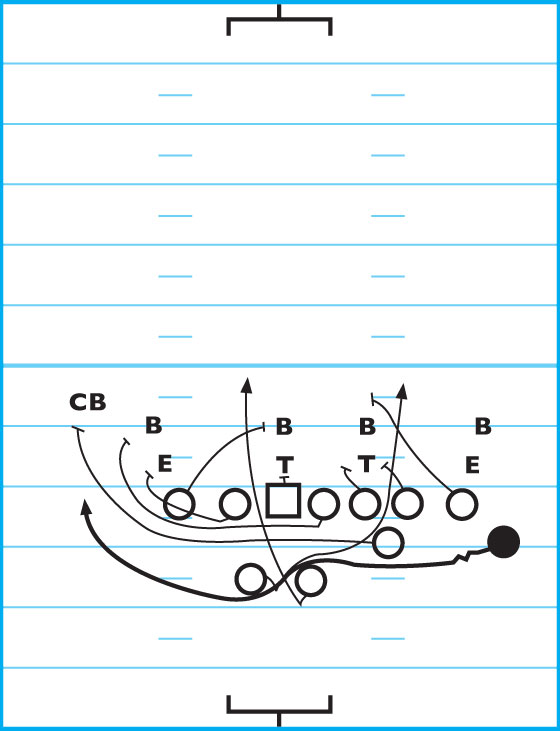
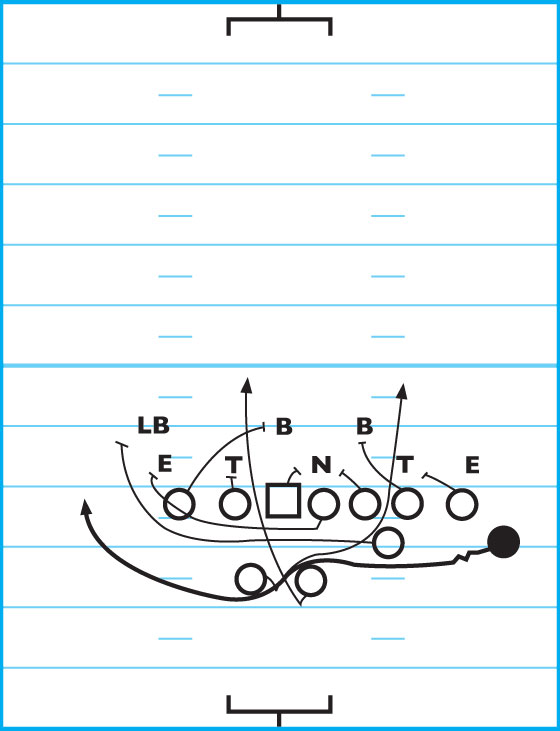
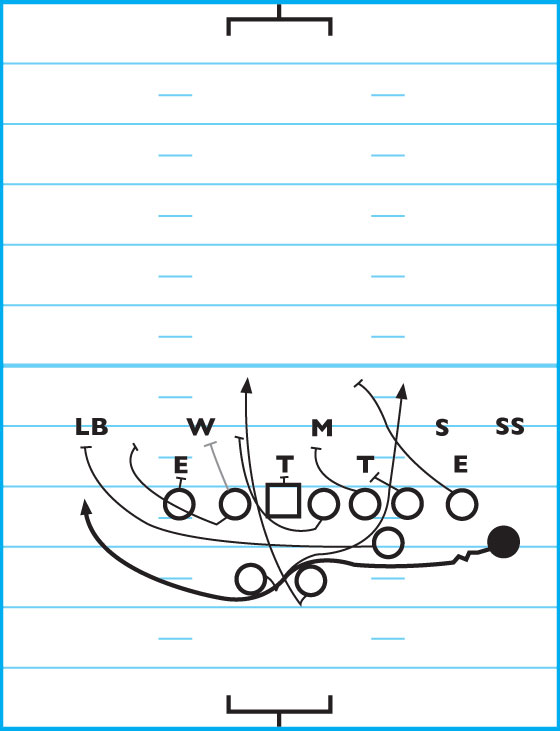
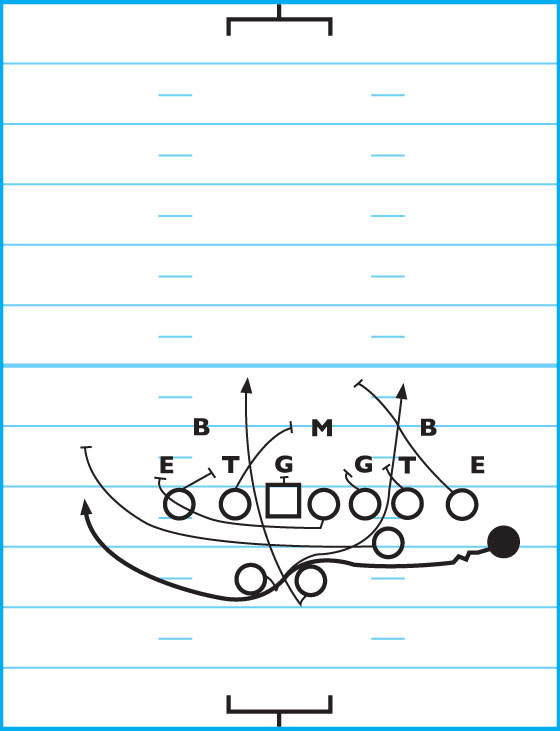
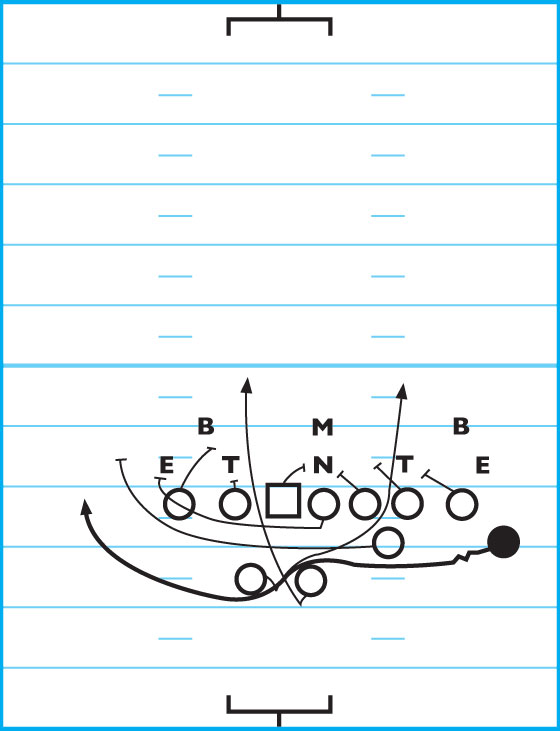
The diagrams on page 27 illustrate three highly successful plays from the 20 series against the five defensive fronts that our players have seen from teams in our league.
Single-Wing Strategy
Our thinking is to establish play “233” early in our offensive game plan. The 3-hole has provided the most success, no matter what series we’re running. Defenses tend to defend the long side of the formation due to the possibility of being out-flanked on a sweep. Defenses are also conscious of the weak-side flank due to the fact it’s a very short corner to turn. This concern usually opens up the 3-hole, as well as the 7-hole.
In today’s sophisticated game, a new offensive scheme has come into vogue where a quarterback hands the ball off to a flanker who has gone in motion, followed by a handoff to a TB attacking the interior of the offensive core. Called the Jet Sweep Series, it’s considered the hot, new scheme for the decade. It’s amusing that single-wing coaches such as Carl Snavely (North Carolina), Robert Neyland (Tennessee) and Jock Sutherland (Pittsburgh) were doing the same thing with the 20 series over 75 years ago.
Apparently, what goes around, does in fact come back around.
Check out Part 2 of this great single-wing series in the Aug./Sept., 2004 issue of Gridiron Strategies!
A 34-year head coach, Rude was inducted into the Illinois High School Football Coaches Hall of Fame in 1995. A five-time “Coach of the Year” at three different high schools, his 2001 squad was undefeated and, while running the single-wing offense, led Illinois class 3A in scoring at 39.7 points per game.