THIS OFFENSE IS BASED on running isolation plays at linebackers and by having a complement of option and G schemes to keep defenses from using wholesale blitzing to stop the power game.
Running the iso out of an I-formation is by no means a new concept, but it’s somewhat neglected or rejected by some teams because they “lack the personnel” to run such a scheme.
In our system, we’re not blessed with the kind of athletes on the offensive line that can physically dominate teams 1-on-1. So our power running game hinges on combination blocking (doubling) at the point of attack. This allows our “non-athletic” offensive linemen to push around far more athletic defensive linemen.
Running Toward Play-Side Tackle
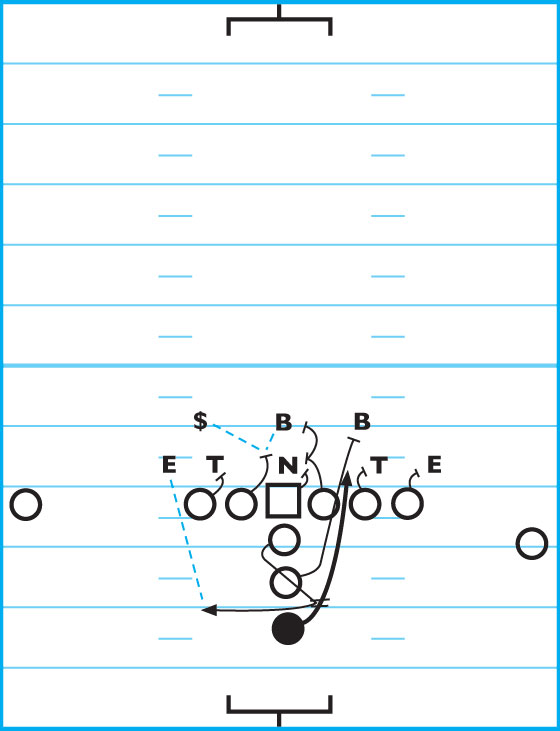
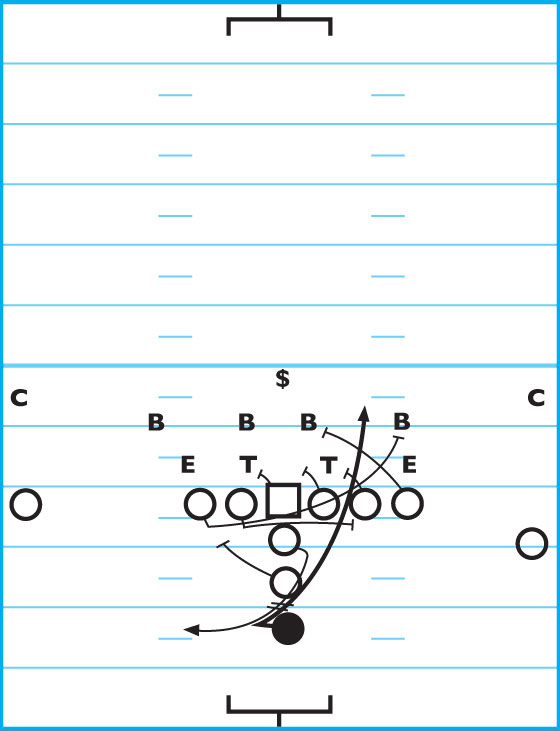
Our core isolation play, the 44/45 Iso, is run toward the play-side offensive tackle and aimed at isolating the play-side LB (the halfback being the 4-man in this numbering system and 4/5 being the area to aim). We like the running back to aim at the play-side OT and make his cuts from whatever holes develop. The quarterback always reverses out and after the toss or handoff, carries out his bootleg.
Running To The Strong Side
Our base formations are “Pro” and “Twins” with a tight end — with the TE side (strong side) being the favorite one to run toward. The offensive line’s blocking scheme to the TE side is dependent on the defense’s alignment on the play-side offensive guard and his calls.
As a rule, if the offensive line reads a 6-man front or more, we base block it with a “Bama” call (base block). If the play side to the TE makes a pre-snap read of three or more down linemen to their side (outside of center) we call “Bama” to block it. If the play-side OG needs to call for a double-team, he calls out “Charlie” (center) or “Tom” (tackle).
DIAGRAM 1: 44-Iso To Strong Side (Vs. 4-3).
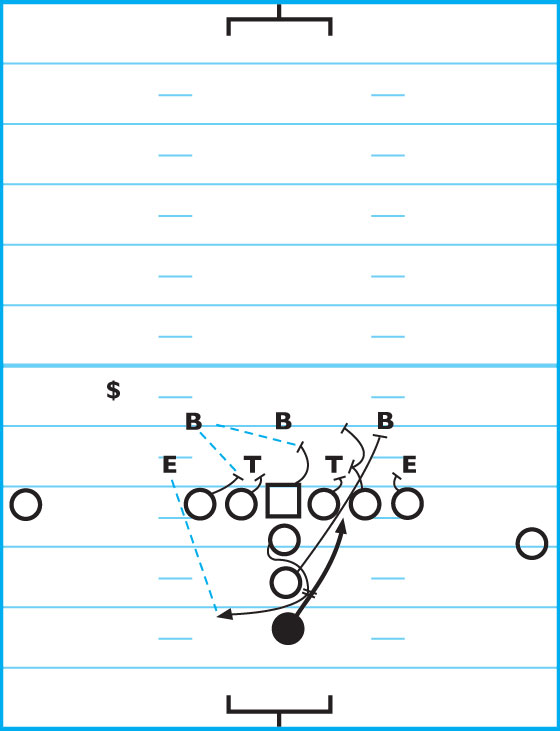
DIAGRAM 2: 44-Iso To Strong Side (Vs. 4-4).
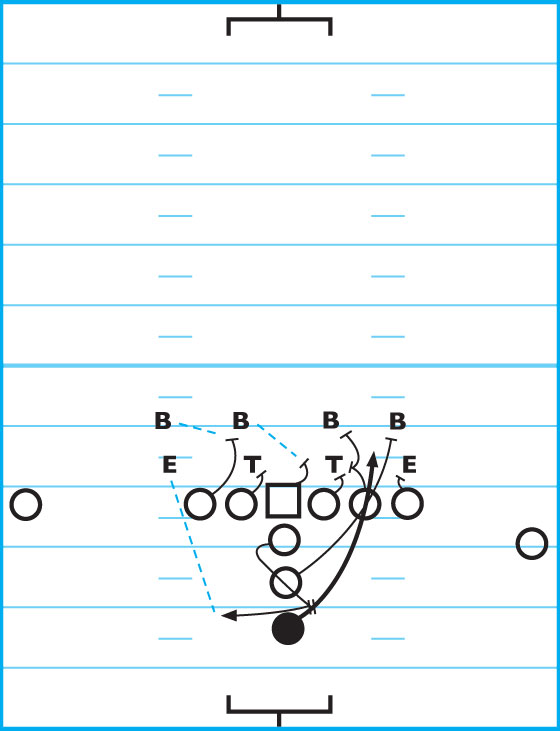
DIAGRAM 3: 44-Iso To Strong Side (Vs. 5-2).
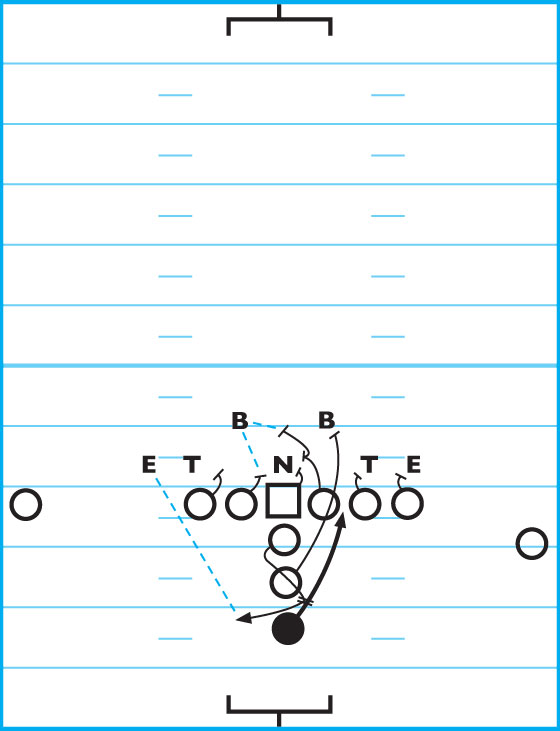
DIAGRAM 4: 44-Iso To Strong Side (Vs. 5-3).
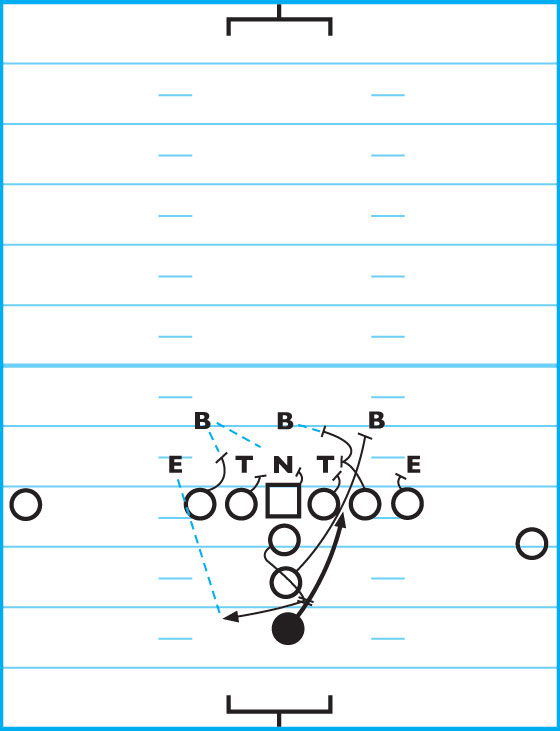
Strong-Side Blocking Scheme
The blocking scheme is simple enough that if the offensive linemen are prepped enough, it quickly becomes second nature as to which player is doubling with the play-side OG and calls aren’t usually necessary.
The following are the blocking responsibilities for each player.
PLAY-SIDE OG: If the defender is lined up head-up to the outside eye, double him with the play-side OT. If the defender is aligned from the inside eye or if uncovered, then double with the center (use a double-O technique vs. a 50 defense).
PLAY-SIDE OT: If covered (head up to outside eye), then base block (covered being a 4- or 5-technique). If uncovered, double with the play-side guard.
CENTER: Zone block into the play side, putting a hand out to help out on a backside 1- or 2-technique and aiming to seal the play-side A-gap by advancing toward the second level. Only provide help blocking on the play side when there’s a shade to the play side.
BACKSIDE OG: Hard zone or scoop into the play. Cut off the shade defender (1-technique) by either hard zoning, scooping-bear crawl underneath or cutting if need be. Whatever technique(s) you stress depends on your personnel. Teach the backside OGs to keep tighter splits from the TE side for two reasons: 1. It helps with an overtake or cut block. 2. It makes for an easier double-team with the center when the play is run toward the weak side.
BACKSIDE OT: Hard zone or scoop into the play. Seal the backside B-gap while proceeding to the second level.
QUARTERBACK: Leave the last man alone on the line of scrimmage. The QB’s bootleg will keep him honest. If the defensive end doesn’t honor the QB, run several QB bootlegs to keep him honest (144/145 Boot).
Running To The Weak Side
Blocking rules for running 44/45 to the weak side are a little different. The blocking differs from a shaded, 4-man front to an honest 50 defense front. If you’re facing a 50 defense, the play-side OG and play-side OT must fan block (block out).
DIAGRAM 5: 45 Iso To Weak Side (Vs. 4-3).
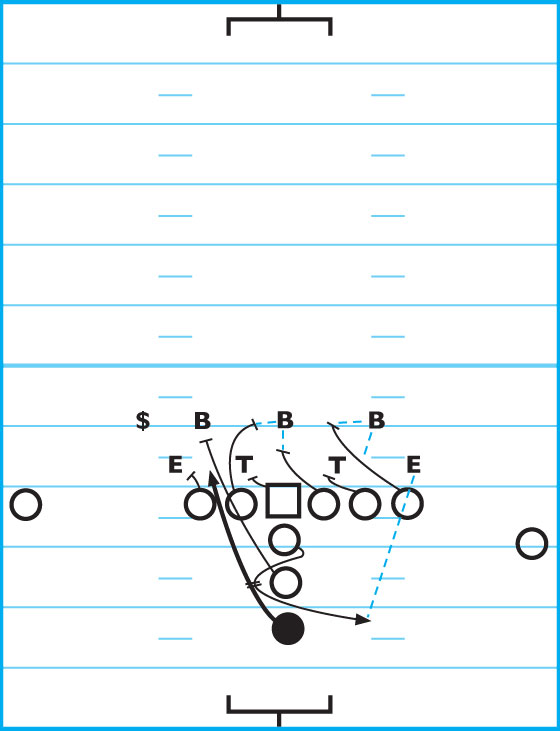
DIAGRAM 6: 45 Iso To Weak Side (Vs. 4-4).
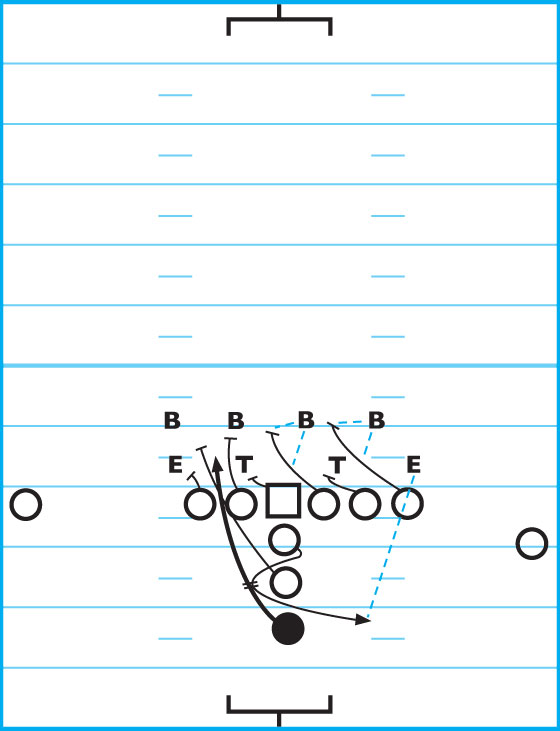
DIAGRAM 7: 45 Iso To Weak Side (Vs. 5-2).
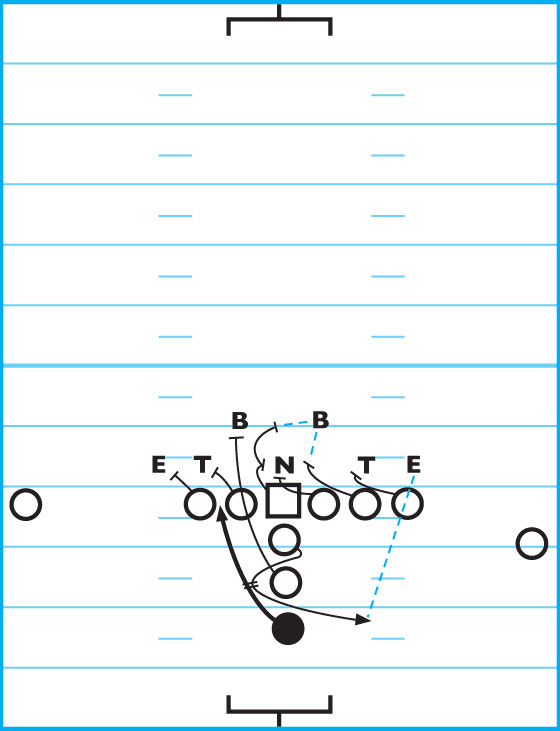
PLAY-SIDE OG: We prefer to have the play-side OG block the first man on the LOS. If faced with a shaded, 4-man front, the center helps the play-side OG with a double-team on the middle LB. Likewise, keep the play-side OG on the weak side to keep a somewhat tighter split to assist the center in overtaking or cutting the first down lineman.
PLAY-SIDE OT: Has to block the second man on the LOS. He’ll never have to give support on the weak side and must base block the defender.
CENTER: Protects the play-side A-gap by either helping the play-side OG or hard zoning over with the backside OG to overtake a nose guard.
42/43 Iso Change-Of-Pace
If we’re playing a team that has a defense that flows hard with the first movement or if we’re facing a defense that begins to overpursue the 44 or 45 Iso. we’ll mix in the 42/43 change-of-pace Iso and attack a 4-3’s middle LB (which is usually that defense’s most dominant and fastest pursuing player).
One way to slow the middle LB down and to take away his quickness is to attack him directly with an iso. If the LBs overpursue, it makes for easier blocking angles for the offensive linemen who have zoned over or chipped to the second level.
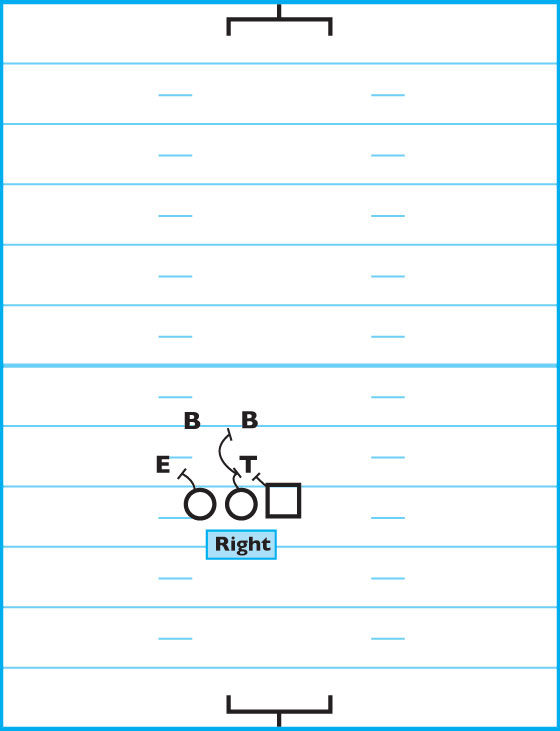
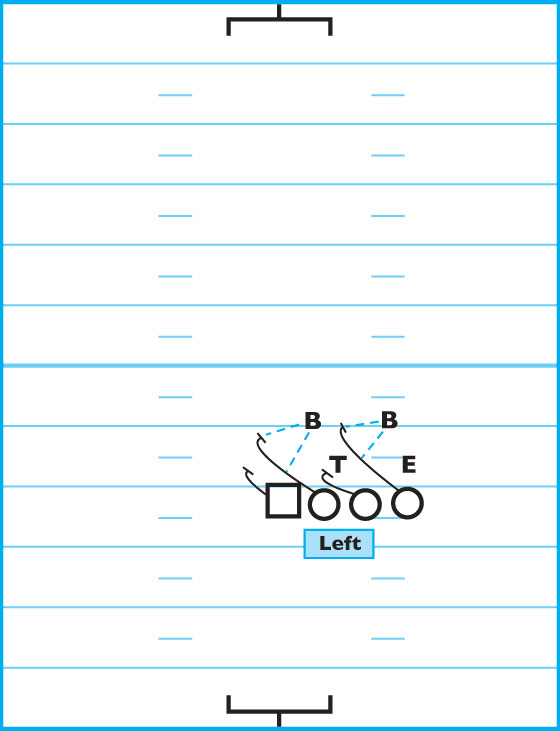
DIAGRAM 8: 42 Iso To Strong-Side (Vs. 4-3). Notice how we attack the middle LB who is usually the fastest-pursuing player.
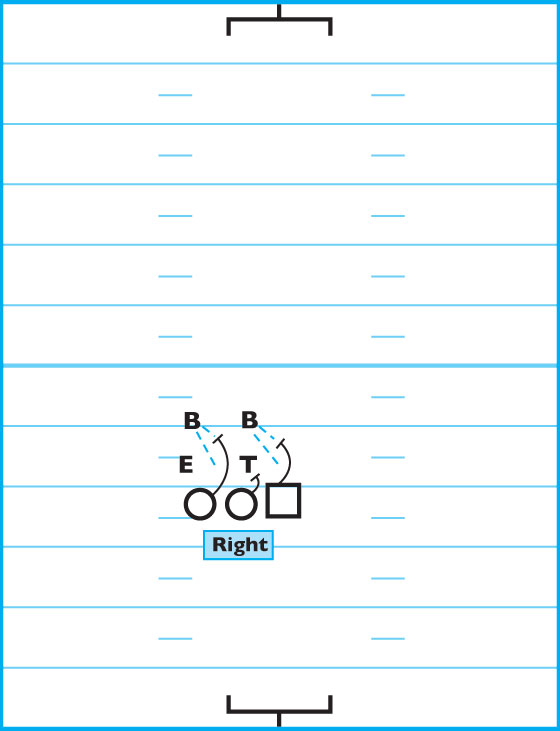
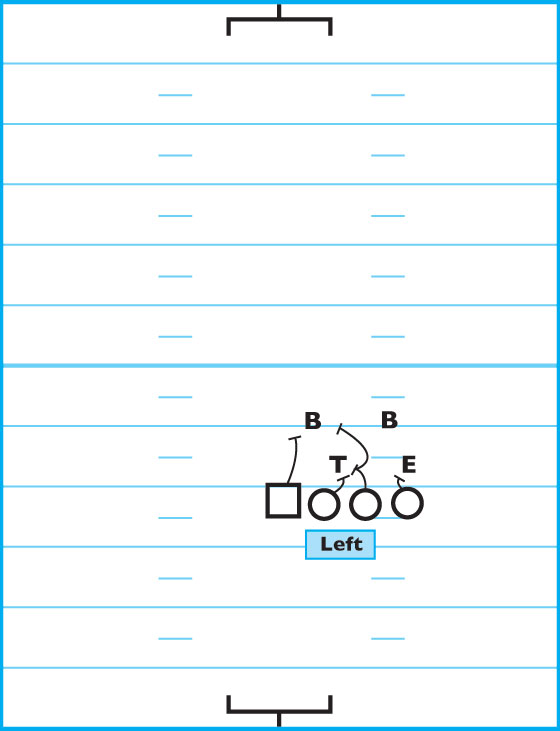
DIAGRAM 9: 42 Iso To Strong Side (Vs. 5-2).
Blocking Changes From 44/45 Scheme
This is a play that needs to be run to the TE side or out of a balanced formation (either no TEs or with two TEs). Instead of the play-side OG overtaking a double-team with the play-side OT, have the play-side OG chip to the outside backer and the play-side OT to overtake.
All blocking rules on the backside remain the same. The fullback and halfback simply take one step to the play side and aim to the play-side
A-gap. Nothing changes for the QB.
45 Counter
This is a counter off the 45 Iso to the weak side. The call-side OG and OT pull while all the other linemen downblock.
DIAGRAM 10: 45 Counter.
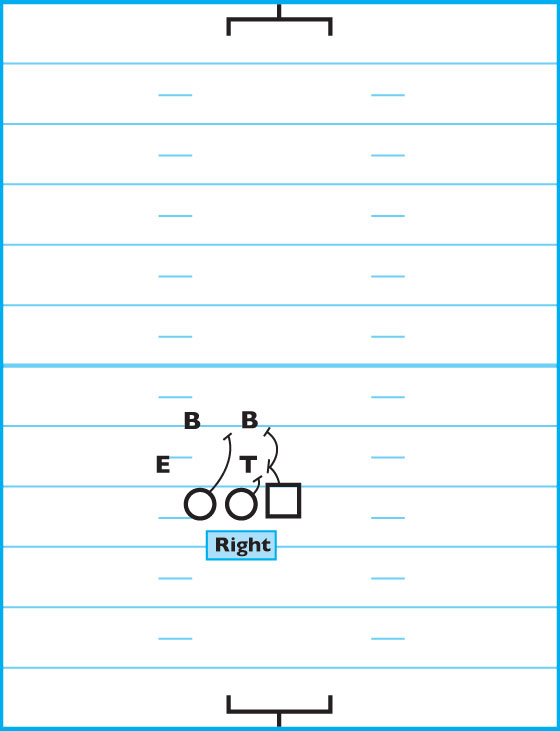
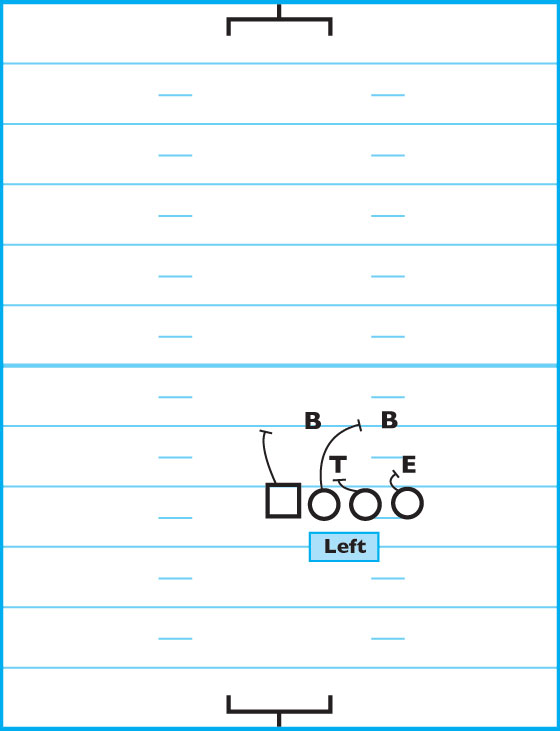
The pulling OT reads the guard’s block to either lead up inside or kick the LB out. The FB fills the call side, which was vacated by the pulling linemen. The HB takes a slide step to the call side and then counters back.
The QB reverses out, fakes a toss pitch to the call side and hands the ball off to the HB with his opposite hand (with the 45 counter, he hands off with the left hand and the right hand in the 44 counter) and carries out boot-leg action to the call side.
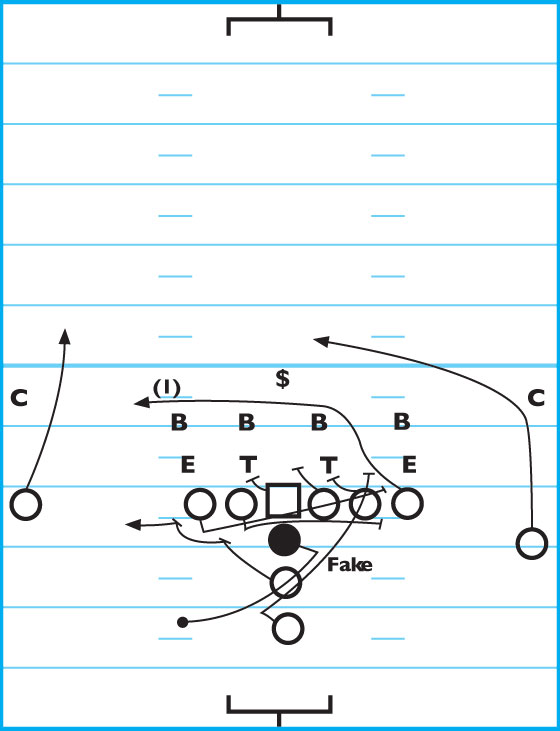
45 Counter Boot leg
In the 45 counter boot leg, the FB carries out the “fill” job for the pulling linemen and tries to hook the defensive end.
DIAGRAM 11: 45 Counter Boot Leg.
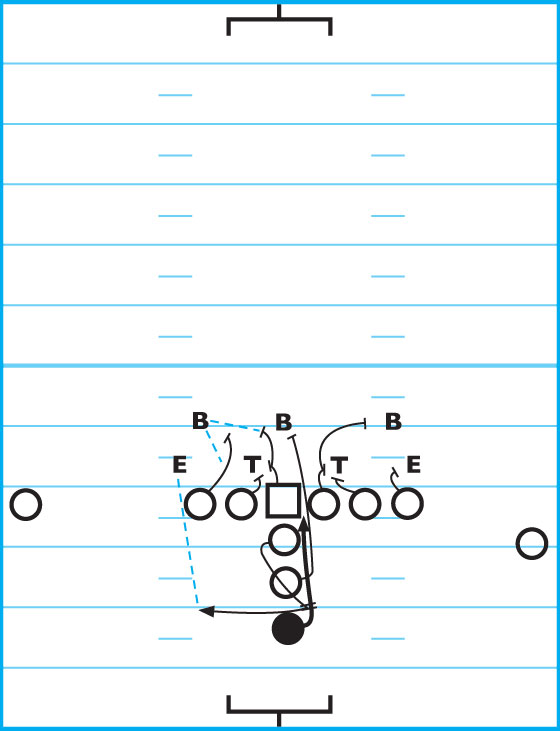
If the DE overpursues inside, then the FB runs a short out-route. The TE runs a 5- to 8-yard drag route and will be the No. 1 receiver. If QB doesn’t sell the fake, the play won’t work.