The Double Wing offense has yielded a flood of rushing yards for those who use it. But not to be overlooked is the high percentage passing game that is a by-product of the running game. Outlined in this article are six passing plays that give you a productive compliment to the power and counter running plays commonly used in the double wing offense. These pass plays are “homeruns” when you catch the defense loading the box and neglecting pass responsibilities. The plays are:
• Power Pass
• Power Pass with “Peel” call
• Counter Pass
• Boot Pass
• Wheel/Slant Pass
• Screen Pass
Power Pass (See Diagram 1)
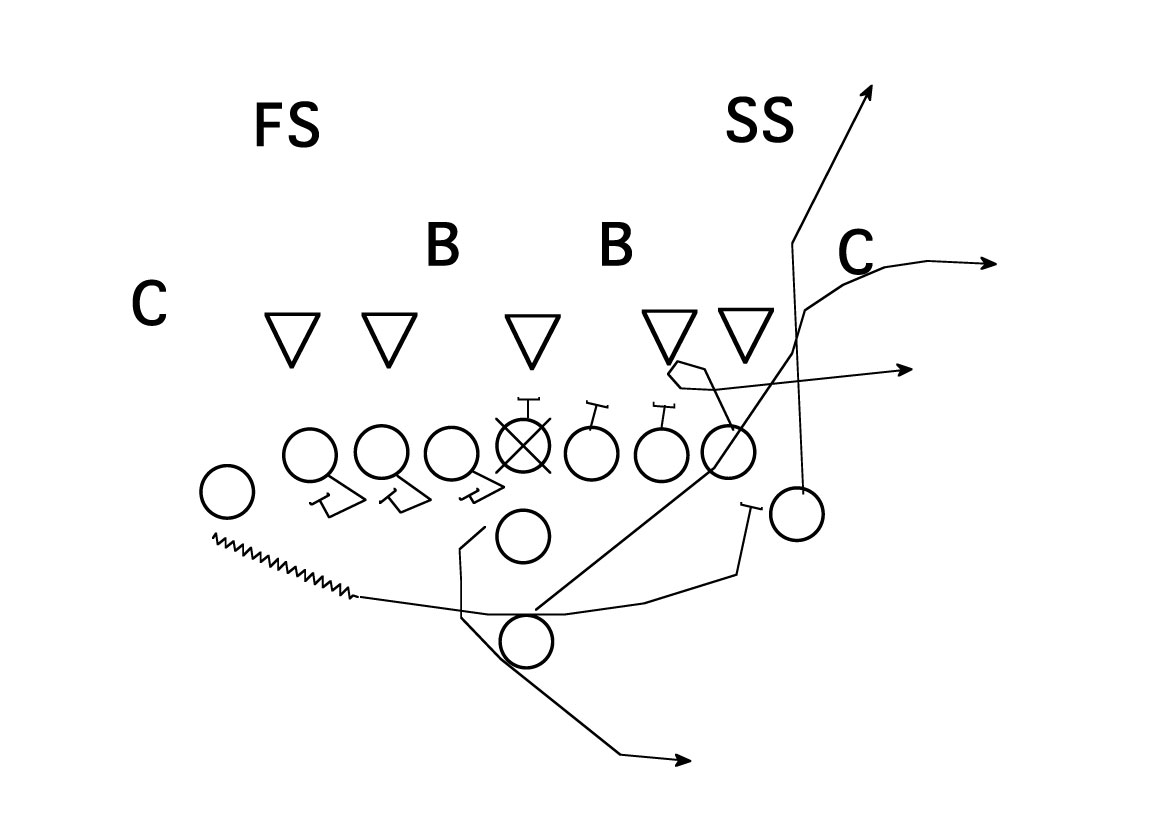
The power pass is an excellent play action pass to run when the defense is crowding the line of scrimmage because you are gaining big yards with the off tackle power play used by double wing teams. The backfield action must look like the run play that sets this pass up. The fullback runs a 12-yard flat route. The wingback runs a flag route and the tight end runs a 5-yard whip route. The whip route is important because at its inception it looks like the TE is blocking down – the same action as when running the power play. This will bring the CB down into run support and give you the time to hit the wing for a big play. As the QB comes out of the pitch action he should quickly look at the wing and if he is open throw the ball to him. A point of emphasis to any receiver who runs a deep route is to come back and block for receivers who catch a short pass. Also, the routes shown in these plays are easily reassigned to another receiver as needed.
Power Pass/Peel (See Diagram 2)
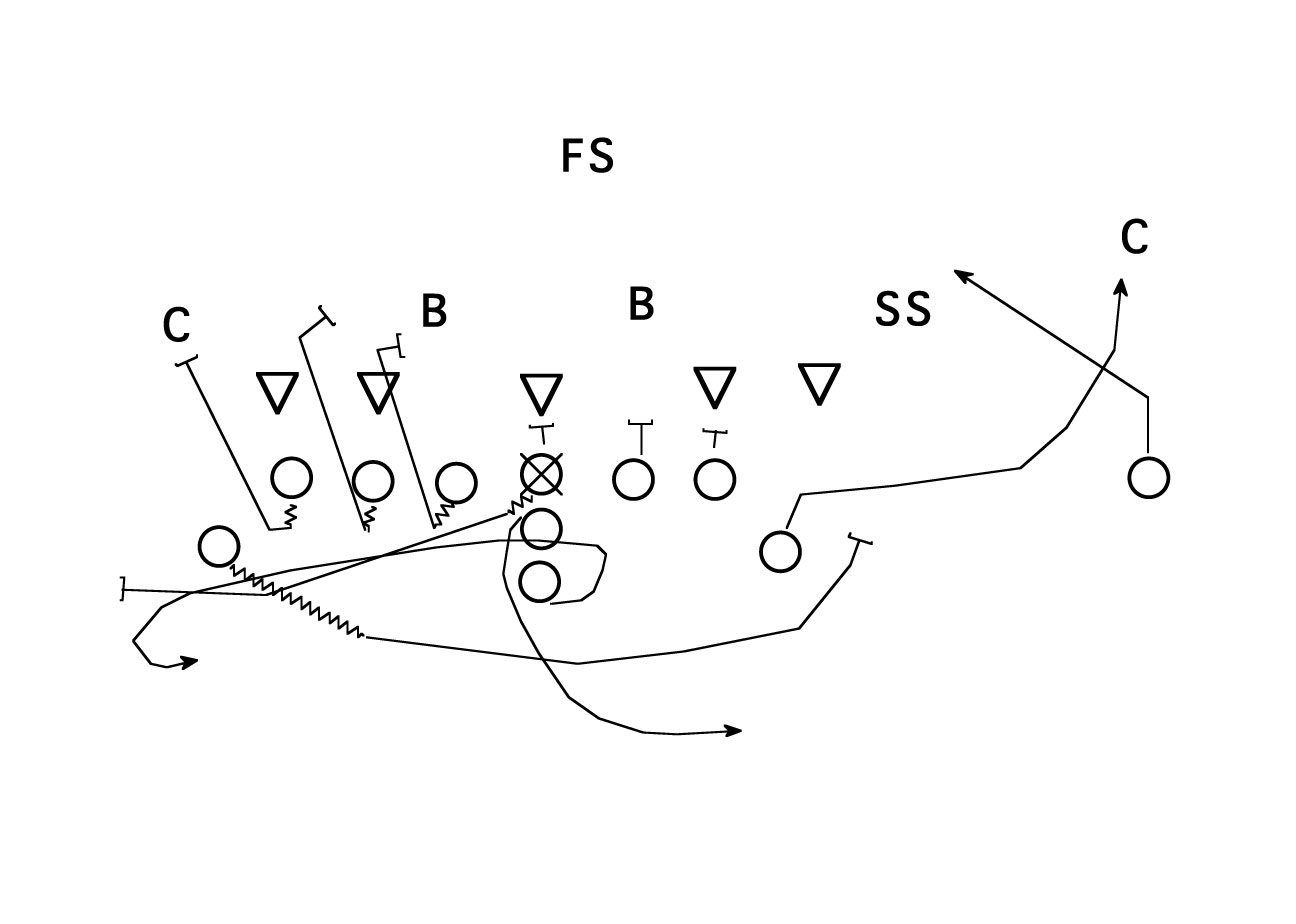
We tagged this play with a “peel” call when the back-side tight end runs the drag at 12 yards depth. This is to help with the back-side pursuit of the defense. The front side tight end runs a whip route at 5-6 yard depth. The Wing runs a flag route.
Counter Pass (See Diagram 3)
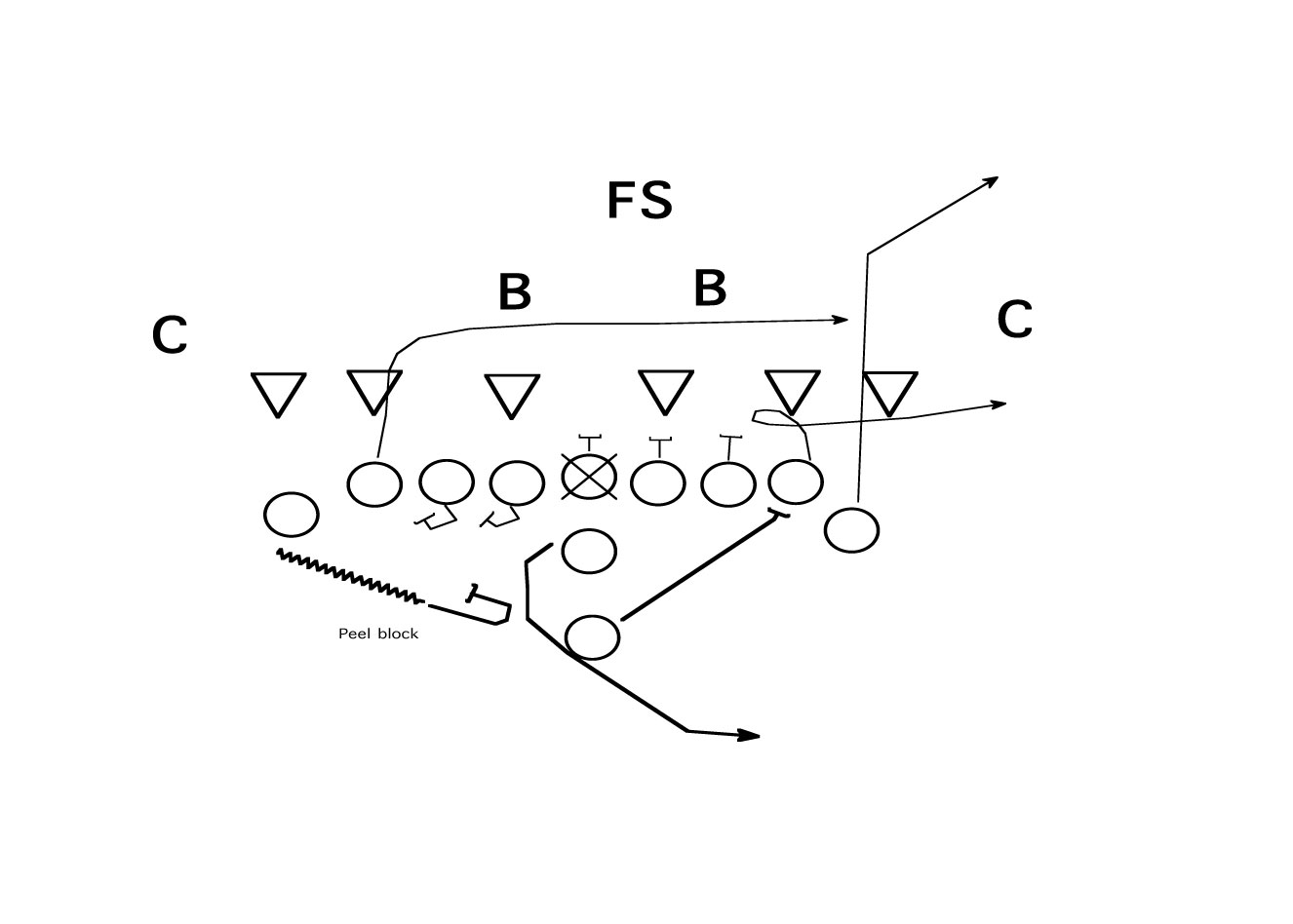
This pass is a great compliment to the counter play so often used by double wing offenses. Again, backfield action must look the same as the run play that sets this up. An important coaching point is to emphasize to the wingbacks that they must block the DE on both sides of the formation. The back-side TE runs a drag route. The front side TE runs the flag route and the FB runs the flat route.
Boot Pass (See Diagram 4)
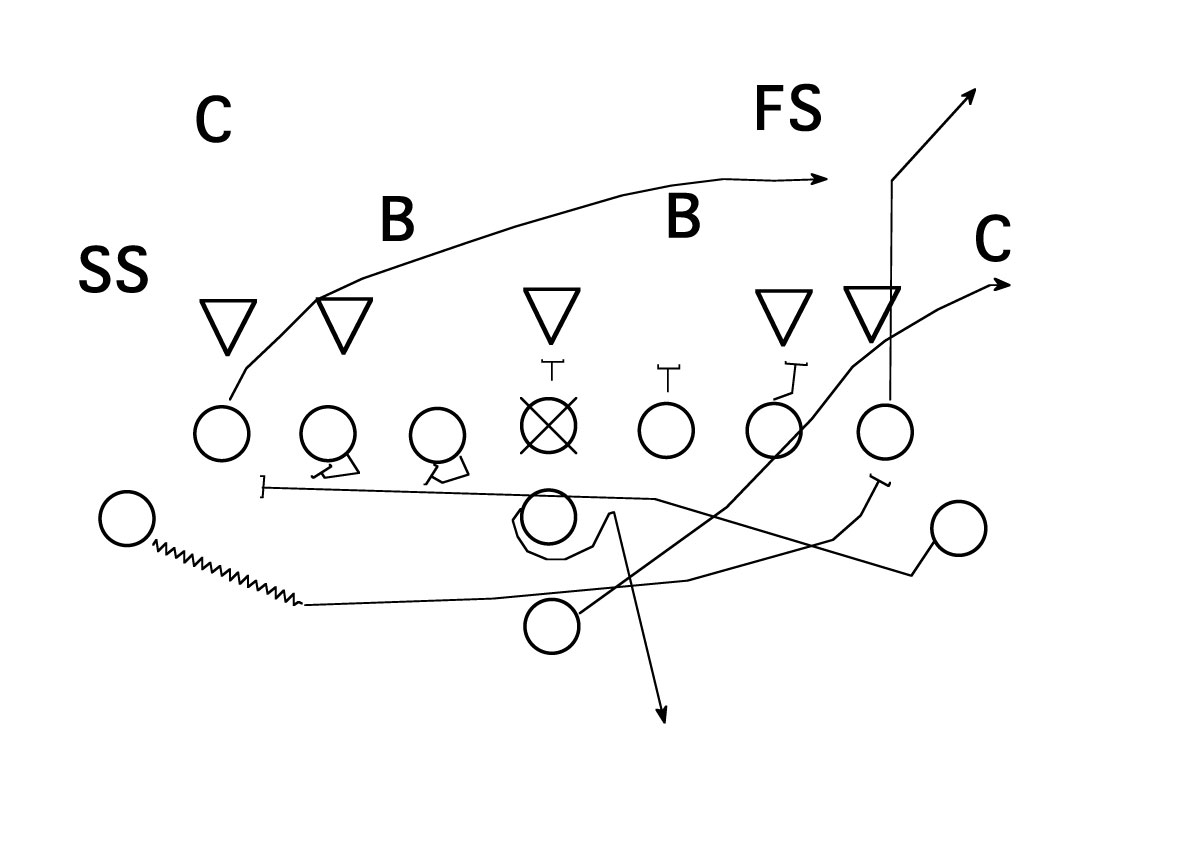
This is a great pass against a two deep zone. The QB will show a play action fake to the wingback running across the formation and then look deep to the play-side TE and wingback as they run their scissors route. If one of them is open, throw it. If not, look to the TE running the curl. If the inside backers are reading the pulling guards they should have vacated the inside curl area. This would allow for a short completion to the back-side TE.
Wheel/Slant (See Diagram 5)
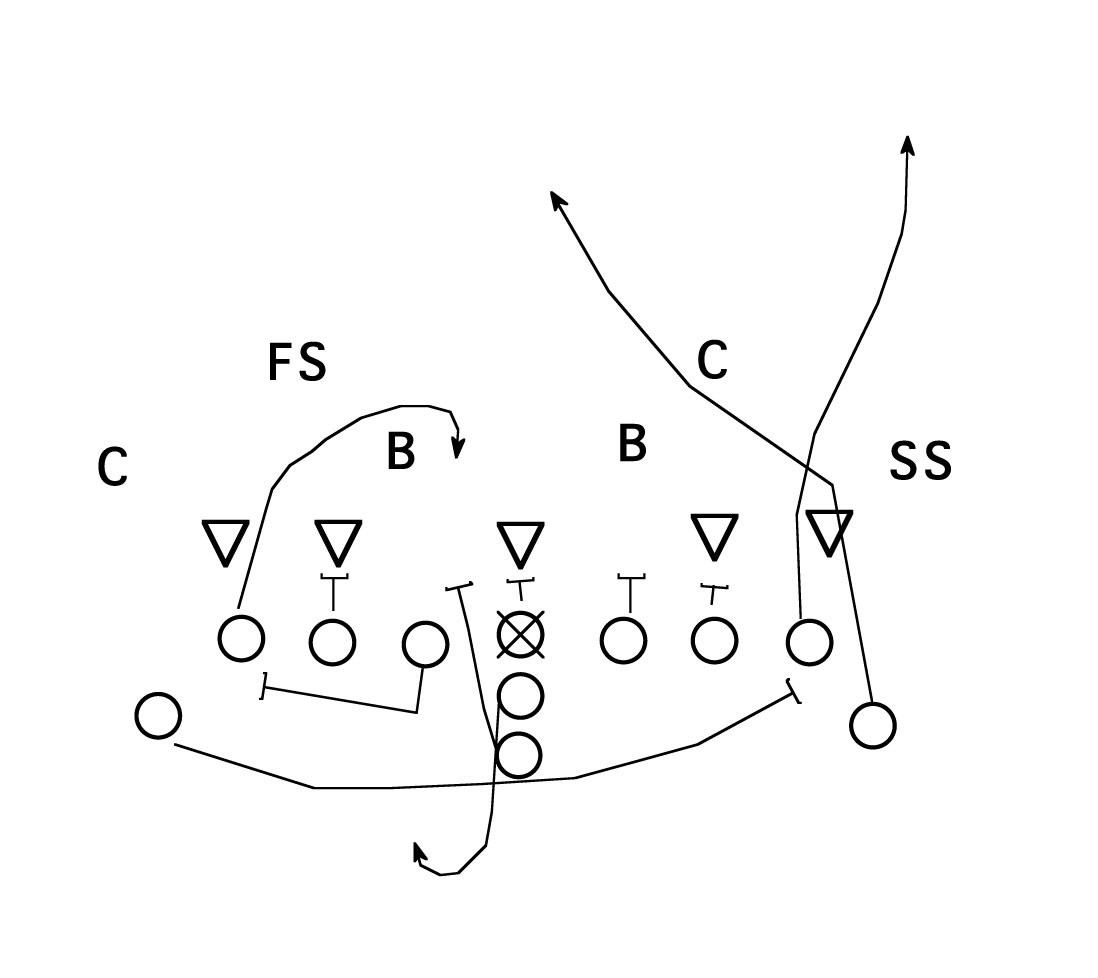
By running the slant pass or showing the backfield motion of the power play you have two plays to set the wheel/slant up. If needed, you could tag this play with a “peel” protection to block the back-side pursuit.
Screen Pass (See Diagram 6)
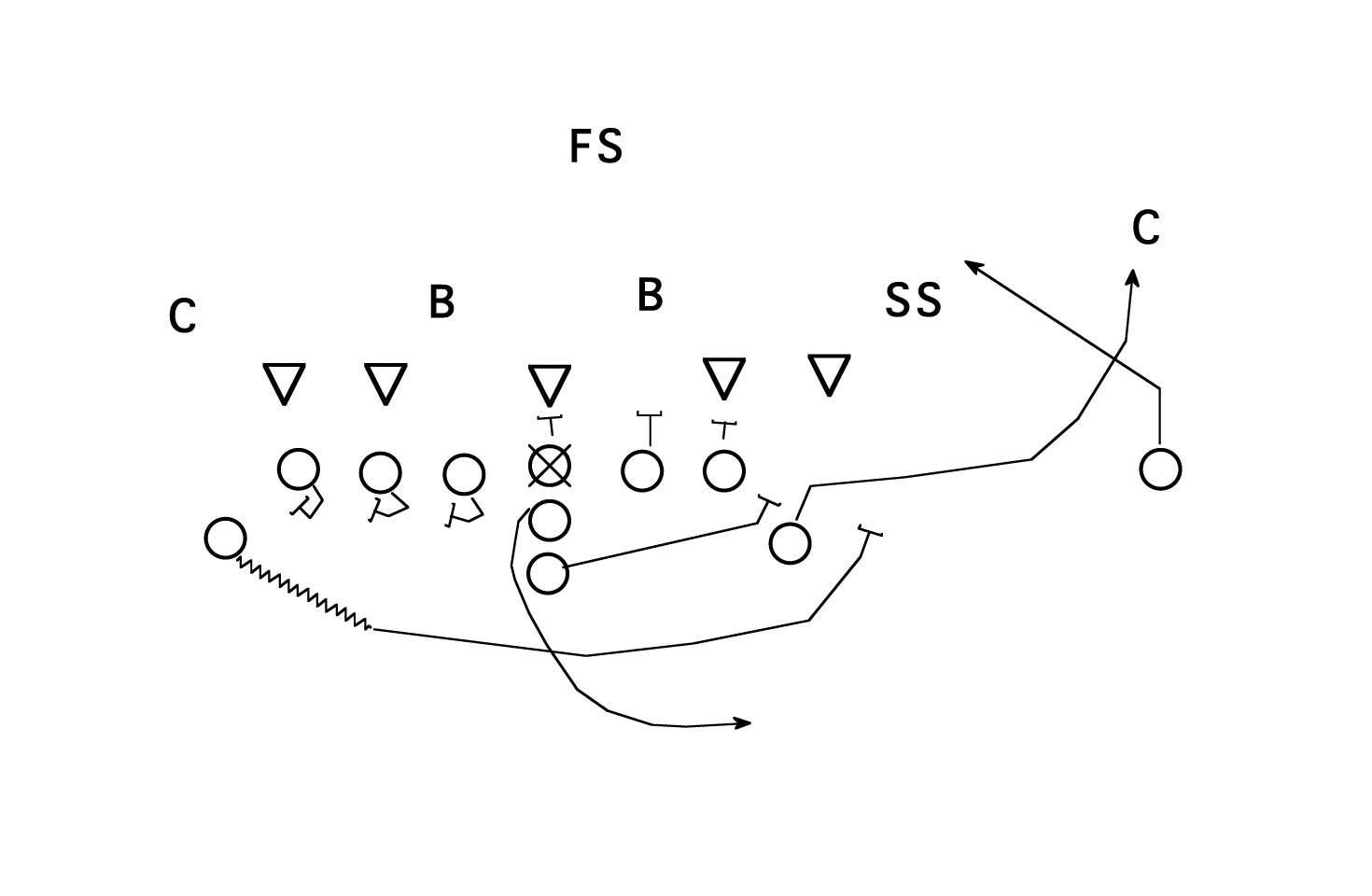
This play can be run from the split formation or double tight end formation. The fullback should take two steps away from the direction the quarterback opens. On the second step, the FB should plant and change direction to set up and receive the pass. It’s important that the QB show the same action as if running the power play. Also, he must get beyond the tackle box and draw the defensive pursuit in order to open up a big gain from this pass play.