OUR PROGRAM HAS been known for its rushing game and excellent running backs for over 20 years. The lead (isolation) play has been a major part of that success.
This play has been a very consistent running play vs. all 7-man fronts and it often forces defenses into 8-man fronts, allowing us to use our motion-lead package and our counter play-action game to get mismatches in our favor.
Why It Works
We’re an I-formation team that rushes with the tailback 20 to 25 times a game. But our thinking differs from many high school or college teams that run an isolation series. We align our fullback 10 feet from the center’s heels and the TB is tight to the FB.
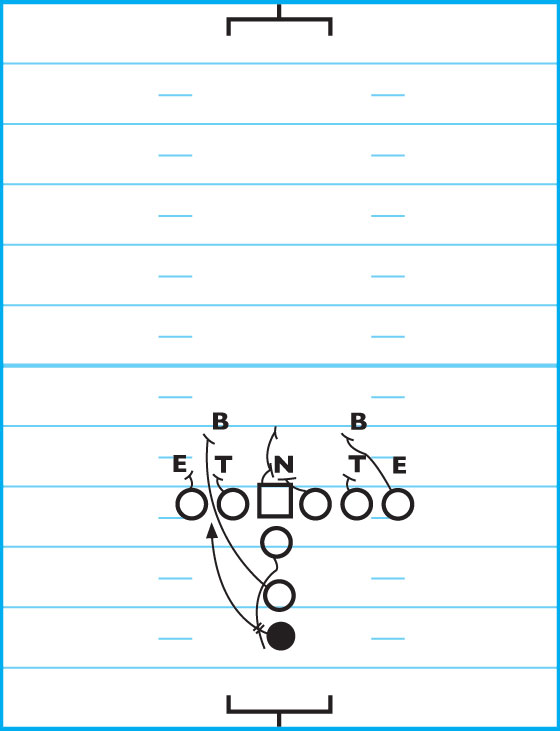
We designate the play by calling the side lead 20-21, 22-23, the outside lead 24-25 and the weak-side lead 24-25 (away from the tight end).
DIAGRAM 1: Inside Lead 20 Vs. Even Defense.
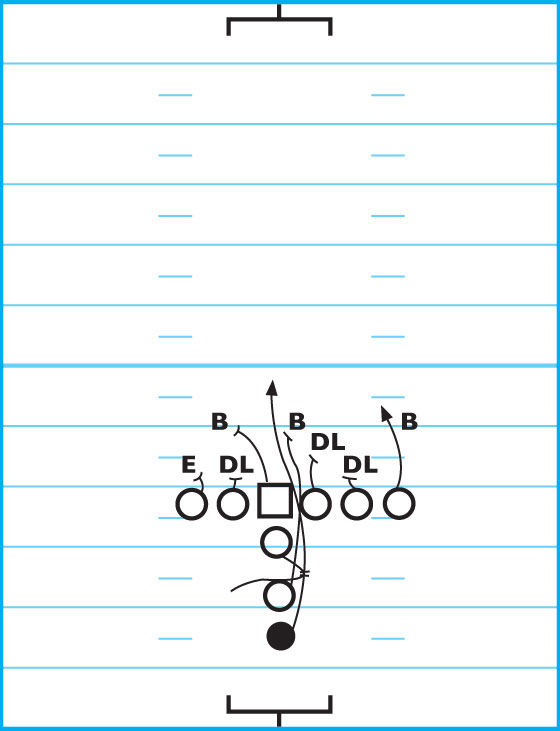
DIAGRAM 2: Inside Lead 23 Vs. Odd Defense.
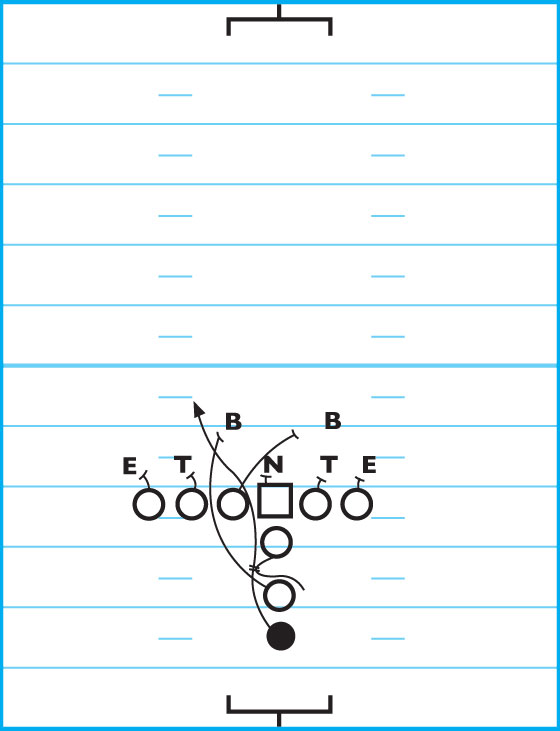
DIAGRAM 3: Outside Lead 24 Vs. Even Front.
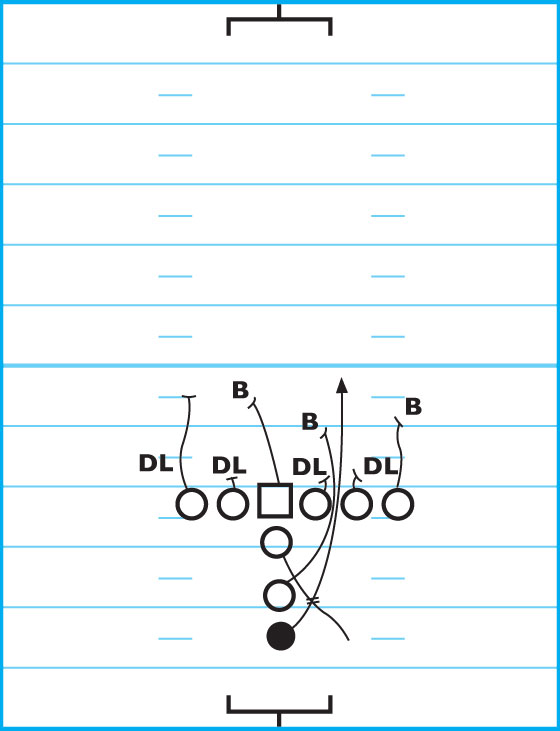
DIAGRAM 4: Outside Lead 24 Vs. Odd Defense.
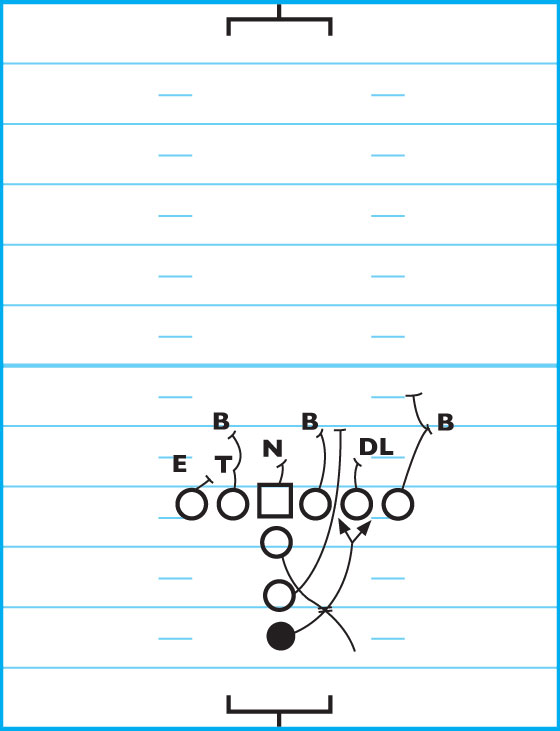
DIAGRAM 5: Weak-Side Lead 25 Vs. Reduced Front.
Why It Works
The goal is always to attack the line of scrimmage quickly with the shoulders of both our TB and FB low, and in a north-south direction.
We aren’t a big cutback team, as the FB is assigned a man or a gap and is told to punch through his assignment. The TB is told to attack the hole, read on the run and get 4 yards, then if possible, try to make a break into the open field.
DIAGRAM 6: 22 Cutback At 3.
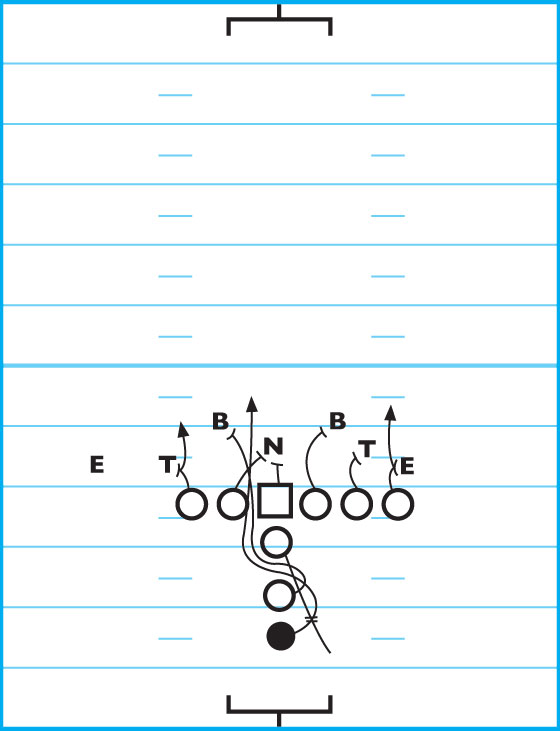
If we feel that we can cut back on a team, we’ll call a cutback play. In that play, the FB and TB make their cutback break together.
Control The Backside LB
On this series, the backside linebacker will often try to make the play, so the cutback play helps control him.
DIAGRAM 7: Controlling The Backside LB.
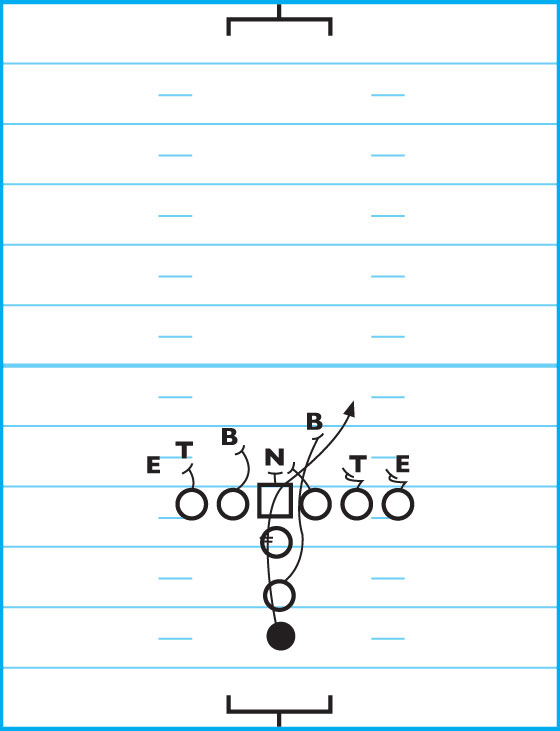
This formation allows your players to be three-on-one at the nose, but come off on the LB away from the lead.
Use a tight aiming point for the TB, almost running over the top of the double team and not breaking into the hole until the very last second.
Zone Blocking, Outside Lead
By zoning the nose and coming off away from the ball you are able to account for and get everyone inside. The backside LBs flow and scrape to the hole is tighter and his pursuit is slowed because he’s not sure where the TB will come out.
The zone block will be made easily on the LB by the tight aiming point of the TB.
The outside lead 24-25 is run three ways and is an off-tackle power play. Use a base call, down call or man call.
DIAGRAM 8: 24 Lead Vs. Even Front (Base Call).
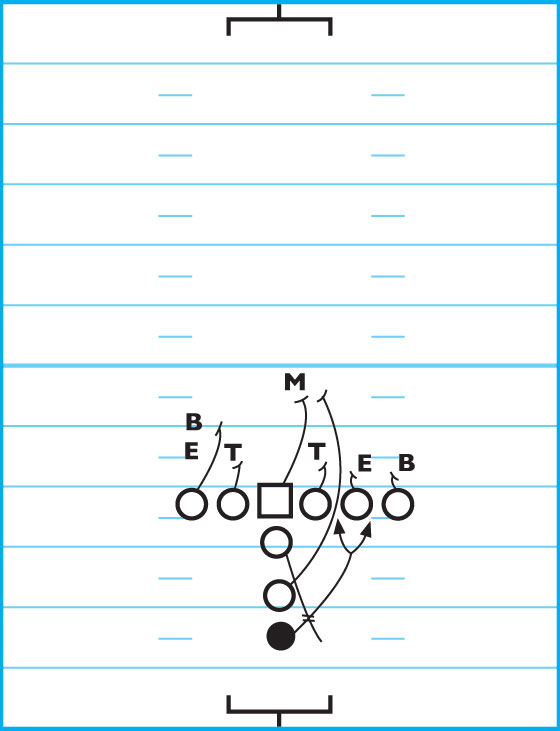
With the base call, the FB and TB read the tackle’s block to determine whether to break inside or outside.
The FB must arc inside as soon as he clears the LOS if there’s no defender present. He must be prepared to block the scrape backer coming inside out.
DIAGRAM 9: 24 Lead Vs. Even Front (Down Call).
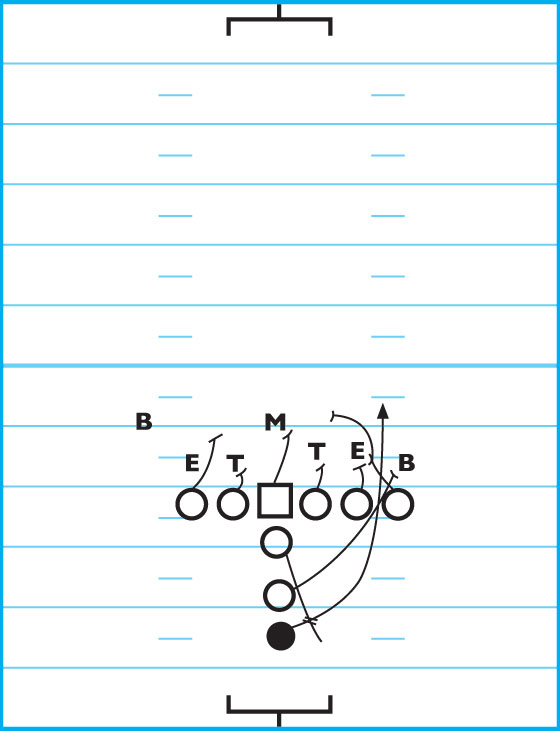
When running the down call, the TB stacks on the FB and knows that the soft spot will be inside because of the tight end down block and FB kick out.
The stack technique keeps the defenders somewhat outside because of fear that the TB will bounce outside.
DIAGRAM 10: 24 Lead Vs. Even Front (Man Call).
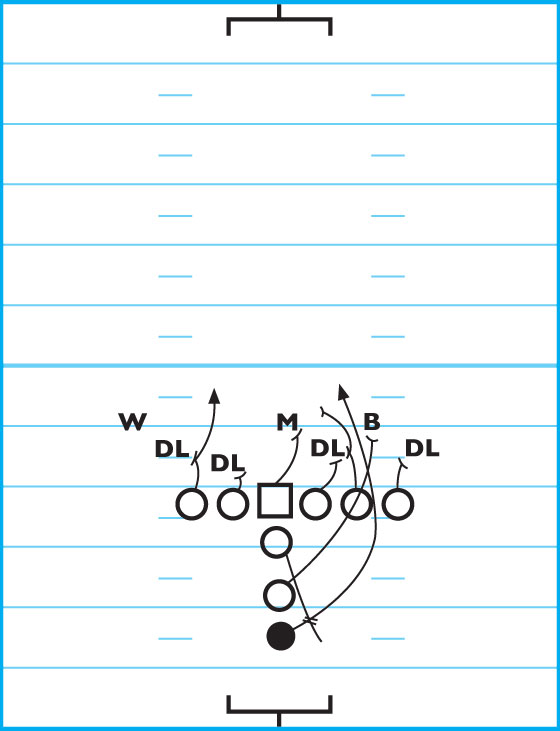
In a man call, you’ll have each offensive player assigned to a defender. With this call, there’s very little read by the TB, as he needs to hit the hole hard and is dependent on his teammates to keep their blocks.
Weak-Side Lead
The weak-side lead is a read play for your FB. We’ll often use our man call or down call on the weak side.
DIAGRAM 11: Weak-Side Lead 24 Vs. Even Front (Man Call).
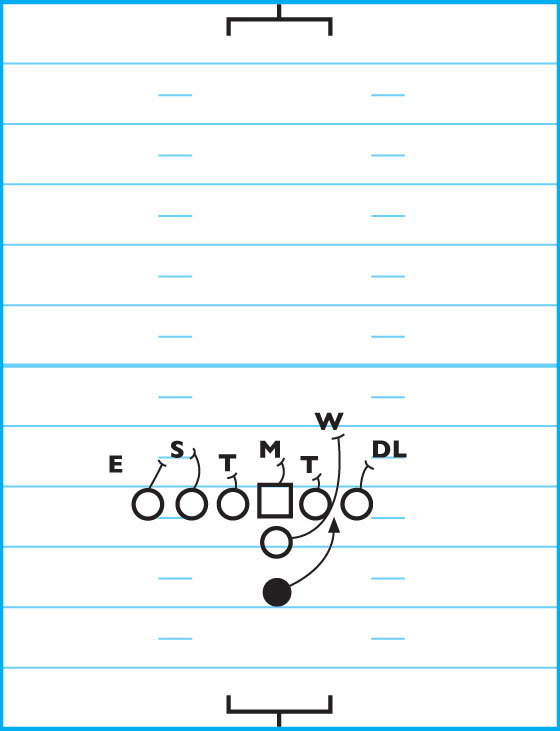
DIAGRAM 12: Weak-Side Lead 25 Vs. Slant Look.
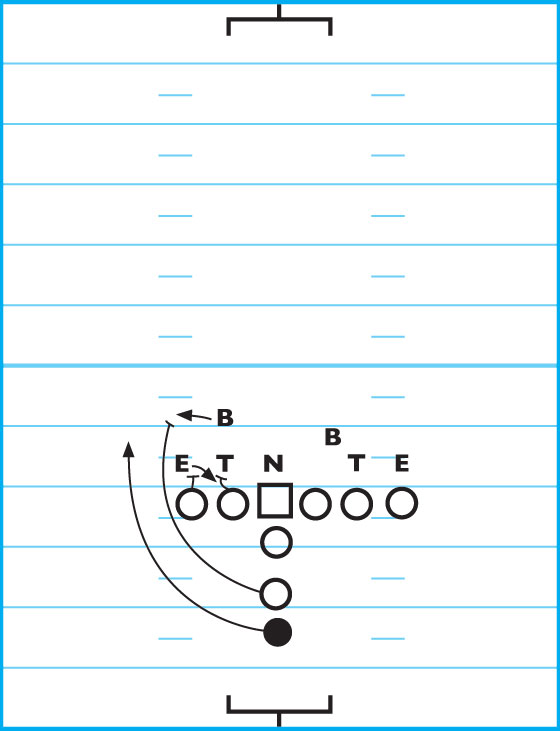
If we have a reduction look and are man blocking, our FB and TB will key on the tackle’s block. The FB must eye the stack backer and watch for a stunt. The stack backer must be blocked.
Offensive Tackle Vs. Inside LB
If down is called, we’ll often put the offensive tackle down on the inside LB and lead on the end.
DIAGRAM 13: Offensive Tackle Vs. Inside LB, FB On DE.
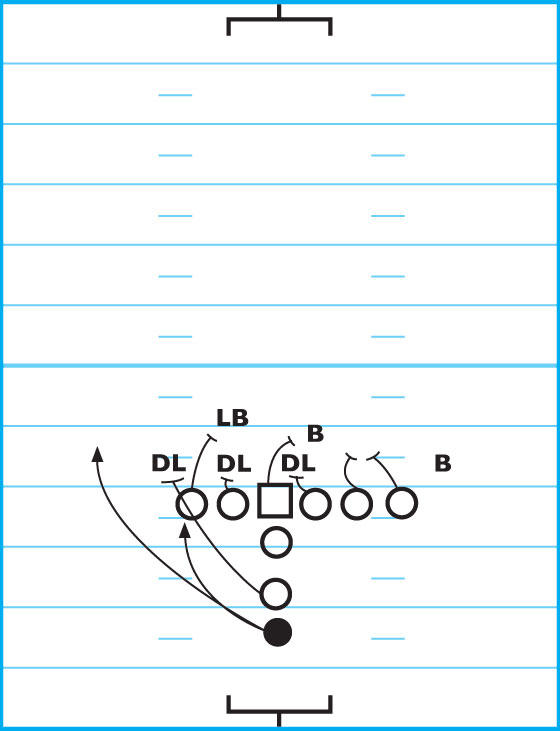
With the OT down blocking the inside LB, the FB and TB must be aware that the defensive end will close hard. The FB must try to pin the DE inside, which will allow the TB to bounce the play to the outside.