OVER THE PAST few years, football has changed. Coaches have shied away from the triple option and the power running game. The “air-it-out” attack is the new breed of football. As a result, the old-fashioned running games have begun to fade.
At many levels of football, the true Veer Offense is quickly dying, and is becoming this generation’s Single Wing. Is it because no one knows how to coach it? Or is it because if the offense gets shut down once or twice, a coach will abandon it and go straight to the air attack?
When it’s properly executed, many coaches consider the Triple Option to be the single greatest play in football.
Understanding The Inside Veer
The basis of the Veer Offense is the Inside Veer. This play has been our bread-and-butter play for a long time.
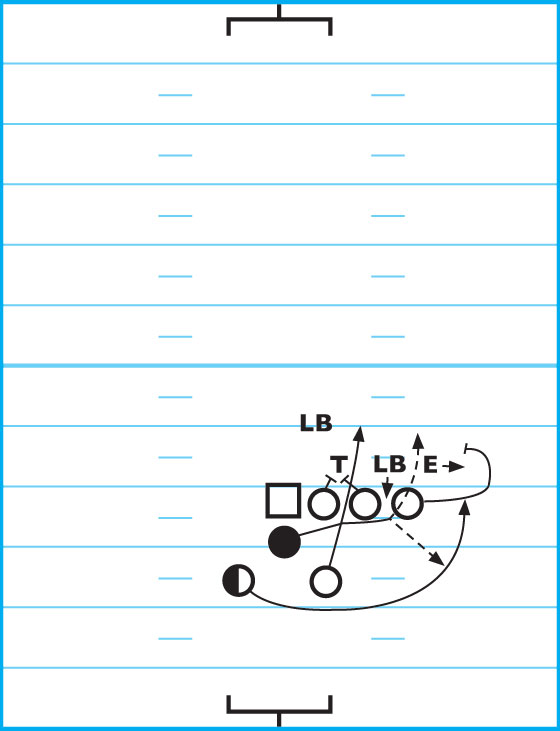
DIAGRAM 1: Inside Veer (Vs. 50). You can run this play out of a two Tight End set or a Pro Set. In this diagram, the play-side TE executes a slam block and releases off to the force man. The TE does this when a defender is head up or to the inside shoulder. This technique slows down the defender long enough so the quarterback can make his reads.
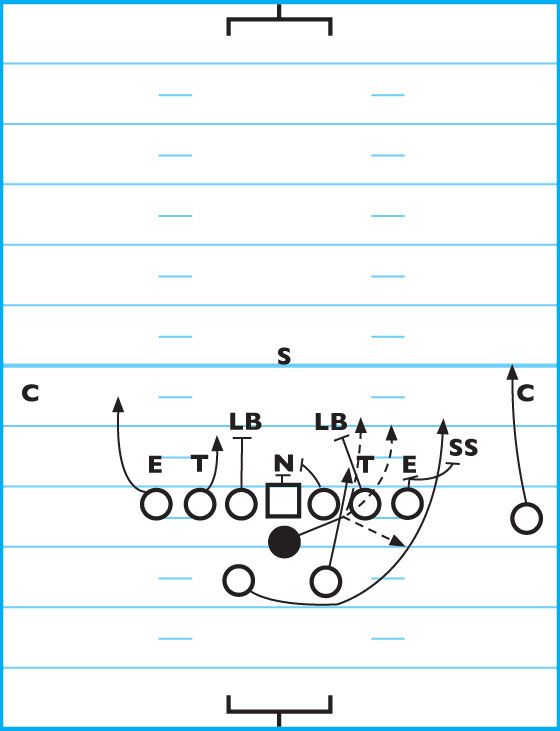
Inside Veer:
TE Blocking Options
DIAGRAM 2: Inside Veer — Tight End Flex. The TE may also flex. His normal split is 3-feet, but you may allow him to flex out to 6- or 7-feet. This technique gives him better blocking angles, helps determine the force man — and against a 50 front — forces the defensive end to think and make quick decisions.
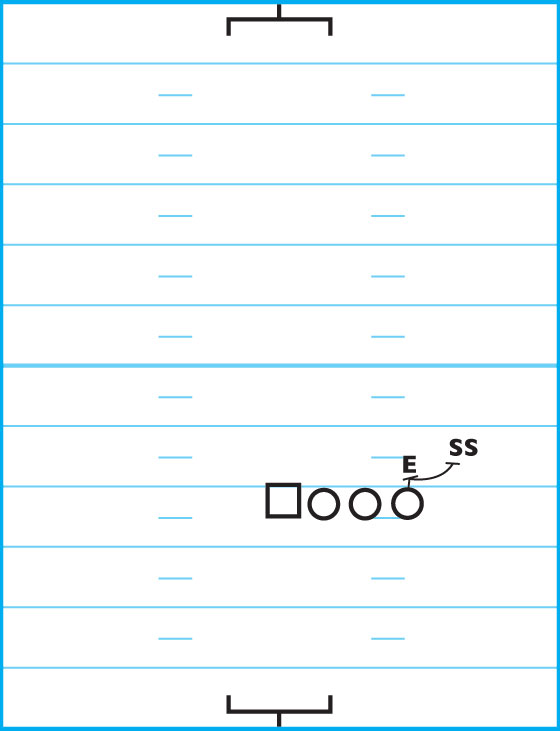
Inside Veer: Play-Side OT Blocking Assignments
The play-side offensive tackle’s assignment is to block the linebacker on or to the inside.
DIAGRAM 3: Play-Side OT (Vs. Even Front). Against an even front, the play-side OT must quickly attack the LB.
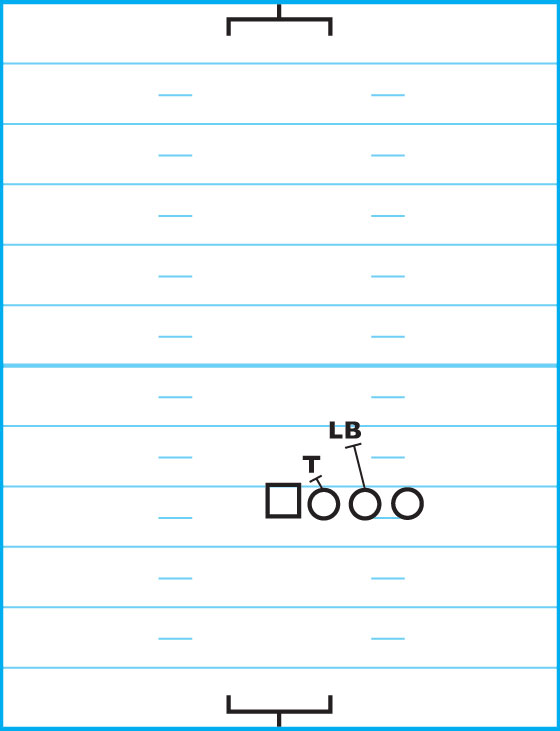
DIAGRAM 4: Play-Side OT (Combination Blocking). The play-side OT can also use a combination block, with the offensive guard taking the DT. The key to this block is to double-team first and then have the play-side OT block to the second-level LB.
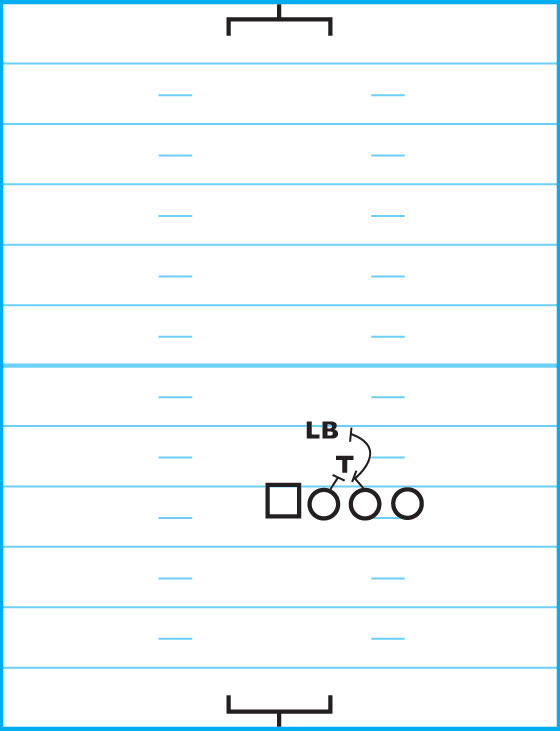
Inside Veer:
FB Responsibilities
The fullback lines up foot to foot with the right OG at a depth of 4 and 1/2 yards from the line of scrimmage.
DIAGRAM 5: FB Movements (Inside Veer). On the snap of the ball, the FB blasts full speed at the outside foot of the OG. As he receives the handoff and feels the ball in his stomach, he puts a soft squeeze on the ball. The quarterback, not the FB, decides whether or not he will keep the ball.
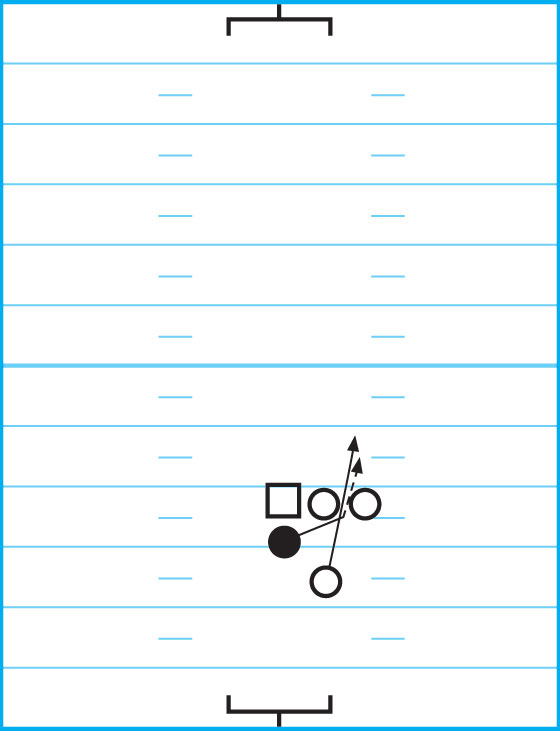
The FB must run this track and burst through the line with enough force to drive the defensive lineman off the LOS. If he doesn’t receive the handoff from the QB, he must still carry out his fake — he should be getting tackled by defenders.
Inside Veer:
RB Responsibilities
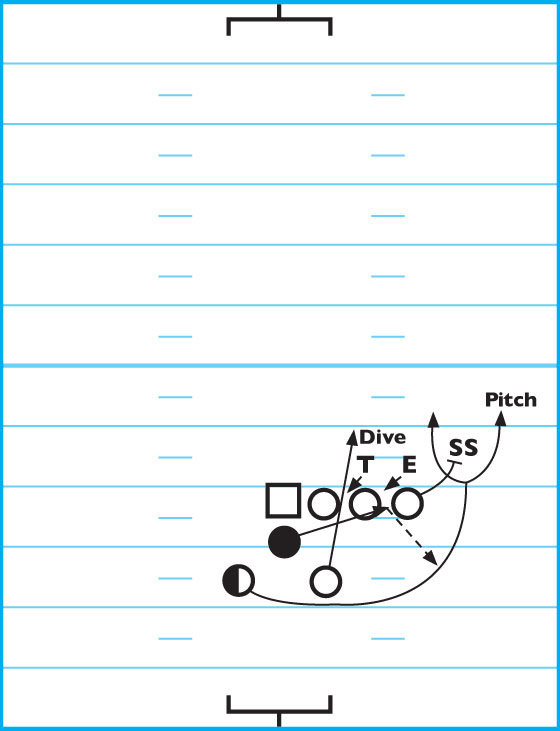
The running back lines up foot to foot with the left OG at a depth of 4 1/2 yards from the LOS.
DIAGRAM 6: RB Movements (Inside Veer). On the snap, the RB pushes off his outside foot and maintains a pitch position with the QB. The golden rule with pitch positioning is that a single defender can’t cover both the RB and the QB.
Inside Veer:
QB Responsibilities
The QB secures the snap and drives off his opposite foot and meshes with the FB. The mesh is into the LOS. For most high school QBs, this is tough. Many QBs have trouble getting into the line quickly, and most of the time, even getting into the line at the mesh point is troublesome.
DIAGRAM 7: QB Movements — Inside Veer (A). Once the QB leaves the center, he reads the first defender outside of the play-side OT and keys on him. If that defender remains stationary or goes upfield, the QB gives the ball to the FB. If the defender closes down, the QB removes the ball from the FB’s stomach and runs a normal option on the end. This technique must be practiced repeatedly so that the QB and FB are comfortable with the ball exchange.
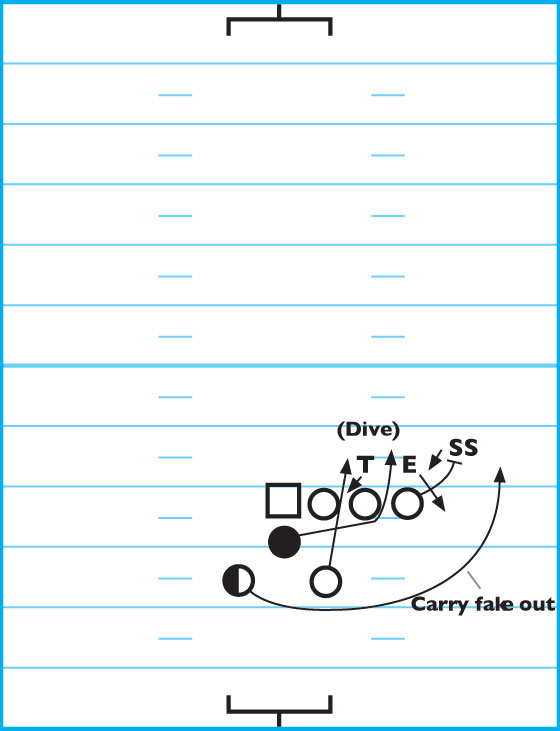
DIAGRAM 8: QB Movements — Inside Veer (B).
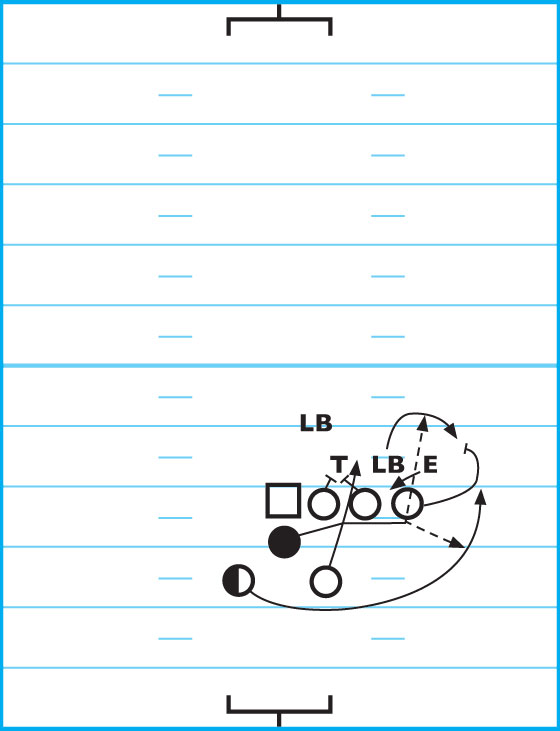
DIAGRAM 9: QB Movements — Inside Veer (C).
Once your QB becomes savvy, he may use a fake pitch or even a blind pitch — although it isn’t recommended for a young QB starting out in your system.
Understanding The Outside Veer
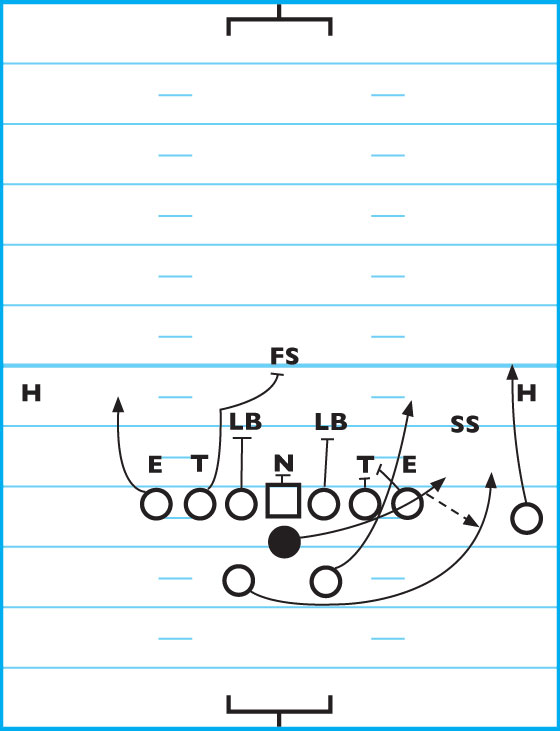
After installing the Inside Veer, the next step is to understand the Outside Veer. The beauty of the Outside Veer is that it’s similar to the Inside Veer. The difference is that you only turn the end man on the LOS loose, meaning he must block the man over him or gap block. The Inside and Outside Veer is the heart and soul of the Veer Offense.
DIAGRAM 10: The Outside Veer.
Outside Veer: Play-Side
TE Responsibilities
In the Outside Veer, the play-side TE has the same responsibility as the play-side OT does on the Inside Veer.
DIAGRAM 11: Play-Side TE’s Blocking Possibilities — Outside Veer.
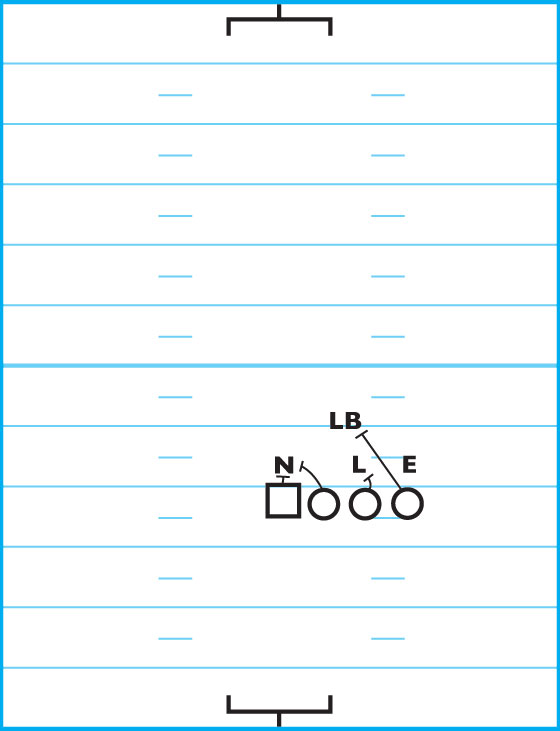
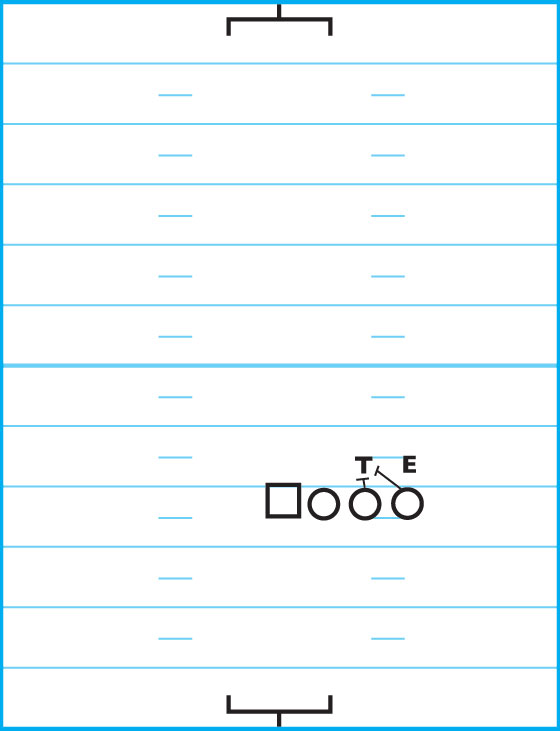
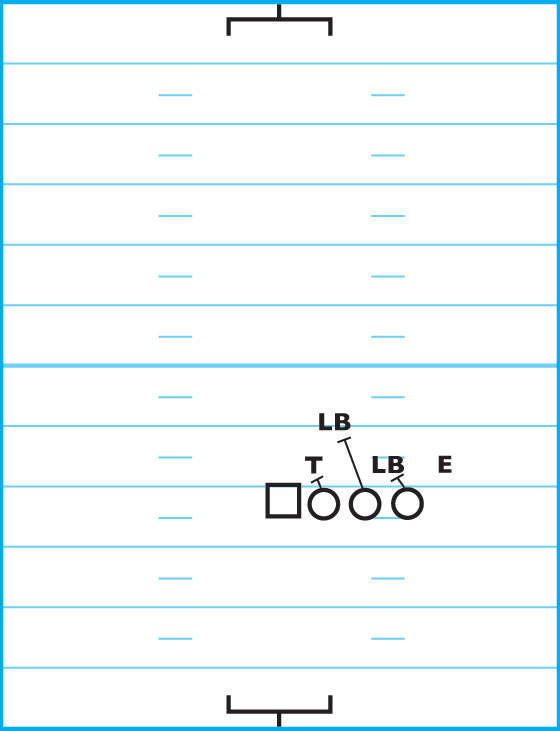
The play-side TE can quickly block the LB (A), double-team (B), or use a combination block with the play-side OT (C).
DIAGRAM 12: Play-Side TE Other Blocking Options — Outside Veer. In special cases, the play-side TE must recognize that the offense can only let the end man on the line loose. This means that he must block the man over him or gap block. This is a tough block. The key to this block is for the TE to get as much movement as he can.
Outside Veer: Play-Side
OT Responsibilities
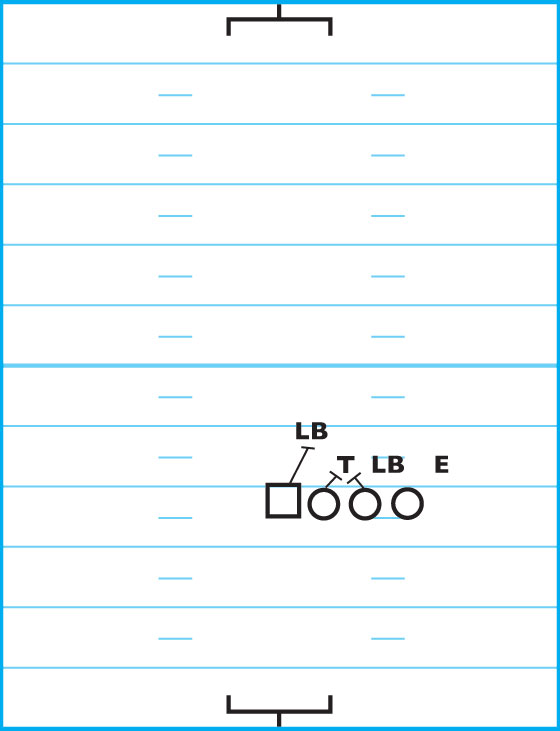
In the Outside Veer, the play-side OT has several blocking options, depending on the defense.
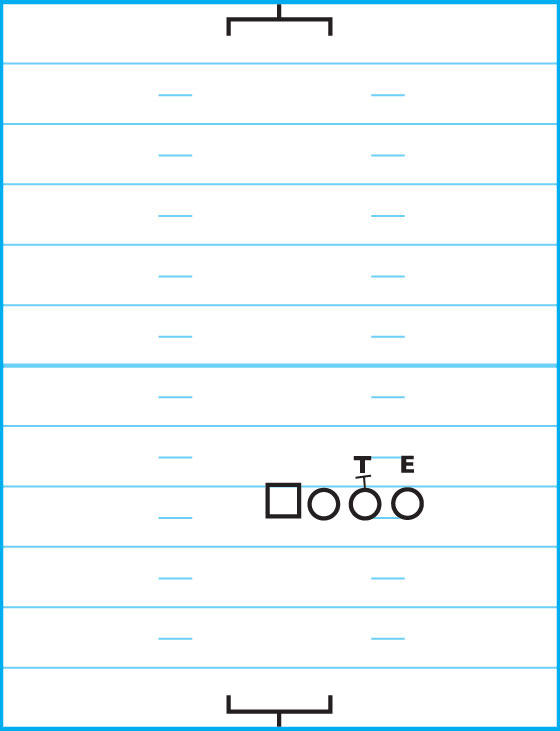
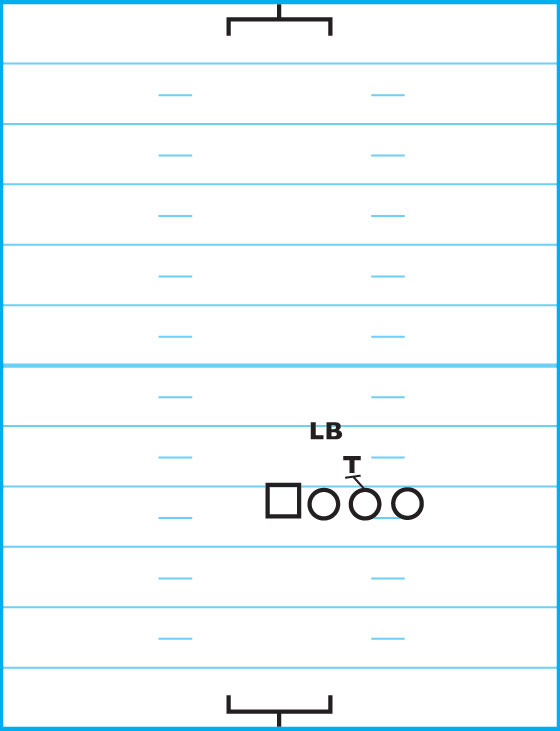
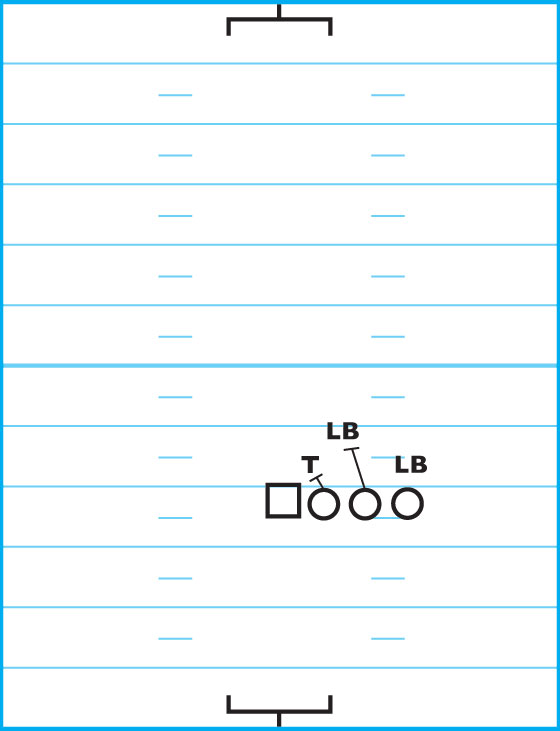
DIAGRAM 13: Play-Side OT’s Blocking Possibilities — Outside Veer. Against odd fronts, the play-side OT base blocks (A). Against even fronts, he blocks the same as he does in the Inside Veer (B and C). If it’s a double-team, both the play-side OG and OT must get movement on the defender (D). This forces the LB to get deeper and results in more yardage on the play.
Outside Veer: Guards,
Center, Backside OT Responsibility
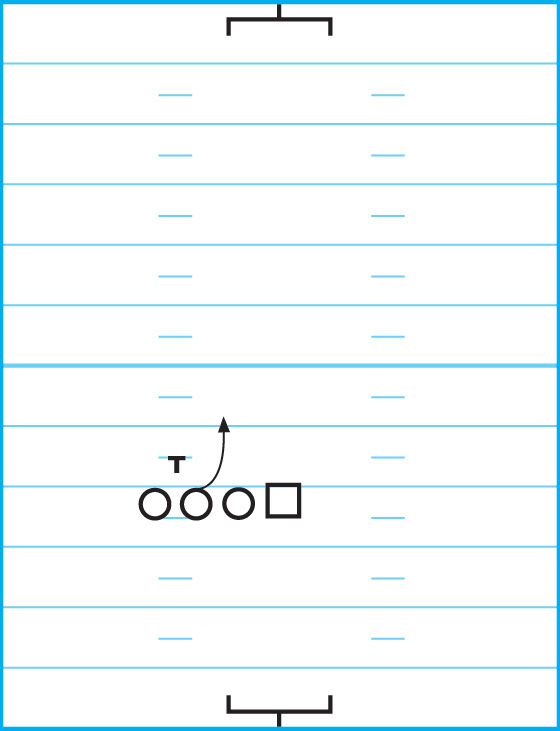
The play-side OG, center and backside OG all base block. The backside tackle releases to the inside and blocks the first defender who shows.
DIAGRAM 14: Backside OT’s Blocking Possibilities — Outside Veer.
Outside Veer: Backside End, FB Responsibilities
The backside end runs a seam or a dump route if he’s flexed tight. If he’s split wide, he runs a streak route downfield, drawing defenders with him.
The FB is in his normal alignment. On the snap of the ball, he blasts directly at the butt of the play-side OT.
DIAGRAM 15: FB Movements (Outside Veer). Again, the FB must feel the football in his stomach and put a squeeze on it. Like the Inside
Veer, the QB decides to give or keep the ball.
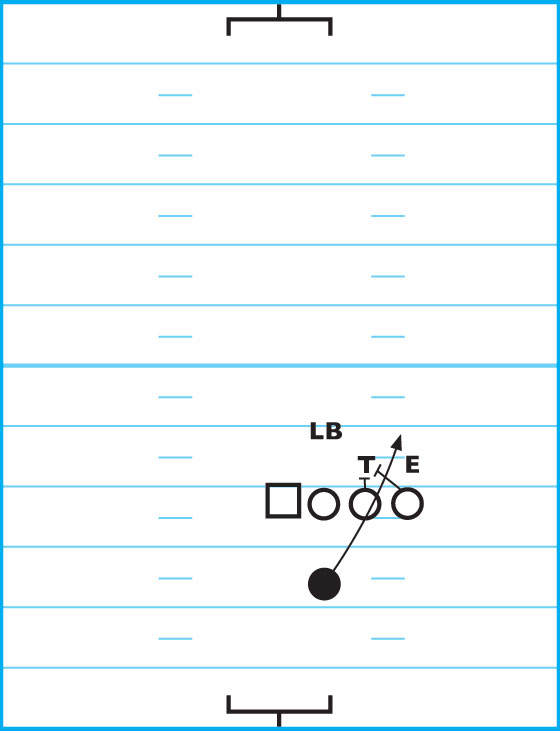
DIAGRAM 16: FB Movements Vs. Even Fronts (Outside Veer). Against even fronts the FB must run to the inside foot of the play-side OT. It’s vital that he stays on track!
Outside Veer:
RB, QB Responsibilities
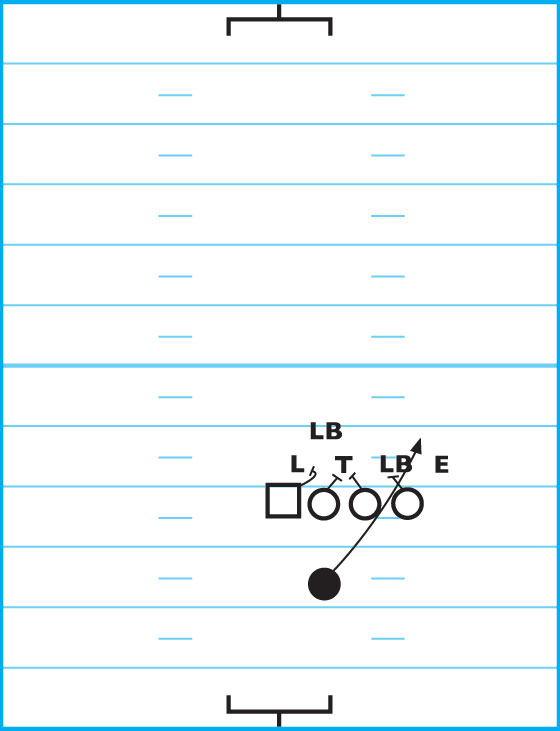
In the Outside Veer, the RB has the same alignment, movements and responsibilities as he does in the Inside Veer.
The QB seats the ball, drives off the opposite foot and meshes with the FB. Immediately after leaving the center, the QB picks up the first defender outside of the TE and keys on him. If the defender stays or goes upfield, the QB makes the handoff. If the key defender closes down, he withdraws the ball from the FB’s stomach and options toward the next man that shows.
Devastating, Effective Play
The Inside and Outside Veer are the heart and soul of the Veer Offense. Installing the Outside Veer as part of your offense makes your team more dangerous in short-yardage situations and is also effective on the goal line.