Four different play concepts – the Stick-Draw, Zone-Stick, Zone-Zero, and the Fold-Stick – can protect your quarterback.
Many football programs at the collegiate and high school levels are utilizing some version of a spread, up-tempo offense. Modern offenses put great athletes at the quarterback position and are looking to get their best athletes the ball in space while putting stress on a defense with a rapid succession of plays. But what happens when your athlete at quarterback is a 6’6”, 220 pound gunslinger that is a pro prospect? What happens when you want to protect your quarterback from taking hits and calling zone read option is not an option?
Having a quarterback who’s strength was passing and not running, we identified a few simple high percentage run/pass concepts that maintain the tenets of our spread tempo offense while still giving the quarterback the option to call the right play.
Our offense ranked #11 among all Division II colleges last fall. Our senior QB, James Stallons, finished 8th in total passing and 9th in passing yards per game. Shaw also finished first in both passing yards per game and passing offense in the Central Intercollegiate Athletic Association.
At the beginning of the season, we wanted to call more single back draw plays as well as throw more from the 3 x 1 stick formation. We know the current trend among spread offenses is to utilize more packaged run/pass concepts that put underneath defenders in a bind. The Stick/Draw concept was one of the first packaged concepts we installed.
We like to align in a 3 x 1 set when executing this concept. We teach our QB to read the sixth defender in the box to the trips side, which would be the Mike linebacker in diagram 1A. We are looking to put him in a bind by his post-snap movement. Once snapped, the QB catches and turns to key the Mike linebacker. If the Mike linebacker plays the stick route by the #3 receiver, then the QB turns back to the RB and gives him the ball on the draw play. If the Mike linebacker is flatfooted or anticipates the draw, then the QB continues with an easy throw to his #3 on the Stick route (Diagram 1B).
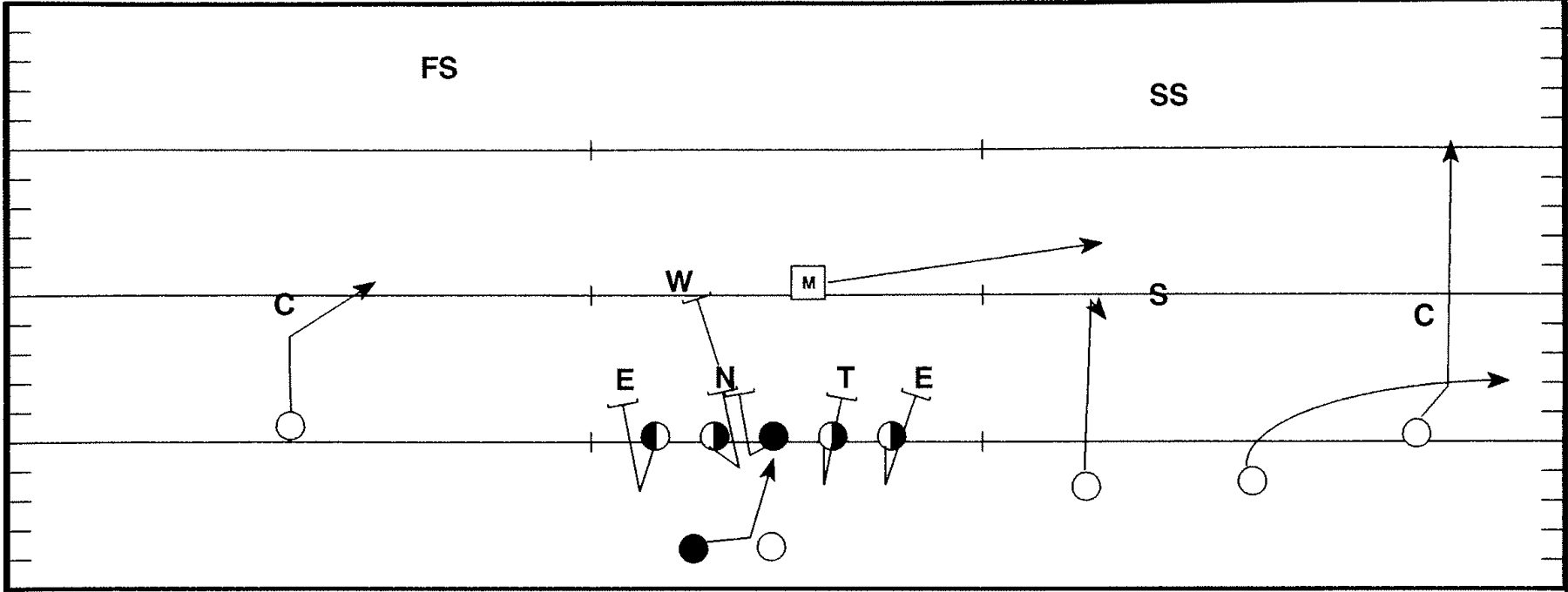
Diagram 1.
Over the course of last season, this was our most successful package. Our QB completed 86% of his passes when throwing the stick route for an average of 9.6 yards per completion. For the draw, we averaged 6.2 yards per rush and found this to be an excellent play when we needed to get our offense back on schedule.
Another run/pass concept that fit our needs and scheme was the combination of the inside zone and stick concept that we ran out of a 3 x 1 spread look (Diagrams 2A and 2B). We like to call this concept when we know the backside defensive end will not squeeze the inside zone mesh. It’s a similar principle to the Stick/Draw concept where we put the sixth defender in the box in a bind. The QB keys the Sam linebacker for his post-snap movement (Diagram 2A).
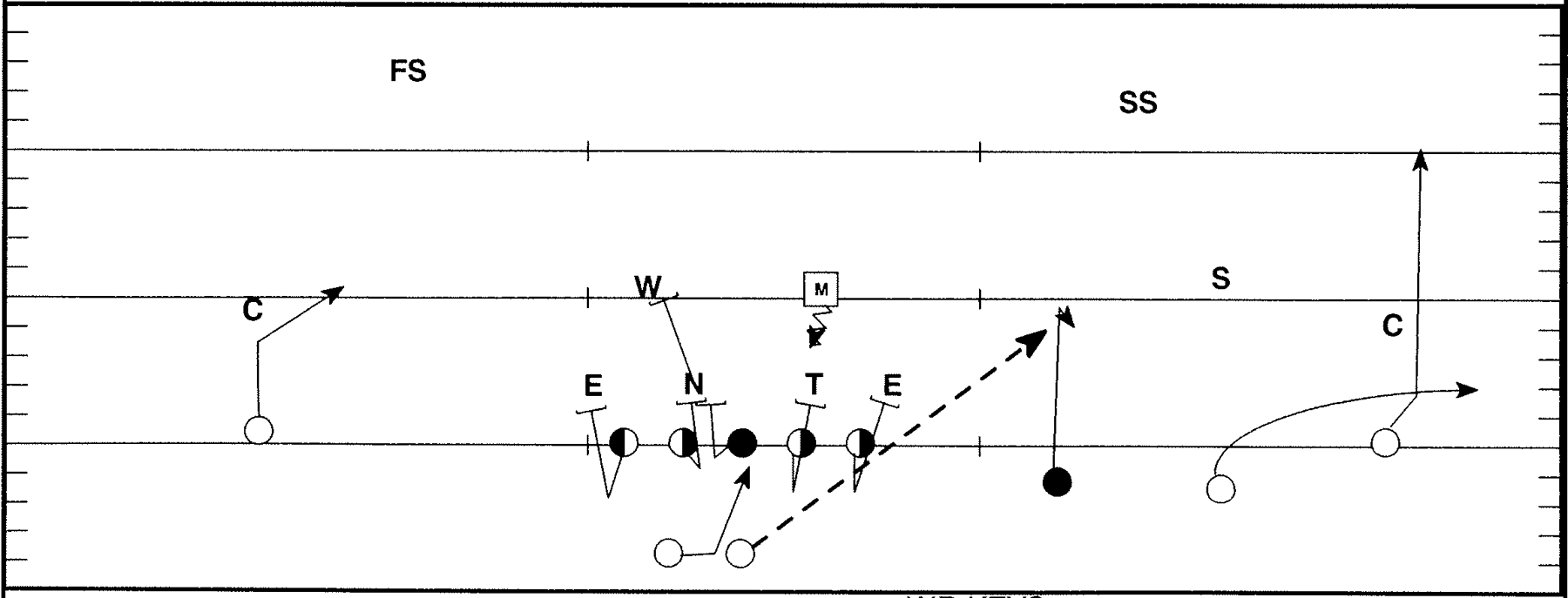
Diagram 2a.
If the Sam linebacker gets involved with his run fit to stop the inside zone play, the QB pulls the ball from the RB and makes an easy throw onthe Stick Route to his #3 receiver. If the Sam linebacker’s post snap movement is to defend the stick or bubble route, then the QB simply gives on the inside zone where the blocking scheme is even (Diagram 2B). On the year, we averaged 8.0 yards per completion and a 75% completion rate. We averaged 7.5 yards rushing on for this run/pass concept.
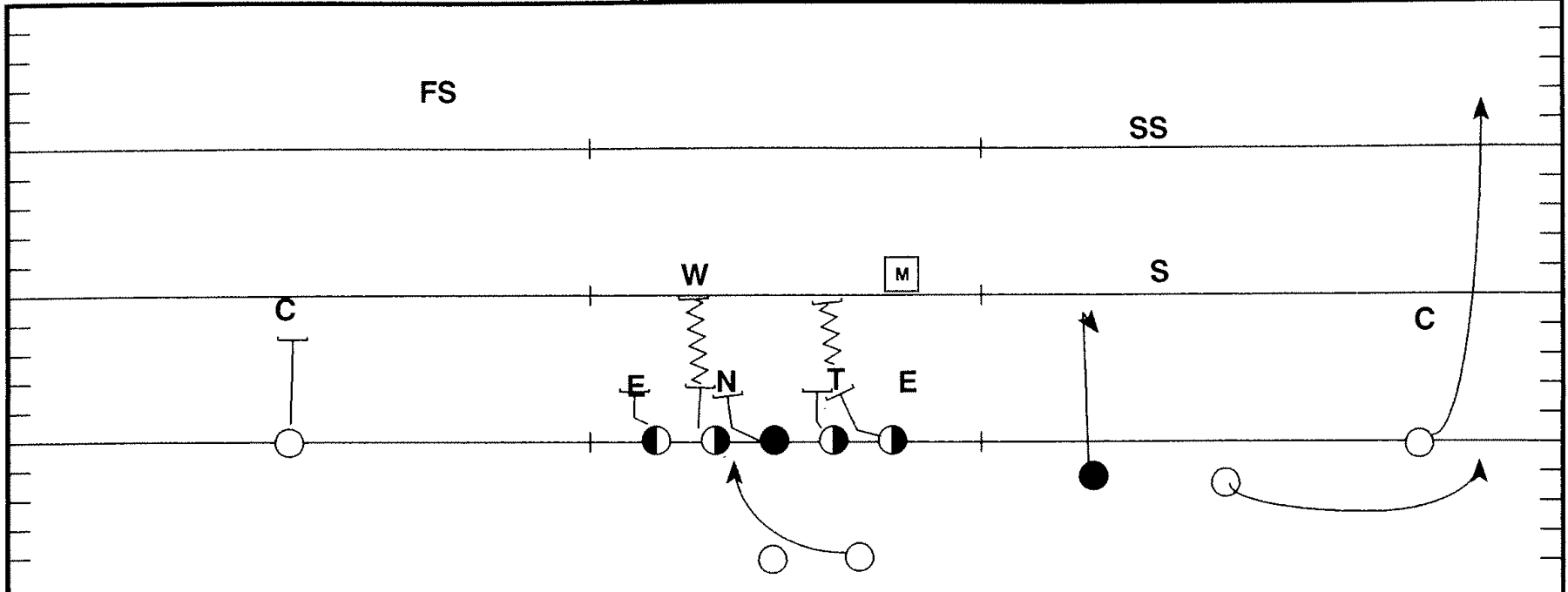
Diagram 2b.
The third run/pass concept we installed was built with the inside zone, giving the QB a read component that allowed him to make an easy throw toward the sideline. We like this concept because it allowed the QB to read defensive leverage via alignment and make the best decision where the ball was thrown. The QB’s decision is based on the defensive numbers in the box (six or more) and the defensive numbers guarding the trips to the field (Diagrams 3A and 3B). If the QB reads pre-snap that the trips formation is only defended by two defenders, he fakes the inside zone mesh and throws the zero route to the #1 receiver. If the QB reads pre-snap three defenders to the trips side, he gives the ball on the inside zone to the RB.
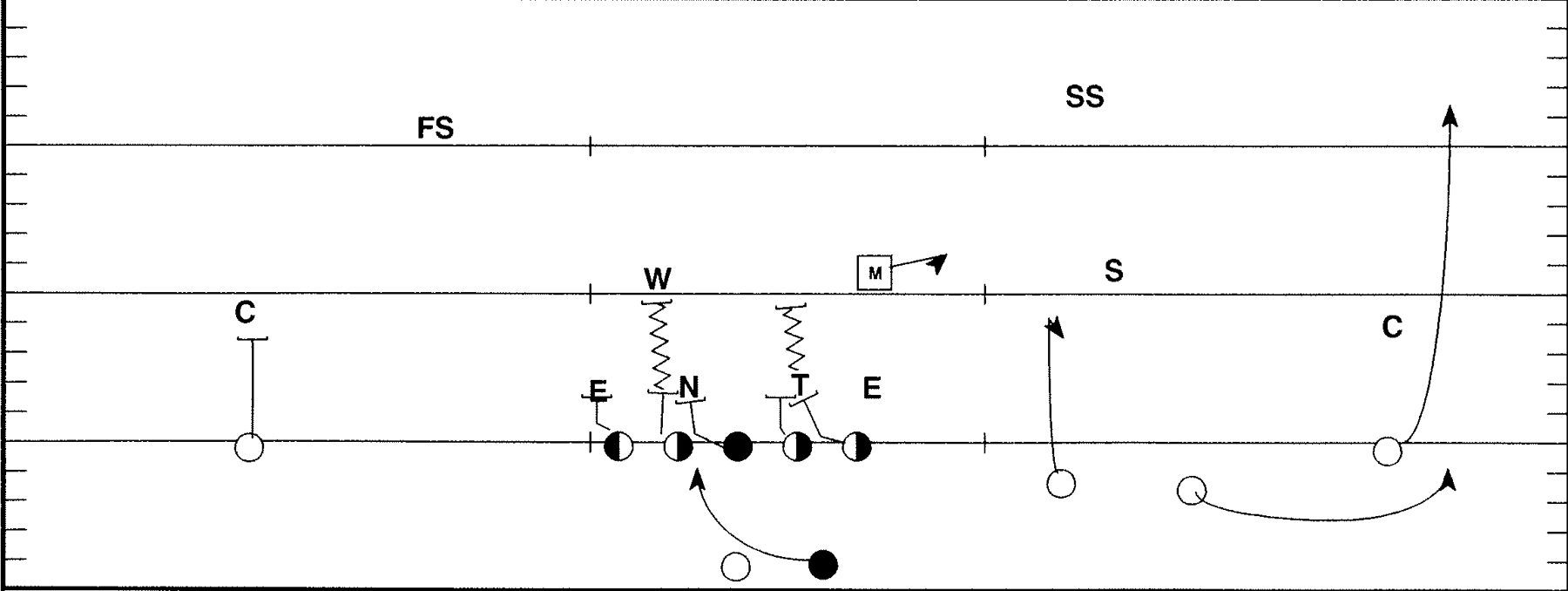
Diagram 3a.
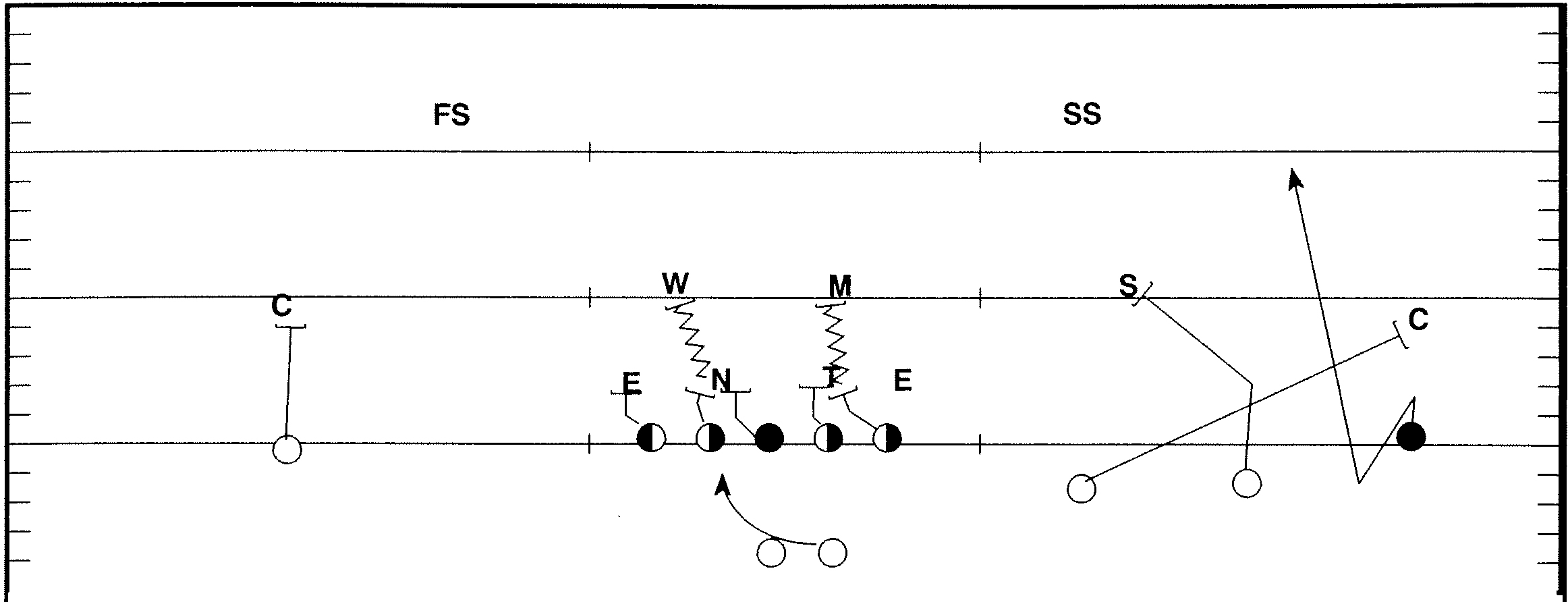
Diagram 3b.
This concept stretched the defense and we got great production out of it. On the season, we averaged 6.8 yards per completion with a completion percentage of 71% and a rushing average of 14 yards per carry.
The last packaged concept we used was a combination of Inside Zone/Stick that we liked to use out of a 2 X 2 spread look when we anticipated a four-man front with two high safeties. The variation in this concept was that instead of an all out inside zone scheme, we fold blocked the nose guard and worked our guard up to the nearside linebacker. The QB’s read is the same as the 3 x 1 Inside Zone/Stick (Diagrams 4A and 4B). If the linebacker gets involved with the inside zone, then the QB throws the stick. If the linebacker is flatfooted or looks to defend the stick, then the QB gives the ball on the inside zone play where the fold blocking scheme gives us a numbers and angles advantage.
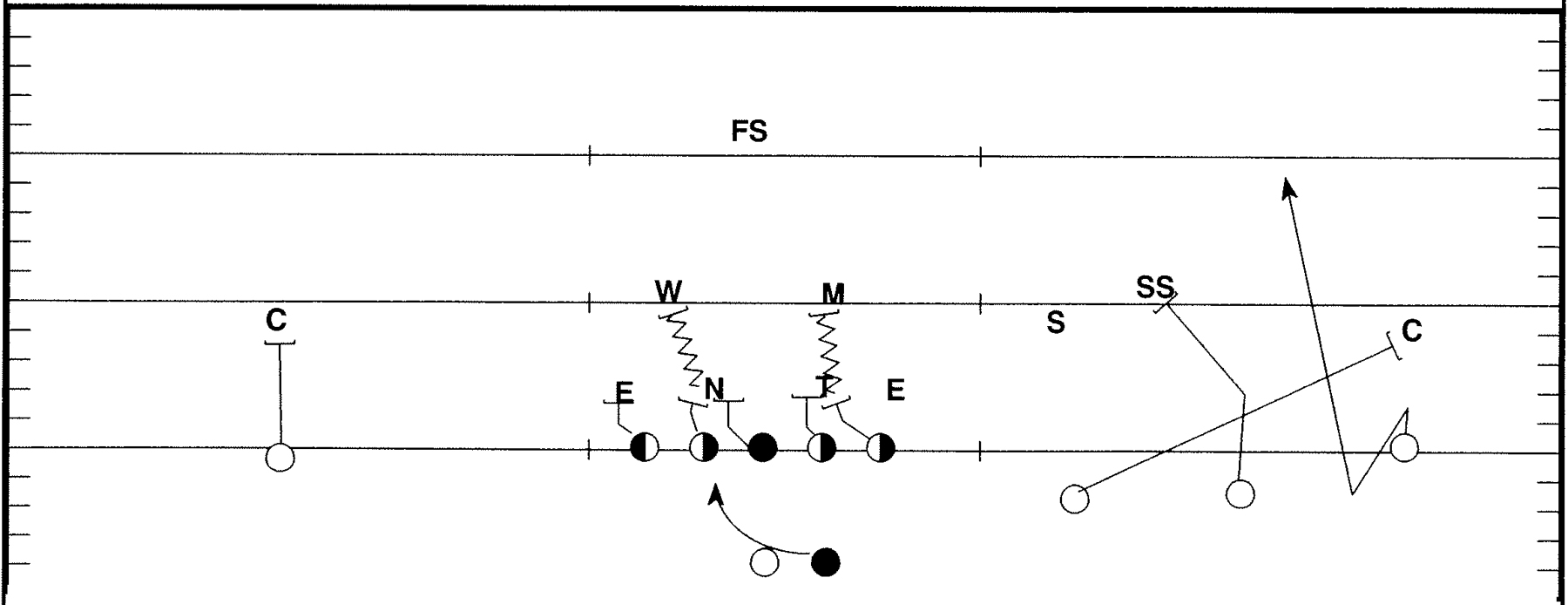
Diagram 4a.
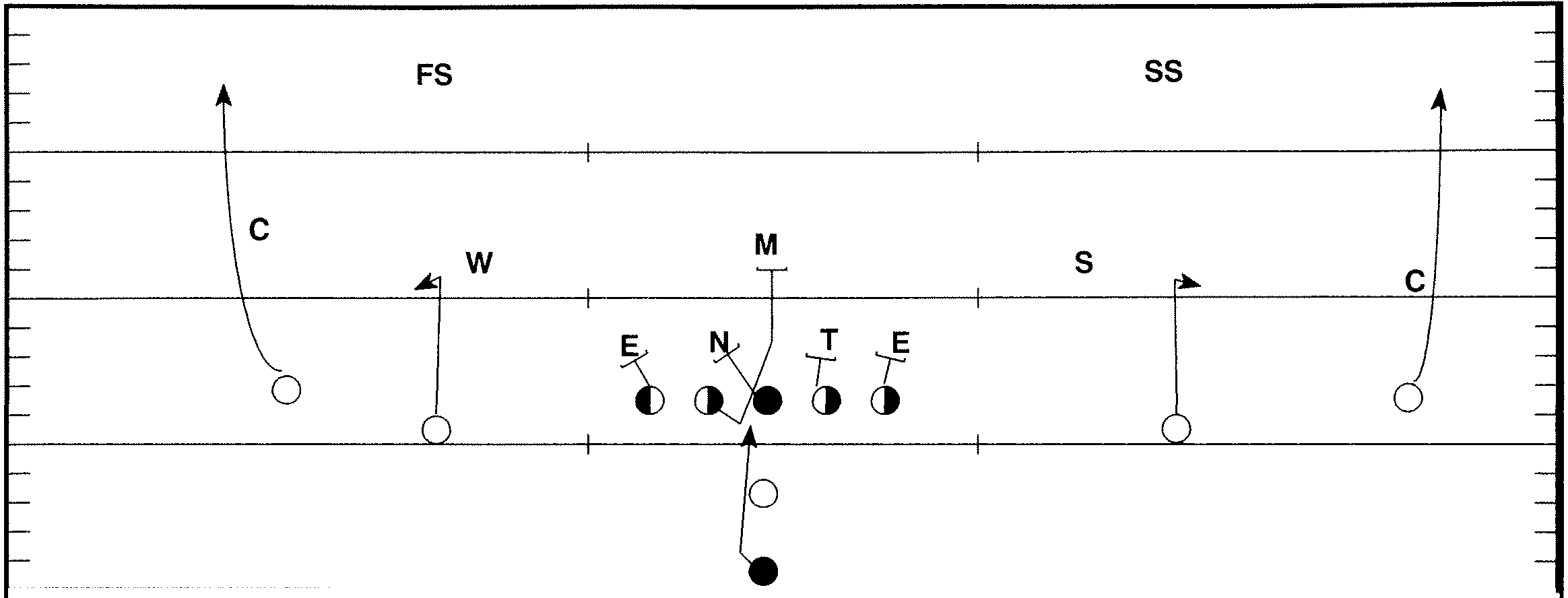
Diagram 4b.
This is another high percentage run/pass concept for us that became an automatic weapon vs. a five-man box. On the season, we averaged 7.0 yards per completion with an 80% completion rate and 9 yards rushing per carry.
Utilizing the zone read option is a major component in our offense. However, we knew coming into last season that we needed to tailor our option packages to the passing strengths of our quarterback and look to run him as little as possible. We identified a few packaged run/pass concepts that ended up being a great substitute for not being able to run the zone read option. This allowed us to stress the defense in the box, on the flanks, and the perimeter while still giving our QB a read defender (option) and keeping him upright.
About the Author: Maurice Flowers starts his second season as assistant head coach, offensive coordinator, and quarterbacks coach at Shaw University this fall. He has 17 years of coaching experience and previously was the OC at his alma mater, Johnson C. Smith University. Flowers coached at two Texas High Schools – Duncanville and Sam Houston – and three in North and South Carolina. He was head coach at Chester Senior High School (SC) and head coach at two Charlotte area high schools – West Charlotte and Olympic.