THE 3-STEP PASSING game is an important part of any offensive package. By using the 3-step technique, your offense can quickly gain yardage and take advantage of soft spots in the secondary.
To run effective routes, your wide receivers must understand when the ball is being released and where the soft spots are in the secondary.
Although protection by the offensive line and the throw by the QB is imperative for the success of the play, the route of the WR plays a critical role.
There are four basic routes in the
3-step passing game:
h Hitch. h Slant.
h Out. h Fade.
Hitch
On the hitch route, your WR will take a split of approximately 10 to 12 yards. The length of the route is comprised of three big steps and two little steps.
The stem of the route will be run according to the technique used by the defensive back.
DIAGRAM 1: Hitch Vs. DB Reading Inside, Or Outside Alignment.
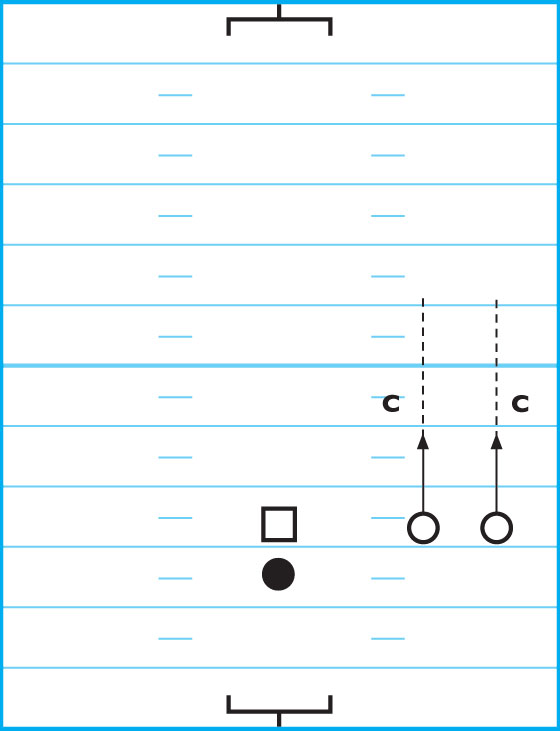
If the cornerback has his eyes inside and is reading three steps or outside alignment playing zone, run a straight stem up field.
DIAGRAM 2: Hitch Vs. CB Playing Inside Leverage.
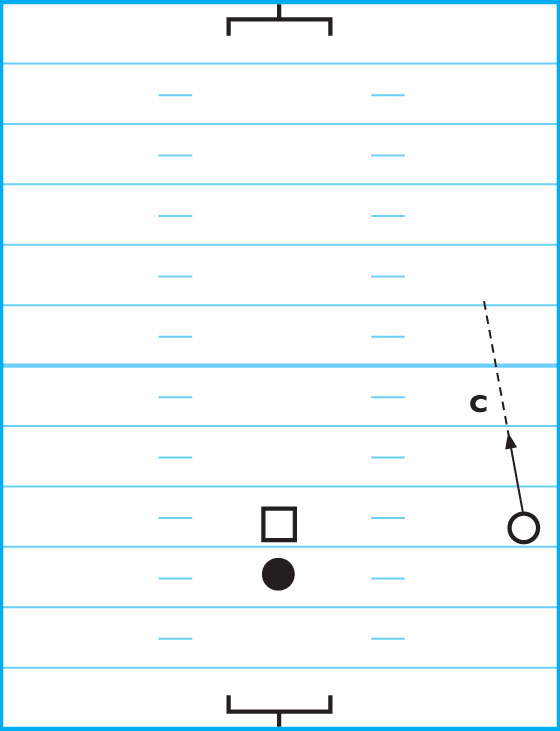
If the CB is playing inside leverage man with eyes on the WR, run the stem at the defender pressing hard off the ball, attacking his leverage. By doing this, the CB will be put into a backpedal-and-brake situation. your WR must be careful to keep shoulder pad level low and in a “down-field attack position” throughout the route.
Slant
The slant is very similar to the hitch. The WR will take a maximum split. The length of the route is three big steps.
DIAGRAM 3: Slant Vs.
Outside CB Leverage.
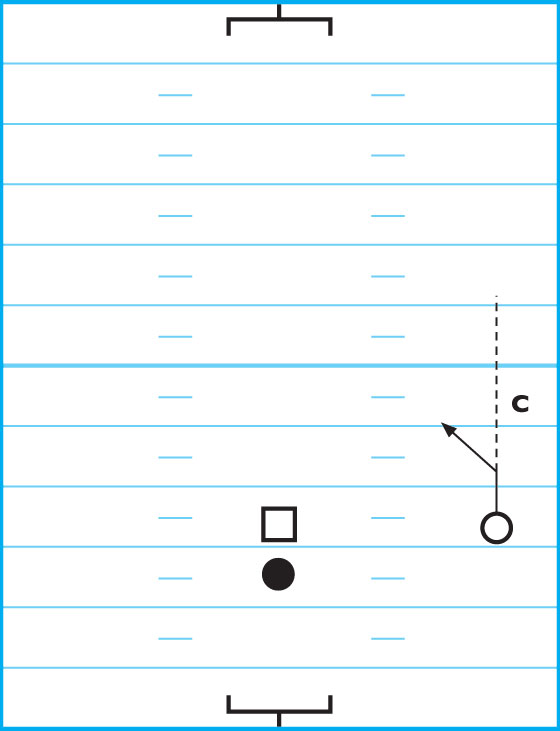
The stem of the route will be run straight up field if the CB is playing outside leverage.
DIAGRAM 4: Slant Vs. Inside, Head Up, DB Coverage.
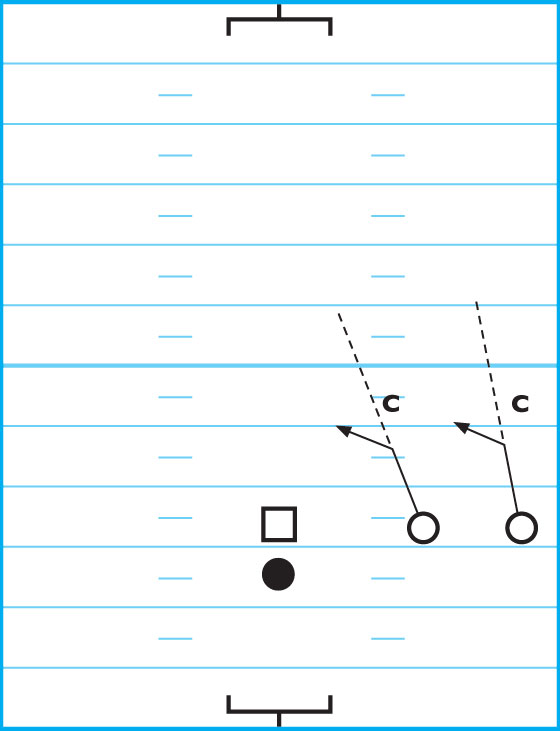
If the DB is playing head up to the inside, attack his inside number. This prevents the CB from making an interception break on the ball by beating us inside. If the DB is playing heavy inside, have your WR split out an extra step to compensate for the inside stem.
Out
The WR will take a reduced split of approximately 8 yards. The length of this route is four steps.
DIAGRAM 5: Out Vs. Inside DB.
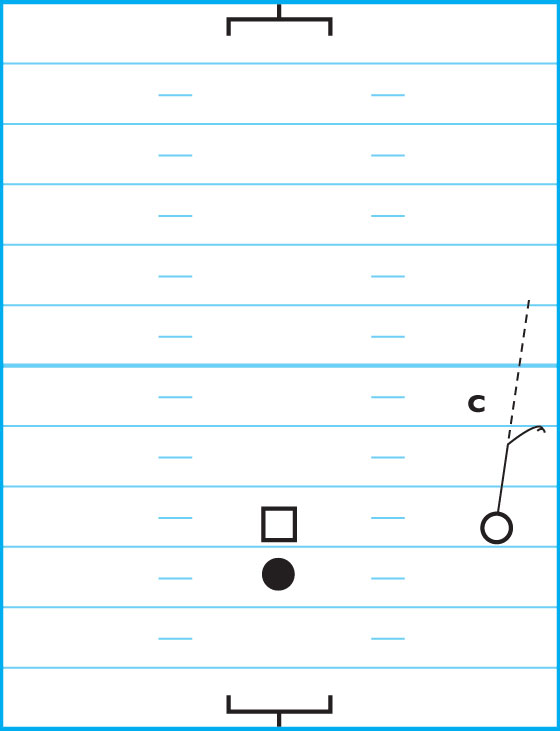
If the DB is playing inside, your WR has already won the leverage battle, and will run the stem up-field, slightly-angled outside. This will allow you to roll out of the route with greater efficiency.
DIAGRAM 6: Out Vs. Head-Up, Outside Alignment.
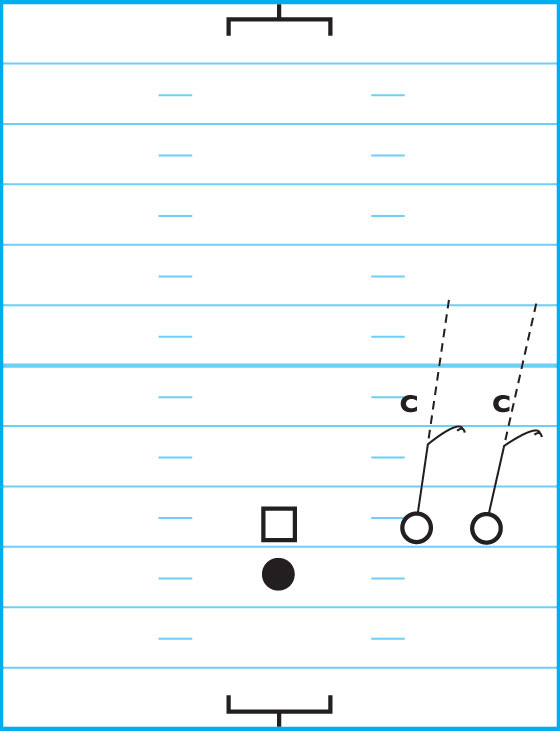
If the DB is playing head up or an outside alignment, have your player attack his outside shoulder and maintain position throughout the route.
Fade
To have an effective 3-step game, sooner or later you have to be able to complete the 3-step fade vs. press coverage. This is a route that could be extremely productive for an offense, but must be practiced on a regular basis.
Beside the QB’s throw, the most important element is getting position on the DB.
DIAGRAM 7: Fade Vs. Inside Coverage.
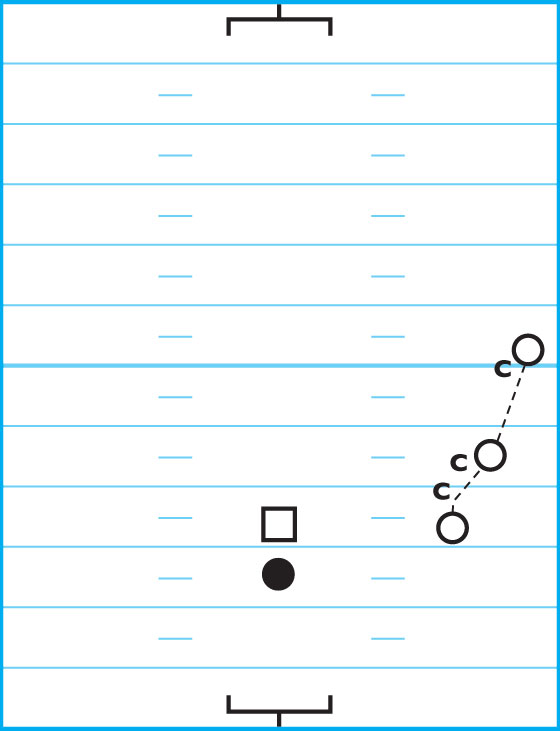
Your WR must do everything possible to release off the line of scrimmage and position the DB on his inside hip while allowing room for outside adjustment on the ball. He must not allow the DB to use the sideline as an extra defender. Coaching WRs to fight for real estate is essential.
DIAGRAM 8: Fade Vs. Outside Coverage.
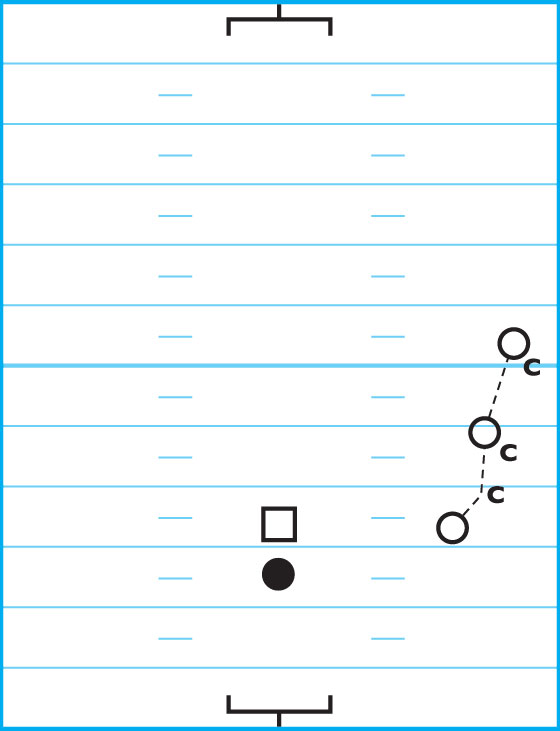
If the DB jumps outside on the snap of the ball, have your WR attack his leverage and quickly adjust to go inside. He should still fight for position, expecting the ball to be thrown and caught over the outside shoulder.