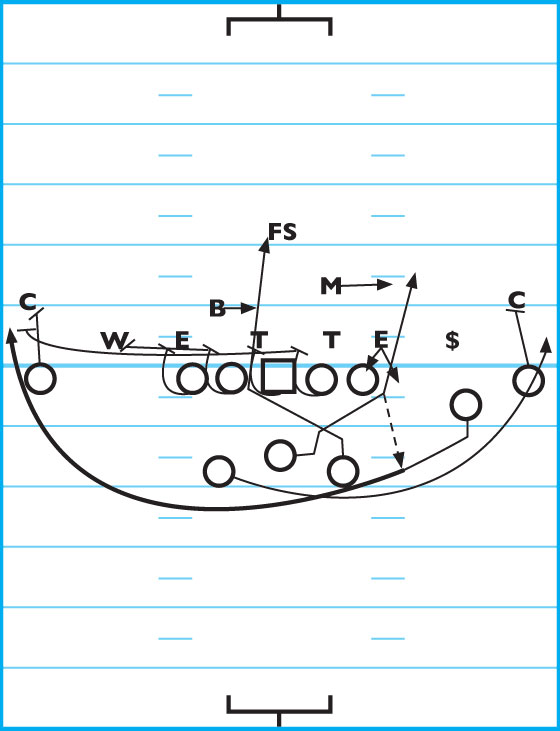
WITH THE PREVALENCE of spread offenses and one-back sets, the inside zone play has been a popular one to generate some rushing offense. Innovations have been made to the inside zone series by prominent coaches such as the University of West Virginia’s Rich Rodriguez and the University of Florida’s Urban Meyer. We’ve taken cues from them and developed the gun inside zone series.
Basic Play
The basic play is a must if you run the inside zone from the gun set. Be sure to stress occupying the backside defensive end, who may stop the running back’s cut-back move.
DIAGRAM 1: Basic Play. The line’s blocking rules are simple — all members of the line drop-step with their inside foot and aggressively block the first man to the inside, on or off the ball. This creates the angles necessary to run this play effectively.
The running back steps laterally to the quarterback who is in the shotgun. The RB takes the ball heading for the near foot of the play-side guard, then runs to daylight. It usually is a cut-back play.
The other RB and QB must sell the option fake, setting up the complement to this play — the zone option.
Zone Option
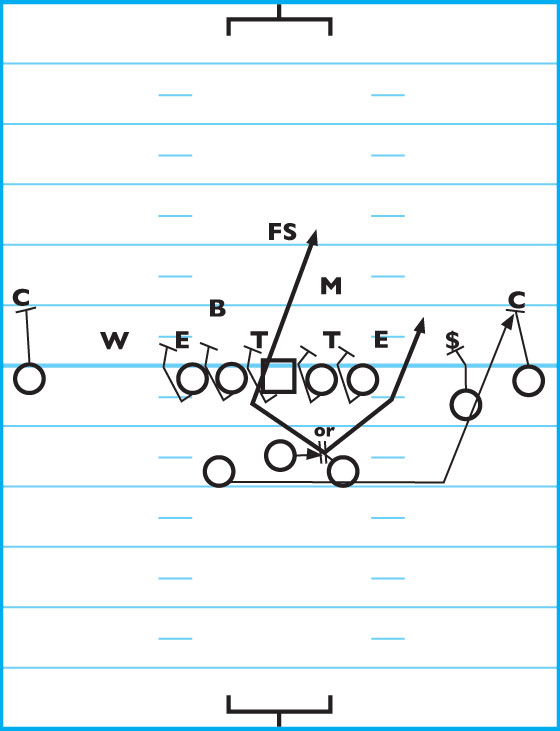
This play is blocked exactly the same way. It is necessary to run this play as it freezes the backside DE.
DIAGRAM 2: Zone Option. This play is run to the wide field and to a double wide-out set as the second WR must block the contain man.
Zone counter
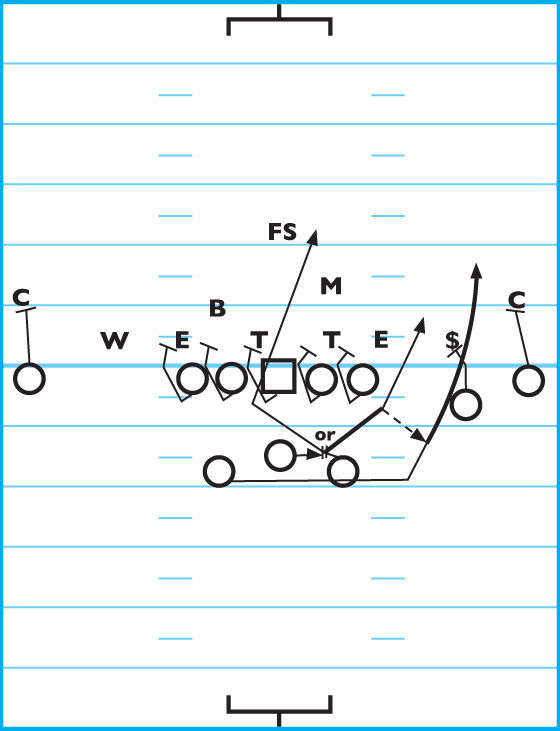
The zone counter surprises the defense after seeing the first two plays.
DIAGRAM 3: Zone Counter. The play-side tackle and guard double-team the defensive tackle. They are responsible for the B- and A-gap to their inside. The center is responsible for the backside A-gap. The faking back is responsible for the backside B-gap to the C-gap. The QB must execute and bootleg to the opposite of the play. The ball-side guard traps the first man outside the tackle. The ball-side tackle pulls and leads.
Zone Option Reverse
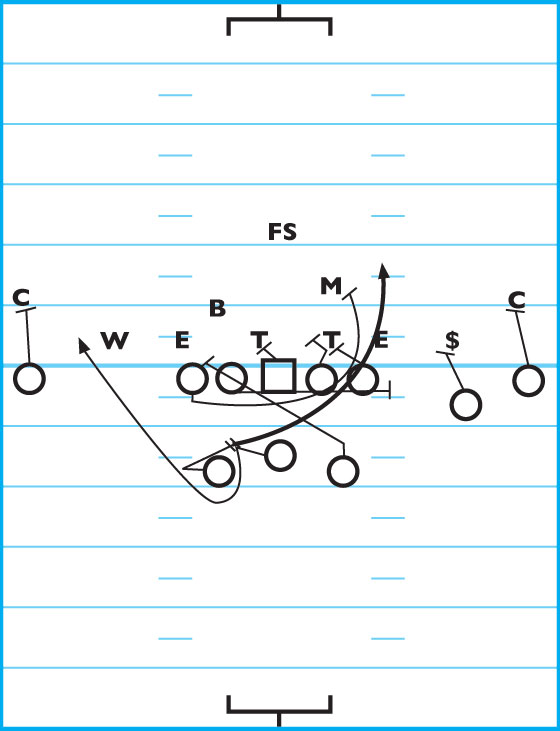
This play is used to control backside pursuit to the option — mainly the Will LB.
DIAGRAM 4: Zone Option Reverse. Both guards check the LB and block if the LBs don’t pursue the option. If they do pursue, “book” them, flatten out and lead the reverse downfield. If the DE comes hard, then the QB keeps the ball on the option.