WE’RE A 2-SLOT spread option team. The practice demands of running the option are great, therefore, our team likes to use perimeter screens because of the ease in which they can be run. And since our offense is already in some spread sets, we can incorporate two simple perimeter screens that are extremely effective. Each screen has an added “wrinkle” or “slip” built into it that has home-run potential.
It’s critical that these screens be run from your normal formations so that it isn’t obvious as to when you’re running them.
The protection scheme for this series is called the “big-on-big” (BOB) to the call side and zone blocking to the backside. The only adjustments that occur during the perimeter screens are as follows:
- To the BOB side, we want to “run-and-reach” block the first two defensive linemen. Since this is a screen, it’s OK if we leak downfield.
- To the zone side, we want the uncovered offensive lineman (if there is one) to immediately attack the nearest linebacker. Since it’s a screen, your blockers can head downfield to block.
The fullback executes a “check-and-chase” block on the call-side LB. If the play-side LB doesn’t blitz on the snap (check), then the FB chases him on the perimeter (chase).
DIAGRAM 1: 80 Bubble Screen Vs. 40 Front. The QB executes a quick 3-step drop and hits the bubble screen.
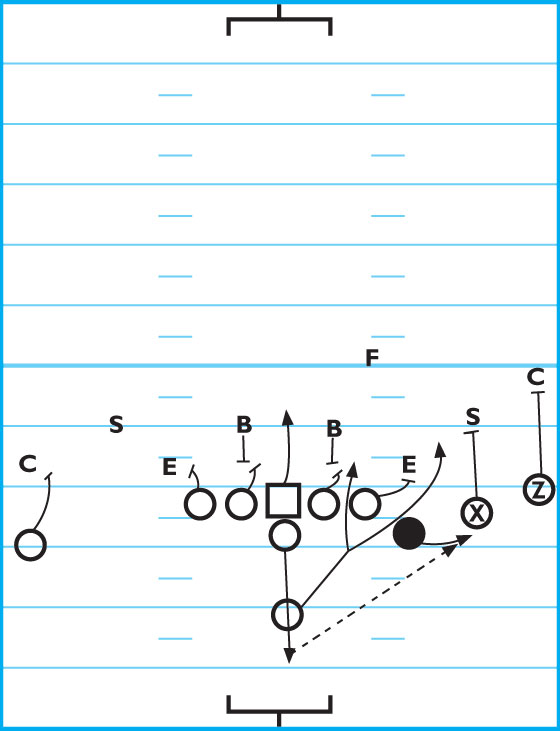
If the QB misses with the pass, make sure that he misses in front of the receiver to avoid it being a lateral.
The play-side X and Z receivers block nose-to-nose with the corners and take them where they want to go.
The split slot receiver blocks nose-to-nose with the defender that’s aligned on or inside of him.
The bubble receiver (inside slot) aligns in a normal position of 1-by-1 yard off the OT. He secures the catch, fights to get his shoulder’s square to the LOS and attacks the first perimeter seam he can get into.
DIAGRAM 2: 80 Under Screen Vs. 40 Front. The QB basically executes the same technique as in the bubble screen except that he’ll be throwing to the wide X or Z on the under screen.
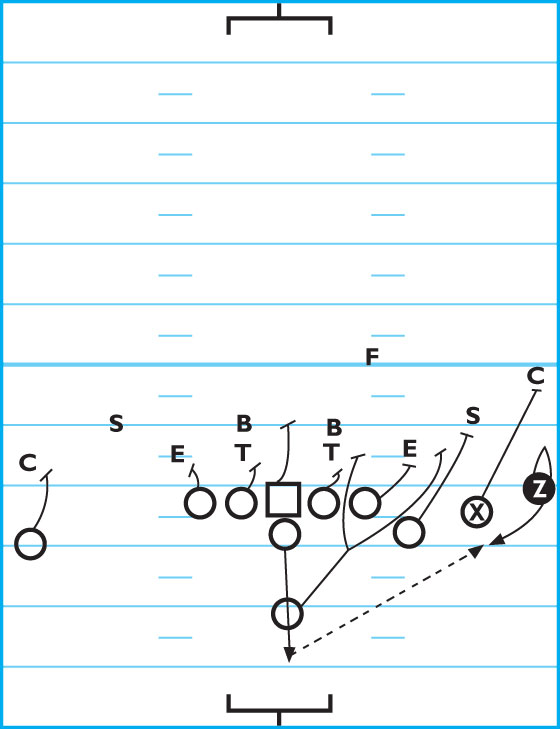
X or Z run an under route by driving-off hard for two steps, planting and then retracing his steps at half speed until he secures the catch. Once the catch is secured, he gets into the first seam and heads upfield as if on a kick return.
Screen “Slips”
There are a few key player adjustments for the “slip” tag.
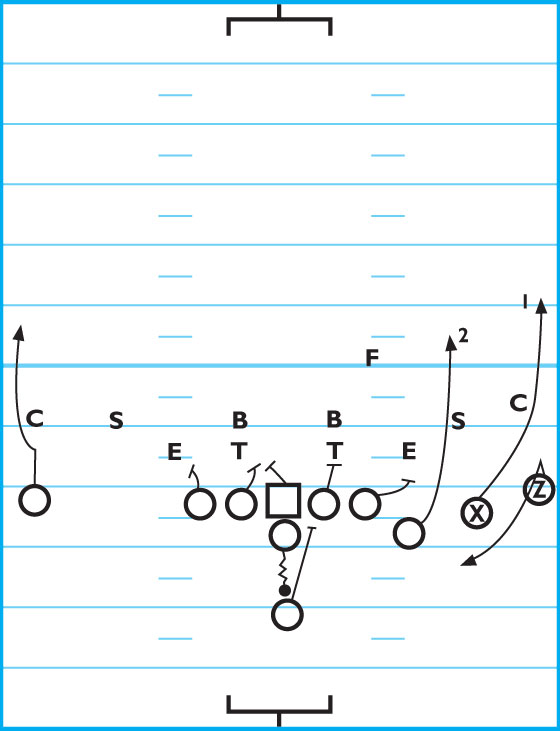
- On a slip tag, we’re going to slip the receiver that’s responsible for blocking the corner by stuttering his feet and having him take it vertical.
- The other blocking receiver on the play goes vertical through the deep safety area to keep him from getting over the top of the slip route. He becomes an eligible receiver if the slip route isn’t open.
- The bubble or under receiver must do a great job of selling the fake off the called route.
- The QB takes a 2-step drop, makes a two-handed shoulder-turn pump fake, re-sets his feet and lets the ball go. Remember, on this play, he’s looking for the slip route first and the inside seam route second.
- Tag this play with the word “slip” instead of “screen.” Doing so tells the offensive linemen and FB to stay in on protection until the ball is thrown (since this is a downfield pass and not a true behind-the-line-screen).
DIAGRAM 3: “Slip” Off Bubble Screen Vs. 40.
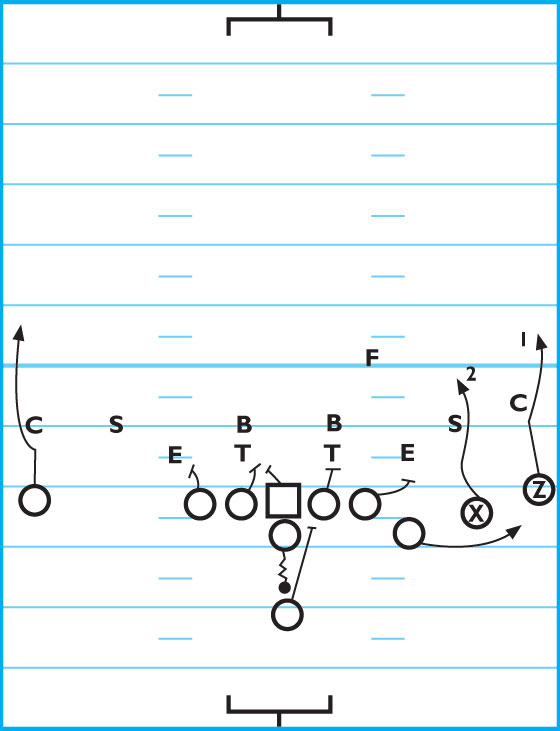
DIAGRAM 4: “Slip” Off Under Screen Vs. 40. It’s critical to watch how the CBs and safeties react to the perimeter screens. If they overreact or play with their feet set, then it’s time to call one of the “slip” plays.
If anyone has additional questions about the bubble or under screen,
e-mail coach Dieterich at:
sdieterich@parkviewbaptist.com.