WHEN DEVELOPING a passing attack, it’s important to build a system that fits your athletes’ abilities and gets your 11 best players on the field.
A coach must be able to adapt to any specific situation and deal with personnel of varying degrees of skill and talent. Once you have a handle on the type of athletes that you will have for the season, design an offense that fits your team accordingly.
Evaluate Your Personnel
It’s important to evaluate all of your offensive positions, not just the quarterback. This will enable you to blend their strengths together to get 11 players executing as a cohesive unit.
- Offensive Linemen: Assess their overall ability so that you can determine which pass protection schemes you will use. (3-or 5-step drop, sprint, play action, etc.)
- Running Backs/Tight Ends: These positions are the easiest to get open in a passing game. Be sure to thoroughly evaluate them to get the most out of their talent.
- Wide Receivers: Evaluate their overall athletic ability (quickness, speed, agility, catching ability, etc.). Figure out how to utilize your receivers strengths.
Design routes and patterns that feature your receivers capabilities.
Quarterback Qualifications
Deciding on your team’s QB is one of the most critical decisions you have to make. Here are some of the character traits you need to look for in a solid QB:
- Athletic Ability.
- Passing ability: The player throws on time and accurately.
- Running Ability: Good escapability. Can avoid a pass rush.
- Makes big plays.
- Leadership, Confidence.
- This player must be consistent in all areas. (Drills, meetings, academics, etc.)
- This player can be a coach/motivator on the field. Leads by example.
- Never loses confidence. Can shake off mistakes and moves on.
- Poise.
- Must be able to think clearly and keep his composure in stressful situations.
- This player must be thick-skinned. Handles criticism well.
- Intelligence.
- Must be able to learn and comprehend the offense. Has good football instincts.
- Understands defenses. Knows formations and understands strengths and weaknesses.
- Makes the correct decisions both mentally and physically.
- Is a student of the game. Spends a lot of time studying.
Fundamentals Are Key
In order for your players to perform at a high level, it is crucial that they have been taught the proper fundamentals.
Fundamentals are the key to success.
Many coaches are so excited about implementing their innovative schemes that they put them in place before working on fundamentals. You will not be successful doing this!
Each position coach should develop a list of drills that will be utilized when coaching his position.
QB Drill Checklist:
DIAGRAM 1: This is an example of a list of drills that you can use to teach fundamentals to your QB. A drill checklist chart like this one should be made for each position.
Protecting The Quarterback
The game starts at the line of scrimmage. A motto that all coaches should adhere to is:
When you control the LOS,
you control the ball.
When you control the ball,
you control the score.
There are many methods of protecting the QB. A coach must select the types of schemes that best fits his personnel. A few important points to consider:
- Practice your protections according to what you major in. This will aid you in game planning.
- Remember that defenses can always bring one extra defender than you can block. Your QB must be prepared for hot throws or sight adjustments.
Launch Points
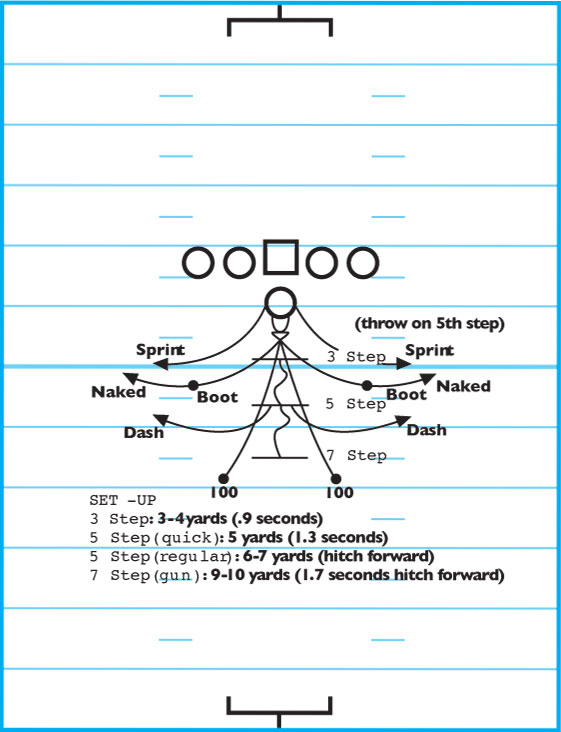
Another factor that will help protect your QB is having a variety of launch points. Everyone on your offense should know them. This will help your line with protections and it will keep your offense unpredictable.
DIAGRAM 2: QB Launch Points.
Complementary Routes, Drop-Steps
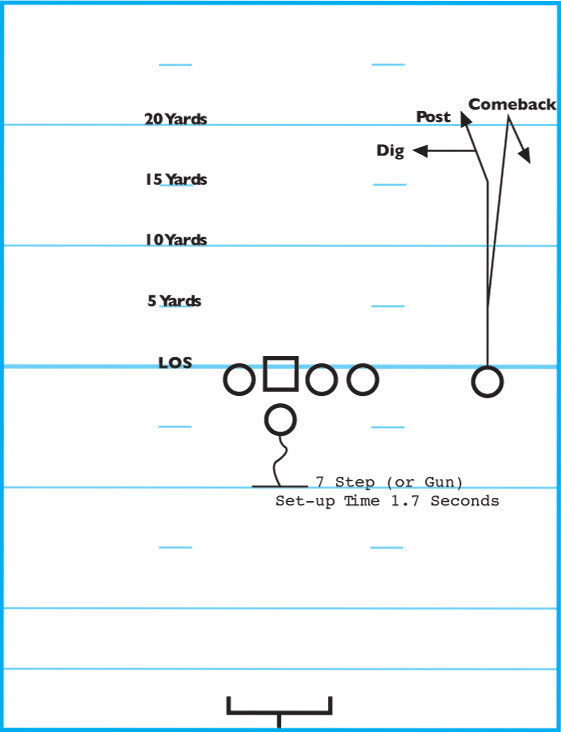
When you are designing your pass patterns, it is important that the QB drops (set-up) and the individual WR routes complement each other.
This will allow the offense to flow and ensure that the ball is delivered on time.
DIAGRAM 3: 3-Step Drop/Quick Timing.
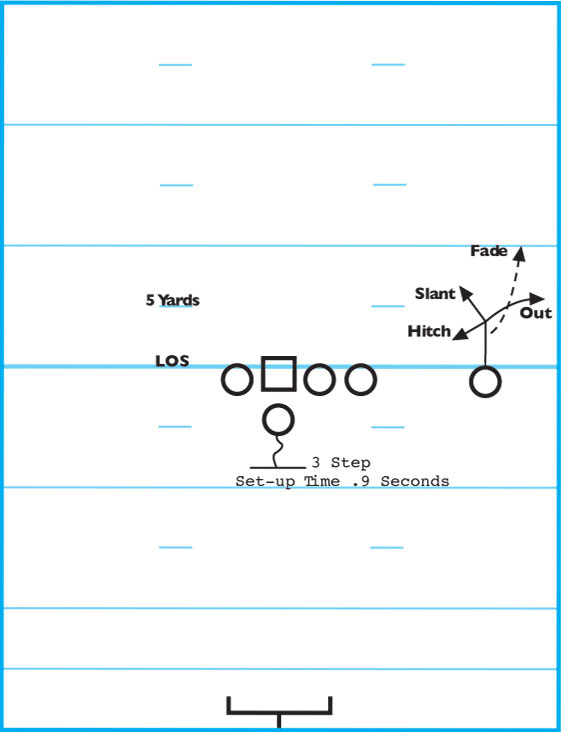
DIAGRAM 4: 5-Step Drop/Control Series.
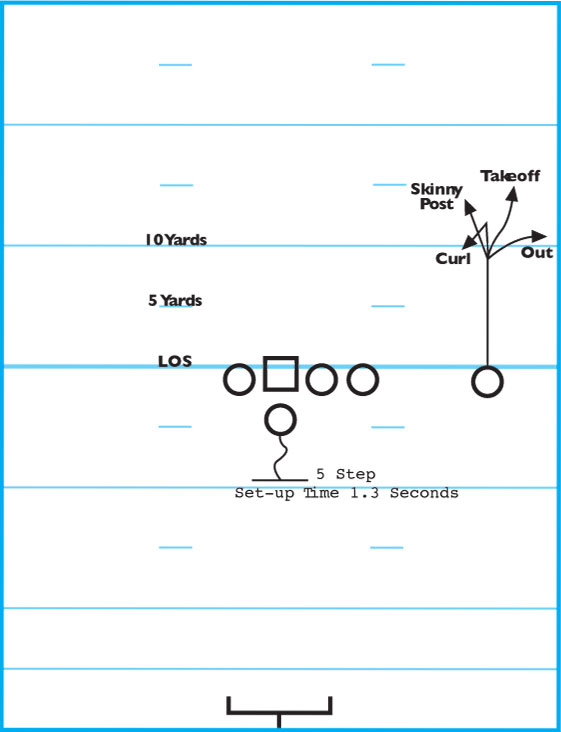
DIAGRAM 5: 7-Step Gun/ Down The Field.
Practicing Makes Perfect
As you begin to implement your passing game, it is important how you practice it. The following chart is the base progression that we utilize.
DIAGRAM 6: Practice Progressions To Develop The Passing Game.
The Winning Edge
As your passing attack begins to evolve, it is important to challenge your athletes to take it to a higher level. A good motto to teach your players is:
“Perfection is our goal, but
excellence will be tolerated!
Light up the scoreboard!”
The following are areas to focus on that will give your team a winning edge and make a difference in your passing game:
1. Utilize multiple formations, motions, shifts and disguises.
2. Utilize the gun formation.
3. Throw to the backs.
4. Give your QBs simple reads and progressions.
5. Attack zone coverages vertically and horizontally.
6. Attack man coverages with crossing routes. Look for mismatches.
7. Prepare for the blitz. Know the hot principles and sight adjustments.
8. Perform a scramble drill. The game is not perfect. Develop a plan for route adjustments when the QB is forced out of the pocket.