USING BOOT LEGS and play-action aids our protection schemes by moving the pocket and slowing the rush, all while maintaining the threat of the run. For a young quarterback, this is a good scheme to run, as it allows him to reduce the amount of information to process because the field is cut in half. This “half field” allows him to make decisions quickly and more accurately. There are two types of plays from this system that work great for our program.
‰ Counter Boots. Run off the traditional “counter trey,” this is a great play that uses misdirection in the backfield and solid protection. Routes are based upon two simple rules 1. “Boot is you.” 2. “Boot is away from you.”
‰ Stretch Pass. Success with this play is predicated on the outside zone stretch. It is a full-flow, naked but protected boot leg in which disguise is a must. It’s used to complement the running game and to slow down pursuit. Again, routes are based upon the two rules of “Boot is you,” or “Boot is away from you.”
Counter Boot
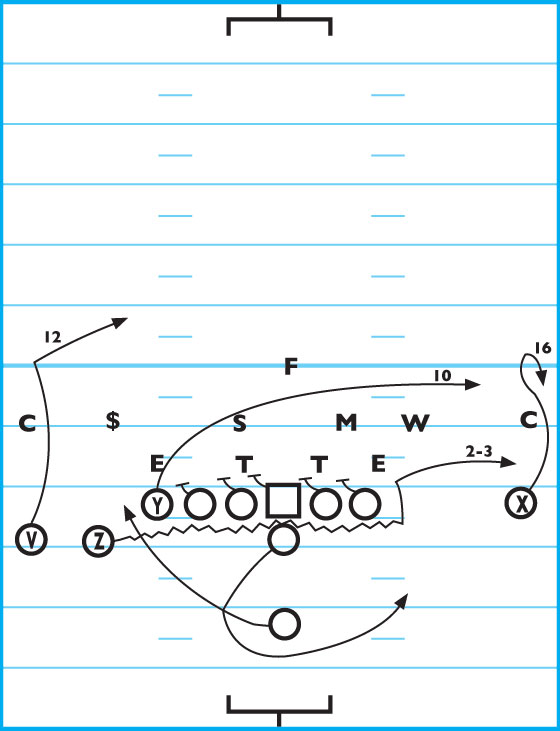
DIAGRAM 1: Counter Boot “Play A” (Boot-Action Strong). Offensive linemen must hit the down lineman and form a pyramid where possible, giving an initial indication of a run. The FB has an aiming point of the outside shoulder of the end man on the line of scrimmage (EMLOS) and must run through it on his way to aid the pulling guard. The FB continues through to the flat, working to a depth of no more than 5 yards (FB is the hot read).
The TB takes a lateral step away from the hole call, gathers and turns his shoulders, then accelerates through a well-executed play fake. The TB’s blocking responsibility is to clean up anything off the back edge.
The QB reverses out, accelerates to the play fake and squares his shoulders at the top of the fake. After a brief hesitation, the QB accelerates out of the fake with 2 steps of depth before squaring his shoulders and attacking the LOS. He must read his routes from low to high.
Y (TE) releases toward the free safety and runs a 10-yard corner route. Z slightly reduces his split, makes an outside release, threatens the technique, cuts off if possible and runs a 16-yard comeback route. X aligns in a normal split, makes an inside release, threatens the technique, cuts off if possible and runs a 12-yard post route.
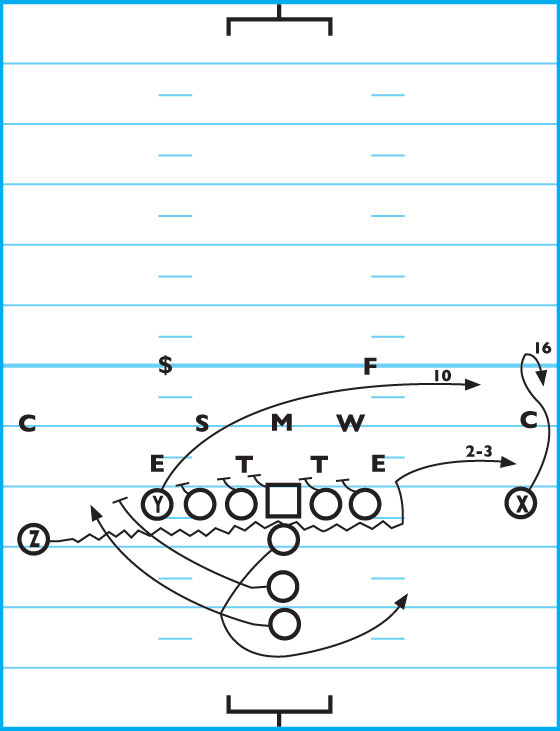
DIAGRAM 2: Counter Boot “Play B” (Boot-Action Weak). In Diagrams 2-7, the offensive linemen, FB, TB and QB all use same techniques as in Play A, giving initial indication of a run.
Y (TE) takes release toward the FS on a 10-yard climb, avoiding all second level defenders. Z aligns in a normal split position, makes an inside release, threatens the technique, cuts off if possible and runs a 12-yard post. X sets up in a slightly reduced split, makes an outside release, threatens the technique, cuts off if possible and runs a 16-yard comeback route.
DIAGRAM 3: Counter Boot “Play C” (Boot-Action Weak). Y (TE) runs a 10-yard post route, while Z tightens his split to the wing position on this play. Z releases under Y on a 10-yard climb route, avoiding all second-level defenders (exception to the rule). The other TE (Q) runs a 10-yard corner route.
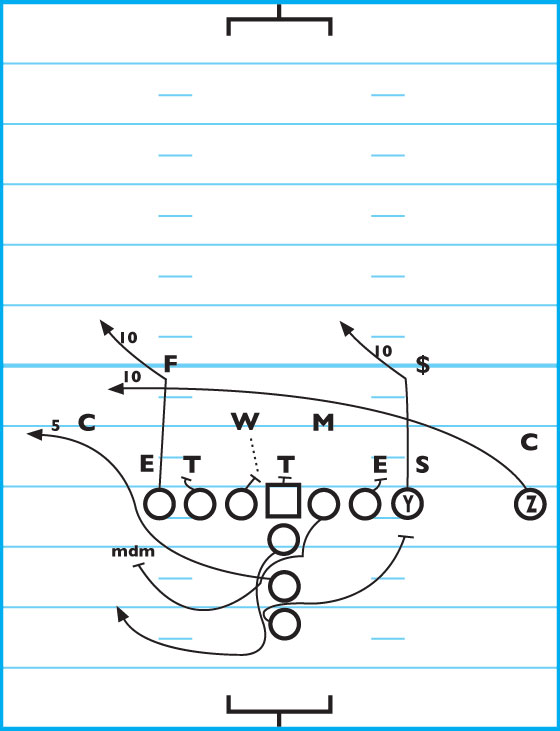
DIAGRAM 4: Counter Boot “Play D” (Boot-Action Weak). Y (TE) releases toward the FS on a 10-yard climb, avoiding all second-level defenders. Z sets up in a normal apex split and makes an inside release, working on a vertical hold on safety. X, aligned in a slightly reduced split, makes an outside release, threatens the technique, cuts off if possible and runs a 16-yard comeback route.
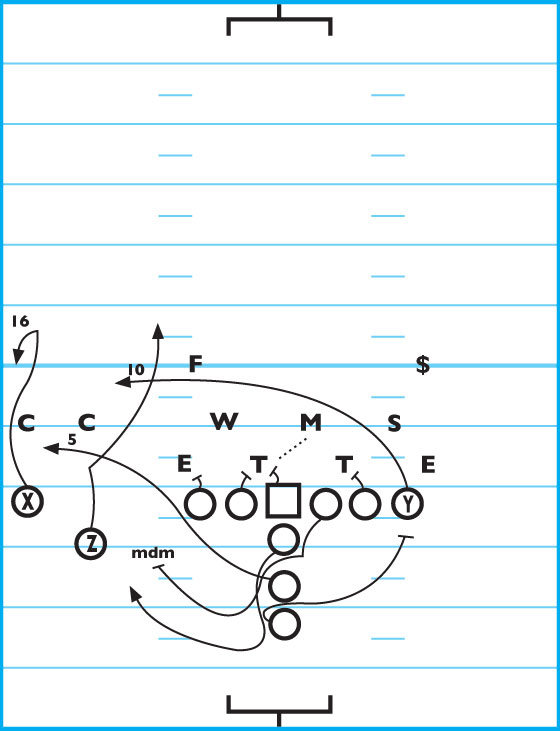
DIAGRAM 5: Counter Boot “Play E” (Boot-Action Weak). Z sets up in a slightly reduced split from the apex and makes an inside release on a 10-yard climb, avoiding all second-level defenders. X aligns in a normal split, takes an inside release, cuts off if possible and runs a 12-yard post route. V sets up in a slightly reduced split, runs outside, threatens the technique, cuts off it if possible and runs a 16-yard comeback route.
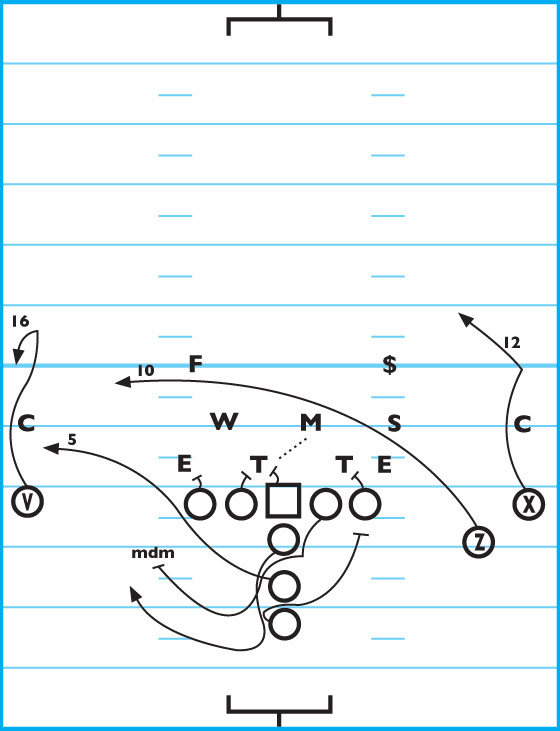
DIAGRAM 6: Counter Boot “Play F” (Boot-Action Strong). Y (TE) takes a release toward the FS and runs a 10-yard post route. Z, set up in a slightly reduced split from the apex, makes an inside release on a 10-yard climb, avoiding all second-level defenders. X sets up in a normal split, makes an inside release, threatens the technique cutting it off if possible and runs a 12-yard post route.
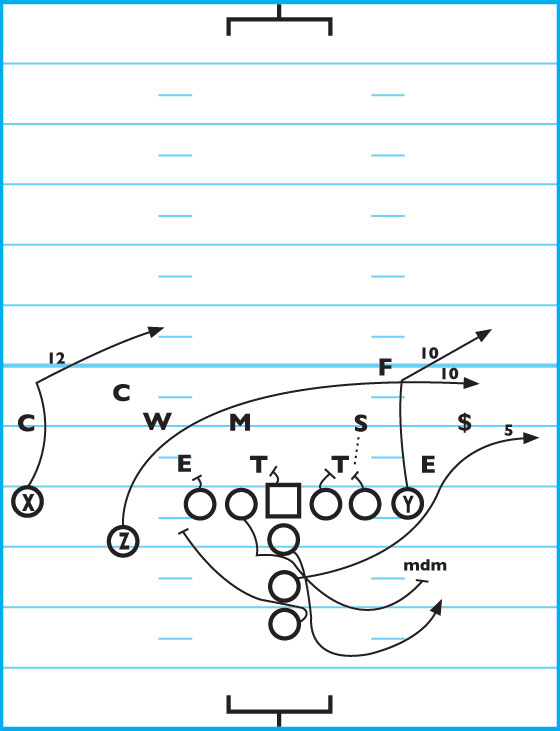
Stretch Passes
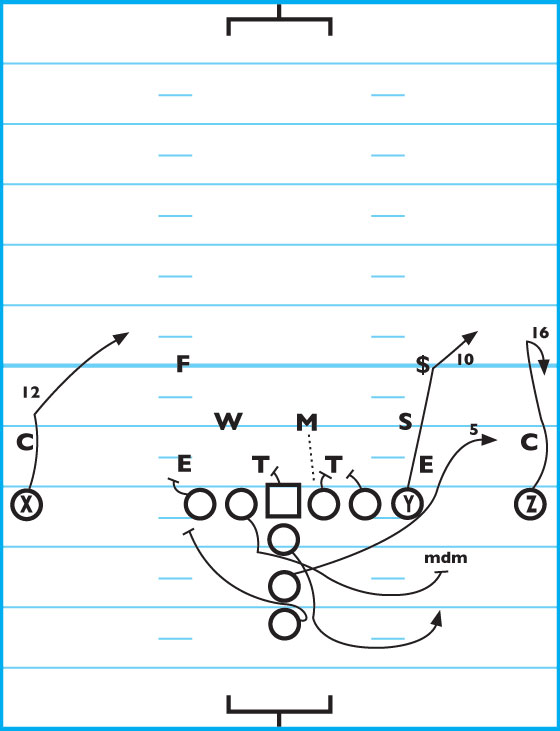
DIAGRAM 7: Stretch Pass “Play A” (Boot Action Strong). The linemen take a lateral step in direction of run fake and run defenders down the LOS. The TB takes a lateral step with an aiming point that’s wider, squares up and accelerates through the play fake.
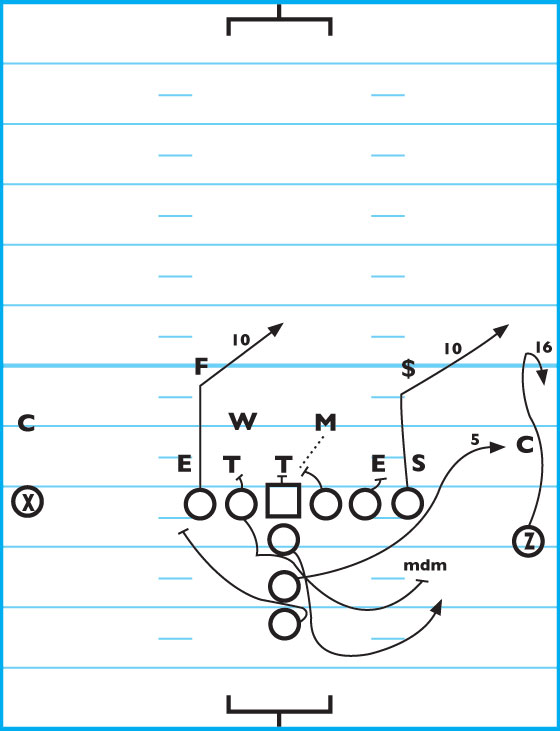
The QB fronts out, shows the ball and accelerates to play fake side. He then rolls out of his fake at a depth of 2 steps, squares his shoulders and attacks the LOS (while reading low to high).
V sets up in a slightly reduce split, takes an outside release and runs a 16-yard comeback route. Y (TE) initiates contact with the EMLOS, holds the defender for a 2-count and releases 2-3 yards into the flat. Z aligns in a slightly reduced split and makes an inside release on a 10-yard climb route, avoiding all second-level defenders. X sets up in a normal split, takes an inside release, threatens the technique, cuts it off if possible and runs a 12-yard post route.
DIAGRAM 8: Stretch Pass “Play B” (Boot Action Strong).
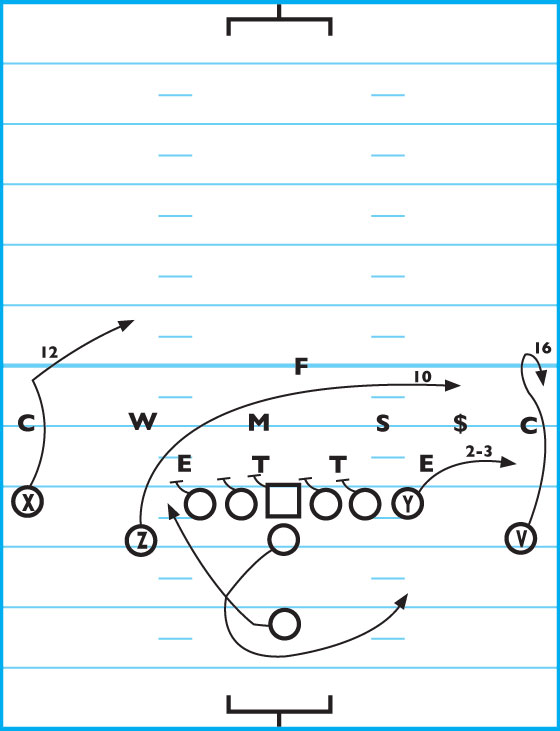
In Diagrams 8-11, the offensive linemen, FB, TB and QB all use the same techniques as in Play A, giving initial indication of a run.
Z sets up in a slightly reduced split, takes an outside release, threatens the technique, cuts off if possible and runs a 16-yard comeback. Y (TE), initiates contact with the EMLOS, holding him for a two count and releases 2-3 yards to the flat. Q (TE) takes a release toward the FS on a 10-yard climb route, avoiding all second-level defenders. X aligns in a normal split, takes an inside release, threatens the technique, cuts off if possible and runs a 12-yard post route.
DIAGRAM 9: Stretch Pass “Play C” (Boot Action Strong). Z sets up in a slightly reduce split, takes an outside release, threatens the technique, cuts off if possible and runs a 16-yard comeback route. Y (TE) initiates contact with the EMLOS, holds for a two count and releases 2-3 yards into the flat. Q (TE) takes a release toward the FS, on a 10-yard climb route, avoiding all second-level defenders.
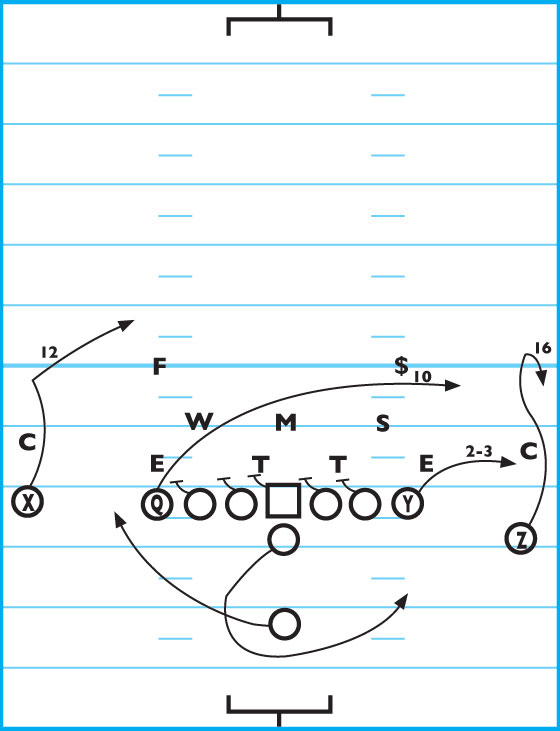
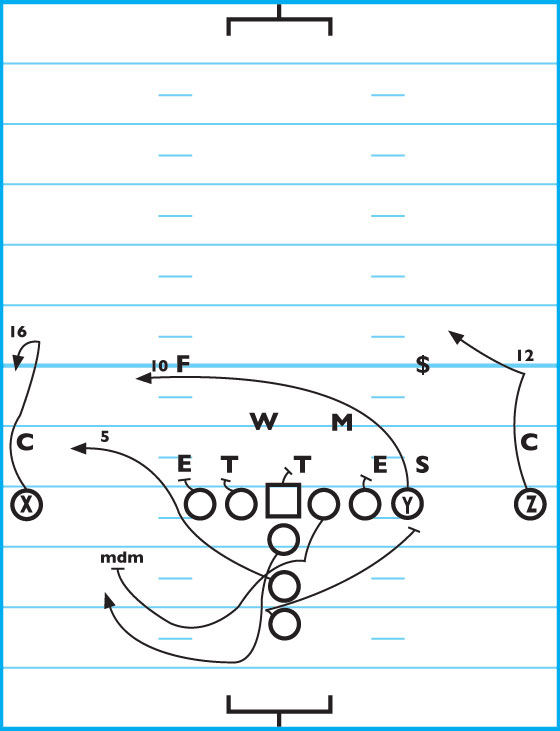
DIAGRAM 10: Stretch Pass “Play D” (Boot Action Weak). Y (TE) takes a release toward the FS and runs a 10-yard climb route while avoiding all second-level defenders. Z motions to the EMLOS, initiate eye-contact on the outside half of the EMLOS, holds him for a 2-counts and releases 2-3 yards into the flat. The more pressure from the EMLOS, the longer Z must hold his block. He must never chase the EMLOS. X aligns in a slightly reduced split, makes an outside release, threatens the technique, cuts off it if possible and runs a 16-yard comeback route. V sets up in a normal split, makes an inside release, threatens the technique, cuts off if possible and runs a 12-yard post route.
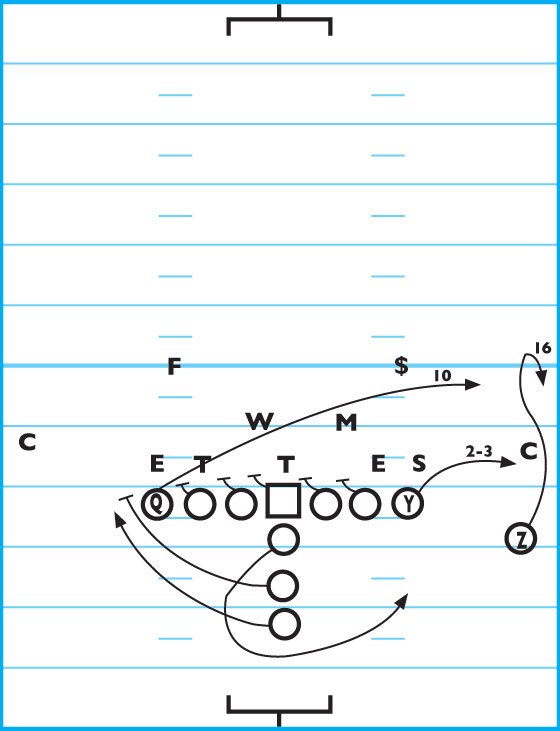
DIAGRAM 11: Stretch Pass “Play E” (Boot Action Weak). Y (TE) takes a release at the FS at a 10-yard climb route, avoiding all second-level defenders. Z motions toward the EMLOS, initiates eye contact on the outside half of the EMLOS, holds for two count and releases 2-3 yards into the flat. The more pressure from the EMLOS, the longer Z must hold his block, never chasing the EMLOS. X aligns in a slightly reduced split, takes an outside release, cuts off and runs a 16-yard comeback route.