Offense
Blocking Techniques for the Mid-Line Option Offense
By Harry Van Arsdale
, Head Coach, Porter Ridge High School, Indian Trail, NC
· Vol. 8, No. 2
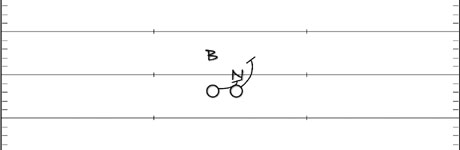
After being involved with option football for over three decades and coaching the offensive line or running backs with some of the best option minds in the country (Dal Shealy, University of Richmond; Greg Gregory, former offensive coordinator of West Point; Mike Turner, Offensive Coordinator at Carson Newman College; and Tim Clifton, Head Coach at Mars Hill College) I wanted to share some ideas about the mid-line option that I’ve acquired over these years.
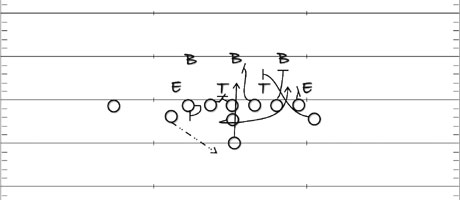
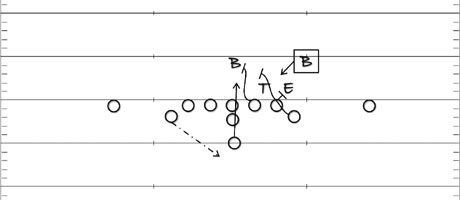
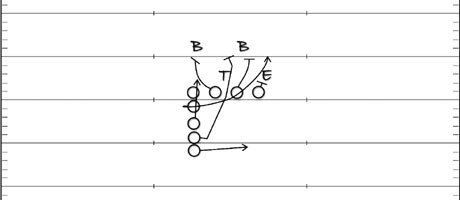
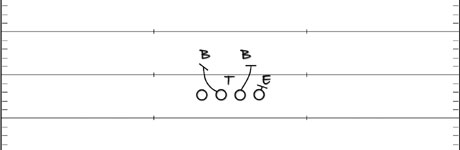
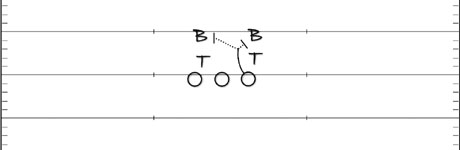
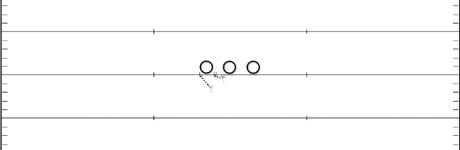
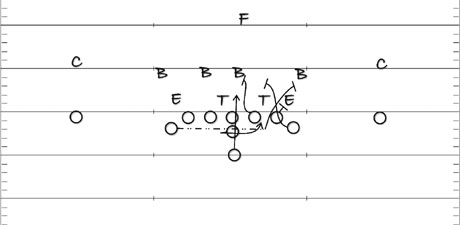
I have come to the conclusion, “Why swat flies with sledge hammers?”; that is, make the defender run around you. With the sophisticated schemes and zone blitzes of today\'s defenses, why try to block the quicker athlete consistently with your offensive linemen when you can veer block and read the defender with the QB? The mid-line offers simplicity and diversification with the number of ways you can run it. I prefer to run it to the tight end side because the extra defender is accounted for (See Diagrams 1A and 1B). Most of the time, the technique will be set to your TE, which allows your QB’s thought process not to change because of an audible. It also discourages the stemming of the defensive tackles.
Diagram 1A
Diagram 1B
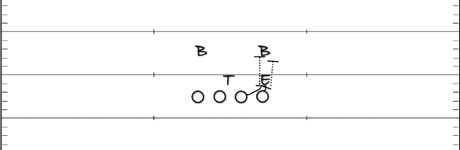
The midline is simpler because you are not using a count system to block the knocker so you can pitch the football; the blocking rules are not complex (See Diagram 2).
Diagram 2. Blocking Rules
BST - Zone Stay
BSG - DT BS (‘A’ w/c)
C - DT BS (‘A’ w/bsg)
FSG - Veer Block PSLB, MLB, BSLB
FST - Out first LNM from nose out
TE - BS: Zone/Stay
FS - Out/Block
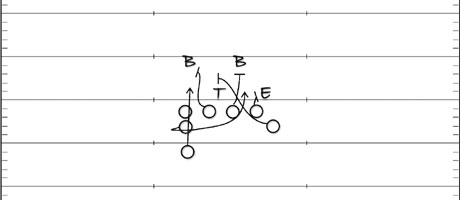
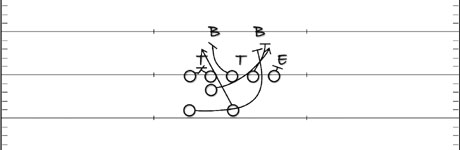
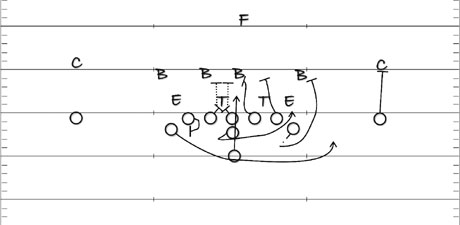
The diversity comes from the various sets, motions and the use of one, two and multiple back-sets to execute the same mid-line play (See Diagrams 3A-C).
Diagram 3A
Diagram 3B
Diagram 3C
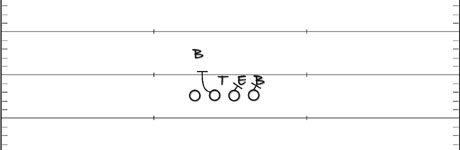
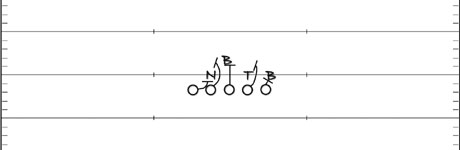
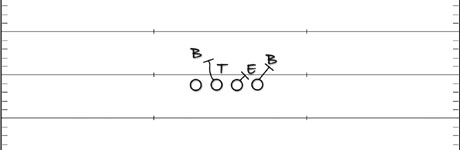
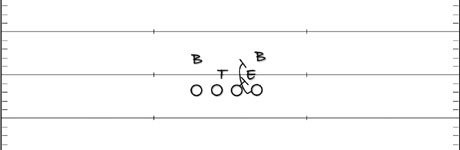
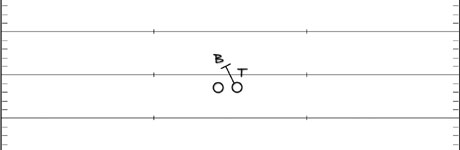
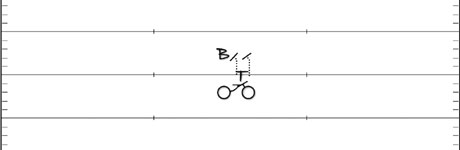
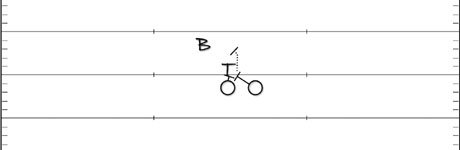
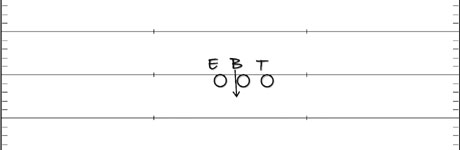
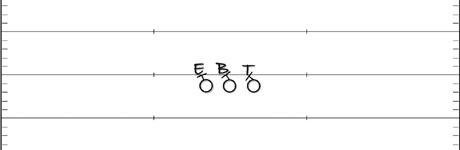
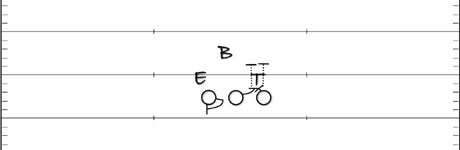
Now I will expound upon the various blocking schemes and techniques that must be mastered by the line of scrimmage. First, I would like to show the different blocking combinations that must be worked on daily by the FST and TE (See Diagrams 4 A-F). The next will be the techniques used by the FSG to block the MLB or stack LB (See Diagrams 5A and 5B).
Diagram 4A
Diagram 4B
Diagram 4C
Diagram 4D
Diagram 4E
Diagram 4F
Diagram 5A
Diagram 5B
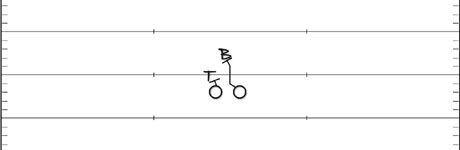
However, if the 3 technique crosses the FSG\'s face, he must lock on and not allow any penetration, keep the feet moving and stick the second point in the ground quickly. Versus a stack LB look, the FSG must explode inside and feel if the LB is going to come late on the give read. If the stack LB does not come, then continue to BSLF/FS. The center and BSG work in tandem for the backside stack and prevent penetration in backside ‘A.’ (See Diagrams 6 A-D). In addition, the center and BST must be alert for a call from the G if the backside ‘B’ gap is threatened (See Diagram 7). This is critical on the mid-line because the QBs back is to the stunt and the QB cannot see the stunt coming. If he is hit, it could force a turnover or worse you could lose your QB to injury. The center now knows with the guards call he has the backside ‘A’ gap by himself. The BST\'s technique is simple (zone stay) unless the guard makes a call (See Diagrams 8 A-C).
Diagram 6A
Diagram 6B
Diagram 6C
Diagram 6D
Diagram 7
Diagram 8A
Diagram 8B
Diagram 8C
We have covered rules, techniques and various backfield sets for the mid-line option. Now I would like to show the different adjustments off the mid-line (See Diagrams 9 A-B). That way you can effectively attack multiple LB defenses and have the ability to pitch the football when defenses over compensate in the direction of the motion HB. The diagram show the ‘boss adjustment’ and ‘pickup’ for slant angle compensation.
Diagram 9A
Diagram 9B
If you have any questions
you can email the author at
HarryVanArsdale@GridironStrategies.com
WHAT IF?
Q1. What if you faced an even front on one play and an odd front the next? Do your blocking assignments change against different fronts?
They do…the different blocking assignments are shown in Diagram 4A-F. The different blocking combinations are shown there.
Q2. What if you are facing an even front (in a 4-3 defense) and see the blitz coming from the middle linebacker, what call do you make?
The quarterback will read the play, make the call and pitch the ball to the halfback running the Mid-line Option.
Q3. What if you’re facing a 3-3-5 and the nose guard and defensive end stunt? What adjustment do you make?
We treat the 3-3-5 as an odd front and block accordingly. It is what we call our Outlaw front.