By Pete Mazzaferro • Former Head Coach • Bridgewater State College
I have coached at the small college level over forty years and have had great success with the sprint-out passing attack. We have had quarterbacks who aren’t tall. Many of them haven’t had a strong arm, but they had the agility to be successful.
In practice, we set up cones over the tackle area about five yards deep. We have our quarterbacks sprint out right and left. They will run a full-sprint and throw, semi-sprint and throw, and semi-sprint and throwback. We will then run our basic patterns on air and then go to seven-on-seven. Our line blocking rules for sprint-out protection are outside reach, backside hinge.
On full sprint, onside back cuts contain the defenders outside leg. On semi-sprint, our side back kicks out. Backside back pass protection forces the rusher to the outside and we practice with our backs blocking bounce-up dummies.
A sideline route is very effective versus cover 3. The quarterback looks for the flanker first and the tight end on a seam route second. We run this pattern off of our full sprint series (See Diagram 1). Versus a cover 2, we like our post pattern. Our quarterback semi-sprints, pulls up behind the tackle and looks for our flanker running a post route first. He looks for the tight end running corner route second and the flex end running an in route third. This is also a good pattern vs. man-to-man coverage with crossing routes (See Diagram 2).
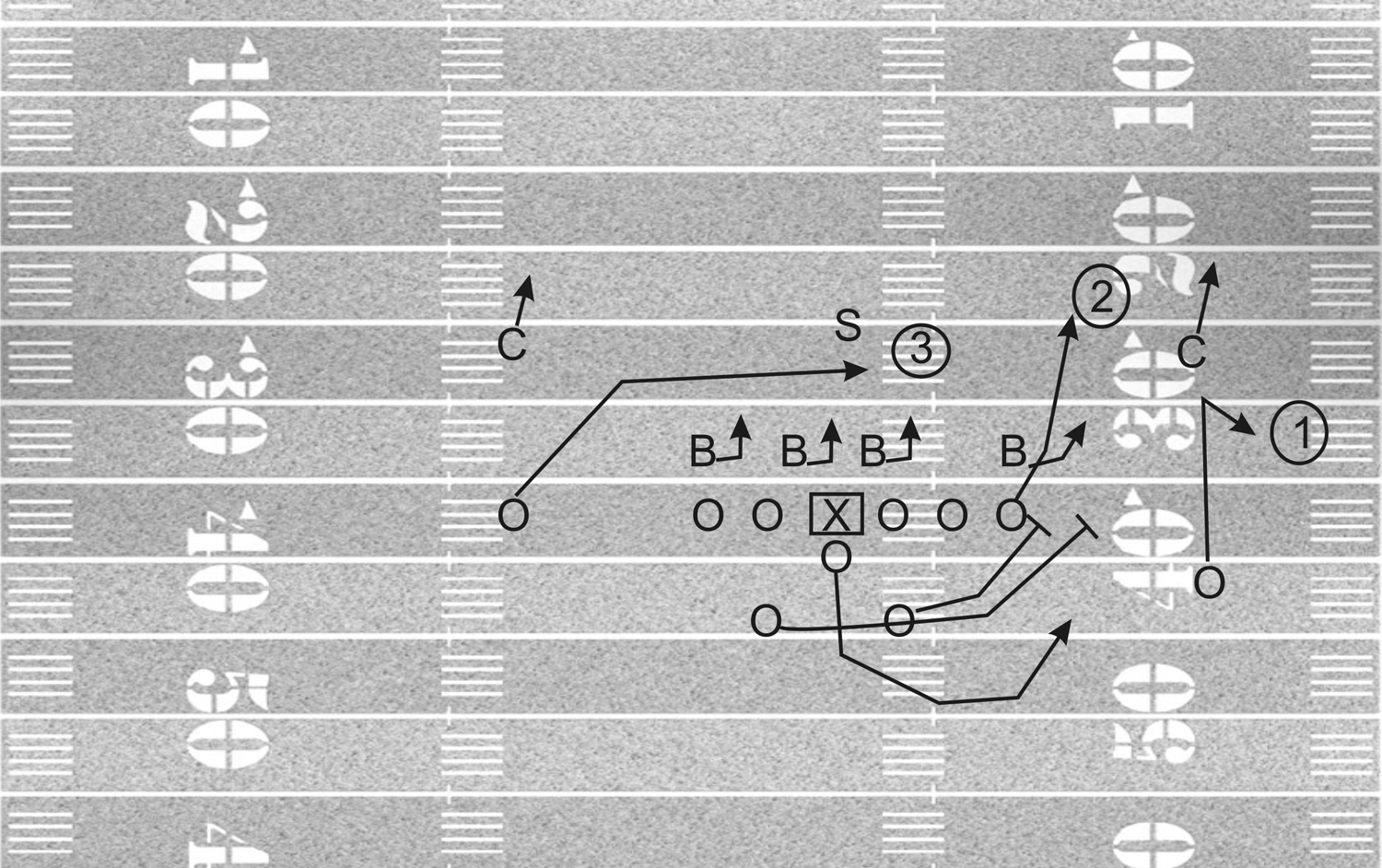
Diagram 1
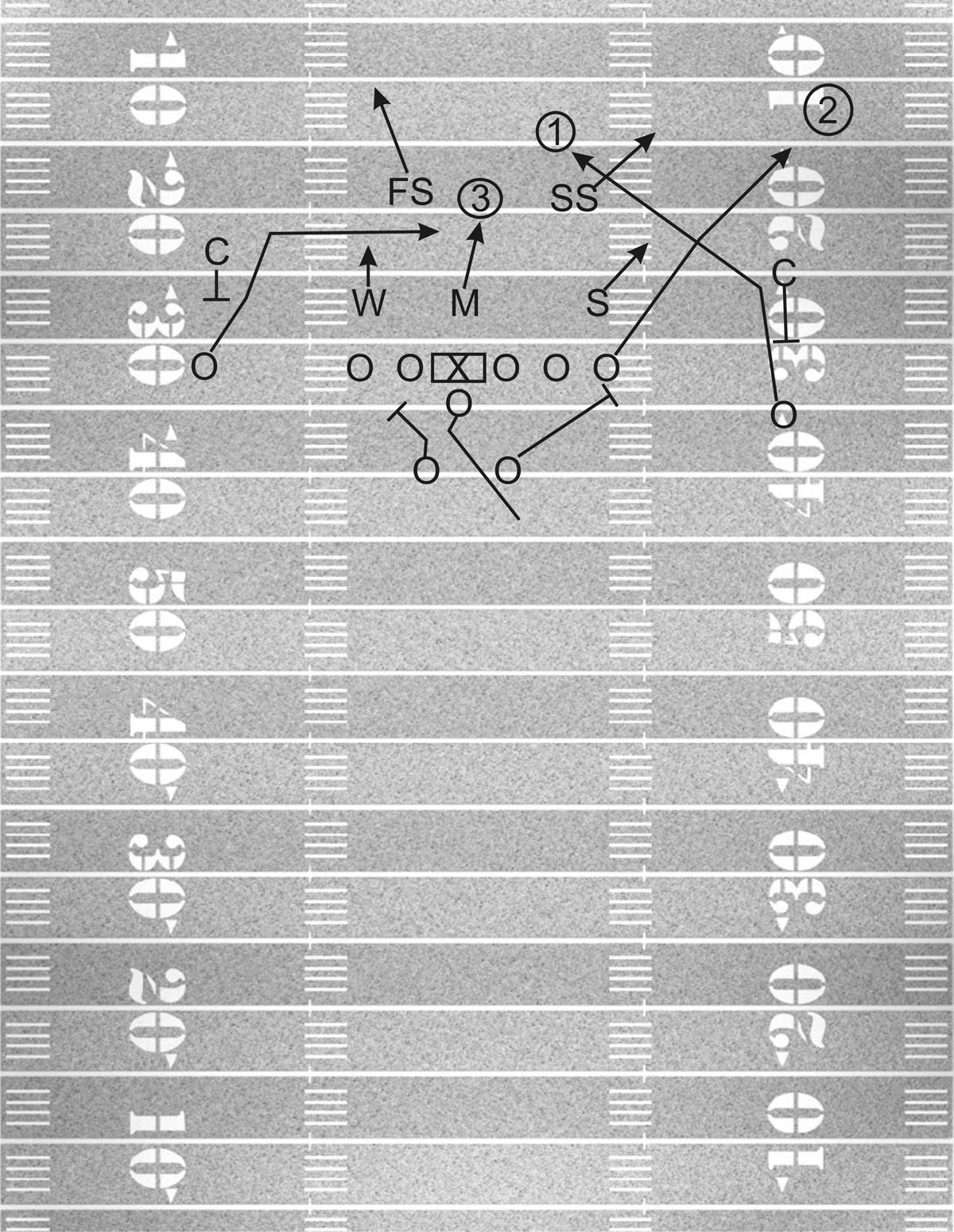
Diagram 2.
A flood pattern from sprint can be very effective vs. coverage underneath. I like this pattern vs. a 6-5 defense on the goal line. To execute successfully, the offside back must cut the contain man (See Diagram 3). Versus a rotating defense, the quarterback semi-sprints. He looks front side, then goes back side to the back running a wheel route (See Diagram 4). 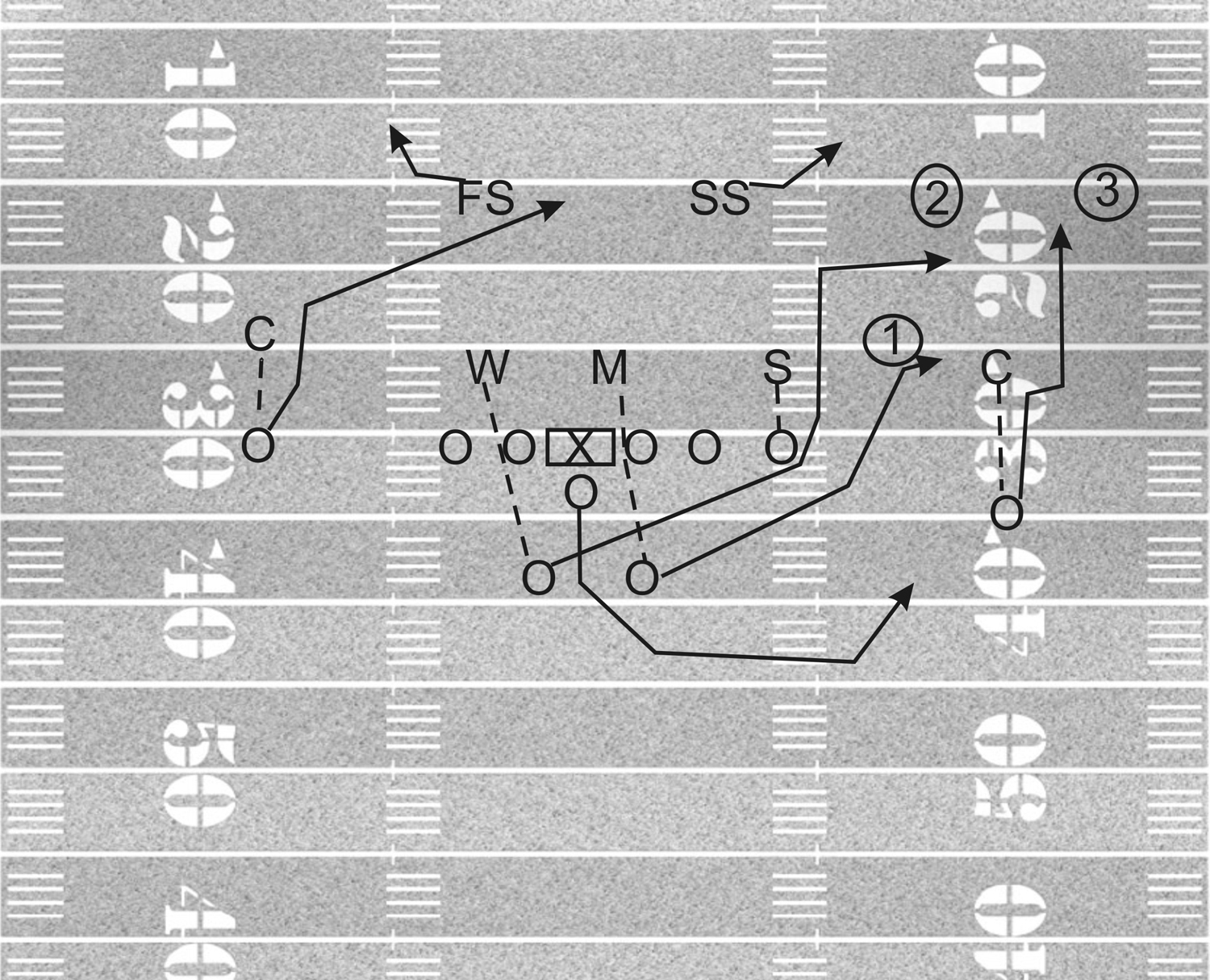
Diagram 3.
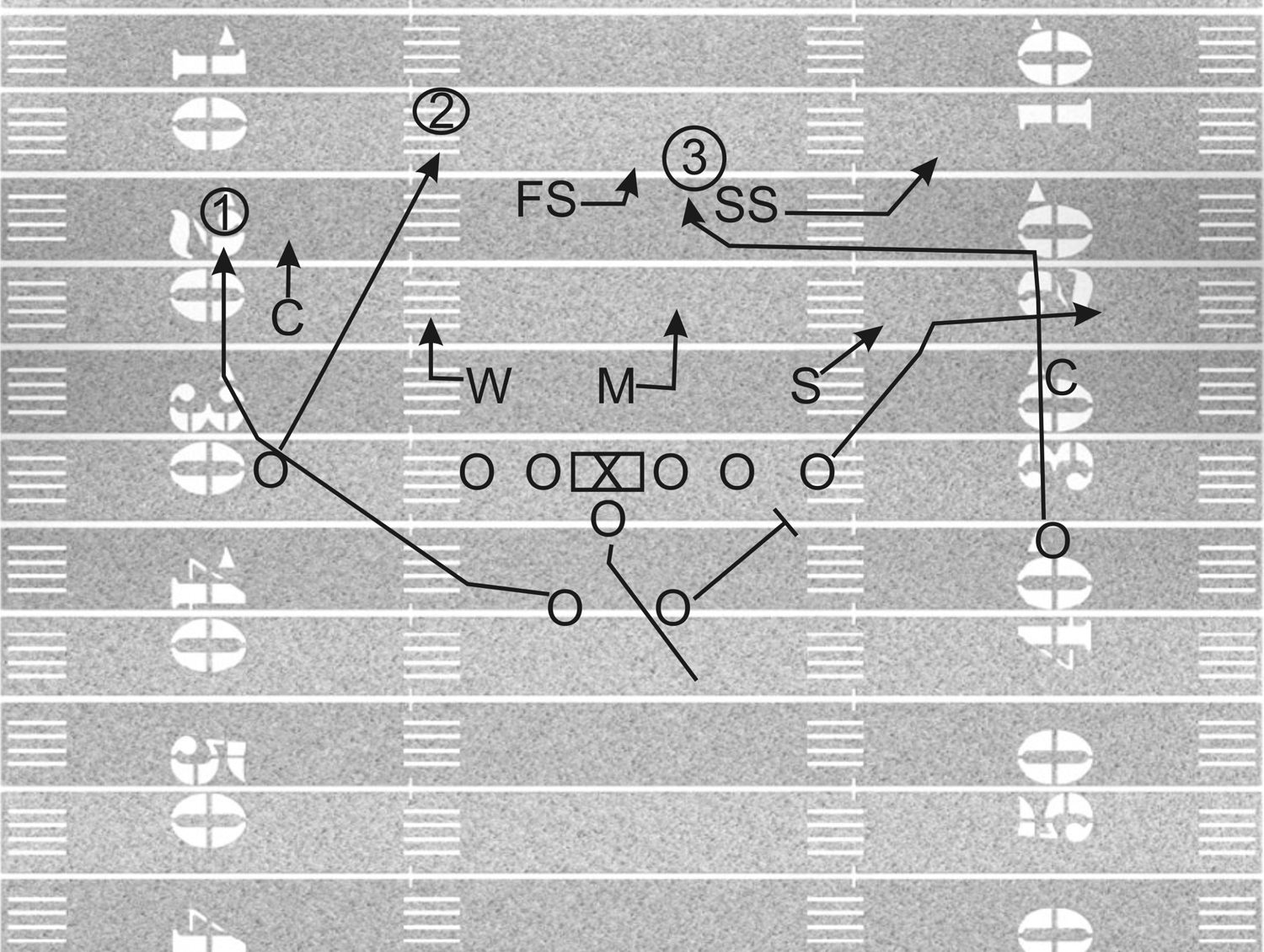
Diagram 4.
Off of our full sprint series, we like to stretch the coverage with motion on our curl pattern. The primary receiver will try to find the window in the underneath coverage. We will send the slot back in motion toward the sprint and he will run an out and up pattern looking over his shoulder (See Diagram 5). Versus a hard pass rush, we screen to the sprint side and away. The quarterback sets up at five steps, and then takes two additional steps back for the screen and then curl. The onside back sets up as to kick out on the defensive end, but then turns outward. He faces the quarterback, looks the ball into his hands and hollers “go”. The on guard sets up 1000-1, 1000-2, and releases on go. The on tackle sets up 1000-1, 1000-2, and releases on go. The tight end runs a curl route (See Diagram 6). 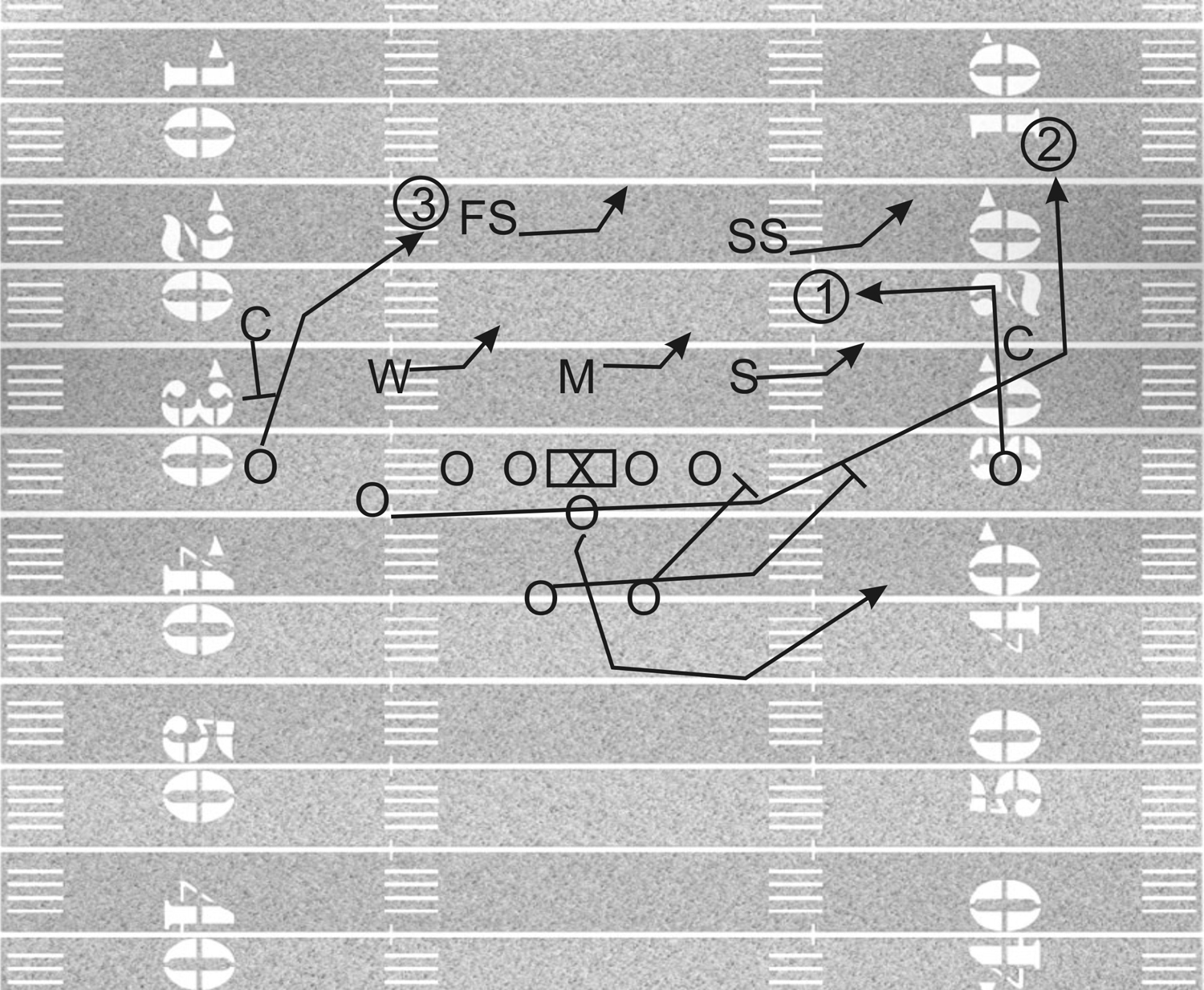
Diagram 5.
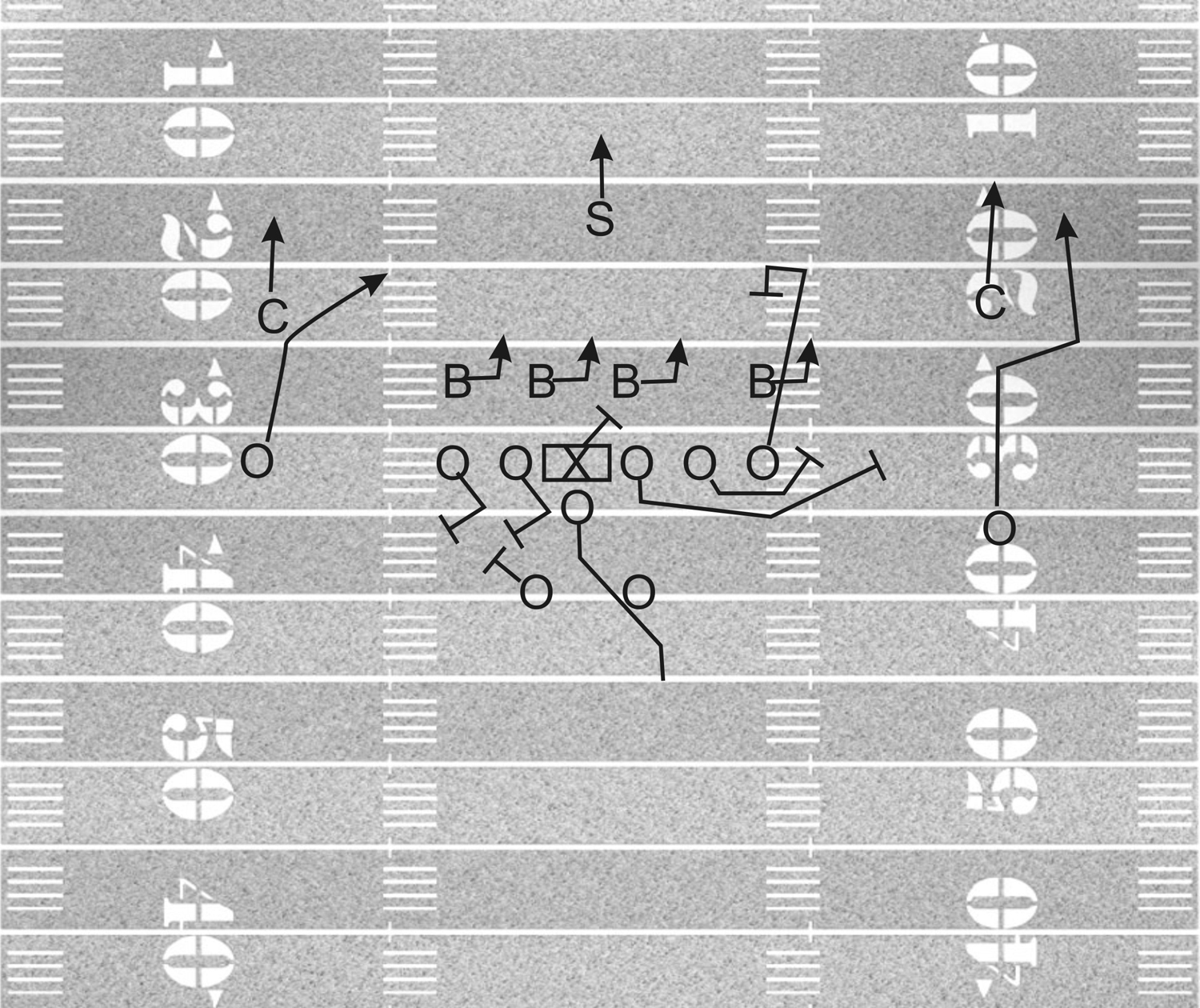
Diagram 6.
When we screen away from the sprint-out, we want the QB to get depth, not width. The screen man should not go across the face of the contain man (See Diagram 7).You must practice the screen daily. We have backs work against bounce-up dummies to make sure they release inside. They must look the ball into their hands before turning upfield.
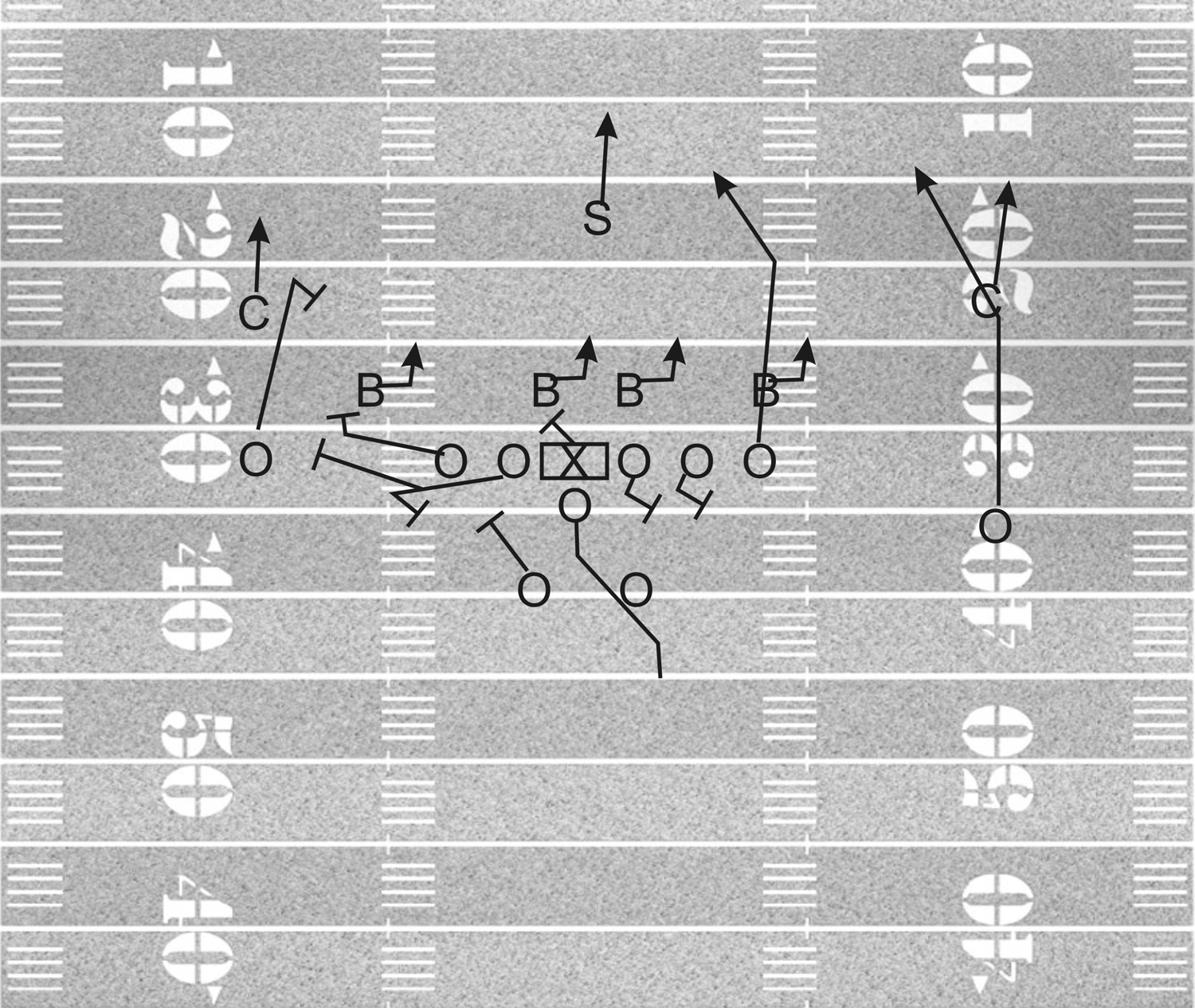
Diagram 7.
About the author: Pete Mazzaferro was the head coach at Bridgewater State College from 1968-2004. He owns the highest win total among Division III coaches in New England with 195 victories. Mazzaferro also coached Waynesburg College from 1959-1962 and has an overall record of 210-53-10. He is also the author of the book, ‘Drop Kick Me Through the Goalposts,’ a memoir of his coaching career published in 2008.