OVER THE YEARS the lead series (see the Feb./March 2002 issue of Gridiron Strategies for a complete overview of the lead series) has accounted for 65 percent of our run offense.
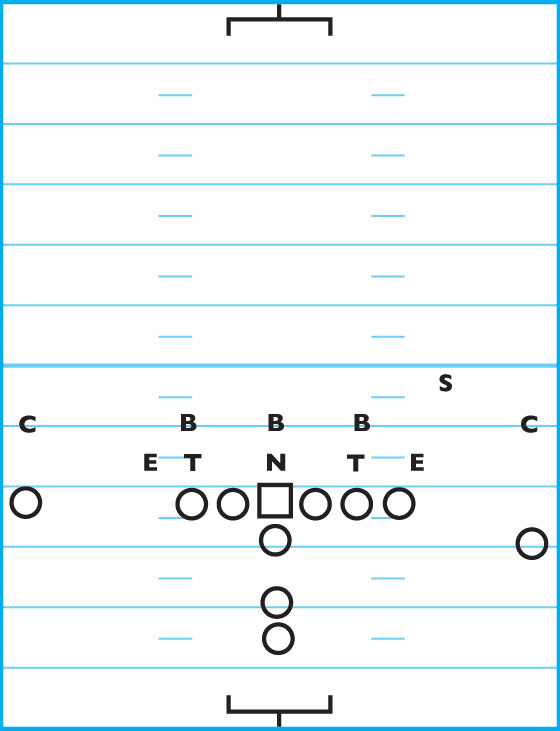
Opposing teams do a lot of defensive adjusting while trying to stop our lead plays. The most common adjustment is the 8-man front. The two most common fronts are the 4-4-3 zone look and the 5-3 man coverage defense.
DIAGRAM 1: 4-4-3 zone defense.
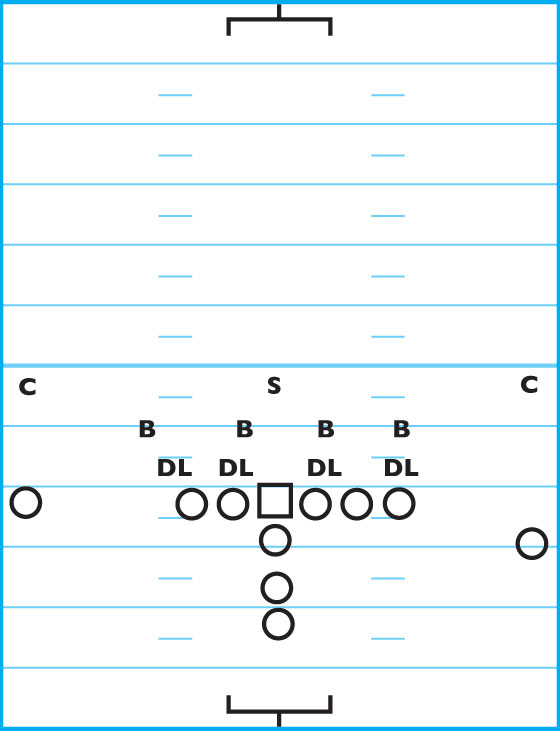
DIAGRAM 2: 5-3 coverage defense.
Using Slot Formation
DIAGRAM 3: Slot formation. When the defense uses an 8-man front, use a slot formation and motion to help your team run the ball with the lead play.
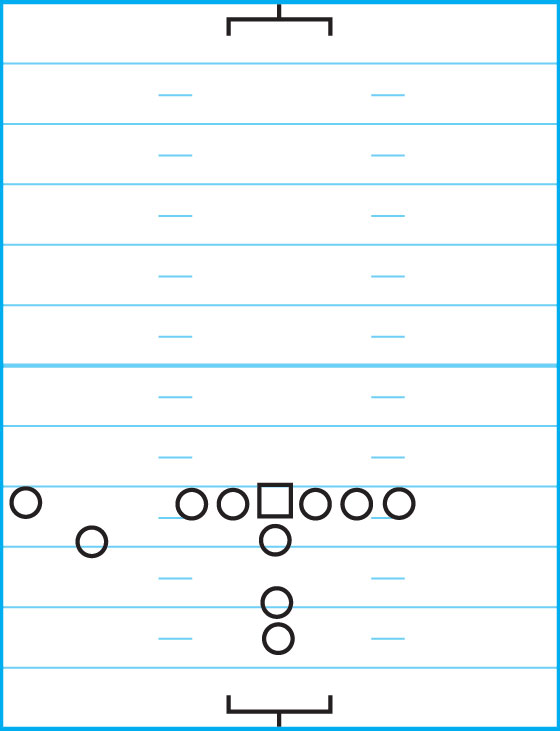
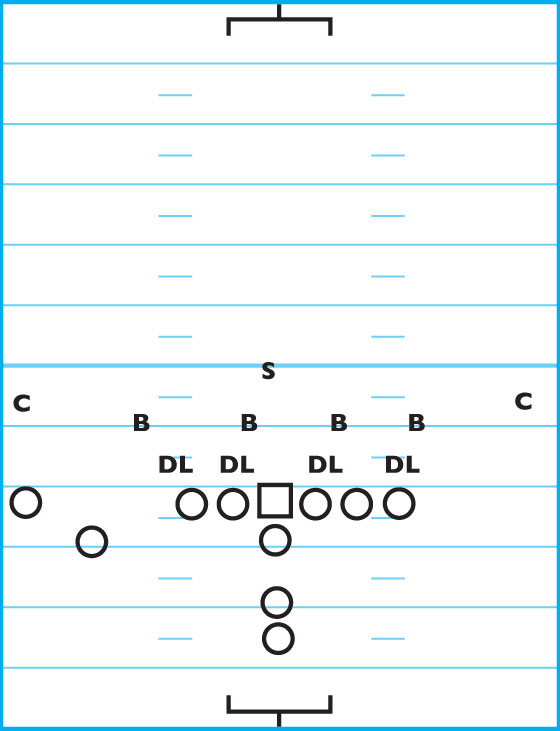
DIAGRAM 4: Defensive alignment dictates area to attack. When a slot formation is deployed, the weak-side linebacker aligned nearest to the slot along with defensive end alignment over the tight end determine how and where to run the ball.
Off-Tackle Lead Play
Attack the slot side of the formation with an off-tackle lead play. This controls the walked-off LB with the slot.
DIAGRAM 5: Off-tackle lead play. The slot will align 6-yards wide. What happens next is determined by where the weak-side LB (Will LB) aligns on the slot.
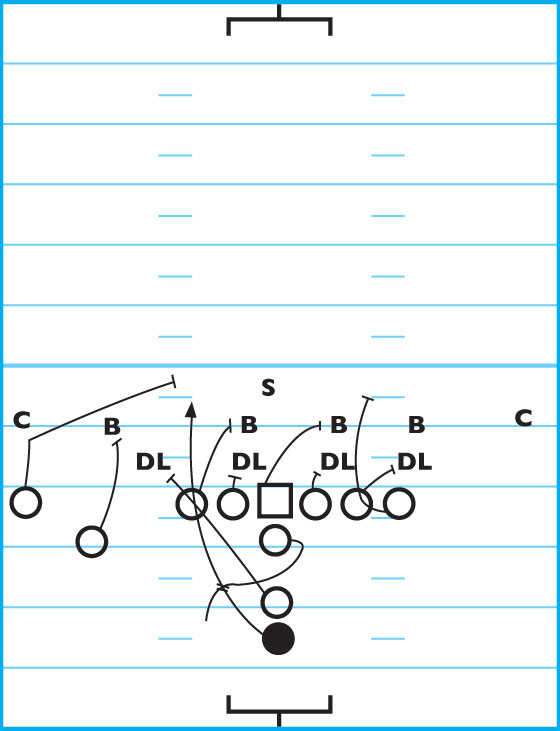
If the Will LB comes out on the slot, tell the slot to release inside and block him with a cut-off screen block. The slot must get inside position on the Will LB and block high to obstruct his view of what’s happening inside. Tell your slot blocker to stay between the LB and the ball.
The split end attacks the free safety with a stalk block. Leave the cover-3 corner unblocked.
Down Scheme With 25 Lead
With the Will LB controlled by the slot, use a down scheme with the 25-lead play and have blocking angles on the defense.
DIAGRAM 6: Speed-out smash pass. If the outside LB splits the difference between the DE and the slot, control him by running a speed-out smash pass.
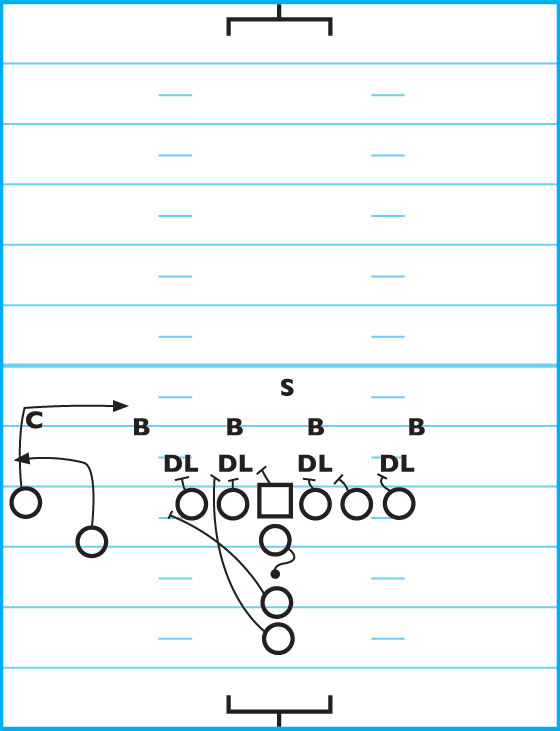
Check to the speed-out smash pass on the line of scrimmage and give the lead-action fake. Your QB should not ball fake to the tailback because this pass comes from a 3-step drop and he has to read the combination route while getting the ball off quickly.
This backfield action is enough to put indecision into the OLB’s mind.
Using Short Motion
If the OLB plays on the inside shoulder of the slot, put your slot in short motion and release him inside the OLB. Use an over-blocking call and lead on the OLB.
DIAGRAM 7: Short motion by slot. The slot will seal the inside LB and you should man-up the DE and defensive tackle.
The fullback must come outside and kick out the OLB. The DE will play tough inside and your offensive tackle should get a good seal on him. The TB reads the OT’s block for his running lane.
Speed Motion From Pro Formation
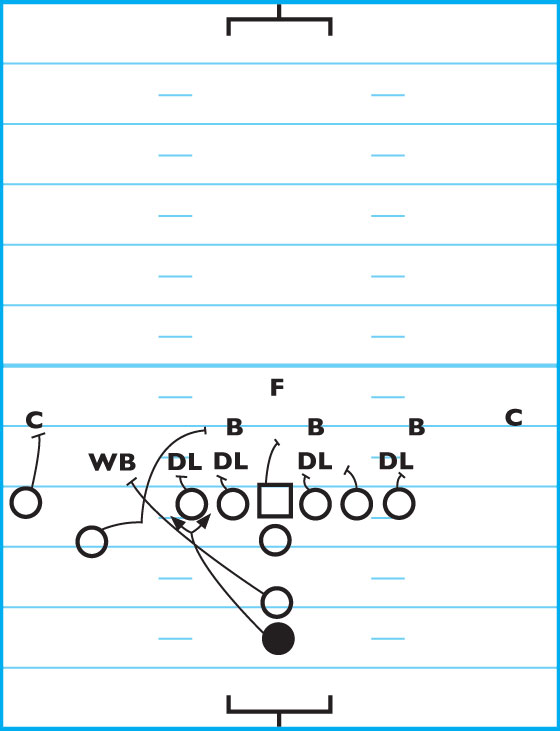
If you encounter an OLB good enough to play head up on your slot and who can take away both the off-tackle lead play and get to the flat to defend the pass, you need to make some adjustments.
DIAGRAM 8: Speed motion. Have your offense line up in a pro formation and run speed motion across the OLB’s face to force him to take the flat or play the off-tackle run. If the OLB flies to the flat, run a 25-lead draw. If not, throw a out-curl combo pass.
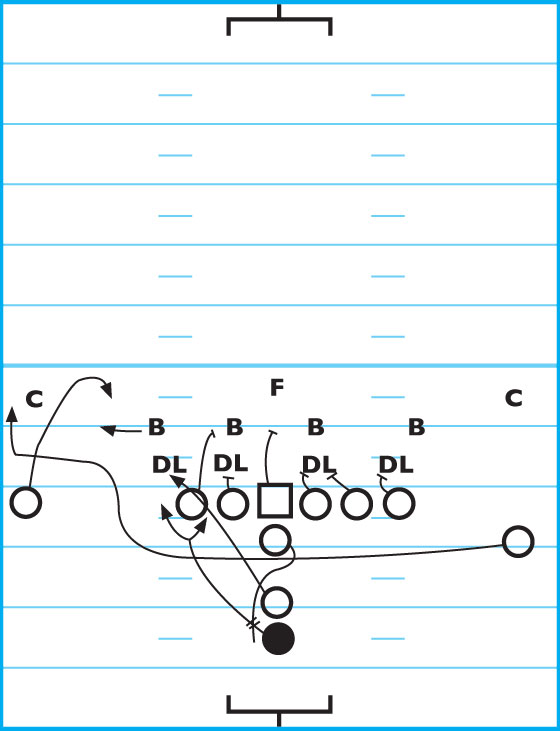
Change the split-end route from smash and curl to give the motion player an opportunity to run a speed out-and-up to get a big pass play.
Isolating LBs, Handling DTs
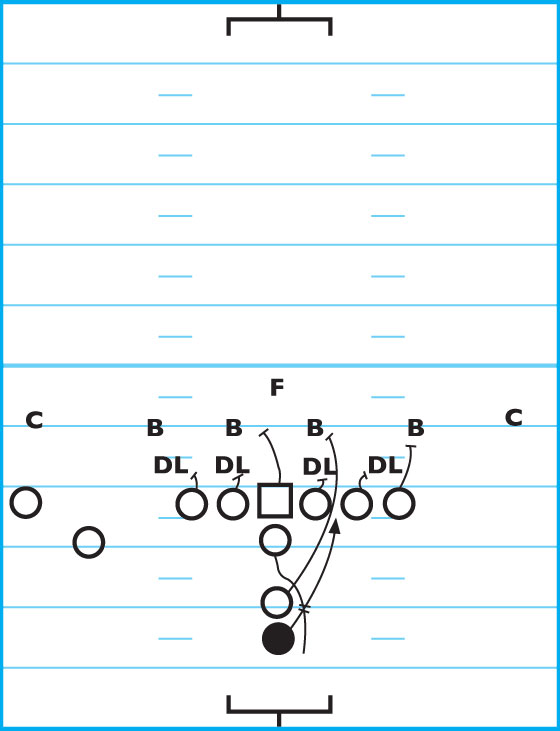
Approach the tight-end side of the formation with a basic lead concepts of angles and isolation on the LBs. The 2 technique (DT) must be blocked by the offensive guard. But when using a slot formation, you’ll seldom see a wide 2 technique or 3 technique.
DIAGRAM 9: Mid-line play. The block can be made and if you run some type of mid-line play, it becomes a simple block. The 7 technique (DE) and 9 technique (OLB) are easy blocks to execute.
Using Cross Motion
If you see a shade or active move to the off-tackle hole from the inside, deploy motion by the slot to help your blocking-scheme angles.
DIAGRAM 10: Cross motion by the slot. Run the slot on cross motion and have him block the 7 technique (DE) to the outside. This frees your tackle to zone-down inside and seal any stunt action or shade.
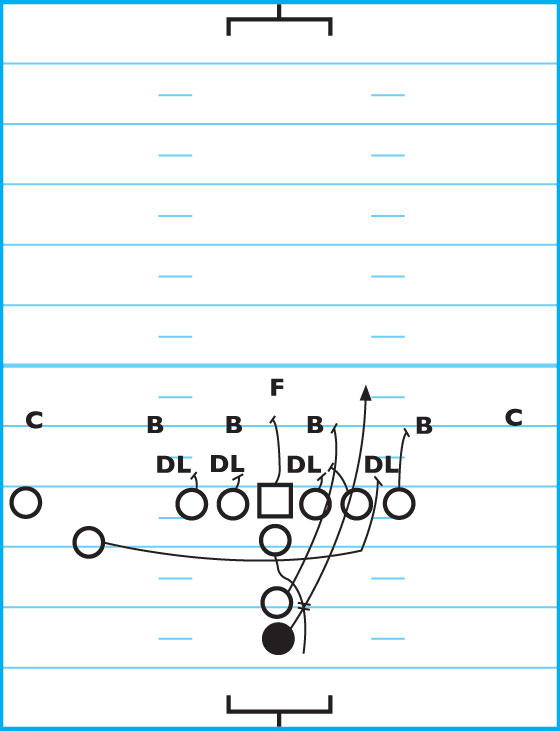
This scheme gives your offense the flexibility to double a shade or zone the inside stack and let the FB attack at the next level.
FB Lead With Slot Motion
If the defense is keying the TB and causing problems at the point of attack, run a FB lead play, (34 lead) with the slot motion.
DIAGRAM 11: 34 Lead. Running a FB lead play with slot motion will give you the capability to counter the TB away from the ball.
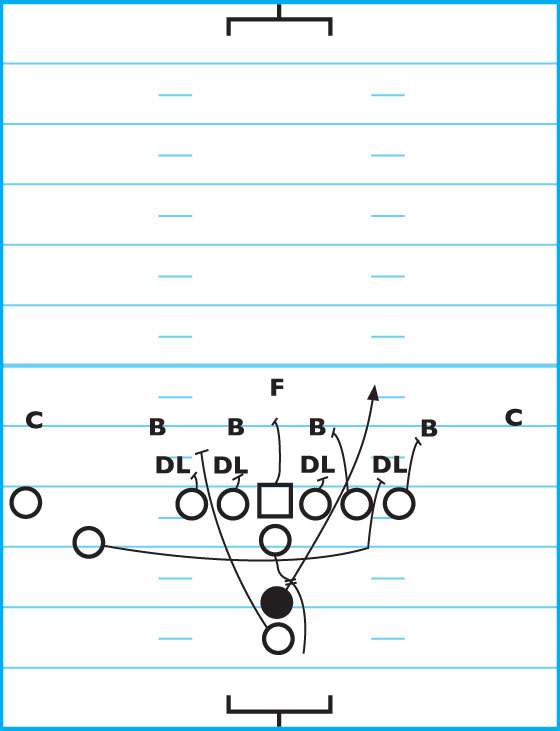
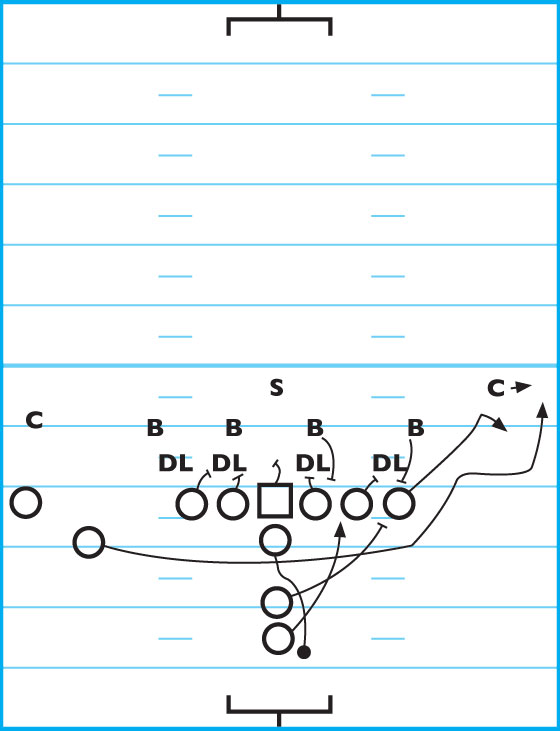
DIAGRAM 12: Speed out-and-up stick route. If the defense is closing from the outside or using the rolled corner as an extra defender to stop the lead, continue a slot motion to the TE and throw a speed out-and-up stick route to get the ball on the perimeter.
Other 8-Man Fronts
Another 8-man front you will encounter is the inside 5-3 man look. This 5-3 is nothing more than a gap 8 front with the LBs blitzing the gaps.
DIAGRAM 13: Motion 24 lead vs. 5-3.
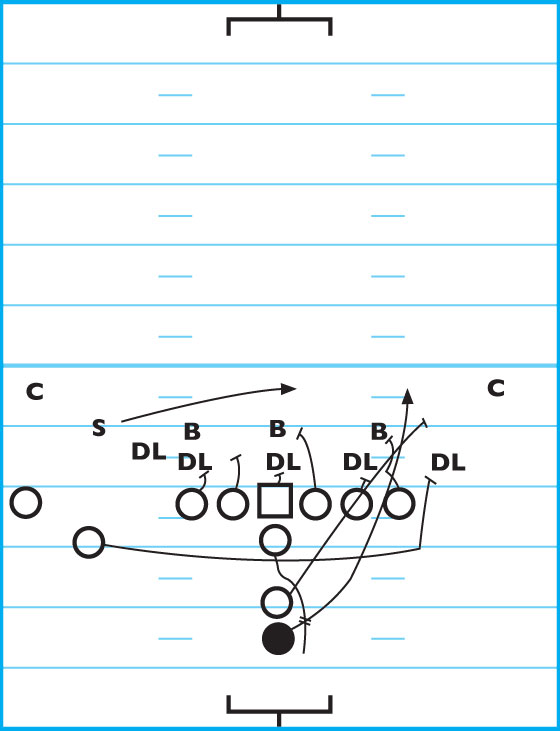
DIAGRAM 14: Motion 34 lead vs. 5-3.
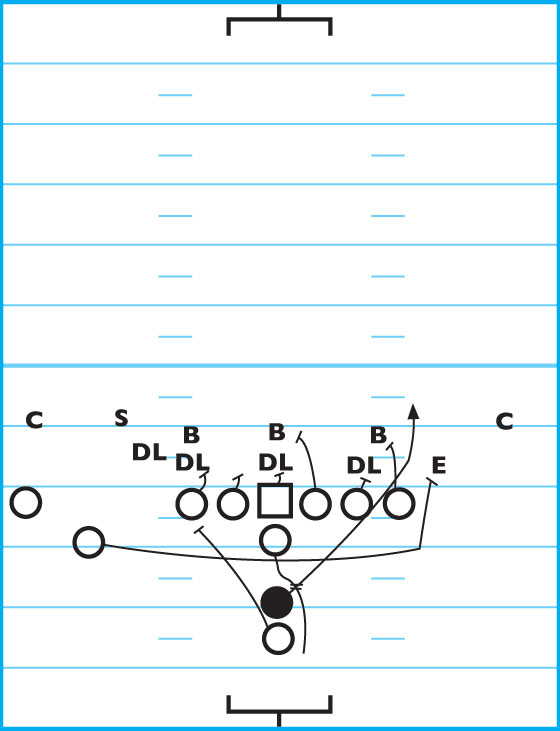
DIAGRAM 15: Motion 24 lead pass vs. 5-3.
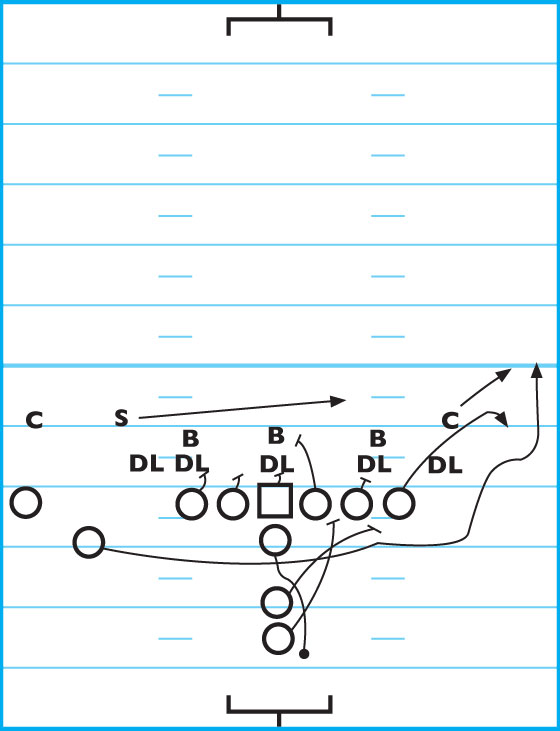
With this motion scheme, you’ll be able to wall or zone the inside blitz, kick the contain player out and still have the FB free to block the defender playing man coverage on your TE.
By using a motion-blocking scheme and play-action passing game, your offense will get some big plays and slow the defensive blitz. If you’re patient and believe in the lead concepts, good things will happen.