FINDING SUCCESS AGAINST the 4-4 defense is as easy as the following three plays. These three plays complement each other and attack the defense in different ways (outside, inside and misdirection).
Toss vs. 4-4 Defense
The toss is the play from which the other two plays are generated. The backfield motion is almost identical in all three plays and the first three steps are the same for the quarterback, fullback and running back with some modifications thereafter.
The key to the toss play is the RB allowing his lead blocks to become set. If the RB is too fast to the edge, he will outrun his blocks and if he is too slow, he runs the risk of getting caught from behind or having defenders being able to get off their blocks.
DIAGRAM 1: Toss Vs. 4-4 Defense. Every player must execute his role for the toss to work effectively.
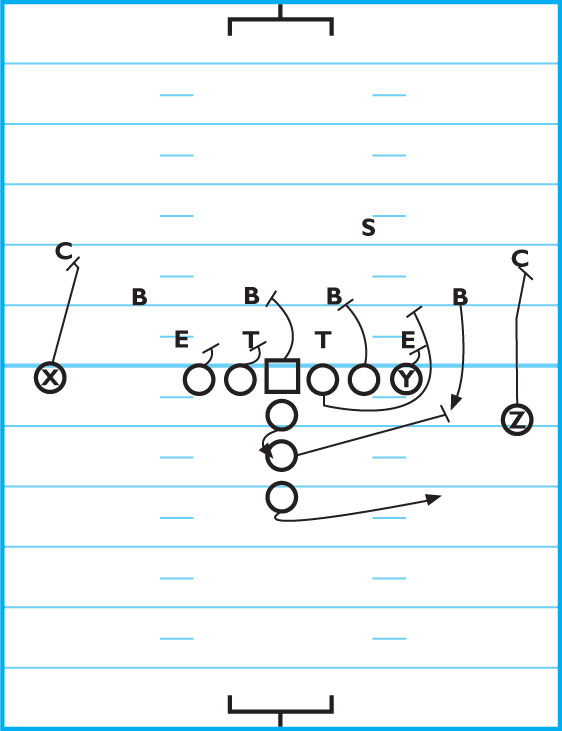
X Receiver: Stalks the cornerback or runs at the safety.
Backside OT: Reach-steps to block through the gap, through the line to the linebacker area.
Backside OG: Reach-step block.
Center: Reach-step block.
Playside OG: Pulls to the right hitting a LB if there is one in the way.
Playside OT: Reach-step block.
Y Tight End: Reach-step block.
Playside WR: Stalks closest defender.
Quarterback: Reverses out and tosses the ball to the running back. He must be sure not to hit the fullback with the ball.
Fullback: Opens to the hole, accelerates and blocks the first defender on the outside.
Running Back: Jab-steps (or pauses) opposite the hole, crosses over, receives the handoff and accelerates up the field.
belly vs. 4-4 Defense
Once the defense is concerned with stopping the toss, run inside with the belly play. The backfield track is the same except the FB gets the ball on the inside instead of blocking on the edge.
DIAGRAM 2: Belly Vs. 4-4 Defense. The following are the player responsibilities for the belly play.
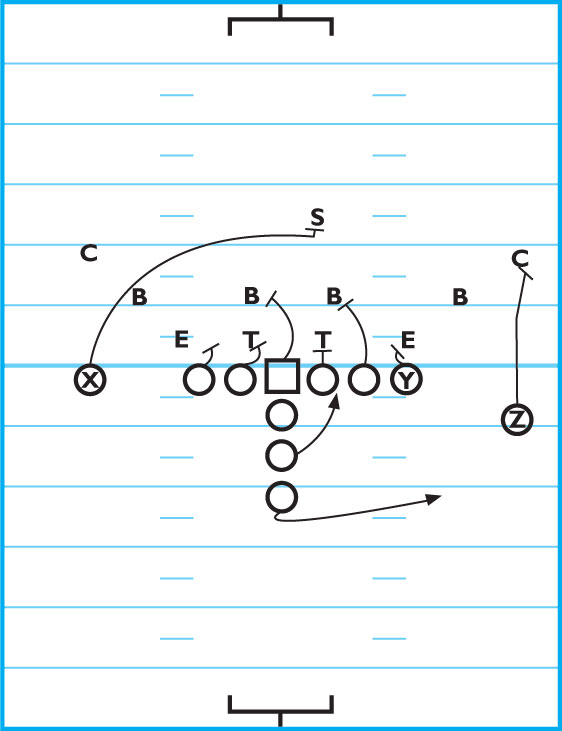
X Receiver: Stalks the cornerback or runs at the safety.
Backside OT: Reach-step block.
Backside OG: Reach-step block.
Center: Reach-step block.
Playside OG: Man-blocks through the gap, through the line to the LB area.
Playside OT: Reach-step block.
Y Tight End: Gap-blocks to block through the gap, through the line to the LB area.
Playside WR: Stalks closest defender.
Quarterback: Reverses out to 4 o’clock position while faking the toss to the RB, then hands the ball to the FB.
Fullback: Opens to the hole, accelerates and attacks the playside guard.
Running Back: Jab-steps (or pauses) opposite the hole, crosses over and acts as if he has the ball.
Z counter vs. 4-4 Defense
The complement to the belly play is the Z counter. The backfield movement looks like the previous two plays. The major changes take place on the line in this play.
DIAGRAM 3: Z Counter Vs. 4-4 Defense. The following are the player responsibilities for the Z counter.
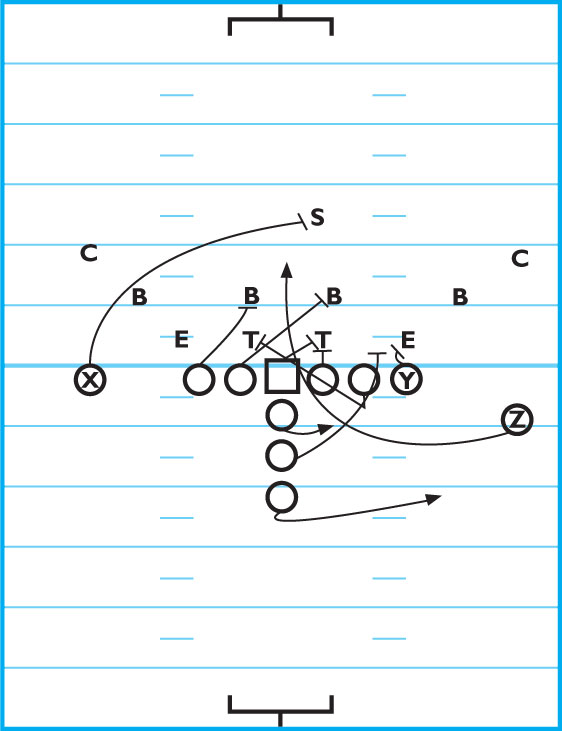
X Receiver: Stalks the cornerback or runs at the safety.
Backside OT: Hits closest inside LB.
Backside OG: Blocks down on other inside LB.
Center: Blocks down on DT.
Playside OG: Double-teams DT.
Playside OT: Pulls inside. Blocks the first defender past the center.
Y Tight End: Gap-blocks to block through the gap, through the line to the LB area.
Playside WR: Jab-steps, gets depth by aiming at center’s behind and receives inside handoff.
Quarterback: Reverses out to 4 o’clock position while faking the toss to the RB, then hands the ball Z.
Fullback: Opens to the hole, accelerates and attacks the pulling guard’s hole.
Running Back: Goes opposite hole and crosses over.