2-BAIL COVERAGE is a combination coverage that we’ve used successfully in our defensive scheme.
2-Bail refers to the bailing technique used by the cornerbacks. Prior to the snap, a CB is lined up head-on with the wide receiver, and on the snap, the CB “bails” and reads the release of the No. 2 receiver. In other words, the coverage is 2 and the technique is bail; hence the term, “2-Bail.”
2-Bail is a hybrid coverage for us. It combines the strengths of traditional Cover-2 and Cover-4 packages.
We’ve taken many of the ideas and concepts from other defensive schemes over the years and tweaked them to fit the needs and abilities of our players.
One of the things we like best is that this coverage enables all of our pass defenders to see the football, which is critical for good pass defense. 2-Bail gives you the opportunity to limit the big plays and takes advantage of your team’s speed.
Adaptable, Easy To Disguise
We’ve also found that this coverage is adaptable and easy to disguise from the basic “2-shell” look. 2-Bail and its accompanying zone blitzes are easy to install, easy to teach and easily repped during practice time. It is not a complex system that takes months or even weeks to install.
This article takes a look at some of our basic philosophies and the way in which we pressure the QB out of this coverage scheme. 2-Bail coverage is advantageous for a number of reasons.
1 It combines and the strengths of Cover-2 and Cover-4 without the weaknesses of either coverage.
2 It’s exceptionally effective against 3-step routes — especially in Cover-2.
3 The flats and underneath areas are protected, but only if threatened.
4 Your cornerbacks need only cover the short areas if their reads and receivers take them there.
5 The pattern reading eliminates guessing and indecision for the defensive backs and linebackers. They do not have to “overthink” situations.
6 2-Bail is also strong against deep routes — especially in Cover-4.
7 Against four receivers who are running vertical routes, there are 1-on-1 match-ups everywhere so you’ll never be outnumbered.
8 It prevents your safeties from being stretched vertically and horizontally by opposing receivers (as can happen in a traditional Cover-2).
9 The No. 2 receiver down the middle of the field is not a problem because a safety is responsible for him. Everything in this coverage is based on the initial release of the No. 2 receiver.
10 You can easily script and make adjustments for the more complex route combinations that you’ll face.
11 Your secondary can be trained to recognize specific keys and route combinations. Position-specific techniques for the 2-Bail are easy to drill in practice.
2-Bail Coverage, Player Duties
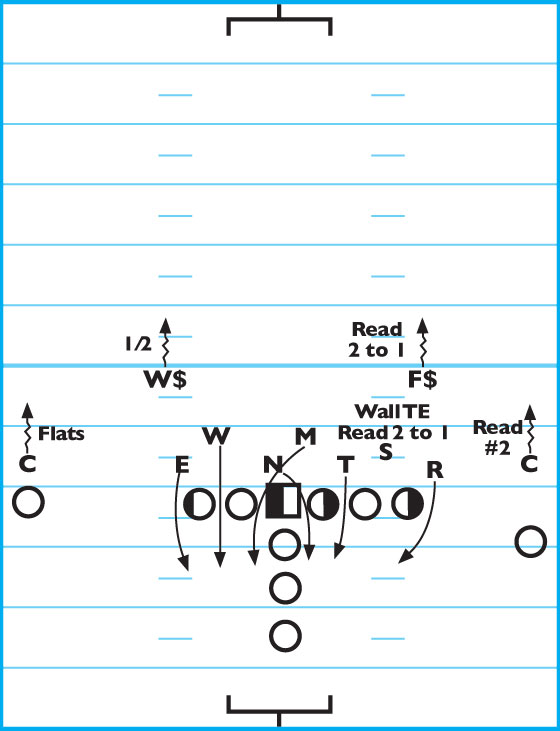
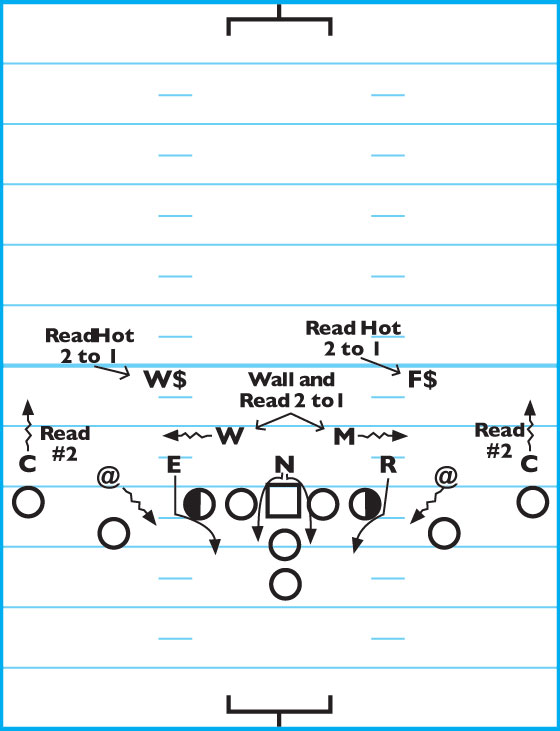
The following diagram shows the coverages, pattern-reading tips and player responsibilities off the 2-Bail from a 2-shell look.
DIAGRAM 1: 2-Bail (2 Read).
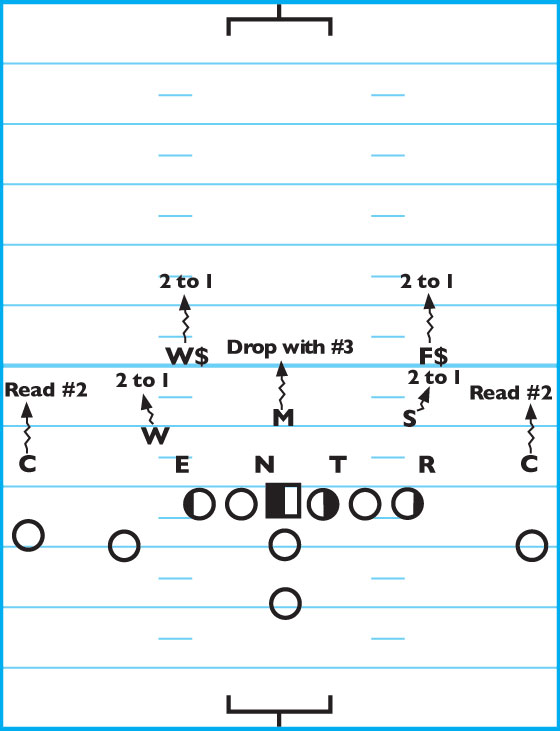
“Sam” LB: Must never chase routes. Pattern-reads the release of the No. 2 receiver on his side. If the No. 2 releases vertically, he must go with him 12 to 15 yards, checking outside for an inside route by No. 1 or a swing/flat route by a RB. Is responsible for the curl routes by No. 2 and needs to help on any deep out.
If No. 2 releases vertically, Sam LB must not pursue him. Instead, he must get his eyes outside and find the No. 1 receiver. If No. 2 releases inside, then he should look for an inside replacement route by a RB or the No. 1 receiver.
“Mike” LB: Match the release of the No. 3 receiver and go wherever he goes. If No. 3 releases to the strong or weak side, look outside and locate No. 2. He must eliminate any receiver that tries to go deep across the middle. He must never step up to hit a receiver on a crossing route, but instead must communicate with teammates as he goes across the field and shifts his eyes to the outside.
“Will” LB: Pattern-reads the release of the No. 2 receiver, which could be a TE, slot or RB. If No. 2 releases vertically, carry him 12 to 15 yards. Is responsible for the curl routes by No. 2 and must be able to help on any deep routes. If 2 releases inside, he must look for a replacement route by a RB and then find the No. 1 receiver who is running the replacement route.
Cornerbacks: Use press alignment on the outside shoulder of the WR. On the snap, the CB must post the WR with his outside arm, open his hips, turn inside and “bail” out of there. CBs open inside so that they see both the No. 2 receiver and the ball.
He must pattern-read No. 2 and the coverage responsibility is determined by No. 2’s release. If 2 goes vertical, lock on No. 1 to the post. However, if 2 goes vertical and 1 runs a short pattern, expect the “Smash” and read the QB’s eyes and shoulders. If 2 releases inside, look for the replacement route by a RB. If no quick-route shows, lock on the No. 1 receiver running the post. CBs must know where their help is and use it!
Safeties: Align 10 to 12 yards deep, with inside leverage on the No. 2 receiver. Pattern-read the release of the No. 2 receiver on the side closest to him and the coverage responsibility is dictated by that receiver’s release.
If the No. 2 receiver runs a vertical route beyond 10 yards, he should “lock on” and cover. If No. 2 curls or runs a pattern under 10 yards, the LB or “@” (extra DB) has coverage and the safeties must continue to gain depth and look outside to the No. 1 receiver. If No. 2 releases to the flats or disappears inside, the safety looks for No.1 coming inside on a post or crossing route. Safeties must remember that “depth equals range” and must stay in their pedal and play everything downhill.
“Falcon” 2-Bail
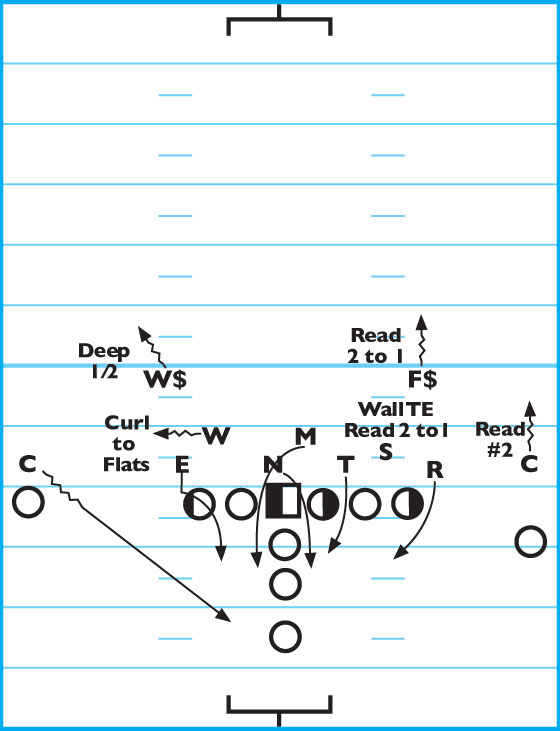
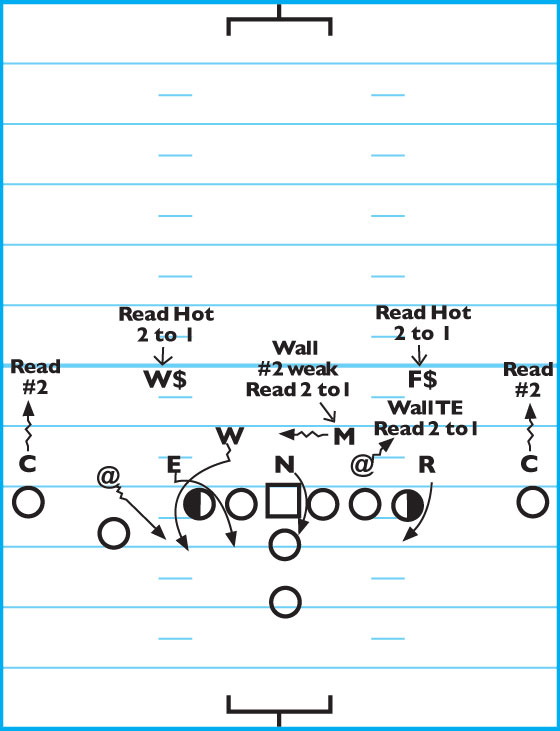
The following diagram shows another 2-bail coverage from the 2-shell look called “Falcon.”
“Falcon”
DIAGRAM 2: “Falcon.” In this coverage, the Sam LB pattern reads the release of the No. 2 receiver and checks him for 12 to 15 yards. He must also help on deep routes. The Mike LB matches the release of the No. 3 receiver. He must eliminate any receiver that tries to go deep across the field. Will LB identifies the first pass threat through formation recognition and pre-snap read. Will is responsible for the weak-side curl routes.
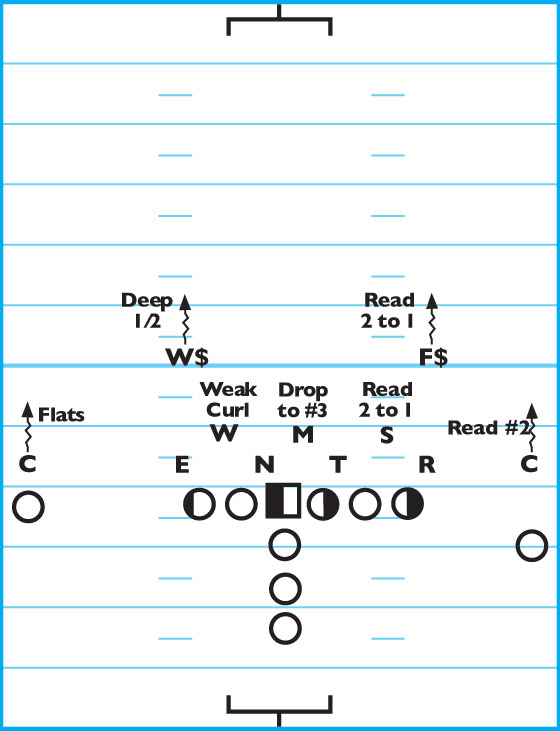
The strong-side CB and Free Safety use normal “2-Bail” technique. The weak-side CB is responsible for the weak-side flats. He must keep the WR from getting vertical and on the Safety too quickly. The weak-side Safety is responsible for 1/2 of the weak side (anything deeper than 15 yards).
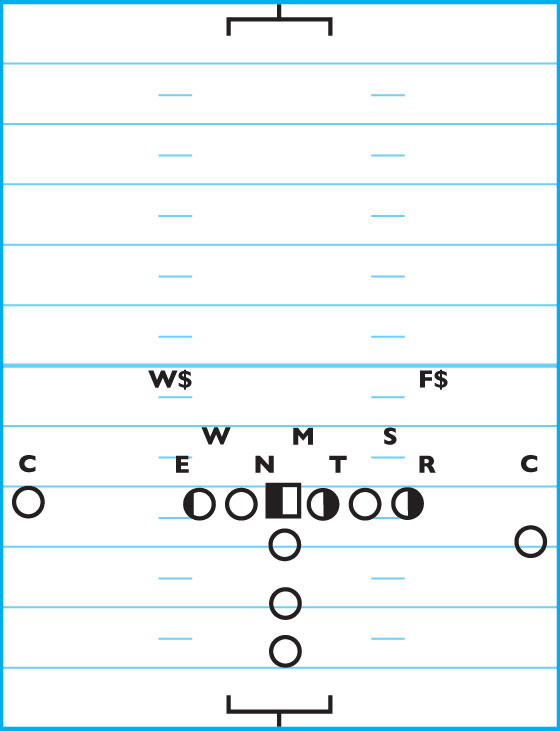
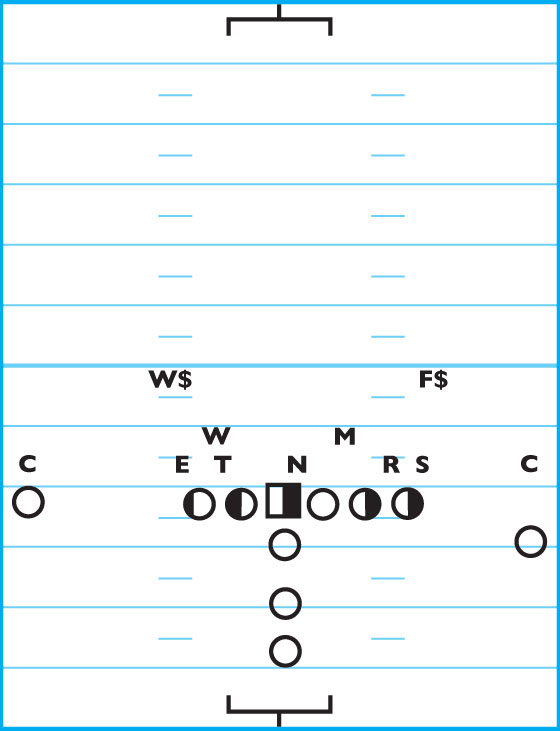
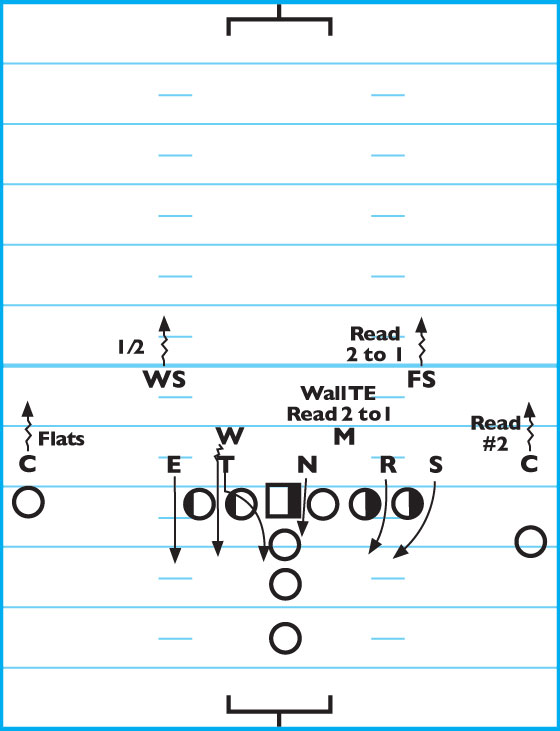
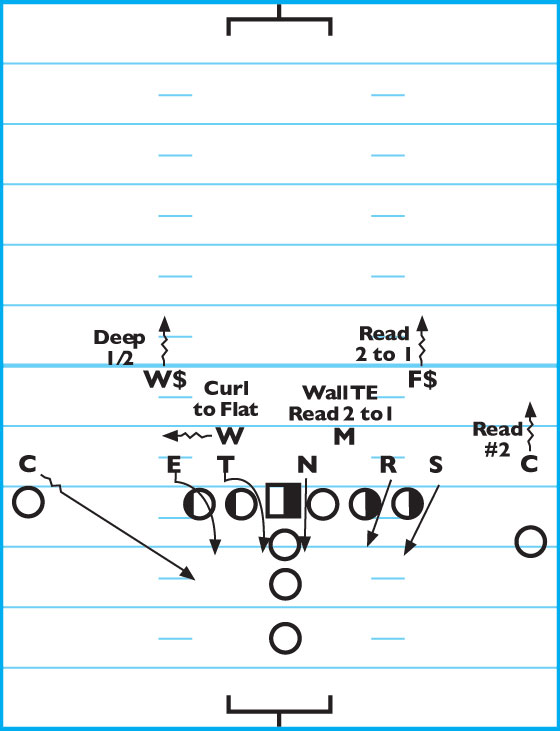
For more information and for detailed descriptions on player responsibilities for each of the 10
coverages shown above, contact Tim Schaffner via e-mail at:
tim.schaffner@gcccks.edu
or by phone at: (620) 276-9593
(e-mail is preferred).