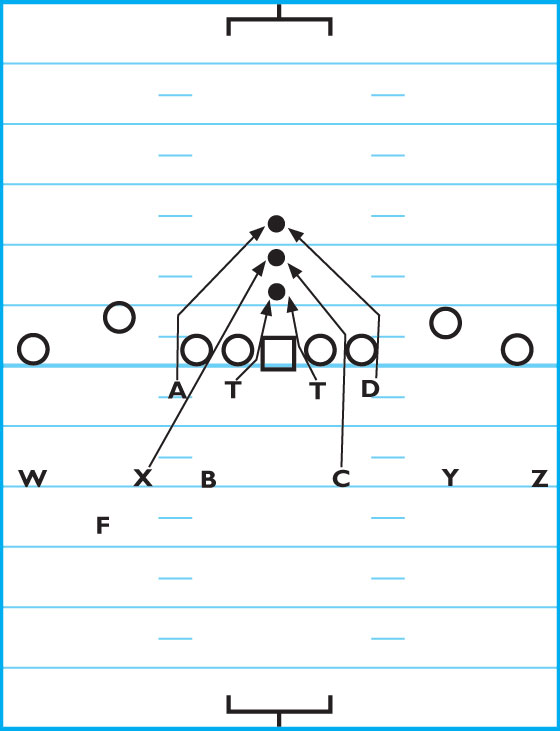
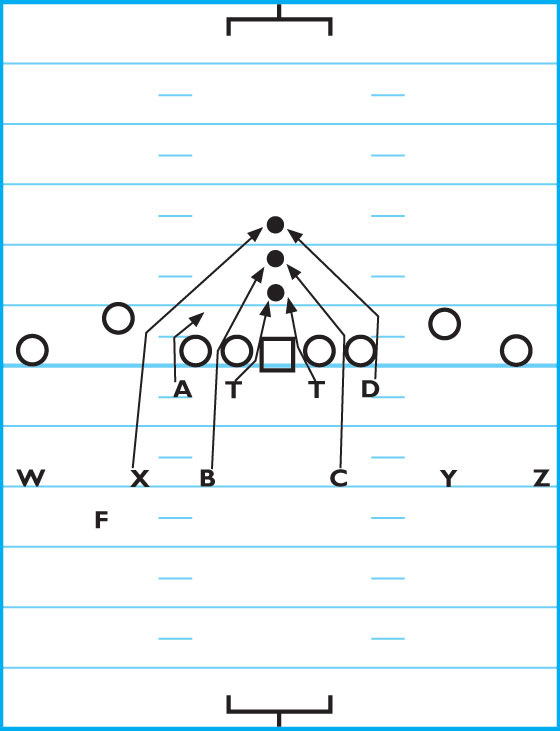
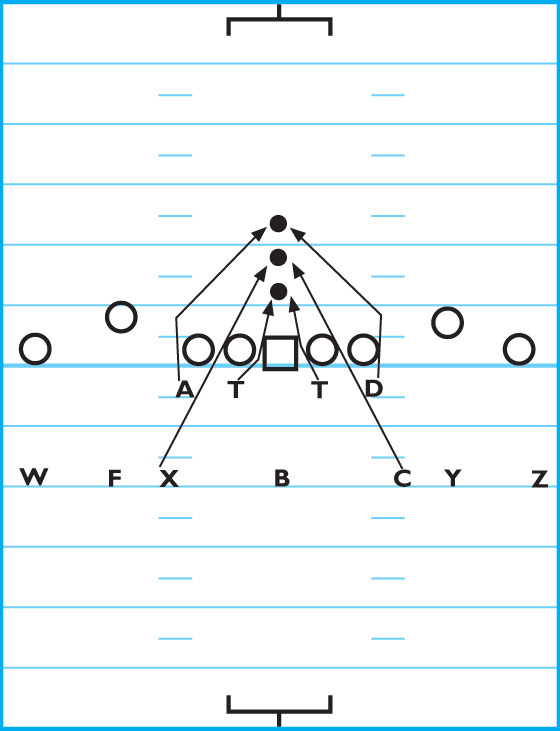
IN OUR FOOTBALL reality, the key to a defensive system is:
Creating a base concept, not just a base formation,
Spreading the base, making it wider and more mobile, and
Merging the “spread” and “base” concepts to form a third component.
Diagrams 1 to 3 illustrate this 3-way transition that involves a flexible base as a foundation, then widening it with mobility — and finally — merging the two concepts into an effective defensive strategy.
DIAGRAM 1: Base Concept.
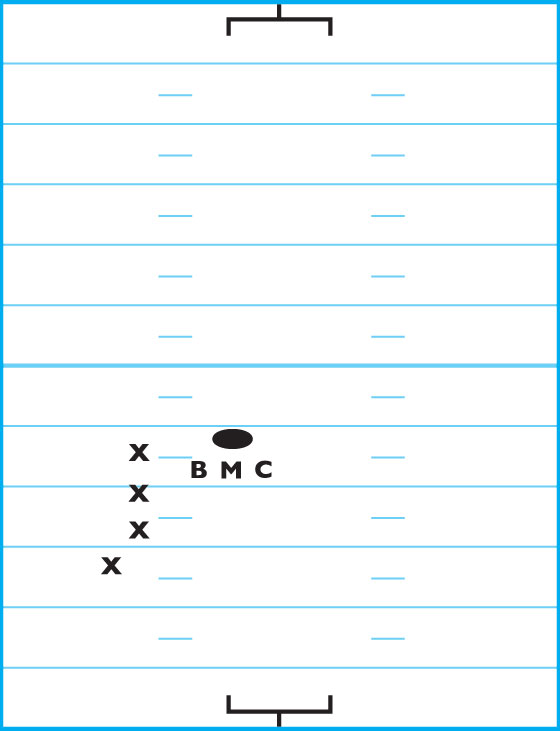
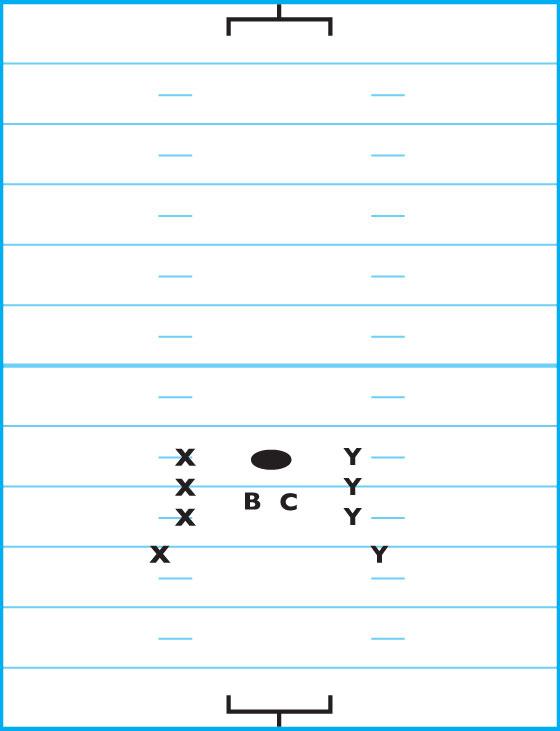
DIAGRAM 2: 4-2-5 Concept.
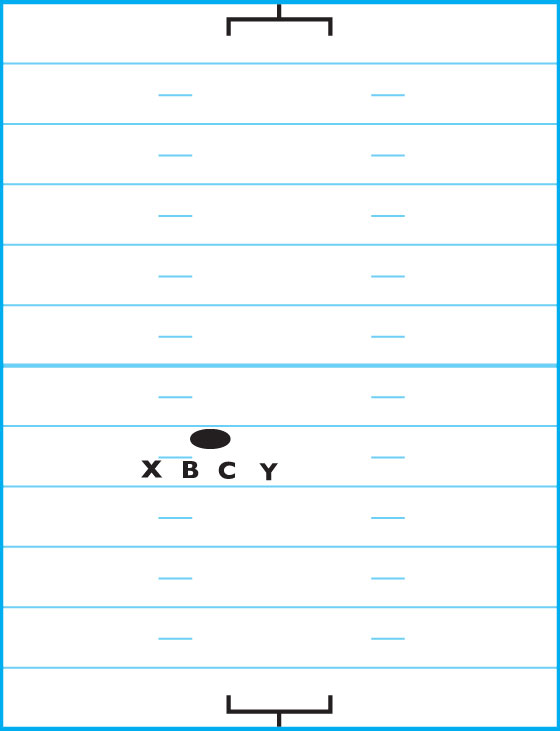
DIAGRAM 3: Merged Concept.
The X-Press defense is an unlimited system based on a language that emphasizes easy translation instead of complex memory recall. The language allows complexity through simplicity. It facilitates pre-snap appearance change, wide-ranging pressure and coverage within the framework of one set of operating rules.
The name “X-Press” expresses the basic philosophy – move/re-align the strong safety (X) and apply consistent, strategic pressure. It was designed over 30 years of research to solve the challenges of limitations that exist in our reality. The system emerged from some of the following conclusions:
1. Possession and points. These are the two defensive “outcome goals.” A number of “performance goals” lead to them, but our defense strives for getting possession of the ball and scoring.
2. Proactive approach. The best way to cause offensive mistakes and to cause the offense to put the ball in the air is by a proactive approach instead of reactive. Forcing mistakes results in possession and points.
Forcing the offense to throw is the best way to force mistakes.
3. Pressure. The best strategy is to create the perceived threat of multi-dimensional pressure. Pressure is synonymous with stress not recklessness. Pressure refers to a system of movement that reduces dual responsibility to single responsibility — and defends the run and passes with equally.
4. Strong safeties provide value and diversity. Strong safeties are easier to find and develop than conventional inside LBs. The versatility of a strong safety provides countless benefits. Two strong safeties are a gold mine.
5. Spread versus spread. Modern offenses are incredibly diverse. All our opponents include a “spread” offensive component. When they spread, KISS: Keep it Simple and Spread. The 4-2-5 concept is the best way to defend a spread offense and achieve defensive goals.
6. R.A.T. Principle. Three elements make any defensive system or concept successful – relentlessness, angles, tackling. Where to go, what to do on arrival and how to do both.
Base Concept
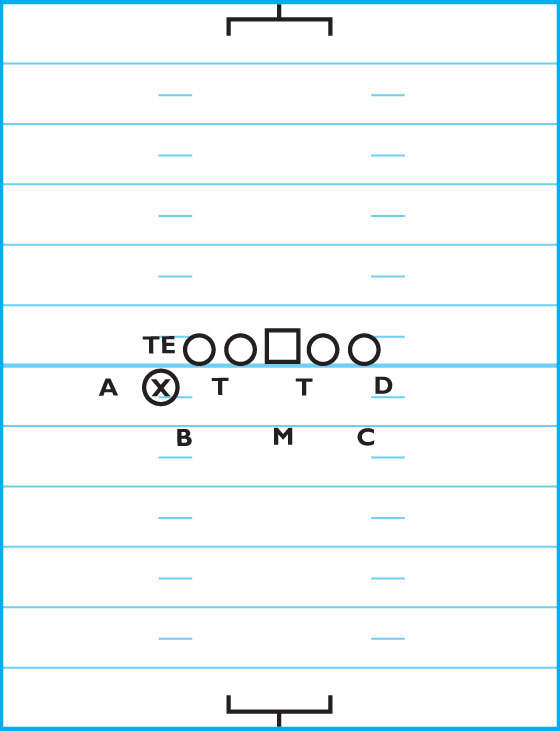
A four-level SS positioning and realignment is the key feature of the base concept. The X-man’s (SS) multiple alignment permits a transition from 7 or 8 man box and a range from a 2-deep shell concept to a 46 concept. Each X level represents a separate defensive approach:
DIAGRAM 4: Level 4: 2-Deep Shell.
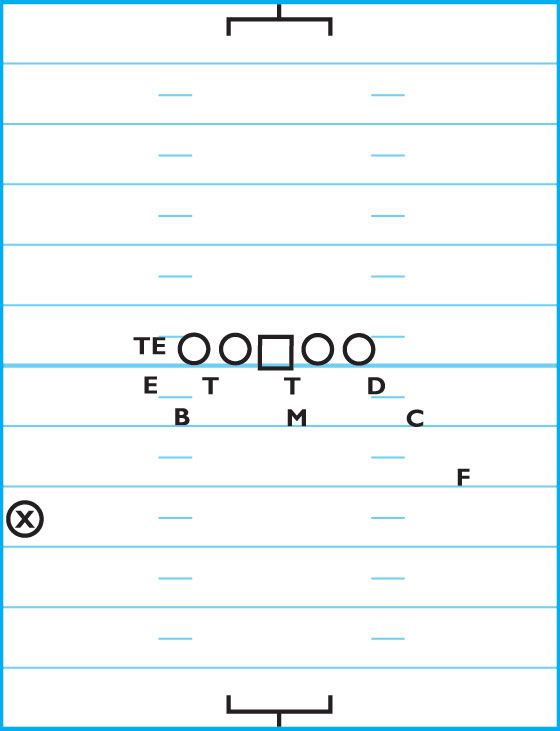
DIAGRAM 5: Level 3: Conventional SS — Man/Robber.
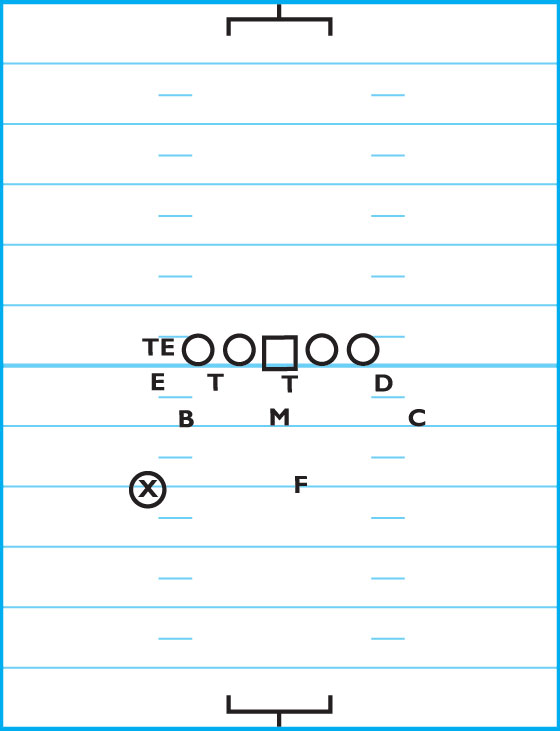
DIAGRAM 6: Level 2: 4-4 Appearance.
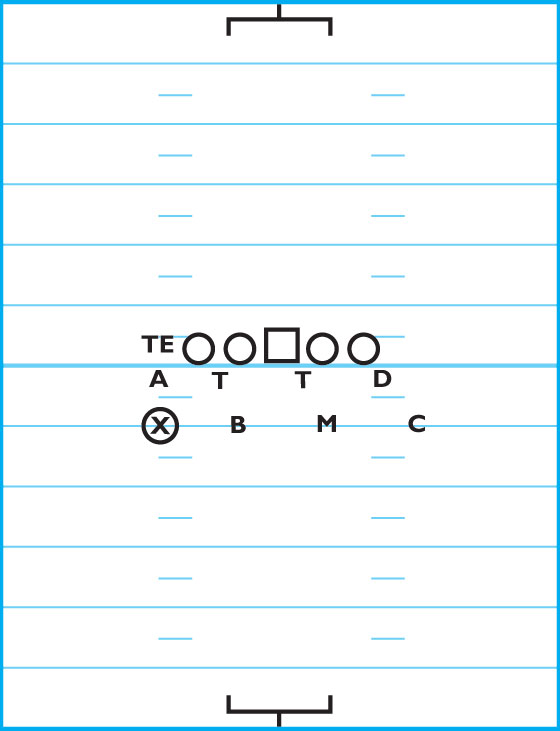
DIAGRAM 7: Level 1: 46 Concept.
“Spread” Concept
The XPress consists of several components structured in a strict teaching/learning sequence. The second component is the 4-2-5 formation, representing the “spread” concept. The M position is replaced by Y, a second SS. Although the second SS is designated by Y, in theory it represents a double-X concept (double SS).
The “spread” 4-2-5 is taught in front of a 2 by 2/10 formation. The defensive alignment gives the perception of a 6-man box and 5 DB (nickel) formation. Both are wrong. The XPress 4-2-5 isn’t intended to be exclusively a 6-man box or a nickel formation. Instead, the intention is to become a post-snap 6-, 7- or 8-man box through post-snap responsibility and response.
DIAGRAM 8: Spread 4-2-5.
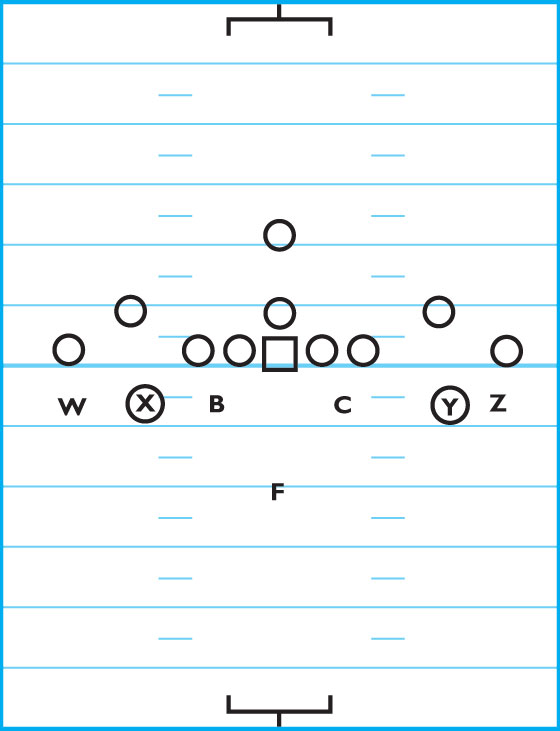
X and Y are in close proximity to the box, creating post-snap flexibility that allows us to defend the entire field.
The XY alignment has 6 benefits:
Close proximity to the box. Rapid post-snap response will bring XY into the box providing the same run defense as pre-snap in the box alignment.
Improved perimeter defense. The popularity of stretch/outside zone plays creates the demand for both primary and secondary angles leading to edge support. The XY spread alignment facilitates wide support.
Same pass coverages. No coverages have to be added or deleted. The same coverages used in the base concept apply in the spread concept.
Expanded blitz package.
Simple transitions. It’s easy to switch from the base concept with on-field personnel or separate personnel.
Merge with the base to create a third concept, using a 2-strong safety (XY) 4-level mobility. See examples in Diagrams 9 to 12.
DIAGRAM 9:
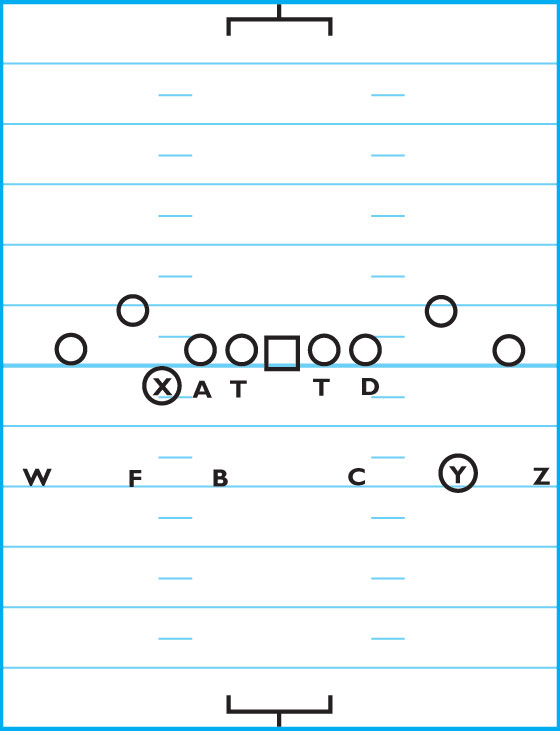
DIAGRAM 10:
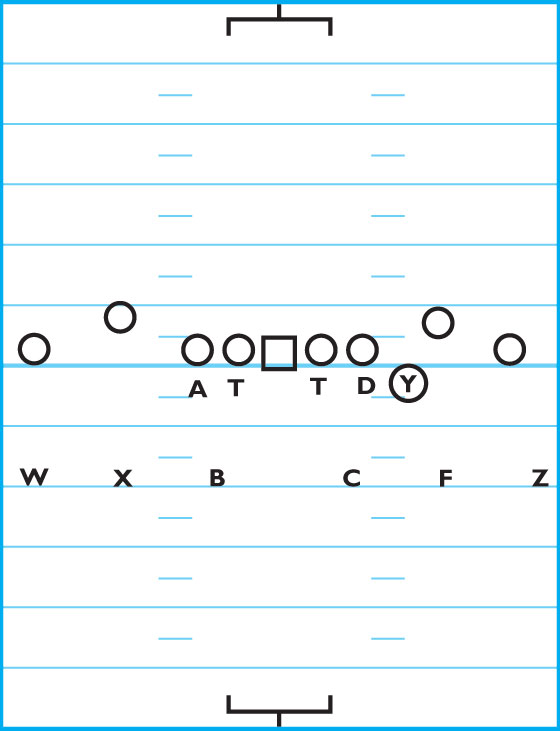
DIAGRAM 11:
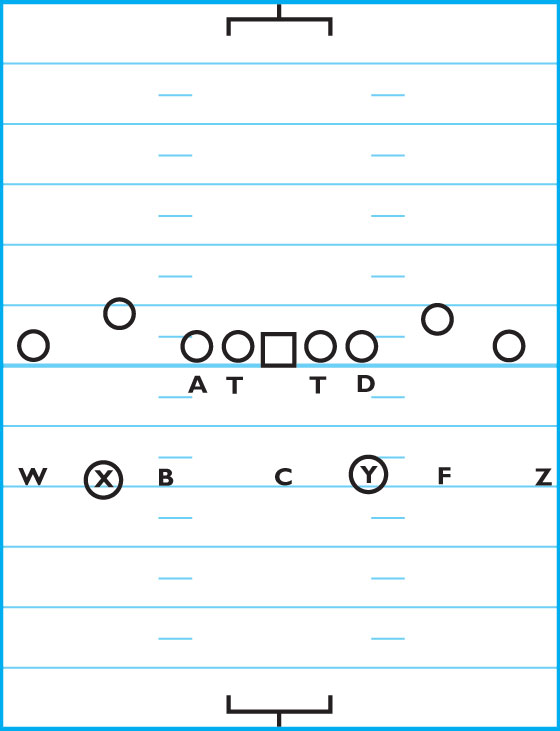
DIAGRAM 12:
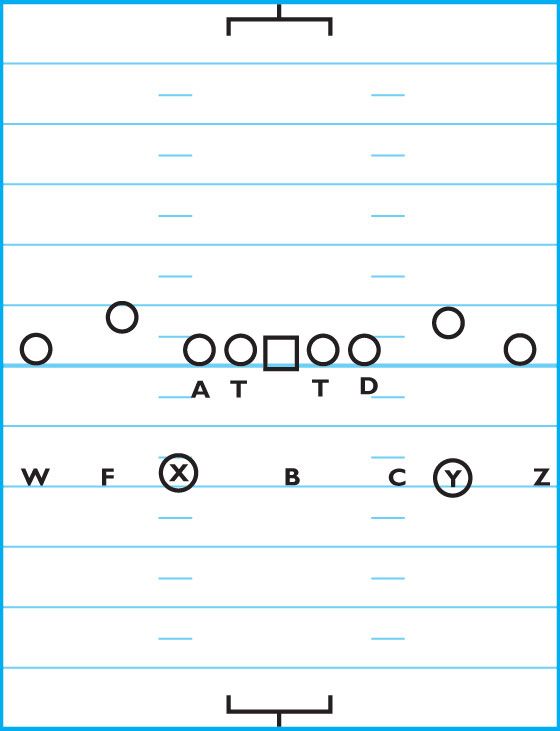
The “base” to “spread” conversion achieves 3 objectives:
1. Confuse the offense, not ourselves.
2. Pressure the offense, not ourselves
3. Retain an 8-man box through pre-snap alignment and post-snap response from close proximity to the box.
Pressure Points: The entire XPress blitz system is predicated on a language that aims for three pressure points, forming balanced or overloaded pressure.
A pressure point refers to one of 3 midline rush targets. The three pressure points are a 3-step drop (aim at 3 yards), a 5-step drop (aim at 5 yards) and a 7-step drop (aim at 12 yards and adjust).
DIAGRAM 13: All three points are aligned on the midline.
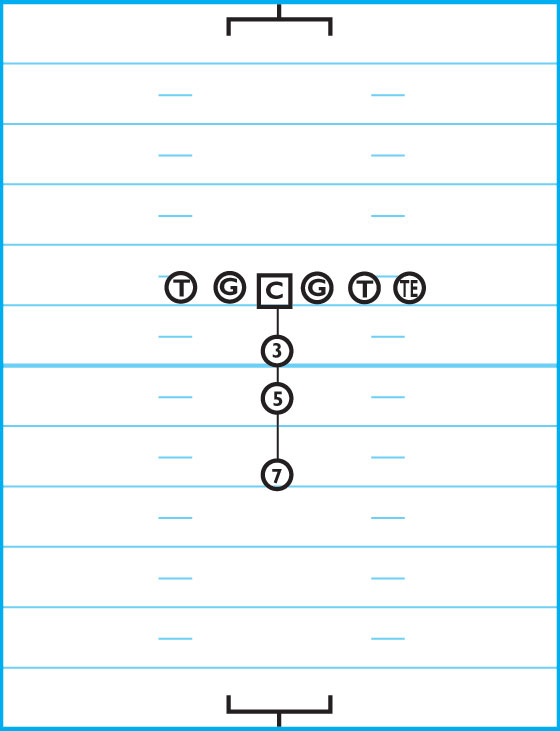
These three pressure points do not exclusively defend the pass. They provide maximum run support. The system communicates a blitzer and his path the same way that a running play is called on offense — blitzer and hole.
Our blitz language creates a limitless blitz system without the need for a conventional playbook to memorize. It serves the dual purpose of defining the run by equally-spaced gap cancellation while maximizing QB pressure through equally-spaced rush lanes. Examples in diagrams (14 to 16).