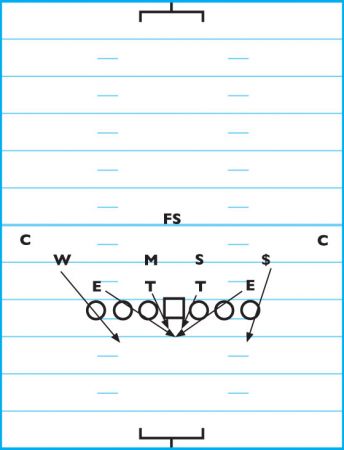
OUR TEAM’S BASE DEFENSE is predicated on the base 44 front. We utilize this front for several reasons.
1. It’s better suited to the players at our school. We generally have smaller, quicker linemen, and our staff believes that it’s more adaptable to their athletic ability.
2. We can run our shading fronts and multiple-blitz packages much more easily out of this formation.
3. It allows us to vary our secondary coverages without giving the offense any pre-snap read.
Our entire defensive philosophy is based on one concept — attack. Usually, we’re limited in the number of players out for football and their size. Recently, we had 25 freshmen, 30 junior varsity and 33 varsity players. Only 6 out of our 22 starters weighed more than 200 pounds. As a result, it’s virtually impossible for us to line up and play straight-up, man-on-man against anyone and expect to have a chance.
Plus, we feel it motivates our players when they know that they have limited responsibilities and can just fly to the ball.
Defensive Priorities
As a defensive staff, we put a priority on the following key defensive areas.
- Tackling. We give our defensive players a daily dose of individual circuit tackling and stress getting 11 players to the ball on every play.
- Pursuit. We place heavy emphasis on taking the proper angles and making “special-delivery” hits on ball carriers.
- Force Turnovers. We work with our players on creating turnovers and have them perform situational take-away circuit drills, with emphasis on making plays.
Simple, Effective Attack
We keep our defense as simple as possible and only make adjustments based on our opponents’ tendencies and formations. At the same time, our goal is to make the offense adjust to us — not vice versa. Therefore, we aim for our players to master what they know and work to have them get better each day through repetition.
This philosophy has helped our defensive players become more consistent at what they do and has eliminated slow thought processes and reaction times on the field. Defensive players must immediately react and should never hesitate to make decisions as a play unfolds.
Wildcat Attack Base Fronts
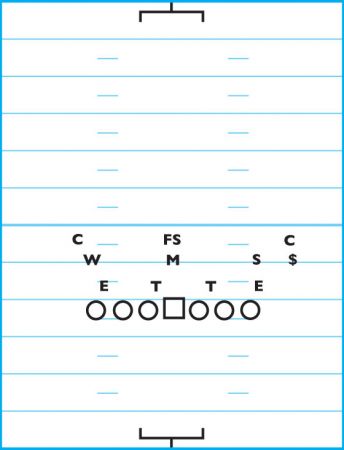
The construction of our 44 base defense is sound in terminology and can be easily applied to different fronts such as the 44, 45, 54, and 43 without losing any blitzes or secondary coverages.
DIAGRAM 1: 44 Cover 3.
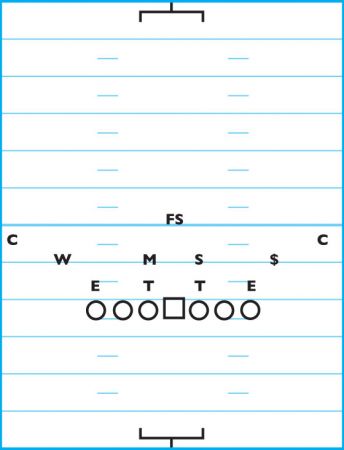
DIAGRAM 2: 52 Cover 3.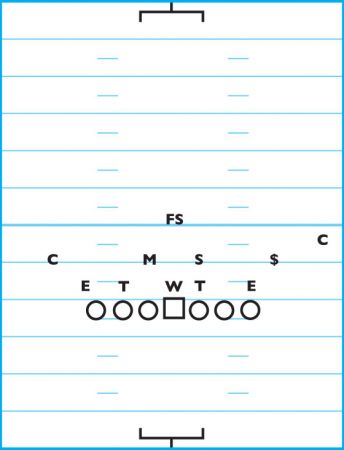
DIAGRAM 3: 45 Cover 2.
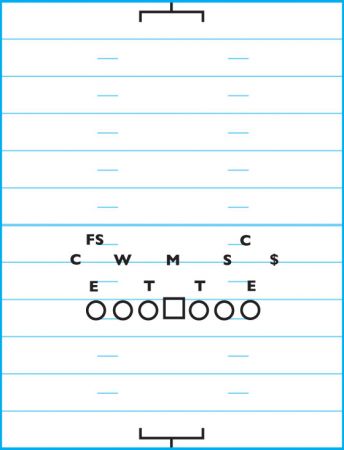
DIAGRAM 4: 43 Cover 3.
Wildcat 44 Blitz Package
Listed below are the favorite blitzes that we utilize not only in our 44, but other fronts as well.
DIAGRAM 5: 44 Slant Strong, Weak (Cover 3). The defensive linemen should cross-face the offensive line 1 gap.
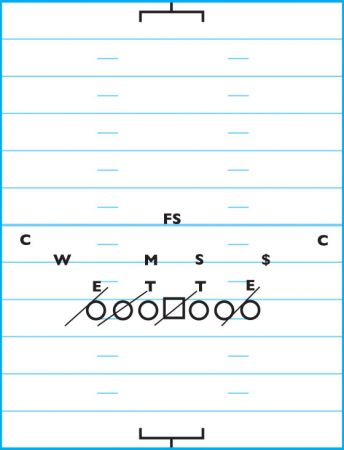
DIAGRAM 6: 44 Strong, Weak A Or B (Cover 3). The play-side defensive tackle takes the opposite gap.
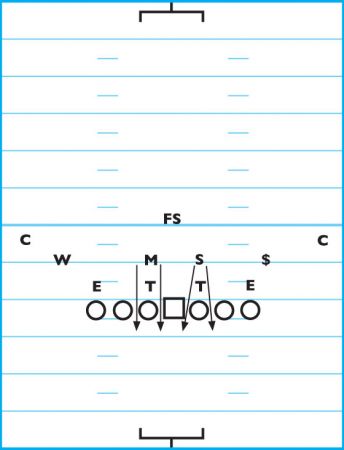
DIAGRAM 7: 44 Crash Strong, Weak (Cover 2). In this blitz, the defensive backs disguise coverage and attack.
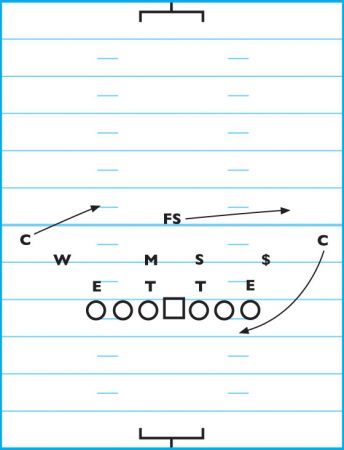
DIAGRAM 8: 44 Fire Strong, Weak A Or B (Cover 2). The play-side DT takes the opposite gap, while the DBs disguise coverage and attack.
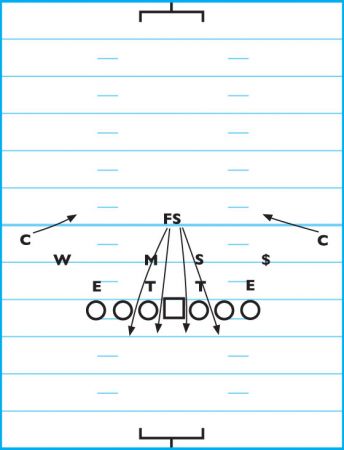
DIAGRAM 9: 44 Strong, Weak Outside (Cover 3). The Buck LB ($) & Will LB (W) must creep up and attack.
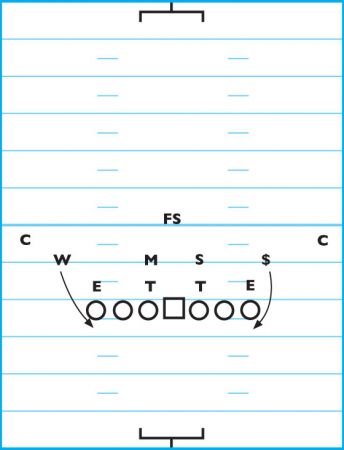
DIAGRAM 10: 44 Loop Strong, Weak C (Cover 3). The Sam LB (S) and middle LB (M) execute an on-cadence attack.
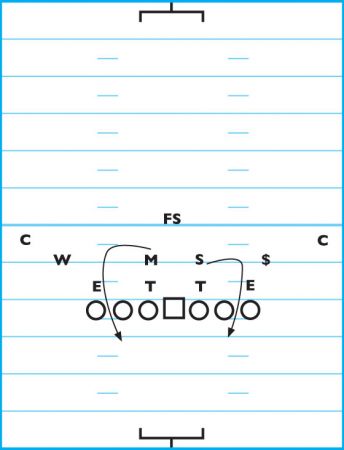
DIAGRAM 11: 44 Lucky-Ringo (Cover 2). This blitz could also run L-R (Cover 2). The DBs disguise coverage into Cover 2.
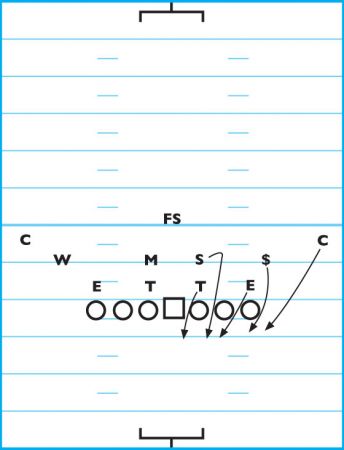
DIAGRAM 12: 44 Hammer Strong, Weak (Cover 2).
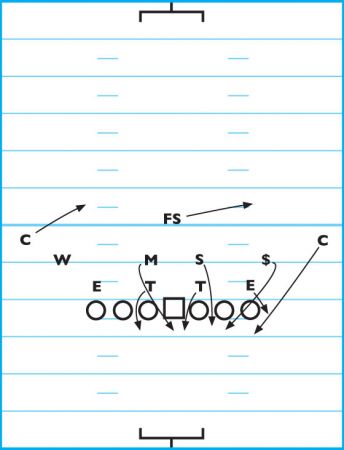
DIAGRAM 13: 44 Robber (Cover 2). The free safety eyeballs and shadows either a player or key.
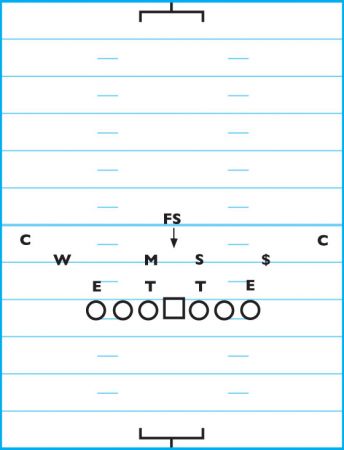
DIAGRAM 14: 44 Pressure (Cover 3). For this blitz, tell your players to stay on their path and hit the opponent. The DT aims toward the butt of the quarterback, the defensive end aims toward the hand of the fullback and the Buck ($) and Will LBs aim at the outside arm of the nearest back to their side.
You can also go either strong or weak on this blitz.