OK, LET’S START this off right and get some people heated up right away. That means you offensive guys, go ahead and blast me and tell me what will not work.
The basis of the wing-T is misdirection and the goal of the offense is to try to get you outnumbered on the snap. Teams will do everything — they will pull both guards, double the defensive end, fake a dive and the QB will boot and set you up for the waggle — everything they do is set up to outnumber you at the point of attack.
Common plays out of the wing-T include the dive, trap, buck sweep, waggle pass, and belly.
There are two ways to play defensive football. You can let the offense dictate what you are going to do or you can dictate what the offense is able to do.
The “Wide 7” defense is just that type of defense. Wide-7 puts pressure where the Wing T does not want it. The defense neutralizes the guards where they are not successful in getting outside.
It also applies pressure on the outside so the QB will be getting hit every time he fakes the waggle. Since he is faking he has the ball — he is technically a “live” player. The reason I mention this now is that I know there will be someone out there saying I am teaching “cheap shots” by telling the Stingers to hit the QB.
This is absolutely false. Those that know me will tell you I live by sportsmanship. Intensity and a hard-nosed style of play —yes! Cheap Shots — no way!
Applying pressure on the outside will not allow the QB to set up on the waggle and it will beat the guards’ block if they’re able to get outside. Think about it — the wing doubles down, the strong OG kicks out and quick OG runs up and seals. What happens if the defensive guy is in the backfield behind the guard? This doesn’t give the play time to develop and it is the defense dictating to the offense.
By angling the DTs at a 45-degree angle and having them coming off the ball low and hard, many things happen. Add to this equation a NT in the A-gap to the tight-end side who is driving into the gap on the snap, making a double-team necessary or turning a center into an All-Conference player.
By using the angles, if the play is coming at the DT, he will collide with the OG before the OG can get outside. This makes a big pile! The backside OT will now be in the back pocket of the No. 2 OG. This also puts the DT right in the way of the dive play or running down the LOS to stop the sweep.
With the dive, trap, buck sweep and waggle pass all gone, it leaves you the belly play to worry about. The stingers have pitch responsibility on option, so that means the QB will have to make some big plays.
DIAGRAM 1: Wide-7 Vs. Wing-T.
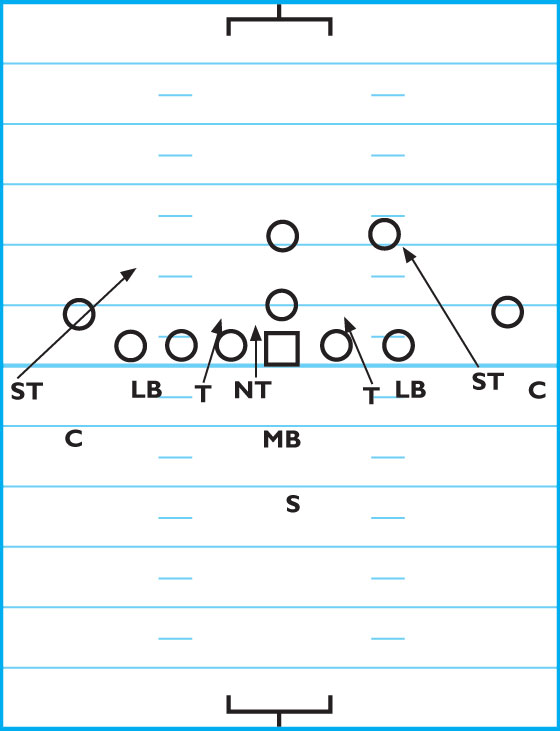
Note that the stingers are aligned 5 to 7 yards from the last man on the LOS.Their aiming point is the near hip of the closest running back. His objective is to explode straight through and attack the outside jersey number of the RB by ripping through the number with his outside arm.
If the Stinger sees a wing to his side, he is to attack through the hip (knowing that the wing will disappear down. This means he is looking for the next back which will be the ball carrier on the sweep or the pitch on the option.
The LBs are in a man-to-man technique. they must first deny the inside release (TE). By staying inside (if the TE releases for the waggle), it is a easy read and the LB will be in good position to run with him. If there’s no TE, the LB plays the back in the backfield. The Mike LB plays the fullback.
DIAGRAM 2: Wide-7 Vs. Wing-T (Double TE).
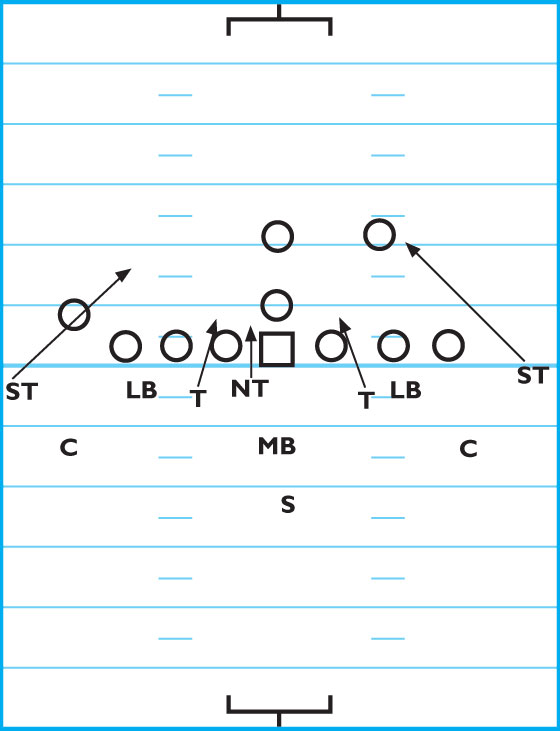
DIAGRAM 3: Wide-7 Vs. Wing-T (With Up Back).
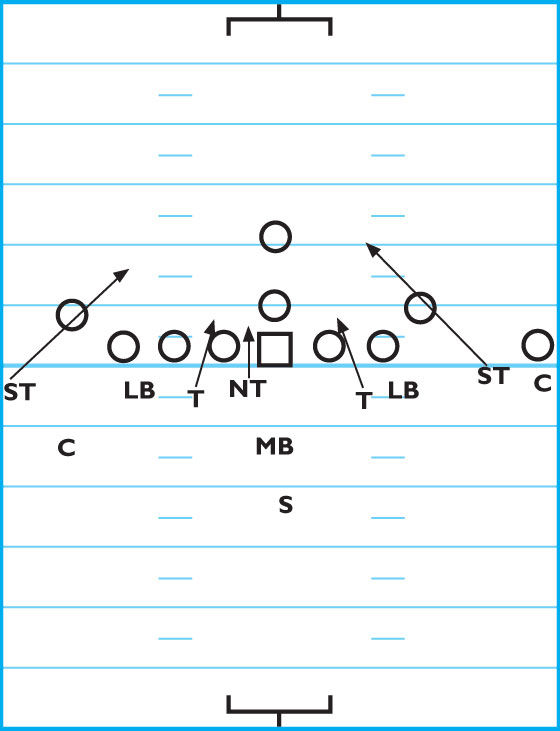
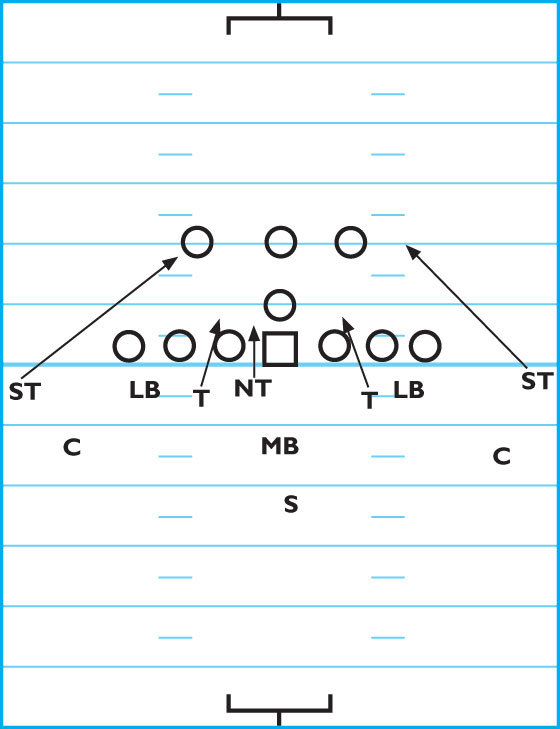
DIAGRAM 4: Wide-7 Vs. Wing-T (Full House).
______________________________