THE ODD STACK is the newest defensive craze flying through the high school ranks. Our team incorporated it at the varsity level over 2 years ago and have enjoyed great success.
Our team generally possesses great speed, but we’re also generally undersized, so we made the switch from a 4-3 defense to a 3-3 defensive front.
Coming up as a coach, I was always taught to have as many athletes on the field at one time as possible and replacing a defensive lineman with a linebacker has become a good switch for us that has paid big-time dividends. This past season, our defense gave up 10.2 ppg, had a +26 turnover ratio, recorded 18 sacks and had 41 tackles for a loss.
The main key for this defensive success has been the discipline of our LBs and the ability that they’ve shown to get to the ball in a hurry.
Technically A 3-5-3 Scheme
Although we call our defense a 3-3, we actually incorporate 5 LBs and 3 defensive backs.
Our Mike LB plays in the middle with his heels at 4 1¼2 yards stacked behind the nose tackle. Our Rob LB (right) and Lou LB (left) also have their heels at 4 1¼2 yards and stack themselves behind the defensive tackle on their respective side.
Some coaches prefer to flop these two backers according to strength and call them Sam and Will LBs. But unless there’s a drastic athletic difference between the two players, I suggest you leave them on the right and left side for simplicity purposes.
Our last two LBs are the Bandit and Strong Safety. These two are the outside LBs and they align 3-yards off the last man on the line with their heels at 3 yards. The Strong Safety should be the best cover LB, so we’ll flop him and the Bandit with the formation according to our scouting report.
Gap-Control Defense
DIAGRAM 1: 3-3 Odd Stack Initial Alignment.
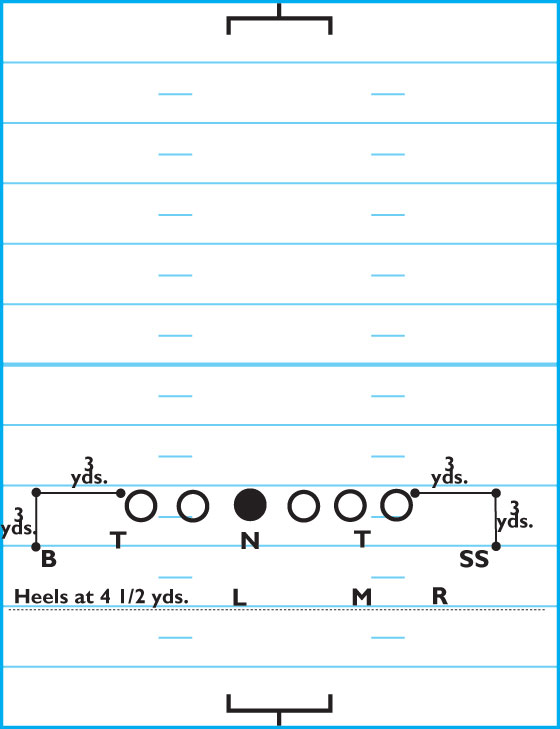
The 3-3 is basically a gap-control defense and, like any gap-control defense, reading keys will make or break you. Repetitions during individual defensive practice periods are extremely important.
I won’t lie, key-reading drills can be tedious and boring to the players but they are critically important and the things that the LBs have to look for on the snap of the ball have to become second nature and reflexive to them.
Mike LB Reads
The Mike LB should be your toughest LB. He is the player that must explode through tackles and be a player who loves to get physical.
On each snap, the Mike LB reads the “fullback-to-guard triangle.” When the FB goes right, the Mike LB’s eyes must immediately lock on the right guard.
DIAGRAM 2: Mike LB Reads (A). If the guard is firing upfield, the Mike LB rips through the A-gap to the B-gap.
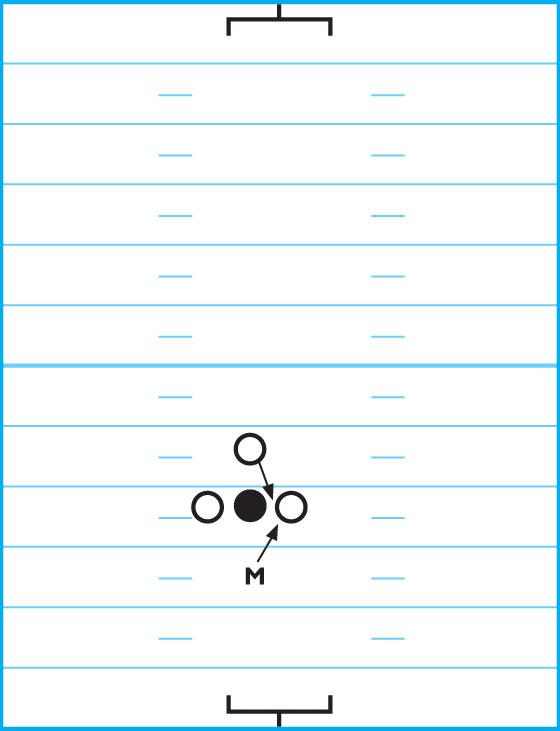
DIAGRAM 3: Mike LB Reads (B). If the guard is popped up to pass block, the Mike LB drops into his pass-coverage responsibility, which varies depending on the cover call.
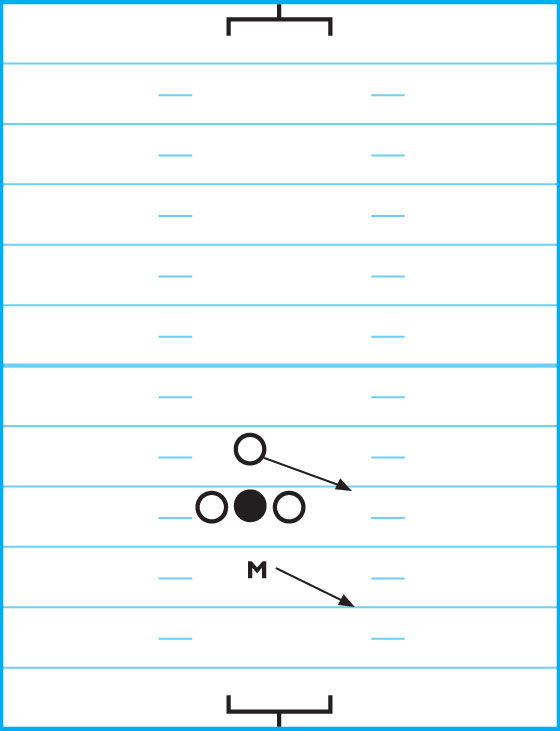
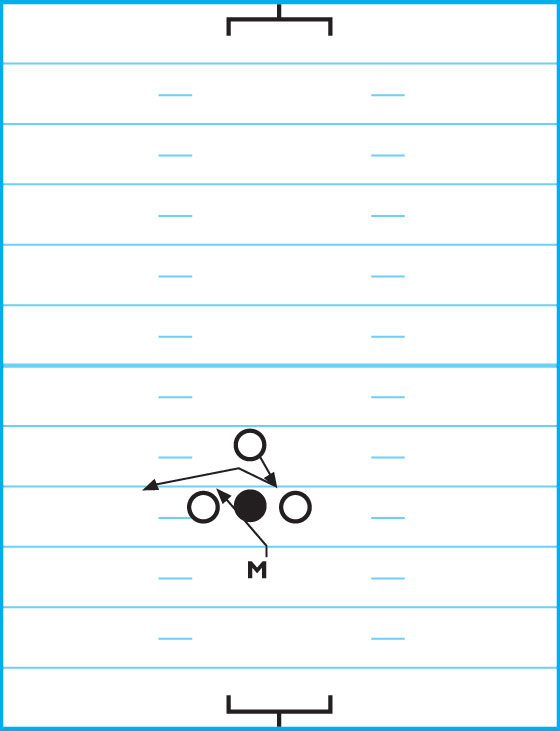
DIAGRAM 4: Mike LB Reads (C). The Mike LB’s toughest responsibility is when the guard is pulling back in the opposite direction. Since his eyes originally went opposite the play, chances are the backside guard has the angle to seal him from the play. The Mike has to feel the flow and get back over the top of the block to the opposite A-gap.
Rob And Lou
LB Reads
The Rob and Lou LBs have fairly simple reads, but these defenders must be versatile enough to be strong in the power hole and fast enough to string out any runs to the corners.
Their read is the “tailback-to-guard-to-quarterback triangle.” If there’s no TB, the near back will be the top of the triangle.
At the snap of the ball, both the Rob and Lou LBs take a shuffle read-step and check the initial backfield flow. If the preliminary flow is away from them, they must set their feet and check the opposite offensive lineman for any counter action. To attack the counter, the LB must close hard in the B-gap and force either a cutback or a bump to the outside.
DIAGRAM 5: Rob LB, Lou LB Reads (A).
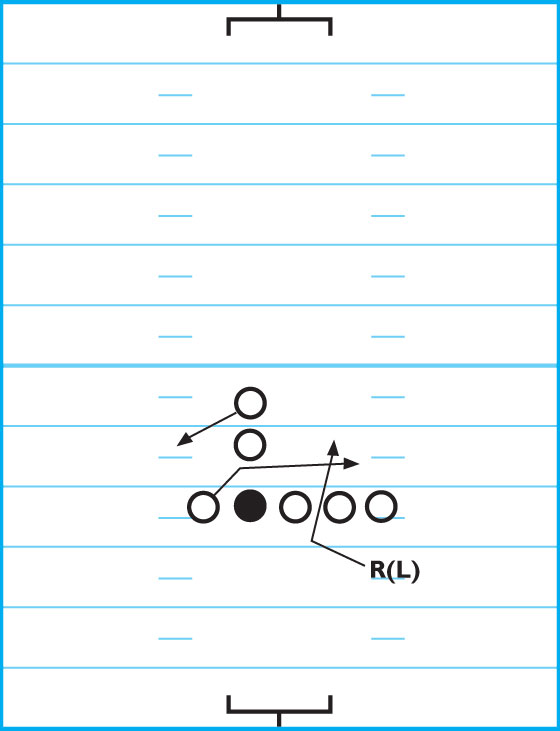
DIAGRAM 6: Rob LB, Lou LB Reads (B).
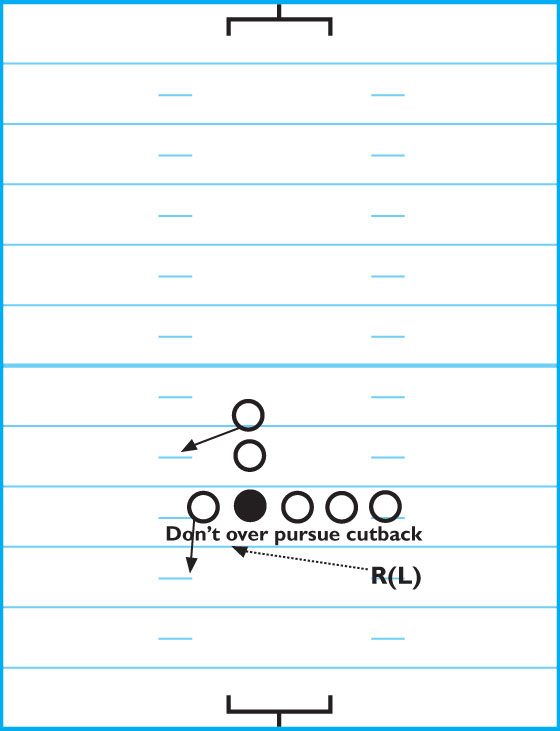
DIAGRAM 7: Rob LB, Lou LB Reads (C). When no counter action is felt, the Rob and Lou LBs become collapse players and take away any cutback lanes. Running back flow toward the Rob or Lou can be broken down into four different angles:
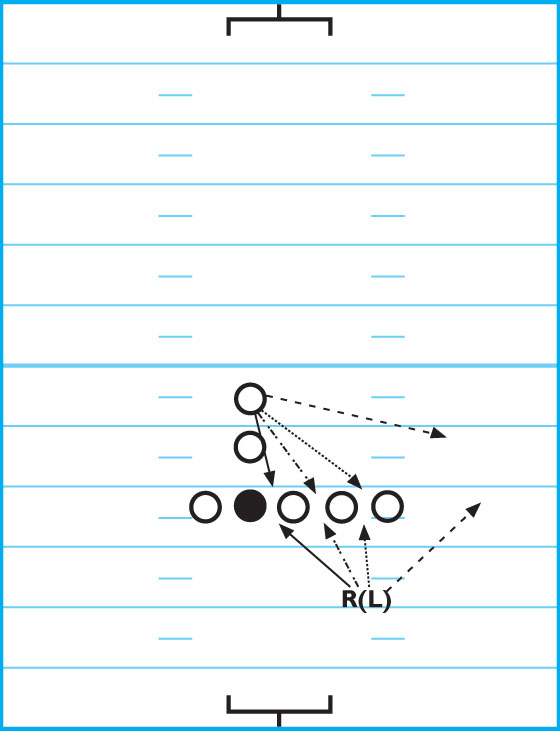
1. A-gap or Blast
2. B-gap or Iso
3. C-gap or Power
4. D-gap or Sweep
After the backfield’s initial movement toward these gaps, the Rob or Lou LB will immediately lock his eyes on the nearest offensive lineman. This read will tell him whether or not the play will be either a run or pass
— upon which he’ll either engage the run block and continue toward the gap, or back off into coverage, if he reads that the offensive lineman is in a pass-blocking set-up.
Bandit, Strong Safety Reads
The Bandit and Strong Safety, on paper, have a 3-yard by 3-yard alignment. However, we like to lurk these two defenders around during the cadence to disguise their responsibility. Whatever the location of the Bandit and Strong Safety, both players must have their inside foot up on the snap — in case they need to pop their hips open and quickly get to the flats in coverage.
The Bandit and Strong Safety read “the last man on the line of scrimmage to the quarterback.” If the last man on the line is a tight end, the LB reads past him and to the nearest OT.
DIAGRAM 8: Bandit LB, Strong Safety Reads (A).
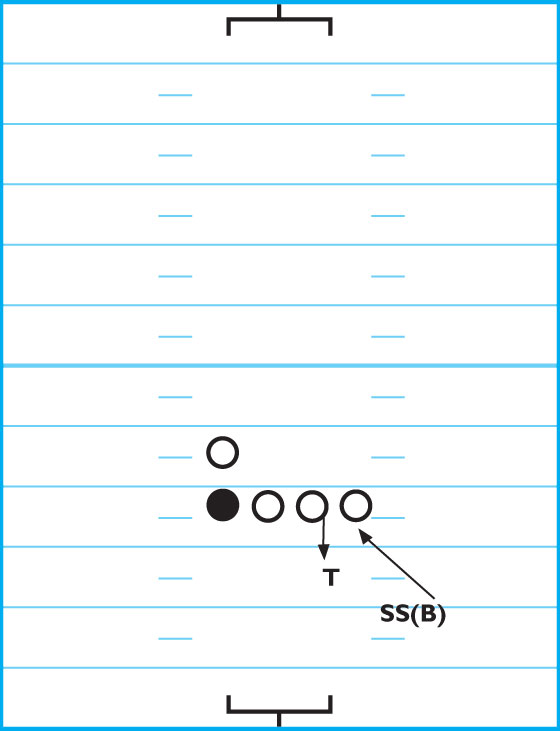
DIAGRAM 9: Bandit LB, Strong Safety Reads (B).
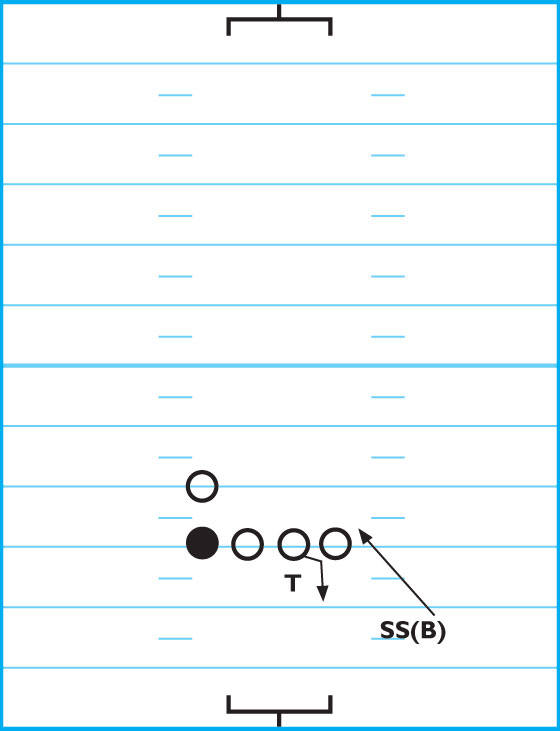
DIAGRAM 10: Bandit LB, Strong Safety Reads (C).
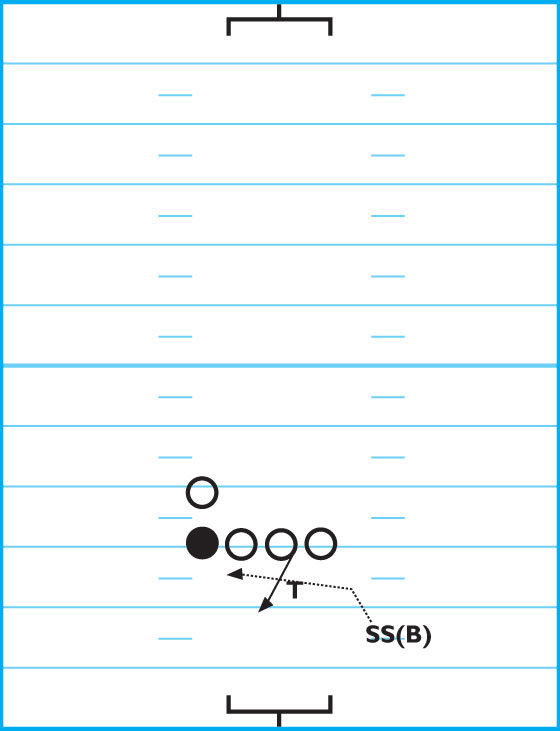
When their key blocks down, the LBs must close and engage any lead blocker with their outside arm free.
When their key steps down but continues to cross and all the flow of the play is away, the Bandit or Strong
Safety must become a “collapse defender” and take away the cutback.
If the last man reach-steps toward the outside, the LB closes hard on the D-gap and engages any lead block.
If their key pops his head up and sets up to pass block, the Bandit or Strong Safety will back off into pass coverage.
Staying Disciplined
The most difficult phase of integrating the 3-3 odd stack into your defensive scheme is teaching the aforementioned LB keys.
Many high school LBs love to look into the backfield but are not disciplined enough to pay attention to the linemen. Spending excessive time with individual instruction during both off-season and in-season practices is essential to running a successful 3-3 odd-stack defensive scheme.
Once the reads are established and the players are comfortable with them, there is no limit to the different fronts and blitz packages that can be employed from this front.
Although some coaches feel this defense is simply a craze, those of us who use the 3-3 odd stack defense and have had success with it, know that it’s here to stay.