AFTER YOU’VE PREPARED your defensive playbook during the off season, it’s time to introduce new defensive schemes to your players in pre-season and game-day preparation.
Total Blitz Package
It’s very important and helpful to your success to design three distinct blitz packages. Techniques and elements might be the same or at least similar, but there should be definite differences in the three packages:
1. Run Blitz: Featuring quick penetration by one or more defensive players.
2. Pass Blitz: Where the individual blitz is designed to defeat a particular pass protection scheme through the use of stunts by two or more players.
3. Zone Blitz: Create confusion for the offensive pass protection people and quarterback by dropping a defensive lineman in coverage.
Objectives
In designing our separate blitz packages, it was easy to pinpoint the reasons for running the blitz, when to call the blitz and defensive objectives.
- Run blitzes have the basic objective of disrupting the play at its inception and, when possible, redirecting the running back away from the desired running lane.
- The objective of the pass blitz is to put pressure on the passer and to defeat the opponent’s pass protection scheme, whether it’s a man, zone or slide protection.
- Zone blitzes are designed to free up a rusher by causing offensive pass blockers to commit to a rusher who was really falling off into coverage.
Blending The Calls
In all blitzes, have your front seven learn to work as small units within the defense. While your total defense should not change, the manner in which one, two or more of your front defenders execute their phase of the defense should change.
By designing blitzes in this fashion, you’ll be able to teach base team defense and then only have an individual unit learn the adjustments. Keep your calls as simple and consistent as possible.
Have your outside linebackers and defensive ends work and practice as one unit. In a 34 defense, your inside backers should work with the DE on their side and both should work with the nose to form additional units in the defense.
Here are examples of the different blitz design defenses.
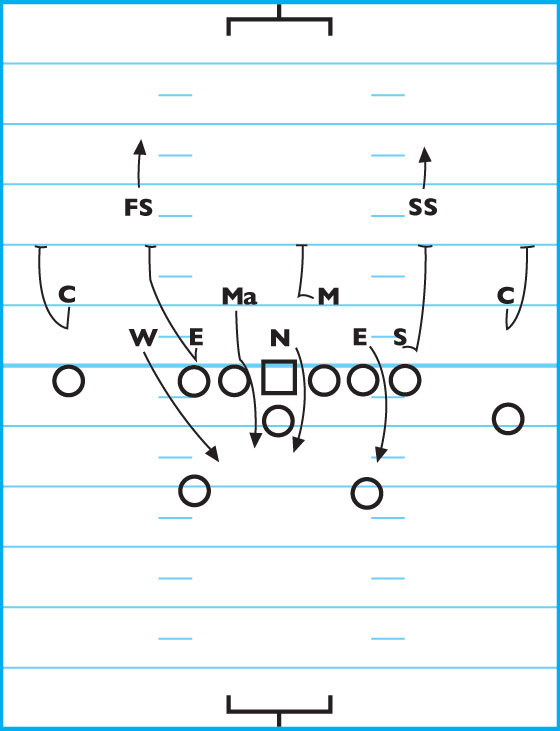
DIAGRAM 1, 2: Run Blitzes. 34 Will Cover 2 and 34 Will Pinch Cover 2 which would be run blitzes.
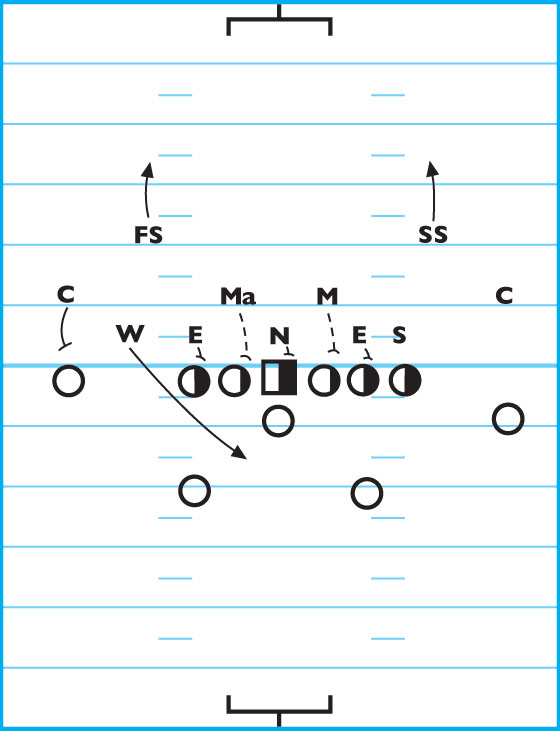
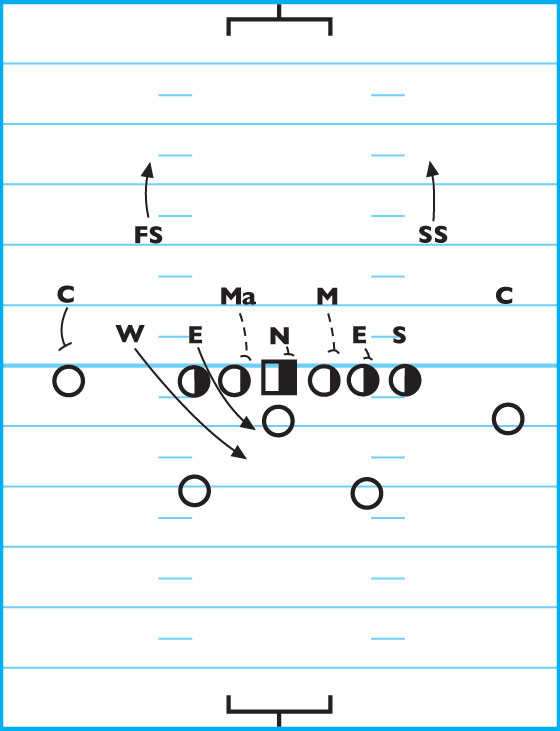
DIAGRAM 3, 4: Pass Blitzes. 34 Will X-it Cover 2 and 34 Will X-it Change Cover 2 would be pass blitzes.
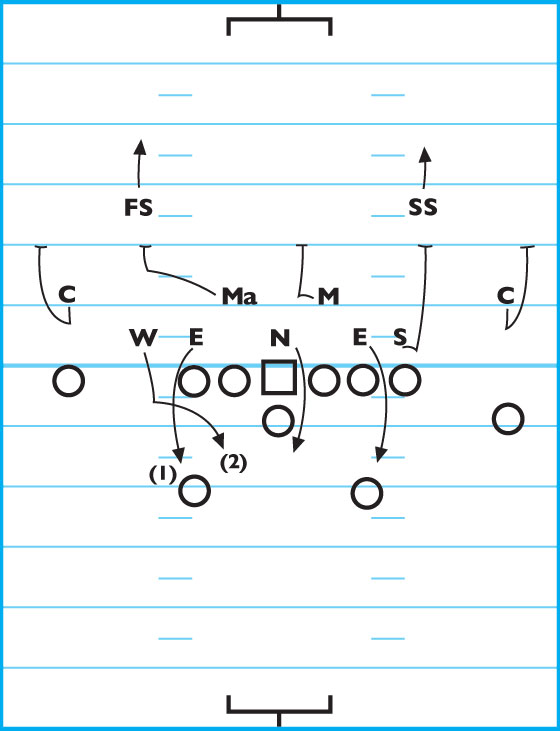
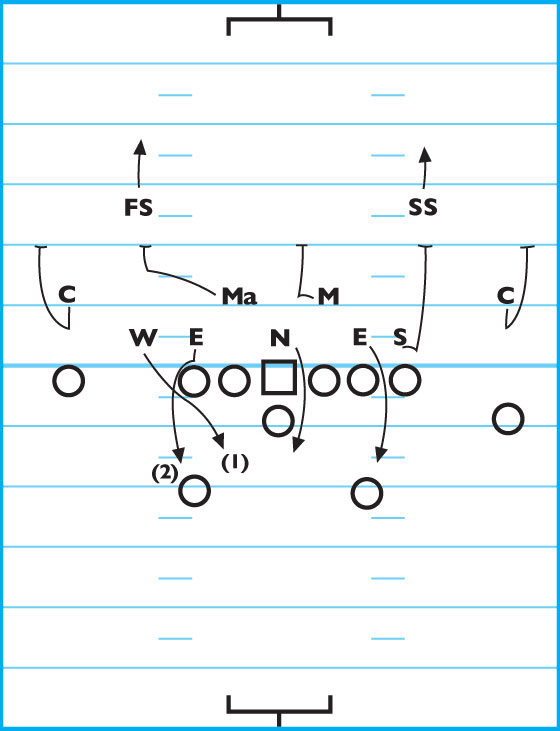
DIAGRAM 5: Zone Blitzes. 34 Will End Drop Cover 2 would be a zone blitz.
Mixing It Up
Here are attacks to the offense where 9 of 11 defensive players are doing the exact same thing. Only the two players most involved in the blitz learn the variations.
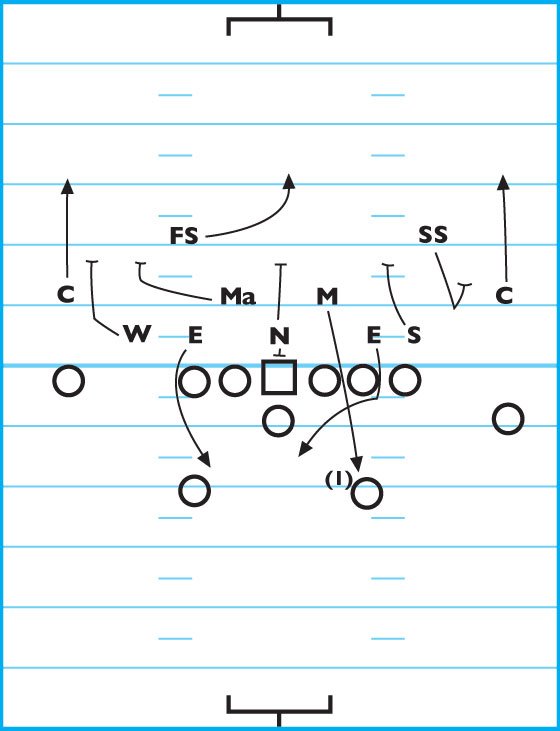
On the inside, try to keep the same type of thinking and design. From a 34 defense you could run the following:
DIAGRAM 6: Run Blitz. 34 Mike Dig Cover 3 — a run blitz. (With flow Mike attacked either A or B Gap).
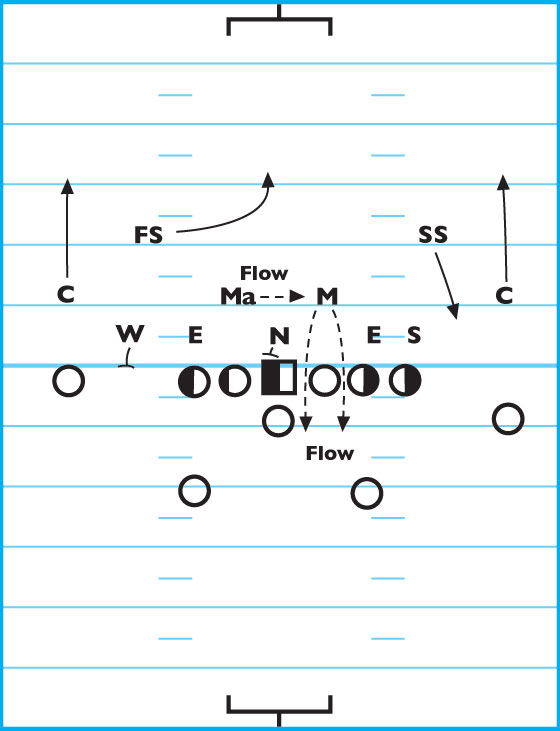
DIAGRAM 7, 8: Pass Blitzes. 34 Mike Spear and Mike Spear Change Cover 3 — both pass blitzes.
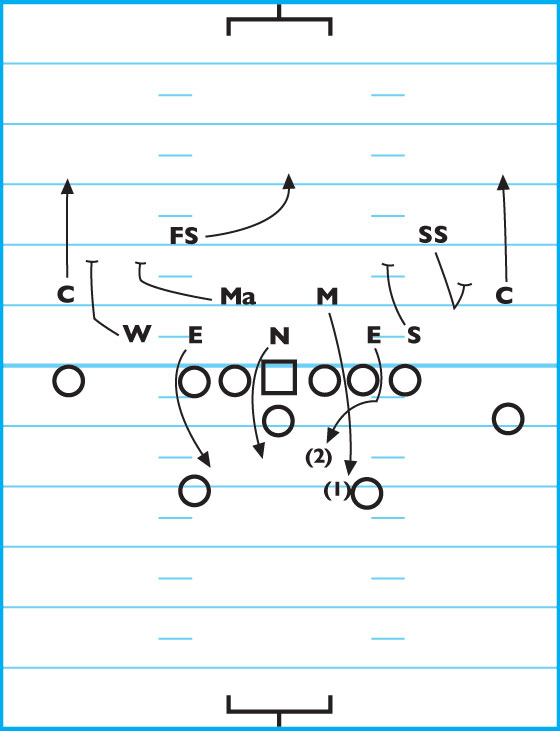
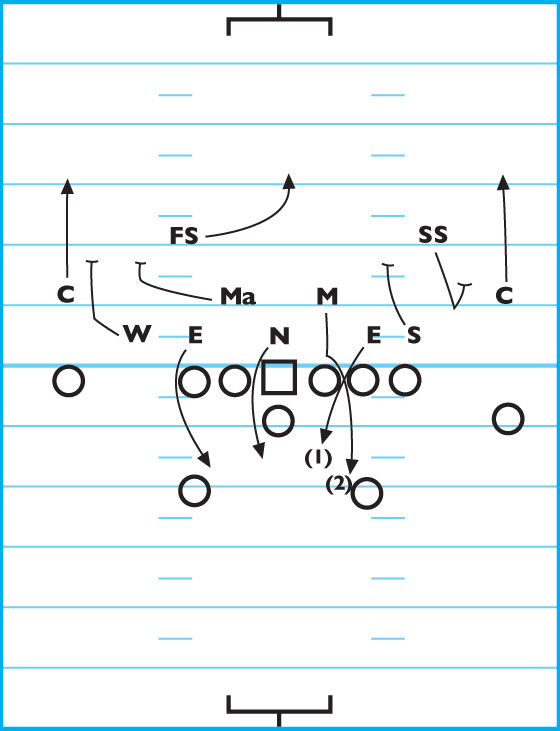
DIAGRAM 9: Zone Blitz. 34 Mike Spear Nose Drop Cover 3 — a zone blitz.
Blitz Rules
Two rules that never change and remain constant in blitzing are:
- The second man on any blitz-stunt should never go through with the stunt if he’s attacked with a run block. This prevents any gaping holes for the RB.
- Never run line or LB stunts if you are using a DB in the blitz. This keeps your DB’s from getting killed by your own men who are pushed out of their rush lanes or are stunted too wide.