From many years of experience we found that we could combine two defenses by using the same terms and rules to run our stunt package, coverages and alignments.
By going in this direction, we had less confusion in our alignments, stunts and coverages and also had a more aggressive and hustling defense. Here is a list of the principles used:
1. A solid defense on each play with players knowing their gap and stunt responsibilities.
2. We created a close-knit group of players because they knew what each of their teammates assignments were.
3. By keeping the terminology and calls the same for both defenses, the players understood their responsibilities.
4. We coordinated the defense to put players in the best possible positions to be successful.
5. The different alignments and calls allowed each defense to be simple yet deceptive to the offense.
6. This defensive system matched our personality, philosophy, and personnel.
7. While being aggressive in our defensive make-up, it complemented our offense, which is a lot of spread with motion, shifting and options.
8. We researched each of our opponents’ offenses and broke down their tendencies to develop our defensive calls and what we needed to defend. This helped us reduce unnecessary risks, and our coaches and players became a more confident defensive squad.
9. By having the players understand the system, we played with greater effort.
10. By combining the even 4-4 and the odd 3-5, you have your opponent working on blocking assignments for two types of defensive looks.
11. The defensive system was accepted by the coaches and players, found to be easily learned and we became a more aggressive team because of the easy adjustments to the formations.
DEFENSIVE APPROACH
Our defensive system of going odd and even fit into our overall defensive philosophy. We wanted something that the players and coaches liked, that would be sound, that enabled us to make quick adjustments on the field, and would also keep us aggressive and hostile.
When breaking down our opponent, we try to get the feel for what they are setting up for each formation and play. Some teams like to run a certain side of their offensive formation while others try to use motion to set up a certain pass play or running play. By charting the formations for first down plays (1), second down plays (s), third down plays (t), and fourth down plays (P) we can see the odd and even looks according to what the opponent is going to do in that formation. Diagram 1 shows an example of a scouting report showing the offensive plays.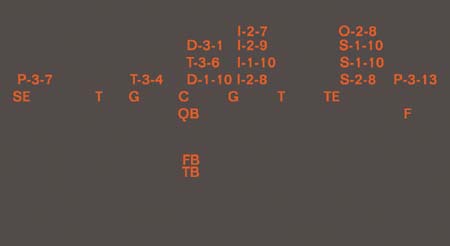
Diagram 1: Scouting Report
If you look at the scouting report, this team favors the right side with sweeps and options to the tight end or strong side of the formation and also on early downs. They also like to trap, iso or dive to the strong side on running downs. With the chart we can set both our defenses and be ready for more running than passing. Our players hear what is coming and this brings the aggressive attitude for our players to run the defense. Diagrams 2a and 2b show how we will defense this formation while we will add our stunts and slants to these defenses.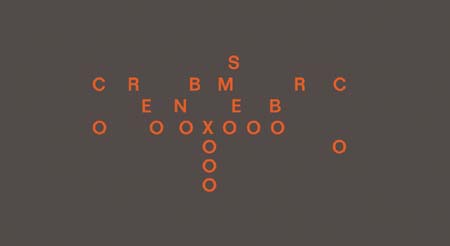
Diagram 2a: Even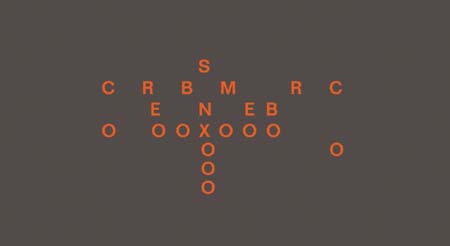
Diagram 2b: Odd
We will have an odd or even call. The tight end is always the strong side call. When we call an even front, this tells our nose to slide to a position on the weak side of the offense. This could be a down call (in the weak side gap), a stack call (which puts him head up on the weak side guard), or a regular call which is on the outside eye of the guard.
Our strong side end will slide down to the guard and follow the same calls as the nose as far as where to align. Our strong side inside linebacker will align on the tight end as close to the line of scrimmage as he can get. He plays the tight end very physical and man-to-man trying not to let him off the line or go down on a linebacker. He is keying into the backfield to read the play. Our outside backers are reaching the offensive tackles to the near back as their keys. Our corners play man rules and call out motion responsibilities. Our safety is free and will take care of all motion. Diagrams 3a and 3b show the blood stunt and the circle stunt when an even call is made.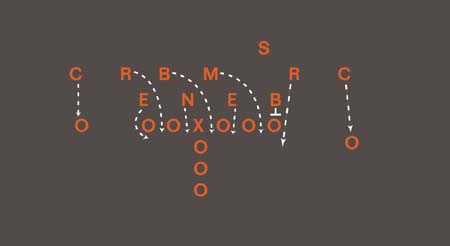
Diagram 3a: Blood Stunt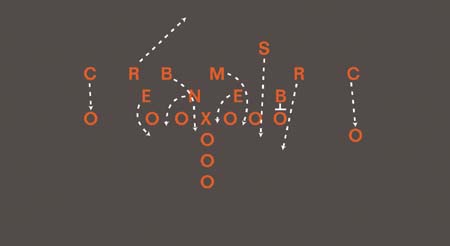
Diagram 3b: Circle Stunt
With a run, we can change to the odd front. This gives us another defense and the offense cannot be sure which one we will use in that formation. We move on the first sound the quarterback makes so the offense will have a hard time changing the play. In diagram 4a the odd alignment is shown and in diagram 4b the blood stunt and in diagram 4c the circle stunt is shown. We use the same signal in calling the stunts.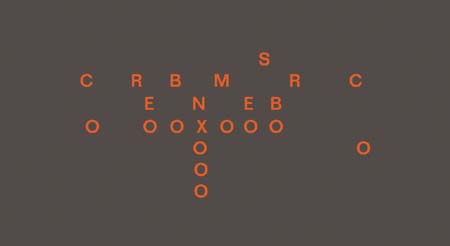
Diagram 4a: Odd Alignment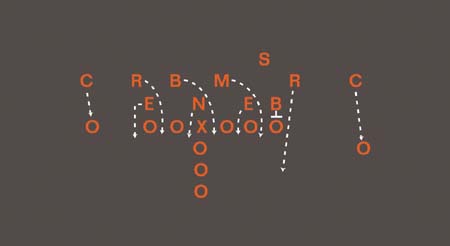
Diagram 4b: Blood Stunt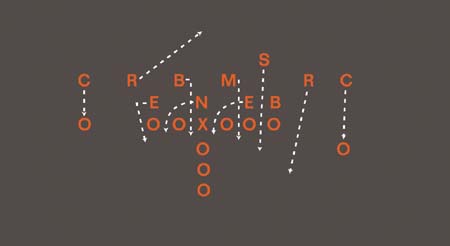
Diagram 4c: Circle Stunt
In the circle stunt, we teach our stunts to be a 6 inch step by our defensive linemen to the side. Then they dip a shoulder and go to the assigned gap. By having our noses and strong side end going toward the weak side - one gap - this allows us to meet pressure and keep blockers off our stunting linebackers.
A quick note about our run to call - you can go even and odd very easily. In diagrams 5a and 5b (even to odd) it shows how the players can go to a run on the first sound by the offense and still be running the called stunt. Diagrams 6a and 6b (odd to even) show a run with the stunt still being run that was called.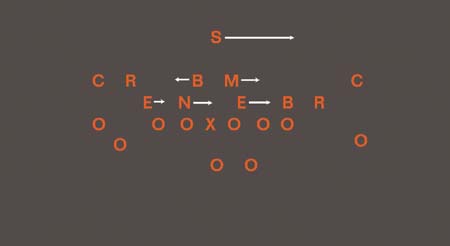
Diagram 5a: 5 Even Run to Odd Alignment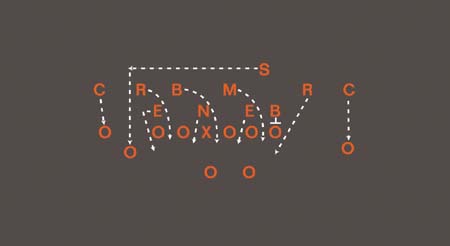
Diagram 5b: Odd Blood Stunt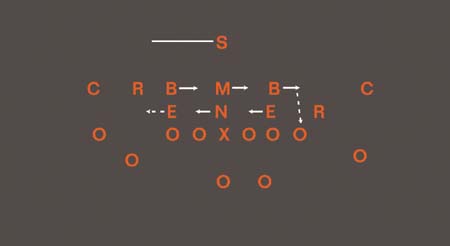
Diagram 6a: Odd Run to Even Alignment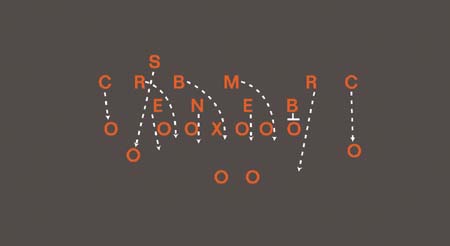
Diagram 6b: Even Blood Stunt
Other alignments you can go into after a RUN-TO has been called (Diagrams 7-7f):
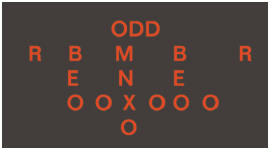
Diagram 7: ODD RUN
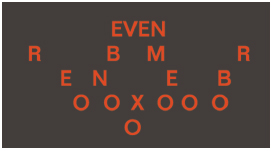
Diagram 7a: TO EVEN
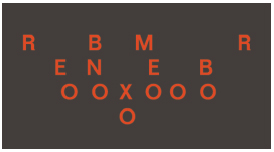
7b: STACK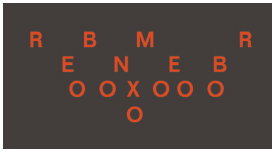
7c: DOWN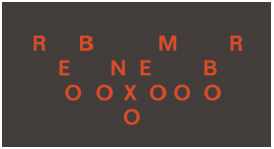
7d: REVERT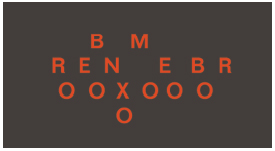
7e: SQUEEZE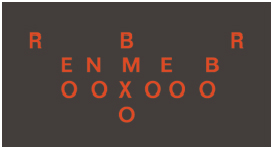
7f: ODD
These would be called by a run to a signal and then the signal is called for the alignment.
This would be the way alignments would look when we have RUN-TO going from EVEN to ODD (Diagrams 8-8f).
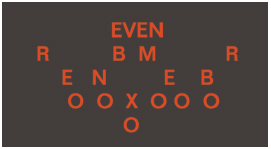
Diagram 8: EVEN RUN
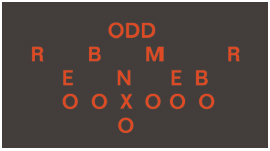
Diagram 8a: TO ODD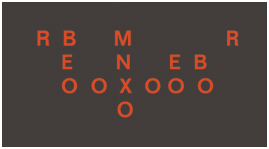
8b: STACK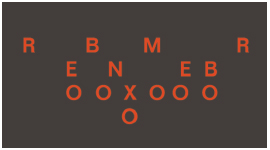
8c: DOWN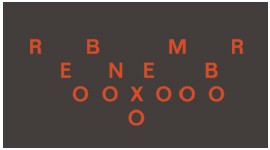
8d: REVERT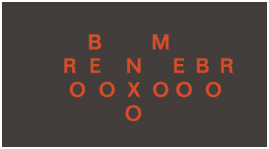
8e: SQUEEZE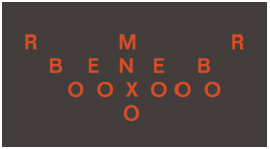
8f: ODD
After you have worked with the different alignments, you will find that you can combine some of them and use hand signals to get the players to use different alignments on each strong and weak side formations.
About the Author: Recently retired John Barnhart coached on both the high school and college level in Pennsylvania for 38 years.