THE 3-5-3 STACK DEFENSE is gaining in popularity at all levels because of its versatility and ability in giving the athletic players on defense the freedom to make plays.
Good defenses are built on speed. The ability for a defense to swarm and pursue the ball is critical.
Our team utilizes various alignments out of a 3-5-3 stack defense. By mixing up the fronts, you can present all kinds of problems for the offense. When you add a variety of stunt packages to the system, all eight players in the box become very dangerous.
There are numerous advantages for running a system that utilizes a 3-5-3 stack defense.
1. Easy To Teach & Use. This defense utilizes a number system that makes it easy to use multiple defensive fronts.
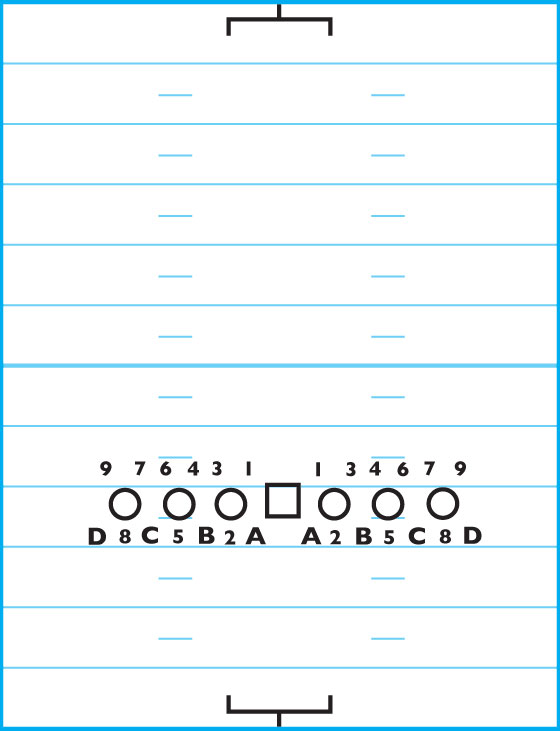
DIAGRAM 1: 3-5-3 Stack Numbering System. All the defensive fronts in the system are signaled by a three-digit number. When a new defensive front is needed, you’ll call a new three digit number, such as a “605,” to represent the defensive front.
The first number represents the position where the strong-side defensive tackle should line up in. The second number is the nose guard and the third number represents the weak-side DT.
2. Protects Linebackers. The “stack” scheme hides the LBs from the offense’s view, keeping the offensive players guessing as to which player they are supposed to block.
3. Throws An Offense Out Of Rhythm. The use of multiple fronts creates multiple problems for the offense’s blocking schemes.
4. It’s Flexible. The 3-5-3 stack can be easily adjusted to defend either third-and-short or third-and-long situations. In short-yardage situations, you can put eight men in the box and aggressively attack. In prevent situations, you can drop eight defenders into coverage.
Defensive “Pluses”
Each front in our defensive package has built-in advantages, or “defensive pluses.” In other words, the advantage is in having more defenders at the point of attack than the offense can block.
The defensive coordinator can use a variety of fronts or stunts based on down, distance, personnel and offensive tendencies to pick a scheme that best fits the situation. All the fronts are “gap assigned” so they are solid in both design and philosophy.
Multiple Fronts
The following are four fronts you can use with the 3-5-3 stack system. You can create real headaches for an offense by coupling these fronts with an endless supply of blitz possibilities.
DIAGRAM 2: “605” Stack. This front presents a problem to an offense, especially on the weak side. The NG must be a two-gap player, allowing the Mike LB more freedom to make plays.
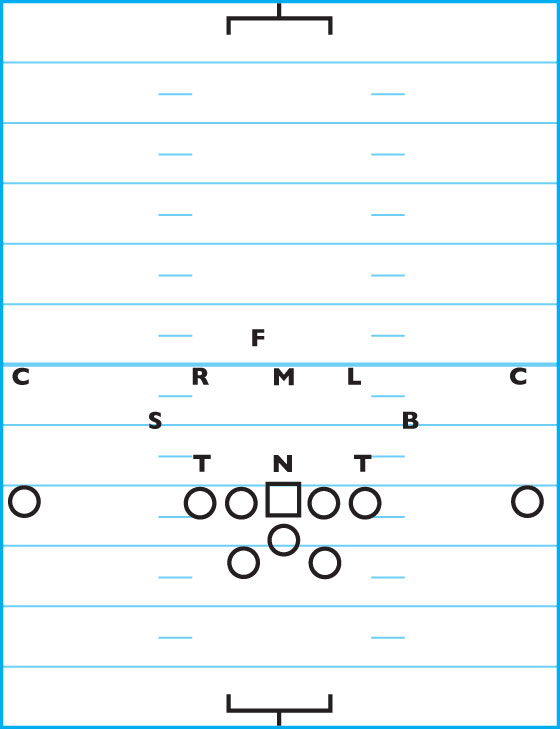
DIAGRAM 3: “303” Stack. This alignment is strong in the middle and on the tight-end side. Preferably, the NG should be a two-gap player, however, the stack can still be an effective front if the NG plays the weak-side A-gap and the Mike LB covers the strong-side A-gap.
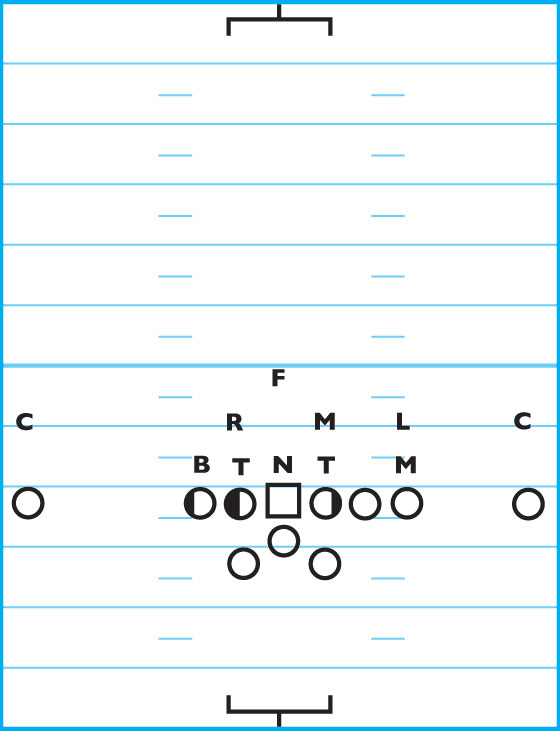
DIAGRAM 4: “822” Stack. This alignment is strong to the TE side with the over shift of the NG. You need to be careful, however, as the weak side is somewhat vulnerable. Backside flow with the Mike LB should help alleviate this concern.
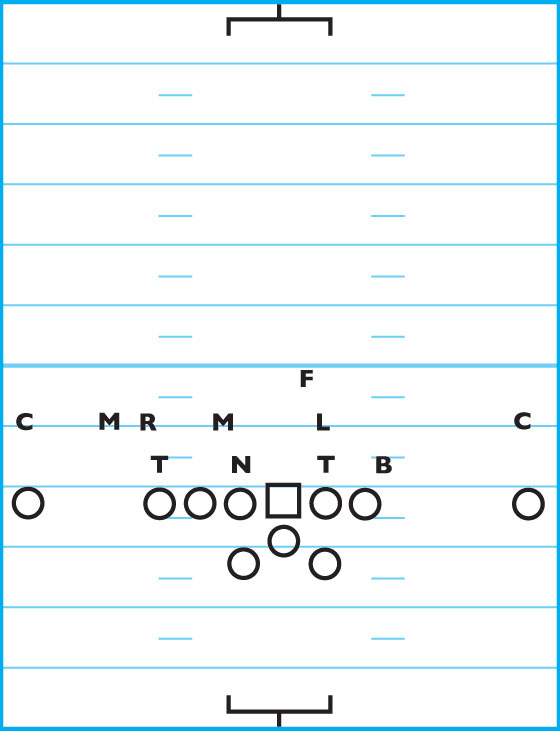
DIAGRAM 5: “505” Nose Gap. This alignment, combined with our “smoke” blitz, provides an exciting blitz opportunity from the weak side. The NG begins in the strong-side A-gap, penetrates and forces the offense to double-team him. This allows the Mike LB freedom to make a play.
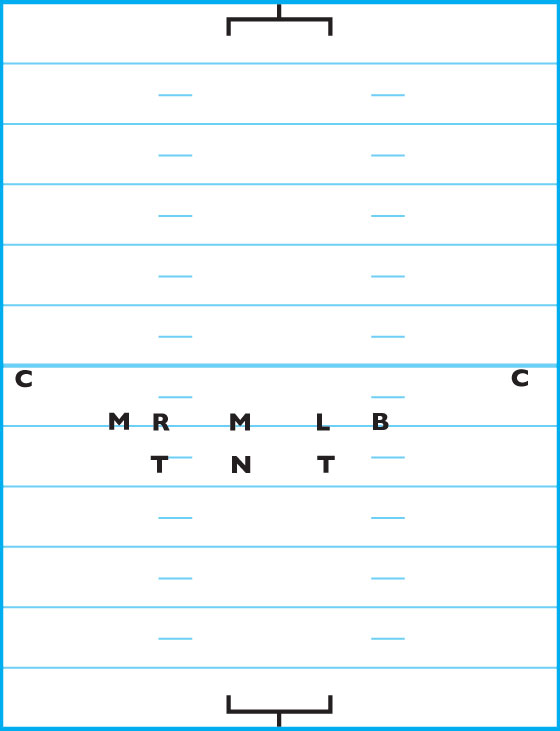
The weak-side DT should cheat to the 6-technique and play contain. The weak-side inside LB (the “Lion” LB) blitzes in the B-gap, while the weak-side outside LB (the “Bandit” LB) cheats and stunts through the weak-side A-gap.