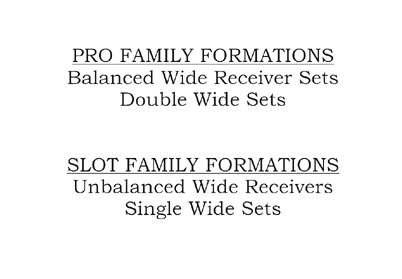
Diagram 1: Family Traits
As we identify formations, we apply the basic rules and then tweak them to suit our purposes. The main goal is to eliminate as much confusion as possible. An example of the basic rule is that all forms of Doubles are in the PRO family, as most are balanced receiver sets (counting the tight end as a receiver); all forms of Trips sets are in the SLOT family, as most of them are unbalanced receiver sets.
There are many formations or variants of basic formations that can confuse so we tend to stick to the basic rule as much as possible. Sometimes a particular opposing player, or an opponent\'s offensive tendency from a formation, will dictate a change in classification for that week. But these instances are rare.
When we went to package our coverage calls by family criteria (about half of our total calls) we made a double digit cover call. The first digit is for the PRO family formations and the second digit is for the SLOT family formations. An example is the defensive call: ‘TITE G (our front) 2 / 6.’ If the offense deploys in a PRO family formation (See Diagram 2), we will align and stem to Cover 2. If the offense deploys in a SLOT family formation (See Diagram 3) we will align and stem to Cover 6: quarter, quarter, half coverage.
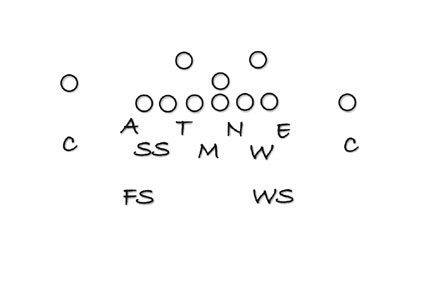 Diagram 2: Stem to Cover 2
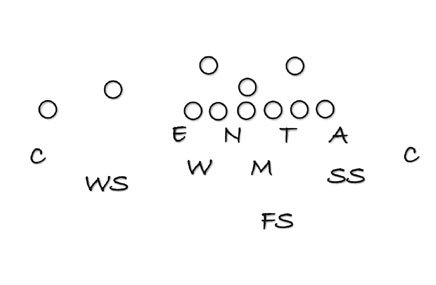 Diagram 3: \'Slot Blue Left\'
If the offense uses a motion or shift that changes a formation from one family to another, we would check to the other coverage, employing as much disguise as possible (See Diagram 4).
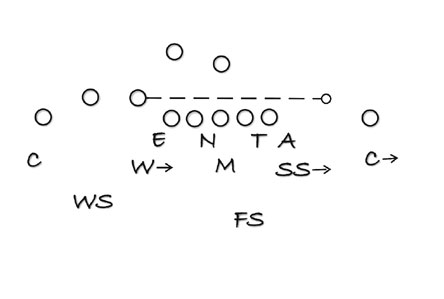 Diagram 4: \'Slot Trips Gun to Pro Doubles Gun\'
Nothing irritates me more than to have an offensive player go in motion and have one of our defensive players holler ‘Motion.’ What I want to have happen is for all defenders involved to immediately recognize the threat posed by the motion. They should alert their fellow players to that threat, or to the change in formation created by the motion and what check we are making according to our preconceived plan. I want adjustments, not mere recognition. Recognize, communicate and react correctly – that’s the key.
Some formations exhibit traits from both family groups and thus create confusion. An example of this is the Open Slot Formation shown in Diagram 5. The formation is unbalanced wides, a slot family trait; yet it is a double wide formation which is a pro family trait. These factors make the set what we call a ‘Bastard Set.’ These sets conform to both families and we must have a special designation for them.
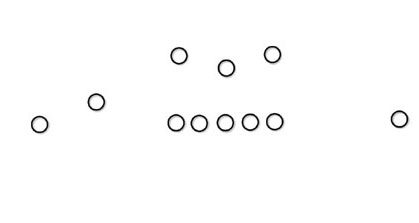 Diagram 5: \'Open Slot Gun White\'
When confronted with such inconsistencies, we make the designation and classify the formation according to how the team we are playing uses the set. We then check our cover call to best suit our needs. We need to understand our basic rule as well as the cover call and then communicate it. If a shift or motion occurs and makes a ‘Bastard’ set conform to our rules, the original cover call will take precedence. Diagram 6 shows the ‘Bastard’ set changing by motion to a pro family set. Diagram 7 shows the same Bastard set changing by motion to a Slot family set.
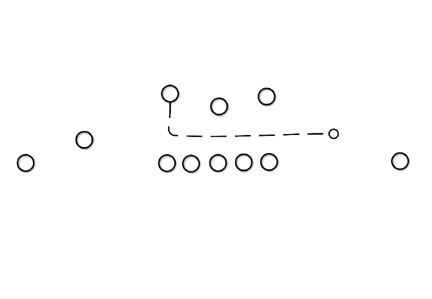 Diagram 6: \'Open Slot Gun White\' changes to \'Open Doubles Gun Ace\'
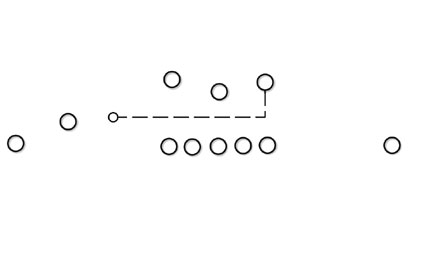 Diagram 7: \'Open Slot Gun White\' changes to \'Open Trips Gun Ace\'
If we want to play a certain coverage against all families, then we will call the coverage and insert the word ‘Stay’ in it. An example of this would be the call ‘Tite 4 Stay.’ In this call we would align and stem to position to run our quarters coverage (Cover 4) and stay in it.
In using this system, the defensive play caller can manipulate the calls to fit the game plan or make adjustments when necessary. The players must know the covers and their verbal and visual signals. They must be confident they’re using them correctly. They must also use as much disguise as possible including ‘fake’ or ‘dummy’ calls. Above all, we must communicate at all times.
By classifying the formations into families we feel that we have added some logic to our situation. We have a system where we can run multiple fronts and coverages with minimal confusion for us and much potential confusion for our opponents.
Rick Wells is the defensive coordinator at Montana State University-Northern in Havre, MT. He can be reached at rwells@msun.edu.