OVER THE PAST three seasons, the San Diego Chargers have been one of the best defenses at stopping the run.
In 2000, the Chargers were second only to the Super Bowl Champion Baltimore Ravens in allowing fewest yards per attempt, holding offenses to a measly 3.0 yard average. In 1998 and 1999 the Chargers lead the NFL in fewest yards per attempt with an average of 2.7 and 3.1 respectively.
To stop the run, your defensive front four must be disciplined, fundamentally sound and use good techniques to strike, separate and escape from blocks to make the play.
These drills will improve your run defense:
Hit Progression Drill
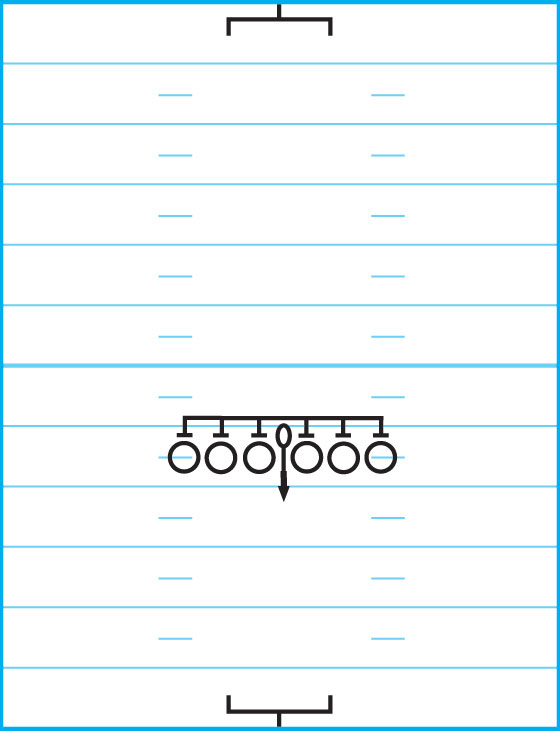
DIAGRAM 1:
Purpose: To teach proper hand shiver and separation techniques.
Procedure: Start on ball movement and align players in front of each blocking pad and then execute the following:
Six-point stance: Toes, knees, hands. Explode hands into pad and roll hips.
Two-point stance: Attack step, explode hands into pad, roll hips and separate.
Three-point stance: Attack step, explode hands into pad, roll hips, separate and accelerate feet.
Hand Shiver Placement Drill
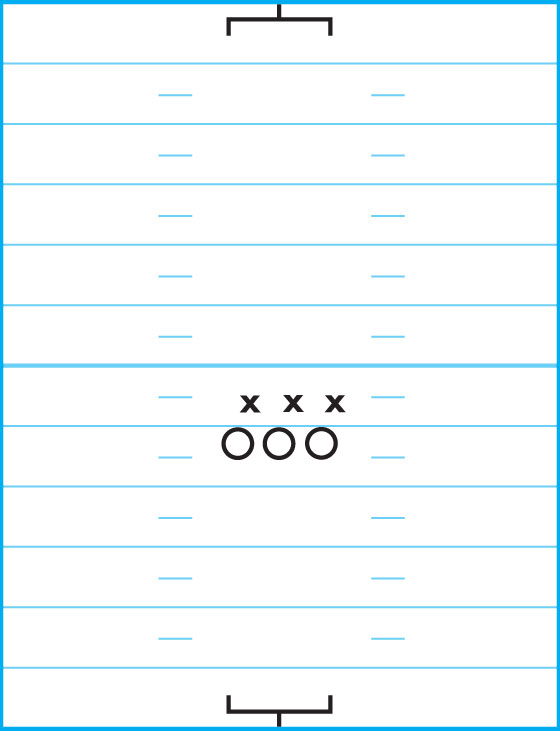
DIAGRAM 2:
Purpose: To strike a blow to the upper torso with proper hand placement.
Procedure: Have the linemen on their knees, paired off facing each other. The offensive player will hold his hands back with chest exposed. The defensive player will shade him to his left or right and be in a six-point stance.
On the coach’s command, he will strike the player in the chest with his inside hand and strike his shoulder with his outside hand, grasping his shoulder pad at the same time to gain leverage.
Hand Shiver, Roll Hips Drill
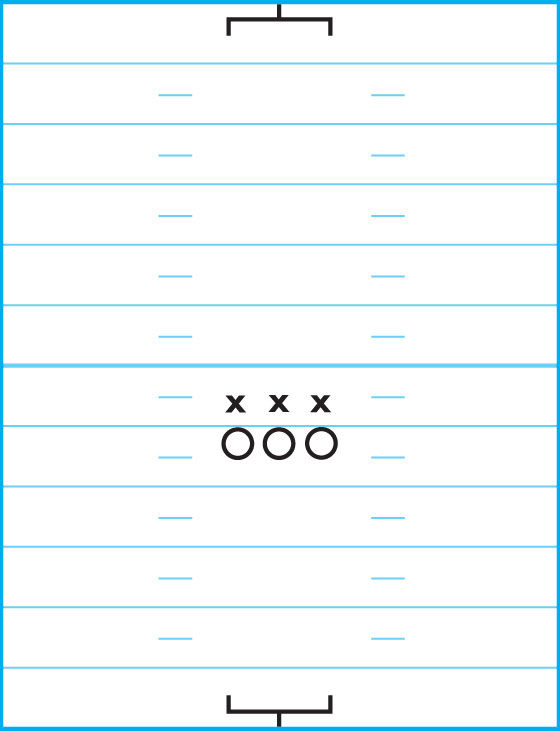
DIAGRAM 3:
Purpose: To strike a blow to the upper torso with proper hand placement and to roll the hips.
Procedure: Have blocker in a three-point stance 1 yard from defender. On his own movement, the blocker will take off with his hands back and chest exposed. The defender is on hands and knees, head up on the defender. On the blocker’s movement, the defender will strike the blocker in the chest and emphasize rolling his hips after the stride. The first thing to hit the ground should be from the belly button on down.
Hit And Cross-Face Drill
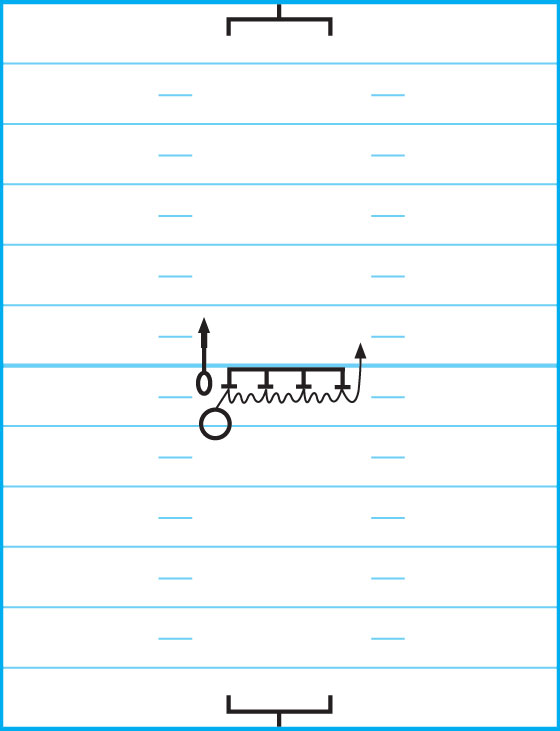
DIAGRAM 4:
Purpose: To teach strike, separation, escape and shuffle down the line of scrimmage.
Procedure: Start drill on ball movement. Align player in three-point stance in front of first pad. Hand shiver the first pad and shuffle to next pad by using an escape move (arm under or arm over) and repeat drill to the end of the sled and then get up field. Stay low when shuffling.
Bridge Explosion Drill
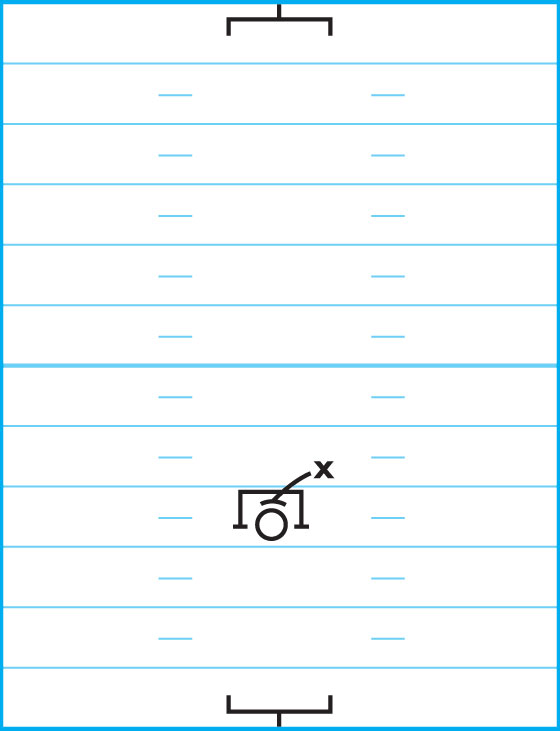
DIAGRAM 5:
Purpose: To teach staying low and explosion out of stance, power step, hand placement, rolling hips into
blocker and separation from blocker.
Procedure: Two players will stagger each other in a three-point stance. The defensive player will align under the chute. On the coach’s command, the blocker will attempt to reach block the defensive lineman. The defensive lineman will knock the blocker back off the ball while getting separation and keeping outside leverage.
Power Arm Press-And-Pull Drill
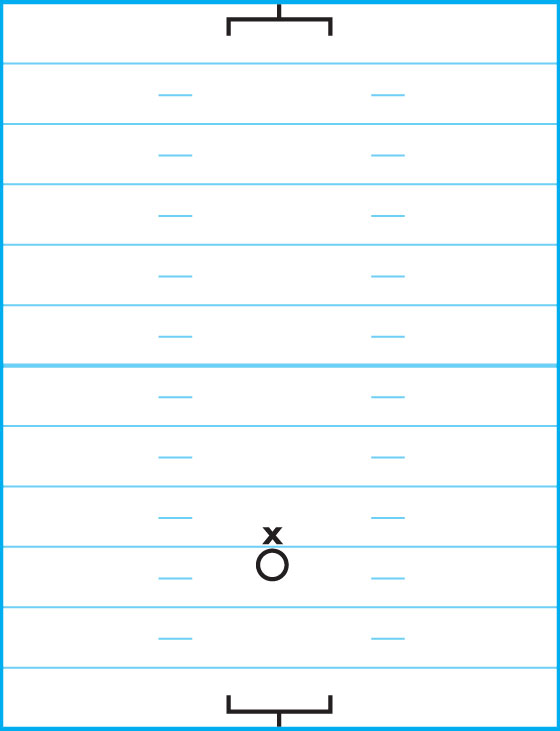
DIAGRAM 6:
Purpose: To be able to turn the shoulder of offensive blocker vs. hooks and cut-off blocks.
Procedure: Two players face each other in a pre-lock position with both player’s shoulders square. The defender will place his hands on the shoulders of the blocker while the blocker hand’s are to his side. On coach’s command, the blocker will take a step to the right or left, simulating either a reach block or cut-off block. The defender will power press the opponent’s shoulder up field and pull the other shoulder to get the blocker’s shoulders turned. Repeat the drill several times and then switch.
Escape Drill
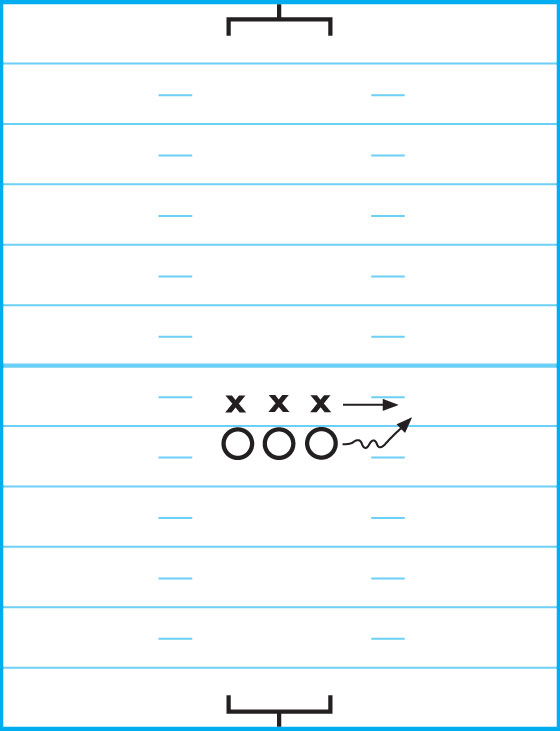
DIAGRAM 7:
Purpose: To teach players how to shed run blocks after locating the ball.
Procedure: Fit into a pre-lock position with the blocker shoulder’s squared. On the coach’s command, the blocker will try to reach block the defender while the defender tries to lock out the opponent’s up-field shoulder and pull on the other. After he’s turned the shoulders, he will use one of three escape moves:
1. Arm Under Move. Rip arm underneath the armpit and shoulder of the blocker.
2. Swim Move. Pull the shoulder down and bring arm over and across the blocker’s face.
3. Snatch And Throw Move. Use the blocker’s momentum and jerk him in either a forward jerk or a sideways jerk.
Coaching Point: Never try to escape a blocker until you have control of him.
Steer Drill
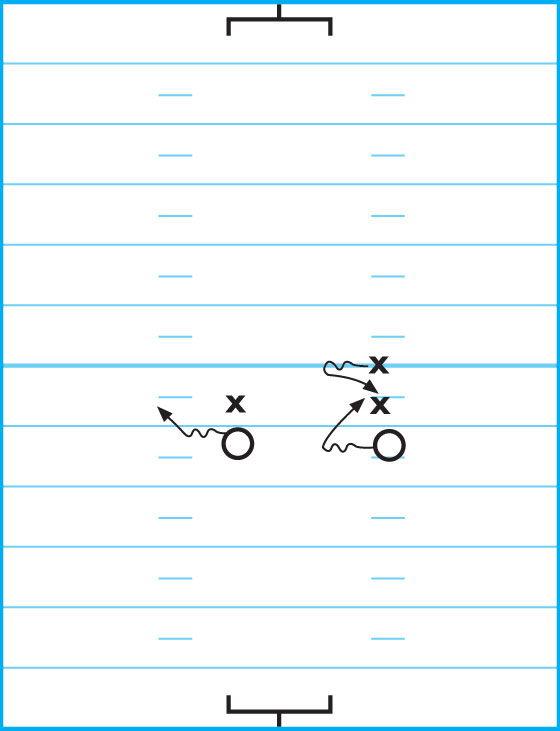
DIAGRAM 8:
Purpose: To teach turning the shoulder of blocker vs. hook and cut-off blocks.
Procedure: Get into a pre-lock position where the defender is already in a pre-aligned reach or cut-off position. On the coach’s command, lock out his arm to the up field shoulder, pull on the other and get the feet moving to a squared-up position. After you get his shoulders turned, use an escape move and get up field. Add a ball carrier to the drill and let him react to the angle of the back.
Split Double-Team Drill
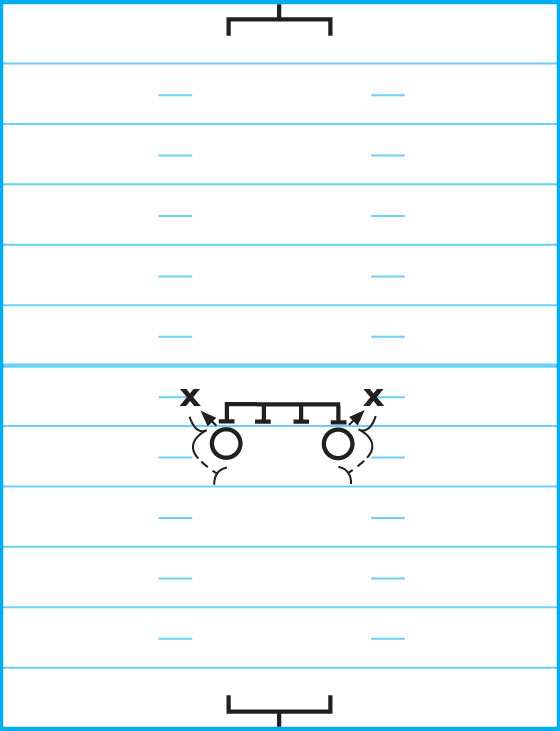
DIAGRAM 9:
Purpose: To teach proper technique vs. a double-team.
Procedure: Have players align on the first pad on the sled. Have blockers align outside the sled in a three-point stance. On the coach’s command, the player will strike the sled and the blocker will come down on the player as if to double team him. When the player feels the down block, he will drop his outside knee to the ground and lean back into the blocker and hold the sled until he feels the blocker coming off to block the linebacker. At that point, he will work up field, splitting the double-team. Work both right and left sides.