TO HAVE A FULLY functional and disruptive defense, one must have a wide and effective variety of front and coverage packages to frustrate offensive designs. To ensure that our defensive package is dynamic, attacking and innovative, we’ve developed a corner blitz/stunt package called “Cover Crash.”
To have a competent and effective stunt package, the defensive coordinator must be able to:
- Attack any and all offensive personnel and bring anyone from the defensive side.
- Stunt various numbers of defenders. To be effective, at any given time, you must be able to bring 5, 6, 7, or 8 defenders.
- Bring different combinations of defenders on stunts.
- Stunt no matter the game situation, such as down-and-distance, score, time remaining, hash mark, field zone, offensive personnel groupings, etc.
- The package must work and attack various offensive systems (pro, option, Wing-T, power, etc.).
Corner Blitz Advantages
For us, the last piece of our stunt puzzle was to develop a way in which to bring the cornerbacks in on a blitz. We have developed a simple and effective way to bring pressure off the corner by the CB.
The corner blitz has many inherent advantages:
- It’s easy to disguise. The boundary CB is usually the “hot” corner. Motion serves to further disguise the on-coming blitz.
- It provides solid run force to the weak side.
- It’s effective against both the running and passing game.
- By bringing the CB on a blitz, a “blind-side hit” on the quarterback is a distinct possibility.
- It’s difficult for an offense to account for CBs in pass protection.
- It allows your best athletes to make plays, as most defenses place their best athletes at CB.
“Cover Crash” Package
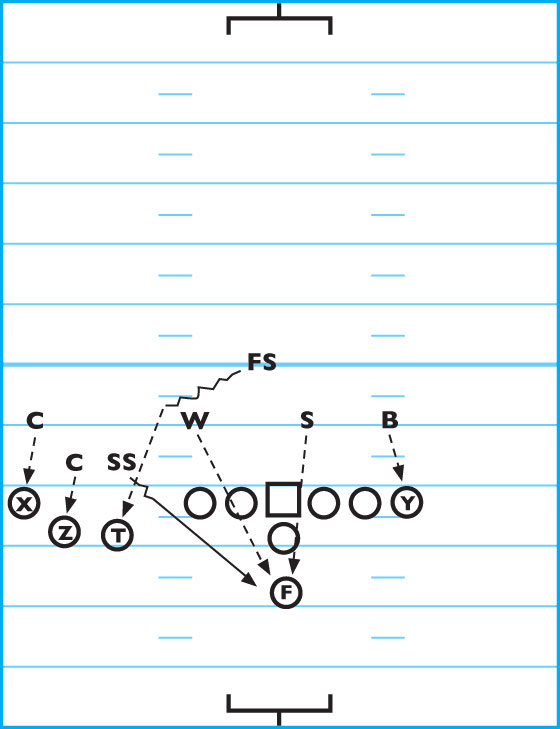
The following diagrams illustrate effective ways to bring the CB in on a blitz. Called “Cover Crash,” these calls come with several variations.
Understand that when we call Crash, we don’t know which defender will actually run the stunt. Against 2-back sets, for example, the stunter will be a CB. However, versus a 1-back set, the stunter can be the strong safety. One of the beauties of this call is that it’s flexible enough to use against any formation.
Our base rule is that the defender who is closest to the QB and away from Y on the snap is the stunter. It can be either an outside linebacker, strong safety, or either CB who you designate to “bring the heat” on the QB. This allows you to effectively disguise the stunt/blitz just prior to the timing to the snap.
DIAGRAM 1: Cover Crash.
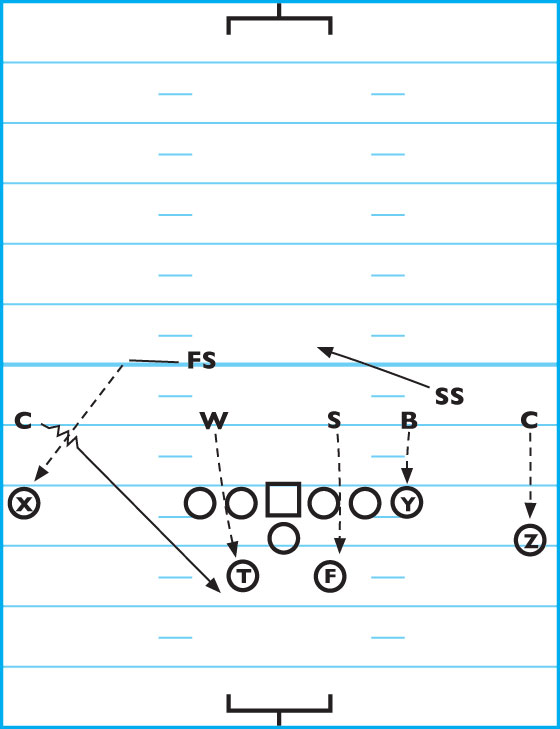
DIAGRAM 2: Cover Crash “Slide Taco” Call.
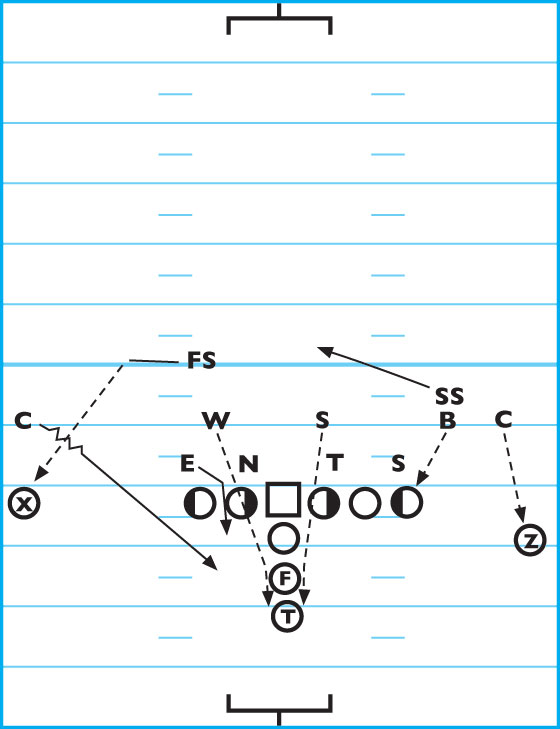
DIAGRAM 3: Cover Crash “Eagle Pirate” Call. “Cover Crash” Vs. Multiple Formations
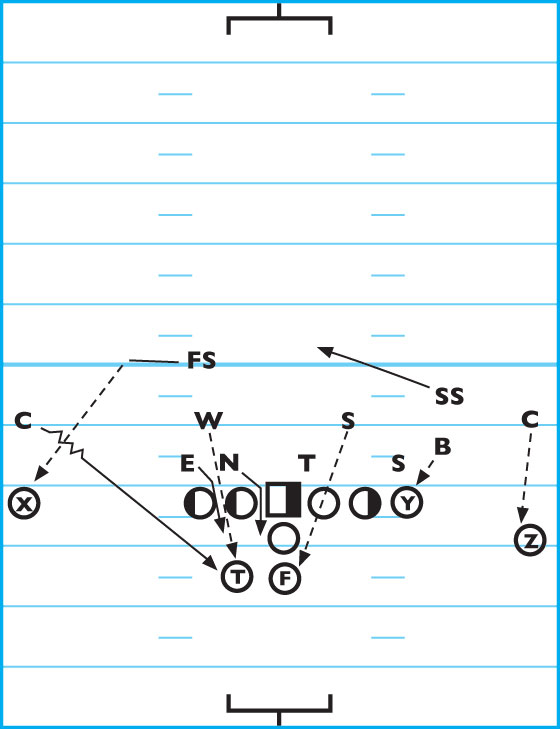
The following diagrams exhibit the “Cover Crash” package against a variety of formations and motions.
DIAGRAM 4: Crash Vs. “Twins.”
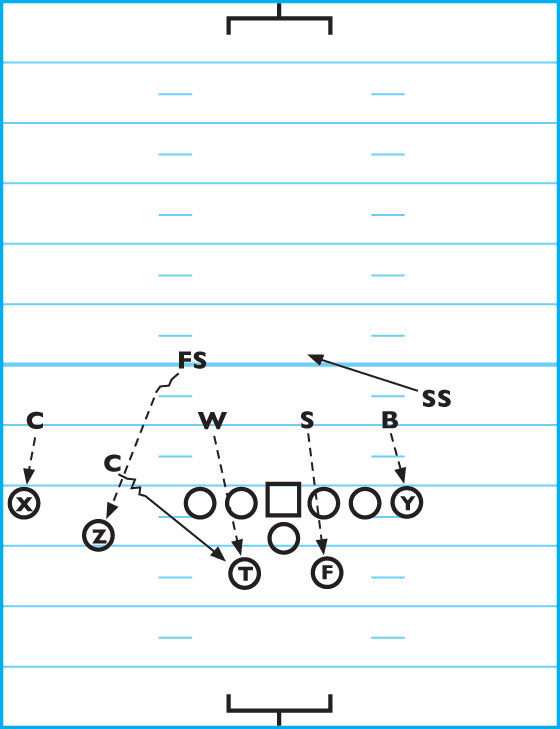
DIAGRAM 5: Cover Crash Vs. “Zac To Twins.”
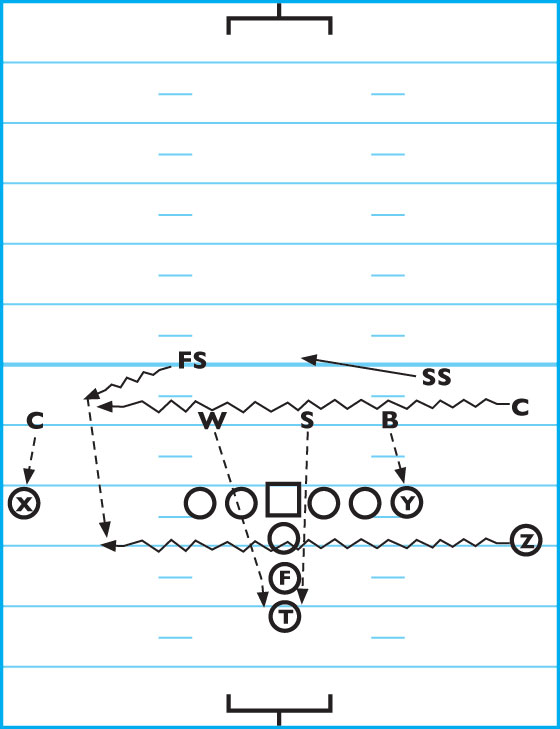
DIAGRAM 6: Cover Crash Vs. “Zac To Pro.”
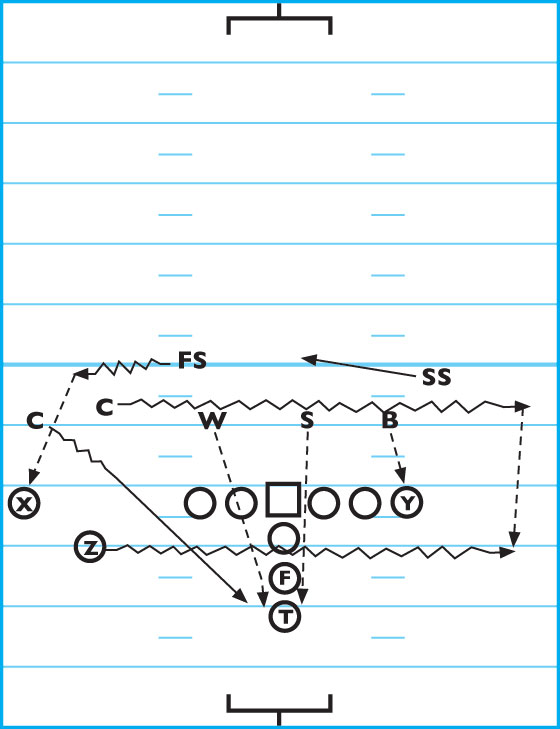
DIAGRAM 7: Cover Crash Vs. “Trey.”
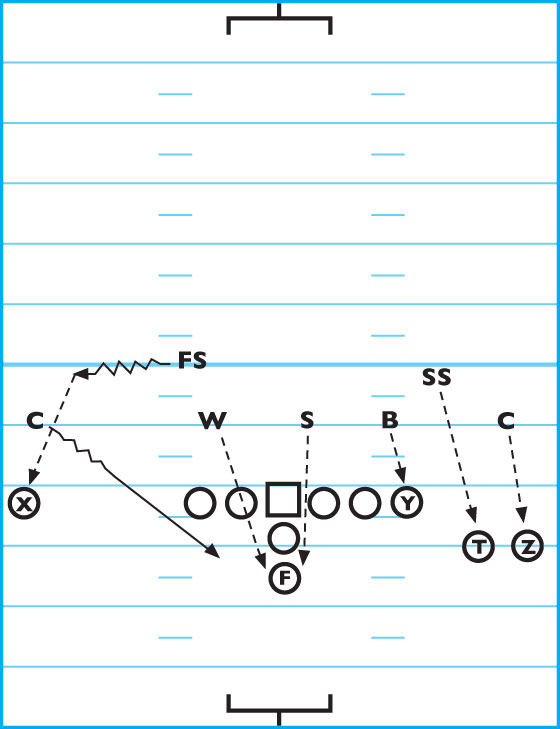
DIAGRAM 8: Cover Crash Vs. “Spread.”
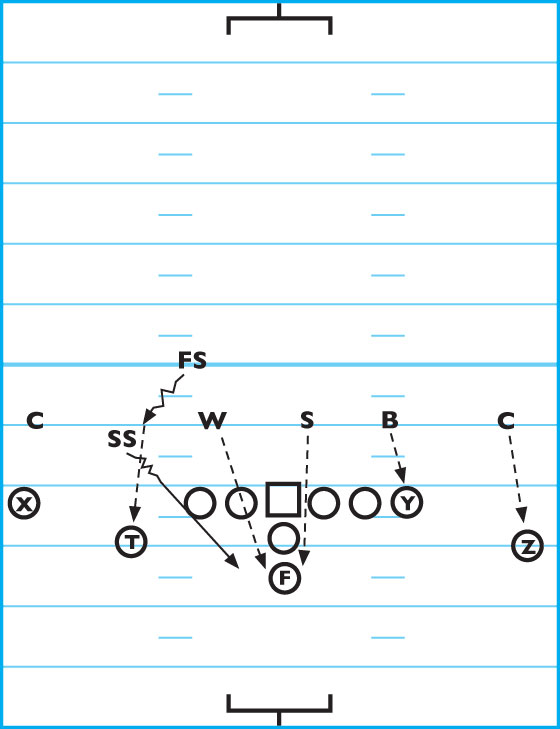
DIAGRAM 9: Cover Crash Vs. “Trips.”